Sacramento has 37 portable toilets for 10,000 homeless people — and they could be removed
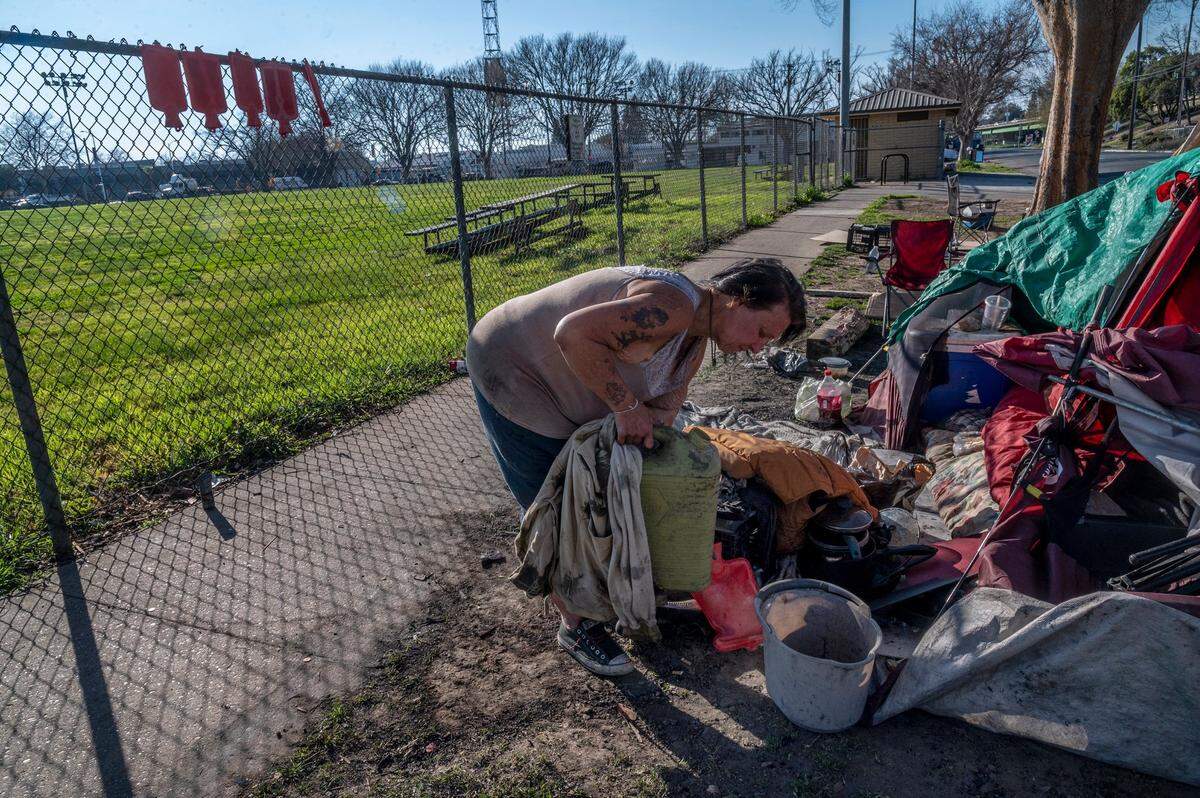
Sherry Aday camps by herself in a small green tent on the sidewalk along X Street in midtown, Sacramento. A city restroom sits just a just feet away from her tent, but it’s fenced off with gray metal chains and padlocks.
When she has to go, she ventures across busy W and X streets to use at restrooms at Southside Park, sometimes in the middle of the night. When she’s not feeling up to the journey, she pees in a bucket. To get water, she has to walk over a block and then carry it — a difficult task with her chronic pain.
Like thousands, she’s on the waiting list for a shelter bed. In the meantime, she wants the city to open the restroom closest to her at O’Neil Field, which has flushing toilets and sinks.
“That would be amazing,” said Aday, 46, sitting in a folding chair next to her tent Thursday boiling a pot of water over a small fire. “I would love that.”
Currently, Sacramento County has 37 portable toilets available for an estimated 10,000 homeless people. That’s about 270 people per port-a-potty. They could be removed in June when funding for their upkeep runs out, said county spokeswoman Kim Nava.
She added officials plan to re-asses the portable toilets after talking with other local governments.
“We will be working with community partners, including the cities, to determine what resources they are providing within encampments in their jurisdictions, and use the county-funded sanitation stations to augment those efforts,” she said.
The county’s portable toilet program for homeless camps is fairly new, and it’s separate from the 28 public restrooms and 45 port-a-potties the county maintains in its regional parks system.
It dates to the beginning of the coronavirus pandemic, when officials put out 50 port-a-potties near homeless camps. Thirteen have been removed since then. The county also put out 50 water stations, but has so far removed 21. Some of the toilets and water stations were damaged or went missing, and the county did not replace them.
The lack of public restrooms is not just a problem for the unhoused community, but for many Sacramento residents. Business owners frequently share horror stories about showing up to work in the morning to be greeted by human feces on their doorsteps. Homeowners in all neighborhoods, including those with kids, complain about unhoused people using their front yards as bathrooms.
“I can’t tell you how many times a week I get an email talking about human feces,” said Councilwoman Katie Valenzuela, who represents the central city and East Sacramento. She wants the county to continue providing portable toilets near homeless camps.
The restrooms also represent an environmental concern, as it’s possible some excrement from the roughly 2,000 unhoused people who live along the American River Parkway ends up in the river.
In 2019, high levels of E. coli bacteria — a sign of fecal contamination — were found along the lower American River. Last year, the first findings of a county-led project revealed the bacteria was caused by dog and geese excrement. Results from additional sampling locations have not yet been released.
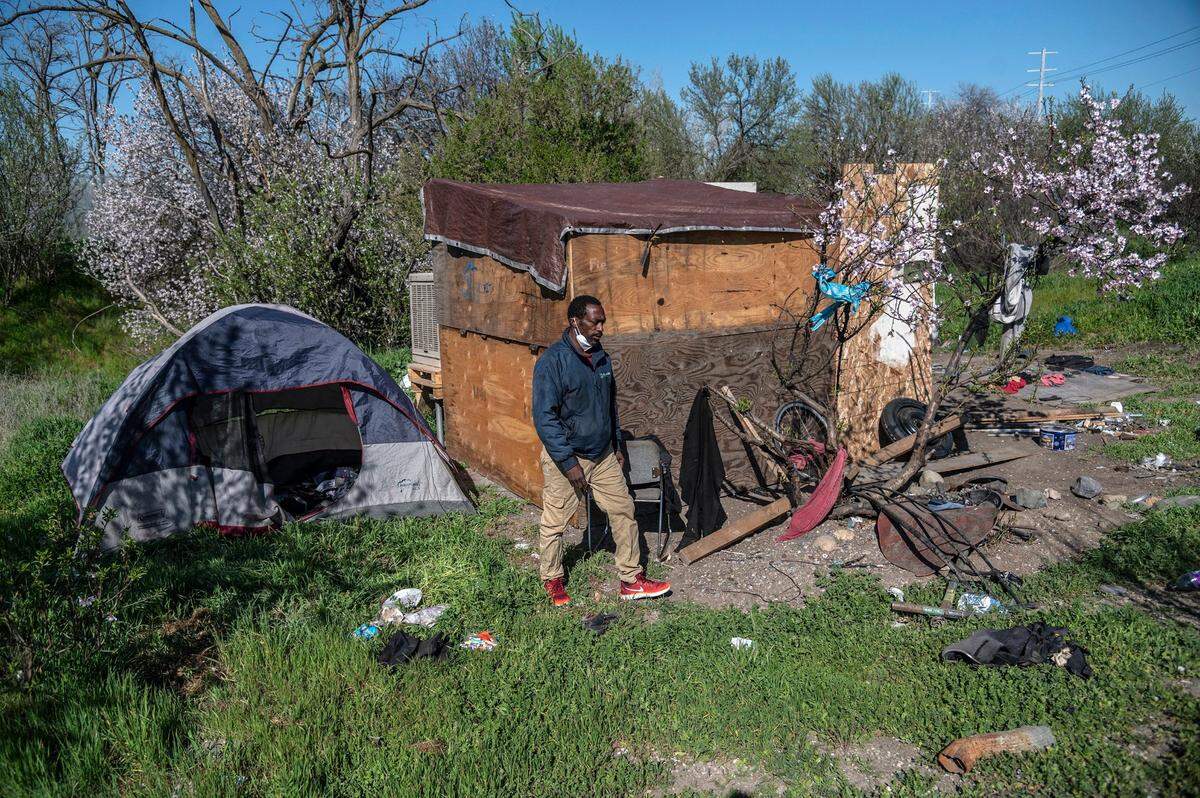
Ivone Carter used the port-a-potty Thursday morning along the American River at the large so-called “snake pit” camp. She said she hopes the county leaves the toilets there.
“They help us a lot,” Carter, 40, said of the portable toilets. “If (we didn’t have them), we’d just have bags of feces hanging around. It’s a health risk. We’re already at a health risk being homeless.”

The camp, nestled under the trees along the American River, is not near any other public bathrooms. The nearby Loaves and Fishes nonprofit closes at 2 p.m.
“If you go into any store to try to use bathroom, you gotta buy something,” said Jahcoyah Greerer, 42, who lives at the camp. “There’s nowhere to go, and to wash our hands at. How are you gonna prevent COVID?”
To install and maintain 25 portable toilets and water stations cost the county $132,000 for the fiscal year that ends July 1, Nava said. The county’s annual budget is $6.5 billion.
Asked if the County Board of Supervisors will leave the portable toilets beyond June, County Supervisor Phil Serna said: “I believe they were deployed vis-a-vis the public health order. I’m not opposed to keeping them available, but I’ve not had any discussion with our public health officer, CEO or our director of homeless initiatives about the disposition of port-a-potties.”
A longtime problem
Sacramento had a severe shortage of bathrooms for the unhoused long before the pandemic.
A damning 2018 report from U.C. Berkeley found: “Unsheltered homeless residents face worse access to water and toilets than is required by international standards for refugee camps.” The report highlighted Oakland, Berkeley and Sacramento.
The Downtown Sacramento Partnership for years fought against a bathroom in Cesar Chavez Plaza, before former Councilman Steve Hansen got a Portland Loo-style bathroom installed there in 2019. But putting portable toilets in public places remained controversial. When two women in January 2020 placed portable toilets in the River District near a camp, police removed them.
The pandemic’s arrival brought more urgency to the issue. The U.S. Centers for Disease Control and Prevention’s coronavirus guidelines say that governments should provide portable toilets to all camps with 10 people or more.
The Sacramento Homeless Union currently has mapped 310 encampments with over 25 people, said Crystal Sanchez, union president. Thousands of unhoused individuals likely lack access to bathrooms and water given that the county has placed only 37 toilets for their use.
“We don’t have the housing, so they need to bring the infrastructure to existing encampments and resource people where they are,” Sanchez said.
City bathrooms
Meanwhile, about a dozen functional park bathrooms, including some near large homeless encampments, are closed except for special events. Of the city’s 60 public restrooms, 29 are open around-the-clock and 14 are open from dawn to dusk.
In a November letter, Valenzuela asked her colleagues to approve funding for public bathrooms, especially at parks, in addition to more portable toilets near encampments and more trash cans citywide. The council did not approve those items.
It’s unclear why the bathrooms are closed.
“From what I understand, the decisions about when those 13 restrooms are open (or not) were made over the course of many years, either with input from local neighborhood organizations or previous council offices or with specific location or safety concerns in mind,” said Gregg Fishman, a city spokesman.
In the case of O’Neil Field, aside from events, the bathroom has been closed for more than 20 years, said Tim Swanson, a city spokesman. In the central city, bathrooms at Fremont Park, Colonial Park and City Cemetery also have toilets that flush and have running water, but are only open for special events.
While Aday sat outside her tent Thursday, a young unhoused man named Justin hopped over the high metal fence to get water from a city water fountain at O’Neil Field.
“I don’t know how to do that,” she said.

This story was originally published February 21, 2022 at 3:00 AM.
CORRECTION: This story was updated on Tuesday, Feb. 22 to include a quote from Sacramento County spokeswoman Kim Nava and more information about the number of public restrooms maintained by the county in regional parks and by the city of Sacramento.