Ukrainians in Sacramento pray for peace and prepare for bloodshed amid Russian invasion
The Sacramento region’s large Ukrainian community has worked for years to help Ukrainian soldiers wounded by previous Russian incursions. Now that Russia has commenced a full-scale attack, these Sacramentans are once again bracing themselves — and preparing to aid the fight for democracy.
President Vladimir Putin ordered troops into eastern Ukraine on Wednesday night, calling the move a “special military operation,” launching a widespread attack on the country of 40 million people at dawn. Many Ukrainians in the capital region — some of them in frequent, frantic contact with loved ones still in Ukraine — watched with fear, but not necessarily surprise.
“There will be loss of life; there’s no question about it,” said Lubow Jowa, president of the Ukrainian Heritage Club of Northern California. “Everyone will suffer.”
According to the U.S. Census Bureau, about 15,000 native-born Ukrainians call Sacramento County home, a higher number than all but three counties in the U.S. Many Ukrainians in the area are observant Christians, and Zachary S. Wochok, the parish council president of St. Andrew Ukrainian Greek Catholic Parish in Florin, said his church was hosting prayer days as the crisis intensified.
Russian forces had been massing at the border with Ukraine since November, and as Wochok followed the news, he became increasingly alarmed.
“I say to myself, my God, it looks like World War I,” he said. “In this day and age, with all the weaponry we have and all the sophisticated technology we have, who in the world lines up against the border with 100,000-plus troops in tanks and artillery? ... It’s insanity.”
In any armed conflict, “Innocent people die. It’s not just the soldiers, and that’s a waste in itself.”
A third-generation Ukrainian American, Wochok had previously lived on the East Coast, but most native Ukrainians in Sacramento County arrived as refugees after the collapse of the former Soviet Union. They were largely Christians fleeing religious persecution, drawn to the Sacramento region by radio personalities who had already moved to California and broadcast back to Eastern Europe. Census figures show that in 1980, only a few hundred native Ukranians lived in Sacramento County.
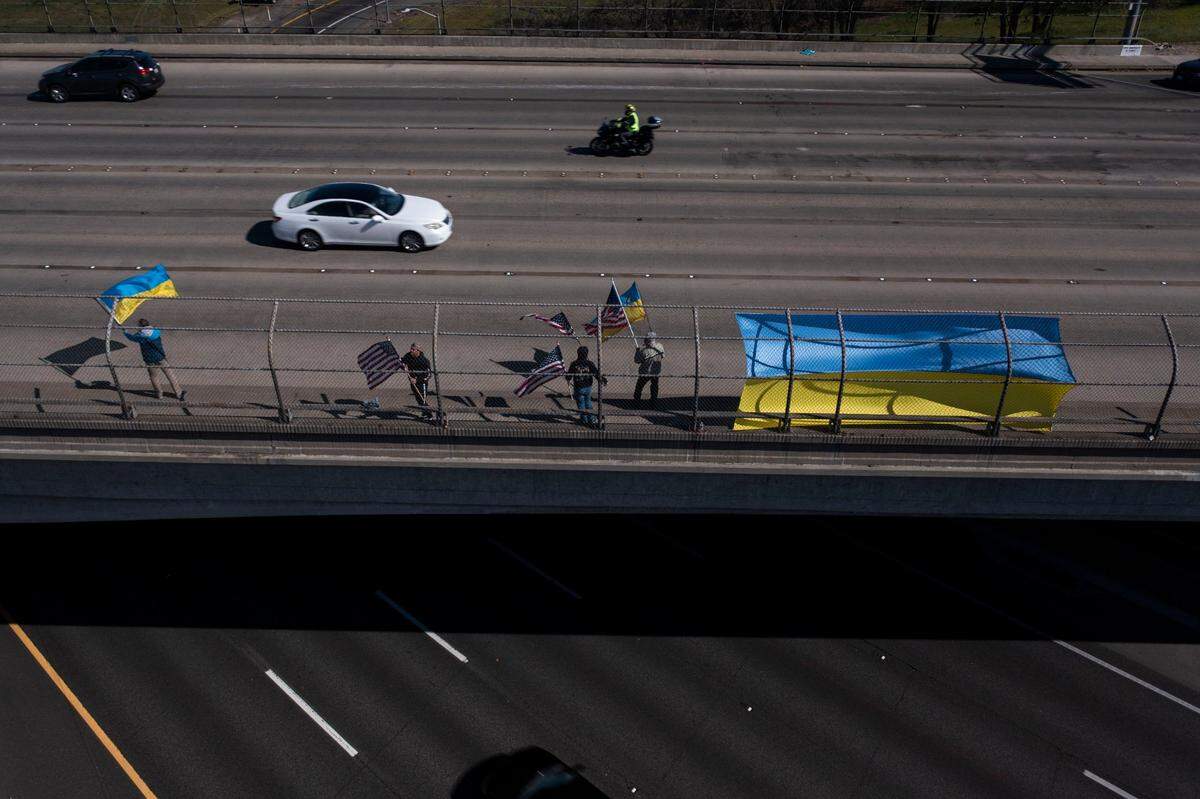
That number grew steadily after Ukraine declared its independence in 1991. By 2000, their numbers had grown to 11,000, and those figures exclude the Ukrainian Americans who were born here.
These Californians have thrived in the region while maintaining their ties to Ukraine, said Oleh Kuzo, a father of three who lives in Roseville and runs a team of data analysts at Hewlett-Packard. He told The Bee, “We keep our feet in both American culture and Ukrainian culture.”
Kuzo and his wife were in daily contact with relatives still living in western Ukraine before the invasion. Because the Sacramentan-Ukrainian community has spent years paying close attention to news from Eastern Europe, he said, Russian aggression against Ukraine was expected.
“This is no news because the war actually began in 2014 when Russia seized Crimea and occupied two Ukrainian territories,” Kuzo said. “It’s been the same experience that we’ve seen for the last eight years. … It’s like a numb pain now becomes an acute pain.”
Jowa agreed. Speaking earlier this week, she said, “This is sort of like the second round for me. … When the invasion occurred in 2014, it was a shock. The community thought that for sure Ukraine finally was established.”
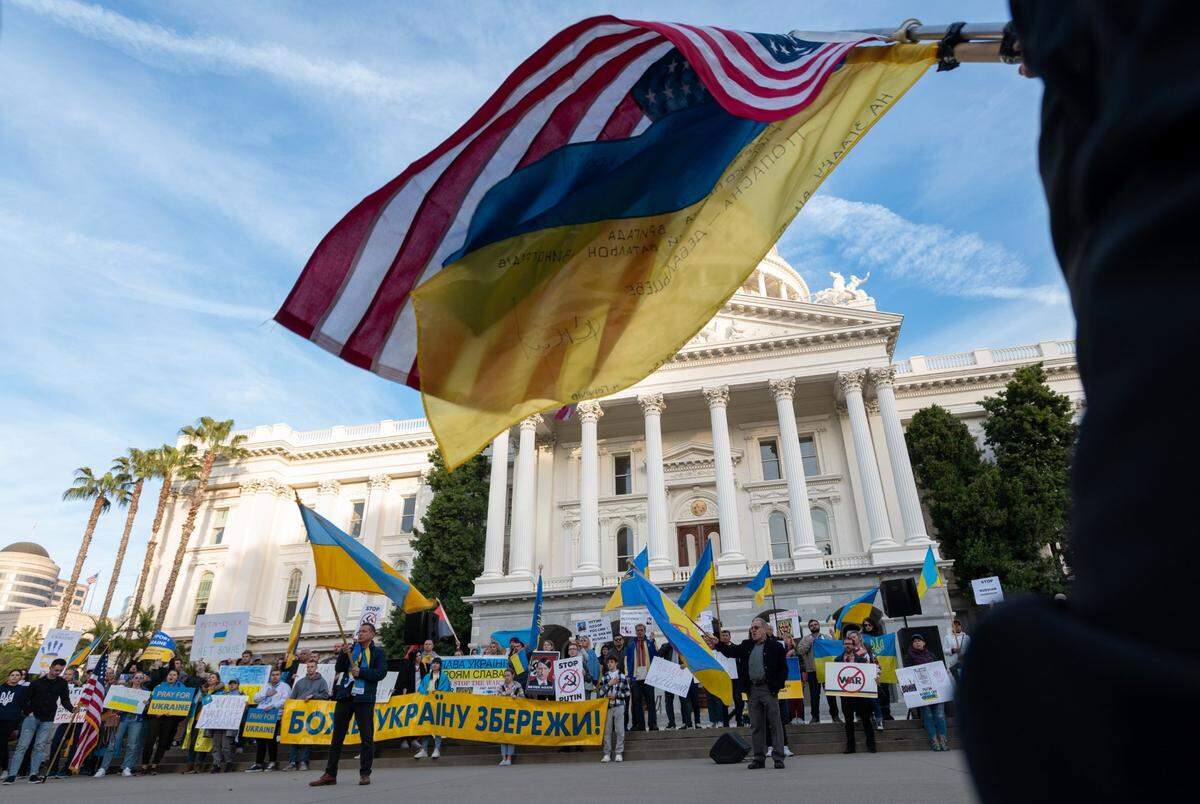
During previous waves of violent conflict with Russia, “The Ukrainian community in Sacramento rallied around helping Ukraine,” Jowa said. “There was help for the wounded warriors and their families, orphans and just plain old people that got bombed, or had their lives destroyed. … It continued because there was still aggression for all those years.”
On Thursday, Biden announced a new set of sanctions against Russia, targeting banks, billionaires and tech. Biden also reaffirmed that U.S. forces would not engage in Ukraine.
Jowa and Kuzo spoke bitterly of the 1994 Budapest Memorandum on Security Assurances, an agreement signed by the U.S., Britain, Russia and Ukraine in which the latter nation agreed to relinquish its nuclear weapons and the larger powers promised to respect Ukrainian sovereignty and its existing borders and to refrain from threats or force against Ukraine. In the agreement, the U.S., Britain and Russia promised to act if another country violated Ukraine’s independence, although there has been some international disagreement on what it means to act.
“Ukraine gave up the rights to nuclear weapons so that their borders would be secure and established as they were upon the fall of the Soviet Union,” Jowa said. “So this was a great shock to us when (in 2014, Russia) decided to invade, and a violation of that agreement.”
“I wish the U.S. would stand by their commitment,” said Kuzo, who left Ukraine in 2006. “We don’t have wishes, right? It was written in ink.”
And Jowa, like Wochok, saw echoes of 20th-century war in the current conflict. She set herself apart from the people who don’t “look at history,” she said. “This is the kind of thing that led to World War II, in the sense that you have people who placate dictators,” she explained, referring to any Western concessions to Russian president Vladimir Putin. “Ukraine won’t be enough. They’ll take over other regions, including the Baltics and Poland and Czech Republic.”
“People don’t want to think about it,” she said, but “it’s really kind of dire.”
This story was originally published February 24, 2022 at 10:42 AM.