
Sacramento lawmakers say time has come to move homeless camps off American River Parkway
As Sacramento struggles with plans to address the homeless crisis in the region, state lawmakers are taking aim at protecting the area’s crown jewel for recreation from growing camps: the American River Parkway.
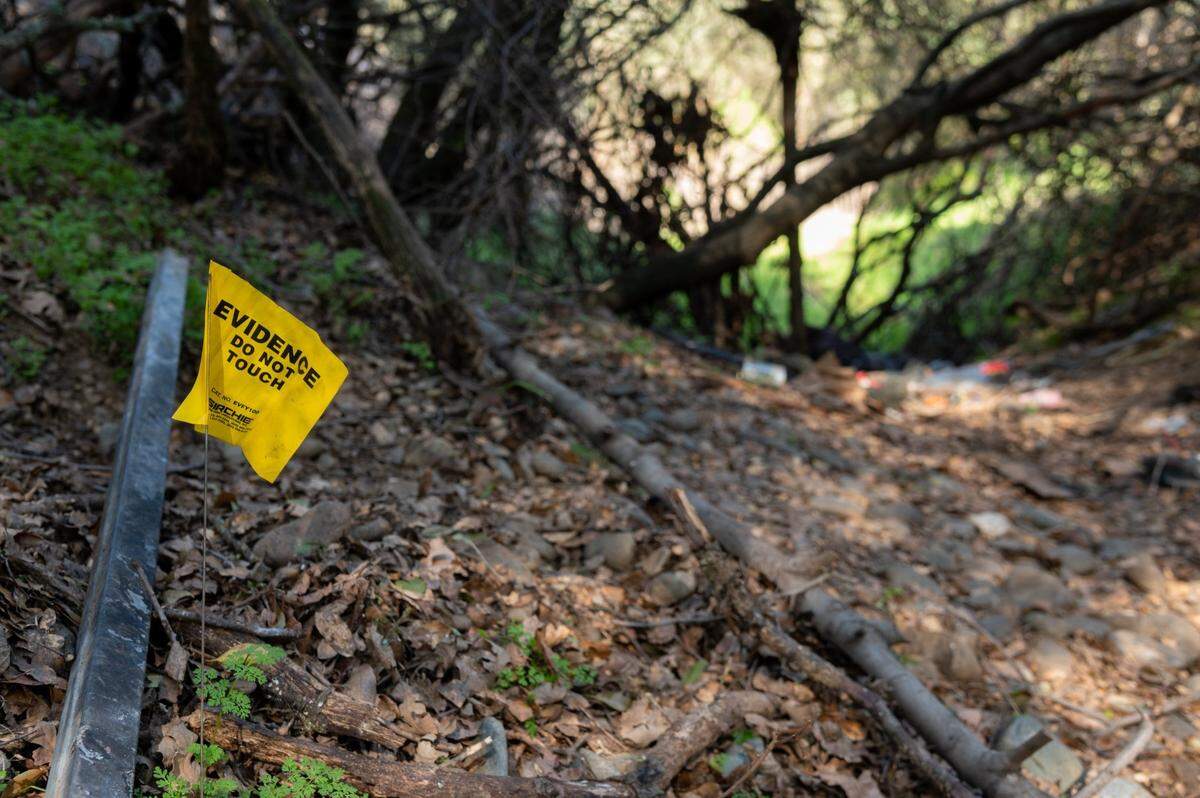
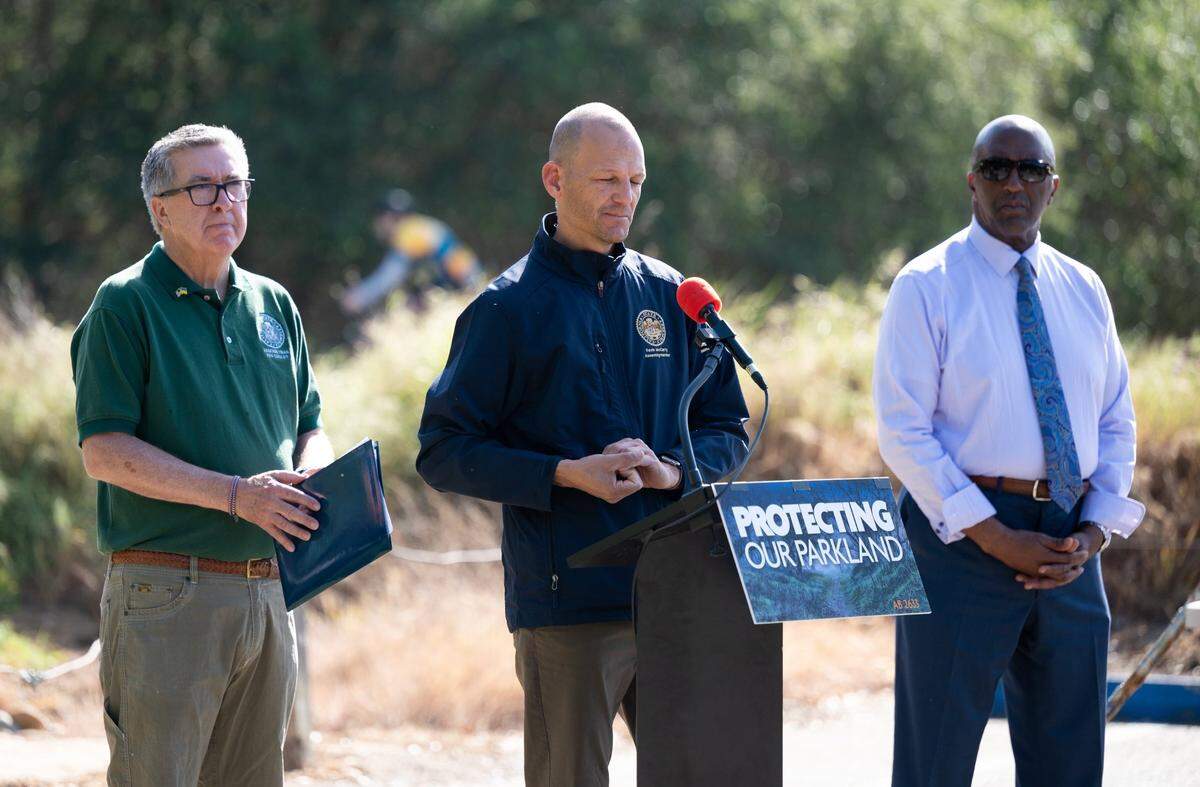
Democratic Assemblymen Ken Cooley, Kevin McCarty and Jim Cooper announced their support Friday morning for a bill that would declare the parkway to be an area of “special parklands” that would allow the removal of illegal campsites that they say create a danger to area residents and homeless individuals, spark illegal fires and leave trash.
“People are beginning to fear coming to it,” Cooley said as he stood at the El Manto Access Point less than a mile from the spot where 20-year-old Emma Roark was killed in a campsite after walking to the area to take photographs in late January.
A homeless man who had been living along the river for several years was arrested and faces charges in her slaying.
Sacramento County Supervisor Rich Desmond, who represents the eastern suburbs and appeared with the assemblymen to support the bill, said the increase in crime in the area is obvious.
“This is almost bookends, because we had this horrible murder out here and then you go down to mile number one and you have a lot of crime down there, most of it against the homeless population,” Desmond said.
McCarty noted that there already are obvious limits on where people can camp, that camps can’t be set up at high schools and the like.
“We have to say there are certain places you can’t go,” he said. “This is one of them. ...
“This is a jewel of Sacramento. Eight million people come here every year. This is a true asset for Sacramento and we need to draw a line in the sand.”
.JPG "SAC_DMK_8191 (2).JPG")
Cooley noted that the parkway has always had rules that it is open only from sunrise to sunset, something that helps protect the abundant wildlife in the area, and said the bill could be used to protect similar areas statewide.
Cooley said the bill would allow for the removal of all homeless camps and provide state funding of $50 million for the county and parks to use to help provide services and housing for people in the camps.
“It is long overdue,” said Cooper, who is running for Sacramento sheriff and has said homelessness is the number one issue facing the region. “This bill does not criminalize homelessness. We’re trying to solve a problem.”
The bill is the latest effort to deal with the issue.
Earlier this week, the Sacramento City Council voted to place a measure on the November ballot that would require the city to provide shelter space for 60% of its homeless population. And late Thursday the city said it planned to sell the property at Fair Oaks Boulevard and Howe Avenue and clear a large homeless camp that has been growing there for a year.
Cooley acknowledged that the parkway legislation, if passed and signed into law, likely would spark lawsuits, and a prominent Sacramento civil rights lawyer and homeless advocate said Friday he was right.
“I think they’re blind to the reality that you don’t get rid of homeless people by eradicating camps,” lawyer Mark Merin said. “They will just spring up somewhere else.”
He also said citing fear over the Roark murder made no sense.
“So what do you do about the murders on 10th and K, do you just clear out night life in Sacramento?” Merin asked. “They’re so short-sighted they’re coming up with little buzzwords to appeal to a certain segment of the population in the hopes that they will vote for them in the next election.”
Merin cited the Martin vs. Boise decision by the 9th U.S. Circuit Court of Appeals that says cities cannot enforce anti-camping rules if there are no shelter beds available for the homeless and said homeless advocates, religious groups and other could be expected to mount legal challenges.
“So in order to combat this type of move on the homeless people, organizations that care have to band together with the homeless population and demand bigger, systematic change that stops the flow of homeless people on the streets and creates the housing they need,” he said. “And, yes, I would be willing to work with such a coalition to challenge this proposed bill.”
Cooley acknowledged there would be legal challenges.
“I sort of think we just need to say we may need to get sued over this and say the Boise decision is wrong,” he said. “The idea that people are afraid to come to the parkway, that is a klaxon going off that we need to do something.”
This story was originally published April 8, 2022 at 12:36 PM.