California Sikh says cops delayed investigation into racist threats. Now he’s suing
A practicing Sikh man filed a federal lawsuit this week against Sutter County, alleging the Sheriff’s Office deprived him of his civil rights by failing to adequately investigate a pair of racist hate crimes he says he experienced last year.
The case centers on two incidents that Rouble Claire, the plaintiff, considers so brazen he can’t believe they happened.
They stemmed from a routine trip Claire took last May to South Butte Market, a short drive from his rural Northern California home.
As he exited the small Sutter County convenience store, a woman confronted him in the parking lot.
She accused him of hitting and killing her dog with his car earlier that day.
Claire clearly had not, he said, and there was no evidence on his car or nearby roadways that he had.
The woman began cursing him out, Claire said, and called him a “f------“ Hindu.
Then she threatened to ram Claire with her car, speeding toward him before stopping behind his car and boxing him in, he said.
Claire went back inside the store. A cashier helped call 911.
Deputies didn’t show up right away, and the woman left the parking lot. So after 30 minutes, Claire went home.
“I could not believe my eyes,” Claire told The Sacramento Bee in a recent interview at his Sutter home. “She actually backed up the car about 50 feet, to the end of the parking lot, and then she sped towards me. Must be about 20, 25 miles per hour.”
She made a “sudden, screeching left turn and stopped,” Claire said.
Claire re-entered South Butte Market to call 911. As he did so, the woman drove away, he said.
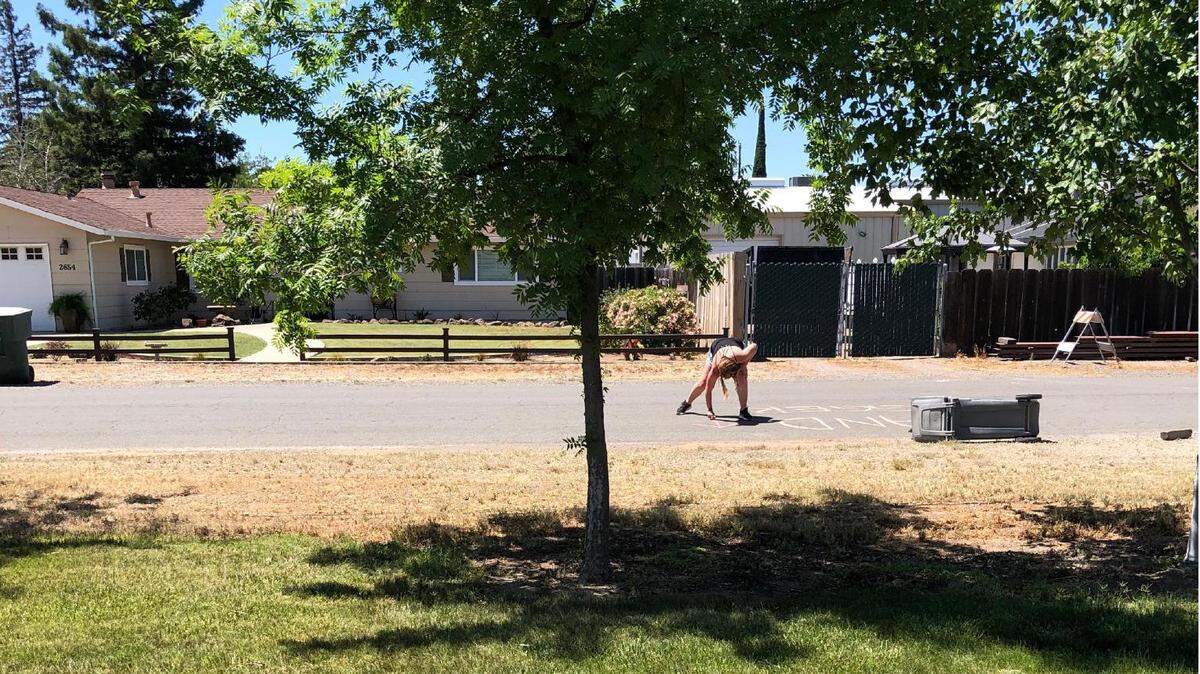
That afternoon, something caught his eye from the window while washing dishes: a second woman was in front of his house, holding a piece of pink chalk.
Claire said this woman had written the words “sand (expletive),” etched neatly on the street and in the corner of his driveway, along with arrows.
Claire opened the door and began to take photos, but he said the woman wouldn’t look up and face him at first.
He said the woman straightened up, called him a racial slur, “and then she walked away.”
Claire, a 66-year-old retiree who lives with and cares for his 92-year-old mother, contacted law enforcement again, recounting both incidents to two deputies. He said he made clear he wanted to press charges in both incidents as hate crimes.
But months later, after deputies eventually forwarded their investigation to prosecutors, no criminal charges were filed.
The Sheriff’s Office eventually recommended an assault charge for the parking lot incident, which the Sutter County District Attorney’s Office in December declined to prosecute.
Prosecutors cited a lack of physical evidence, and also said too much time passed between the incident and the account by Claire ultimately used in the deputies’ police report.
Claire argues he is being penalized for the deputies’ delays in investigating.
Sutter and its sister county Yuba are effectively the Sikh capital of California, home for decades to among the densest concentrations of Sikh residents in the U.S.
Yuba City hosts an annual three-day Sikh parade in November, routinely drawing more than 80,000 visitors to the region. Claire’s neighborhood in the smaller town of Sutter boasts idyllic views of the towering Sutter Buttes domes.
Frustrated by his back-and-forth with authorities, Claire first reached out to the Sikh Coalition, a national nonprofit that for months has tried to help convince prosecutors to reconsider and file charges, before the one-year statute of limitations for misdemeanor assault expired Wednesday.
Charges could still be filed before May 11, 2024, but only if they were to be upgraded to felony charges, which carry a three-year statute of limitations.
Attorney Gina Szeto-Wong on Monday filed a lawsuit in Eastern District of California federal court on Claire’s behalf against Sutter County, two deputies and the two women he’s accusing of hate crimes.
The lawsuit alleges the Sheriff’s Office violated Claire’s civil rights by failing to adequately investigate “based upon Mr. Claire’s race, ethnicity, and/or status as a hate crime victim.”
A Sutter County spokesperson did not respond to a request for comment.
Claire’s suit seeks damages from the county and from two civilian defendants for assault, trespassing and infliction of emotional distress: 23-year-old Sara Hollis, a neighbor of Claire’s who is the alleged perpetrator in the parking lot incident; and the Jane Doe defendant responsible for chalking his driveway.
Efforts to reach Hollis for comment were unsuccessful.
‘Taken aback’: Sheriff’s deputies arrive
As he waited for deputies to arrive after the chalk incident, Claire noticed a black sedan — which he also saw leave South Butte Market the same time as Hollis’ vehicle — drive back and forth in front of his home several times.
On one of the trips, Claire saw a man in the passenger seat “dump water from a water bottle on the street” in an apparent effort to wash away the slurs, the court filing says.
As Claire spoke with the first officer to arrive, Deputy Earl Manion, the black Nissan passed by again, according to the lawsuit. Manion followed it to a nearby home: that of Hollis’ mother.
A second deputy, Vishaal Virk, met Manion at the Hollis residence and they spoke with the Hollis family.
Virk then came to Claire’s home, where Claire again recounted the incidents. He asked Claire if he wanted to file a hate crime report.
“Mr. Claire said yes,” the lawsuit says.
But Claire’s intent to pursue hate crime charges wasn’t documented, and Manion — in a report filed months later by another deputy revisiting the case — falsely stated that Claire had only requested Hollis be “verbally admonished,” the lawsuit says.
Claire also alleges Virk destroyed evidence from the chalk incident.
“Before leaving Mr. Claire’s home, Deputy Virk poured water over the (slur) written on Mr. Claire’s driveway,” the lawsuit continues.
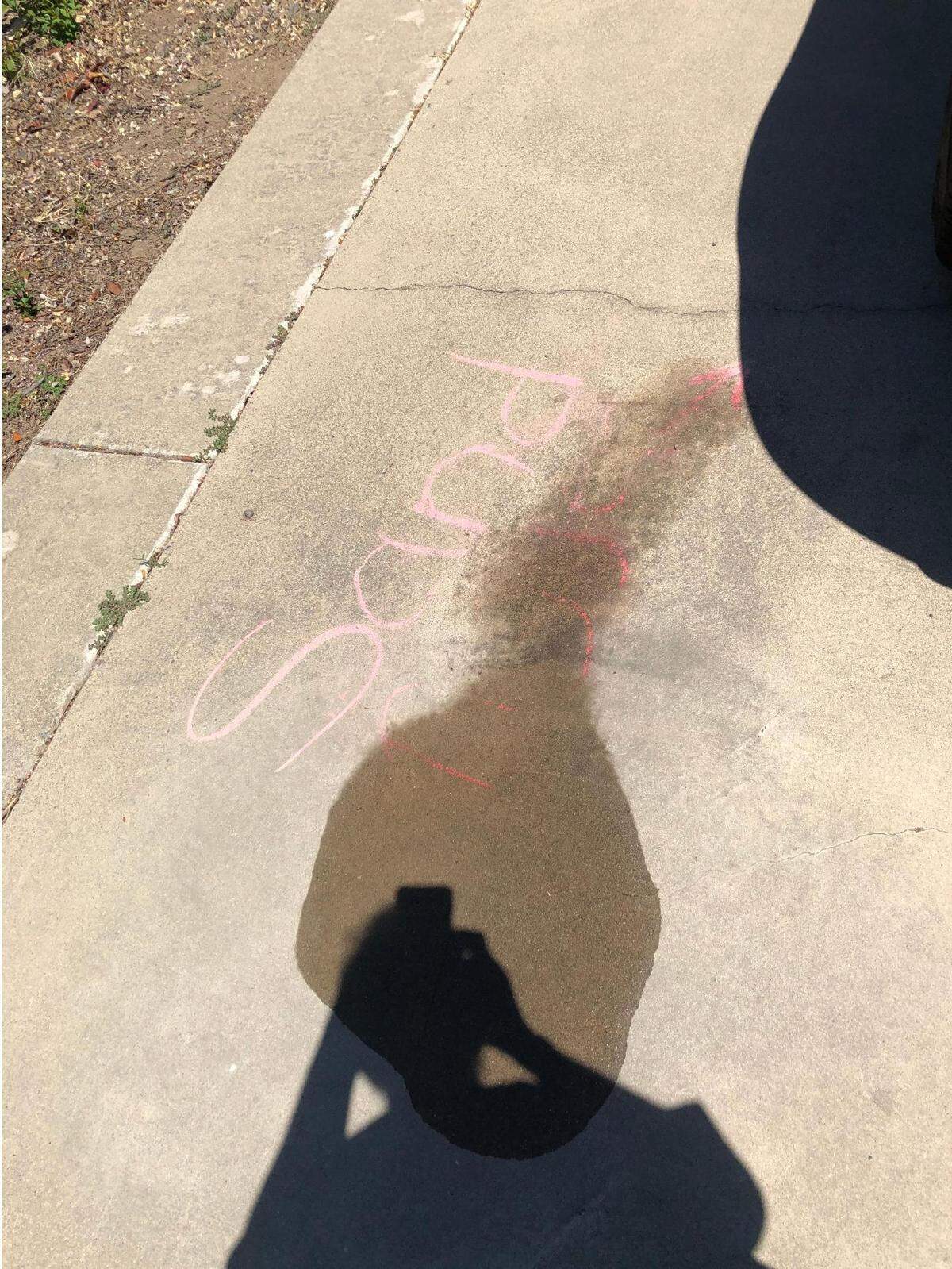
“I was surprised,” Claire told The Bee. “I was totally taken aback by a sheriff’s police officer trying to, kind of, erase the evidence.”
Neither Virk nor anyone else from the Sheriff’s Office had photographed the chalk at that point, Claire said.
Claire’s lawsuit alleges that after the initial response from deputies and a brief follow-up a few days later, he “heard nothing further from the Sheriff’s Office … for months.”
“That was it,” said. “They took off.”
Investigation lingers
Claire said he believed at the time that deputies were simply doing a thorough investigation. Hate crime investigations take time, he figured.
“All this time, I was thinking they are investigating behind the scenes to find out who these people are,” Claire said. “Initially, they weren’t even telling me who this woman was that tried to run me over, even though they went and talked to her.”
Claire said in September, he decided to reach out to a journalist at the local Appeal-Democrat newspaper. Within days, Claire received his first follow-up from authorities in months, he said.
Manion, Virk and a third deputy came to his home, unannounced, asking for Claire to again give his account of events.
Claire did so, and he also complained about the lack of action, asking Manion why the deputies did not pursue a trespassing arrest.
“Deputy Manion responded by saying words to the effect of, ‘You don’t have a ‘No Trespassing’ sign on your property,’” the lawsuit says.
The third deputy then assured Claire his case would be forwarded to the District Attorney’s Office, asking him to send his photos of the chalking incident to the Sheriff’s Office.
Claire did so.
In October, Claire asked to speak with a sergeant. When he went to the Sheriff’s Office, he said he was met by Manion and another deputy in the lobby, who had him review a six-photo lineup of potential suspects in the chalking incident.
Claire said he couldn’t identify the Jane Doe from the lineup, and Manion quickly told him the case would be closed.
“I would say law enforcement should have more empathy, more sensitivity to people,” Claire said. “Some action should be taken, else … what recourse do we have? What else would you do?”
No charges filed by Sutter DA
The lawsuit says Claire urged deputies to talk to the cashier at South Butte Market, who witnessed some of the incident and helped call 911.
According to a probable cause statement provided by the District Attorney’s Office, a new deputy assigned to review the case interviewed the cashier in November.
The cashier told that deputy she observed the incident, though not from the beginning and she could not hear the alleged racist statements from indoors. The cashier could identify Hollis and her vehicle with certainty: Hollis had been an employee at South Butte Market, quitting a few days before the incident.
The Sheriff’s Office on Dec. 1 filed that deputy’s declaration in support of an arrest warrant for Hollis.
Two weeks later, the District Attorney’s Office declined to pursue charges.
“Without additional evidence to corroborate Mr. Claire’s report made six months after the date of the incident, there is insufficient evidence to prove beyond a reasonable doubt that Ms. Hollis willfully did an act that would directly and probably result in death or great bodily injury,” the office wrote in a refusal to prosecute form, Assistant District Attorney Cameron King confirmed.
Claire contends that the six-month delay noted by prosecutors was a direct result of deputies’ inaction.
In December and January, the Sikh Coalition reached out to Sheriff Brandon Barnes regarding the incident. Barnes in his response to the coalition acknowledged that Virk did not follow proper policy when he poured water on the chalk messages, according to Claire’s lawsuit.
Barnes told the coalition Virk received additional training.
The lawsuit accuses Manion, Virk and other unnamed deputies of failing to conduct a “minimally adequate investigation” and destroying available evidence “which would have established that a hate crime had occurred.”
Amrith Kaur Aakre, legal director for the Sikh Coalition, said she believes Claire was unfairly penalized for law enforcement officers’ “laziness,” and that the incident prompts broader concerns of bias.
“I think it’s just really, really important that these government agencies acknowledge for the community — local and far — that Yuba City, the state of California (and) this country are equally the home of Sikhs in the community, and if they’re gonna be targeted and treated in this manner, then the government and those in authority will take action.
“I don’t think that’s happened yet, and I think that’s a big problem.”
This story was originally published May 12, 2022 at 5:00 AM.