
Who’s to blame for California’s $6 gas? How our driving habits help fuel runaway prices
Chuck Klein is a real estate agent in Roseville and sells houses all over the region.
So he drives a lot. His 2013 Nissan 370Z covers about 25,000 miles a year— nearly twice the mileage of the average American — and he doesn’t expect that to change.
“You can’t really show a house on Zoom,” Klein said. “Real estate is really personal.”
Gasoline has surpassed $6 a gallon in the center of American car culture — yet Californians by and large are driving as if little has changed. Even though some motorists are cutting back, most have made few if any adjustments to their driving habits. And that, frankly, is a significant part of the reason why gas prices have risen so dramatically.
In the world of economics, gas is a funny thing. When most consumer goods become scarce, the price goes up and people quickly scale back their consumption. Demand gets back into equilibrium with supply, and the price stabilizes in fairly short order.
But as gasoline prices increase, most drivers continue driving, fully outraged but keeping their feet firmly on the gas pedal. It takes a big leap in price to shock enough motorists into finally backing off — fewer car trips, a bus ride if possible — so demand matches the reduced supply. Only then do prices begin to moderate.
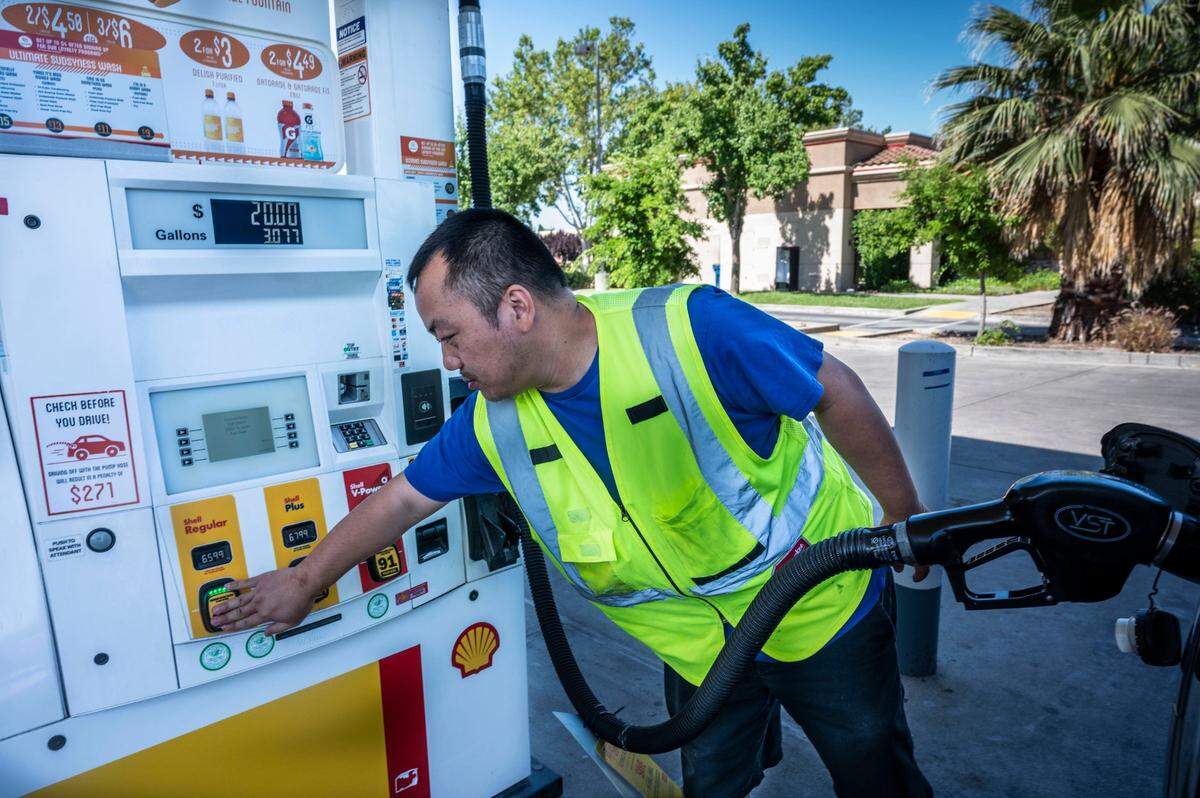
“The price has to go up a lot before you get any reduction in demand,” said Dave Hackett of Stillwater Associates, a fuels-consulting firm based in Irvine. “It’s not easy for people to reduce their gasoline consumption. They’ve got to drive to work, they’ve got to go to the store.”
How high is too high? At what point do consumers make significant lifestyle changes to reduce their gas purchases? Severin Borenstein, an energy economist at UC Berkeley, said there doesn’t appear to be a single tipping point when it comes to fuel pricing. Every motorist is different.
“We do see this gradual response as prices go up,” Borenstein said. “Unfortunately, a lot of people don’t have a lot of options, and don’t have great public transit options, and feel like they’re stuck. That’s why we’re not having that much responsiveness.”
Klein recently agreed to market a property in Foresthill, about 35 miles from Roseville and well outside his usual territory.
He realized that taking the listing meant even longer treks — high fuel prices notwithstanding — in a car that gets a little more than 20 miles per gallon.
“I am seriously part of the problem, I readily admit,” he said.
The problem appears to be easing, even as motorists such as Klein keep driving. The price of oil — the single biggest factor in the retail price of gas — has dropped about 15% in recent weeks, the result of recession fears and signals that OPEC and other oil-rich nations plan to increase production.
After peaking at around $6.44 in mid-June, gas prices in California have fallen to an average of $6.19 for a gallon of regular, according to AAA. The national average has dropped to $4.75, a decrease of 27 cents.
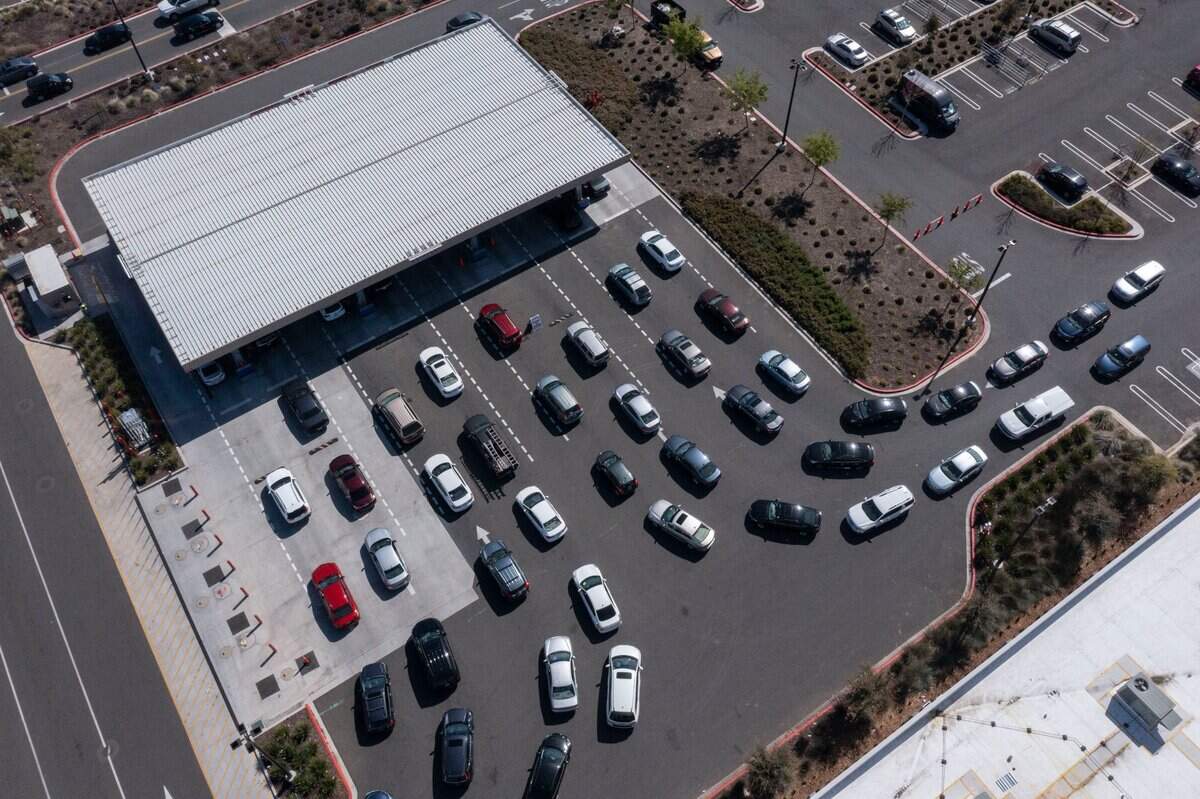
Hold off on the ticker-tape parade. Gasoline isn’t about to become cheap.
“We continue to see historically high energy prices as a result of the economic recovery and the repercussions of Russia’s full-scale invasion of Ukraine,” said Joe DeCarolis, the head of the federal Energy Information Administration, in a prepared statement in early June. “Although we expect the current upward pressure on energy prices to lessen, high energy prices will likely remain prevalent in the United States this year and next.”
Meanwhile, Californians are due to get some financial help from the state. Capping weeks of negotiation with Gov. Gavin Newsom, the Legislature approved a $17 billion “inflation relief package” that includes direct payments of as much as $1,050, depending on income. The package is designed to help Californians cope with rising prices for all sorts of goods, not just fuel.
Lawmakers didn’t suspend the state’s excise tax on gas, as Republicans demanded. Nor did they halt a planned 3-cent increase in the tax, allowing it to reach 54 cents a gallon effective July 1. But the inflation package does include a 12-month pause on the portion of the sales tax on diesel that goes to the general fund, saving drivers about 23 cents a gallon, “which primarily benefits businesses,” according to an Assembly summary of the budget deal.
Drivers’ rigid habits fuel price hikes
Economists have a word for what’s happening. They say the demand for gas is “inelastic,” which means it barely budges, regardless of price, the health of the economy or other factors.
A study by the U.S. Bureau of Labor Statistics said fuel purchases remained almost constant from 2004 to 2014, a decade in which average prices rose about 50%.
“Instead of a shared road trip with friends, biking instead of driving, or other consumption changes in response to price increases, people likely continued their gas-consumption habits,” the study’s authors wrote. “Something about gasoline is different than other goods that create this static consumer behavior.”
If anything, motorists have become even more stubborn over the years. A study by UC Davis’ Institute of Transportation Studies said that in the late 1970s, a 3% hike in gas prices would reduce consumption by 1%. By the mid-2000s, it would take a price hike of as much as 14% to generate the same cutback in usage, according to the study, which was published in 2006.
Dan Sperling, the institute’s director, said the university hasn’t updated the study but he’s convinced the principle continues to hold true.
“The demand is so inelastic,” he said. “Travel is back to where it was pre-pandemic, even though the price has nearly doubled. People are not adjusting very much.”
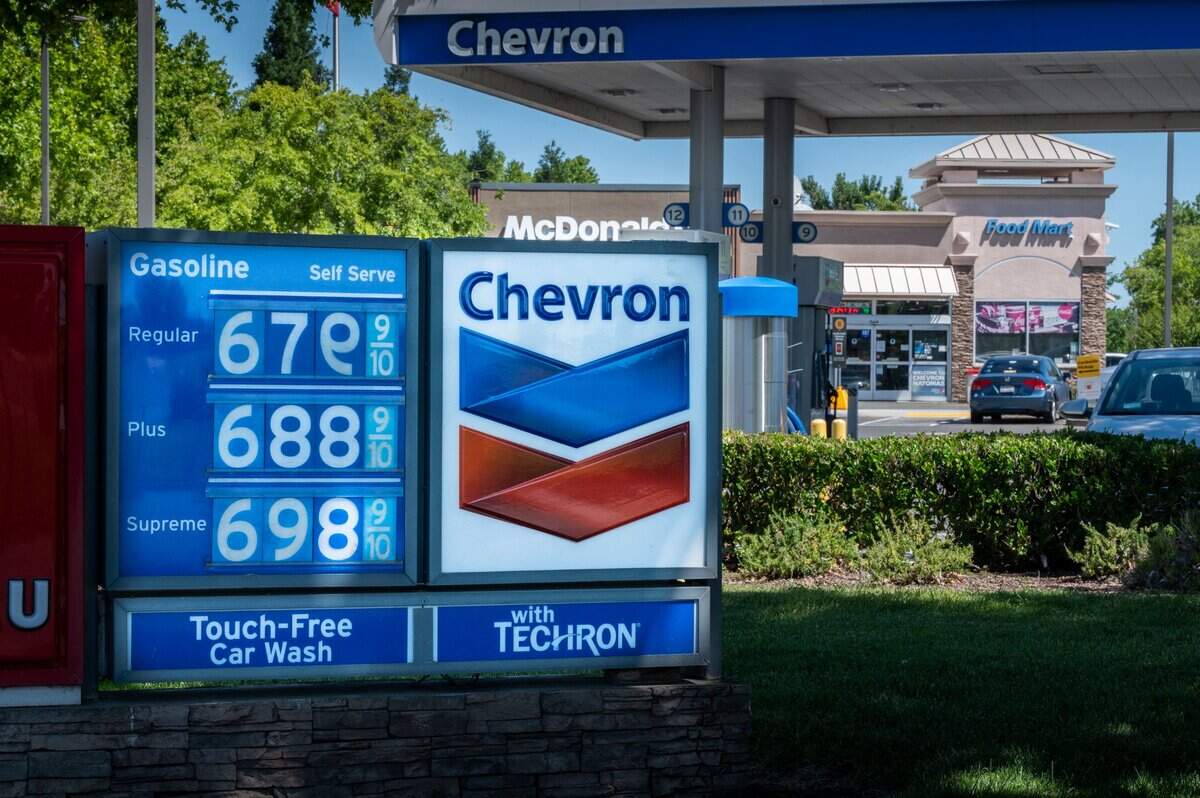
In the first three months of this year, as prices were cruising toward the $6 mark, Californians bought 3.31 billion gallons of gas — still below pre-pandemic levels, but 7% more than in 2021, according to the state Department of Tax and Fee Administration. Heavy-duty vehicles were out in force, too: It was the busiest first quarter for diesel purchases in California in at least 10 years.
Then, as vacation season arrived and the pandemic faded even farther into the rear-view mirror, Americans took to the road in sweeping numbers. Despite a nationwide average price of $4.62 a gallon, AAA said 34.9 million Americans took driving vacations over Memorial Day weekend. That was 4% more traffic from the year before — when the price was barely above $3.
Turns out motorists were just getting warmed up for summer. An estimated 42 million Americans were expected to drive somewhere for the July 4 holiday. That was up slightly from 41.8 million the year before, according to AAA.
Sacramento drivers struggle to cut back
It’s not as if Independence Day vacationers shrugged off the spike in gas prices altogether. In California, home to the highest prices in the country, the number of motorists driving over the holiday was expected to fall to 4.3 million, down from 4.6 million a year ago, said AAA spokesman Aldo Vazquez.
Signs do show higher gas prices are leading to small changes in driving. While it’s true that fuel consumption has continued climbing out of its pandemic slump, the increase has slowed since the Russian invasion of Ukraine, said Garrett Golding, an economist and energy analyst with the Dallas Federal Reserve Bank.
“Demand is bending, not breaking,” Golding said.
Some Sacramento residents have resorted to other forms of transportation. Light rail ridership at Sacramento Regional Transit grew 12% in May compared with the month before, said agency spokeswoman Devra Selenis. Bus rides increased 8%, she said. Total ridership in May was the highest it’s been since the pandemic started, she said.
Those sticking with their cars are trying to cut back, too.
At an Arco station in Natomas recently, Leslie Pagenkopf gassed up her Honda Civic at $6.26 a gallon but stopped short of filling the tank.
Her strategy, she said, is “filling up half a tank and hoping gas is going to go down before I have to fill up again.”
What about going electric? Sales of electric vehicles accounted for 10% of car sales in California last year. That figure jumped to almost 15% in the first three months of this year, according to the California New Car Dealers Association.
Over the long haul, Borenstein said the growing popularity of electrics and hybrids will bring down the demand for gas. But for now, he said most Californians remain tethered to their gas and diesel vehicles. Global supply-chain problems have left car dealers with inventory shortages — and electrics are especially scarce.
“Our electric vehicles are pre-sold three months out,” said Edwin Guadamuz, general sales manager at Folsom Lake Hyundai. “They’re buying them before they test-drive them.”
In the meantime, most drivers have to cope with high fuel prices. By the time Vincent Johnson was done filling his Hyundai Sonata the other day at the 49er Travel Plaza in Natomas, he’d spent $103.21. The high cost is forcing him to cut back a bit on driving — and on other expenditures.
“I’m conscious of where I should drive, when I should drive (and) consolidate all my trips,” Johnson said. “I used to go to shows a lot; I used to go to theaters a lot. I don’t golf as much.”
Gas prices rise — and California lawmakers fume
The economy shut down and the freeways went quiet.
In the early months of the COVID-19 pandemic, the world was awash in gasoline. At one point in the spring of 2020, the price of oil futures trading on the NYMEX exchange fell below zero. In other words, panicked energy speculators were actually paying traders to take oil off their hands.
No surprise, then, that gasoline was something of a bargain. The average price for regular fell to $2.64 a gallon in California, the lowest in four years.
That’s as low as it got.
To prop up crude prices, OPEC and other producers (known collectively as OPEC+) cut back on supplies. As the coronavirus lockdown orders were relaxed, economic activity began to revive, putting more upward pressure on energy costs. The OPEC+ countries agreed to increase production, but not enough to keep a lid on prices. By last summer a gallon of gas in California cost $4.14, the highest since 2014. Prices continued rising gradually as demand outstripped supply.
Then the world’s third largest oil producer went to war and energy markets went haywire.
After Russia invaded Ukraine on Feb. 24, the West imposed economic sanctions and began shunning Russian oil. In the month after the first tanks rolled into Ukraine, the average gas price in California marched from $4.67 a gallon to $5.76. After backsliding in April, it shot past $6 in late May.

As prices soared, so did oil company profits. California’s own Chevron Corp., for instance, earned $6.3 billion in the first three months of the year, four times what it earned a year earlier.
The price spike generated a political response at the Capitol. Declaring enough was enough, Assembly Democrats announced in June they were creating a select committee to investigate rising gas prices.
Assembly Speaker Anthony Rendon, who appointed the committee, vowed to “stand up to profiteers who are abusing a historic situation to suck profits from Californians’ wallets.”
Rendon gently scolded motorists for continuing to drive. “We have put ourselves in this situation because of our addiction to the gas powered engine.”
Joel Villanueva is among those who can’t kick the habit.
“I’m trying to cut back a little bit,” he said as he gassed up his SUV at a Shell station just north of downtown Sacramento. “But you still have a life .... I’m still driving no matter what.”
California gas prices are nation’s highest
Californians go for a drive in some other state and return home irritated: Why are California’s gas prices so much higher than anywhere else? The average price in California is $1.44 above the national average and 57 cents higher than the second-highest state, Hawaii.
The answer lies in a combination of taxes and environmental regulations.
To combat climate change, the oil industry must comply with two programs established by the California Air Resources Board: the cap-and-trade program and the low carbon fuel standard, both of which attempt to put a price on the carbon content of a gallon of gas. A study by Stillwater Associates in March said the climate-change programs add 37 cents a gallon to California motorists’ costs. A study by the Legislative Analyst’s Office last December pegged the impact at 41 cents.
Californians pay more in gas taxes, too — about 30 cents higher per gallon in state and federal taxes and fees compared to the national average, according to a study earlier this year by the American Petroleum Institute.
Borenstein said those factors don’t explain everything, though. The UC Berkeley professor believes Californians have also been paying a “mystery gasoline surcharge” that flared up after a 2015 fire temporarily knocked out the Torrance refinery operated by ExxonMobil (now owned by PBF Energy of Parsippany, N.J.). Since then, he said the state’s drivers have been paying at least 30 cents a gallon more than they should have, even allowing for environmental costs and higher taxes.
Hackett said he thinks the problem stems from a shortage of gas stations in California, relative to the size of the population. “If you’ve got fewer stations per capita, there’s less competition,” the industry analyst said.
State officials have been struggling to figure it out. A 2019 study by the California Energy Commission concluded that gas stations are simply charging more than their counterparts in other states. But the commission couldn’t figure out why, and called on the attorney general’s office to investigate. Newsom did, too.
Nearly three years later, Attorney General Rob Bonta’s press office won’t say whether such an investigation exists. However, the attorney general does have a lawsuit pending against two Texas energy-trading firms, Vitol Inc. and SK Energy Americas, accusing them of using manipulative trading strategies to jack up prices after a refinery explosion in Southern California in 2015. The case is scheduled to go to trial in summer 2023.
California’s oil industry says problems stem from the state’s regulatory policies, not any alleged misdeeds by energy companies. In a letter to Rendon, Newsom and other officials last month, the head of the Western States Petroleum Association took aim at the state’s ban on fracking, among other things, as one of the sources of the state’s high fuel costs.
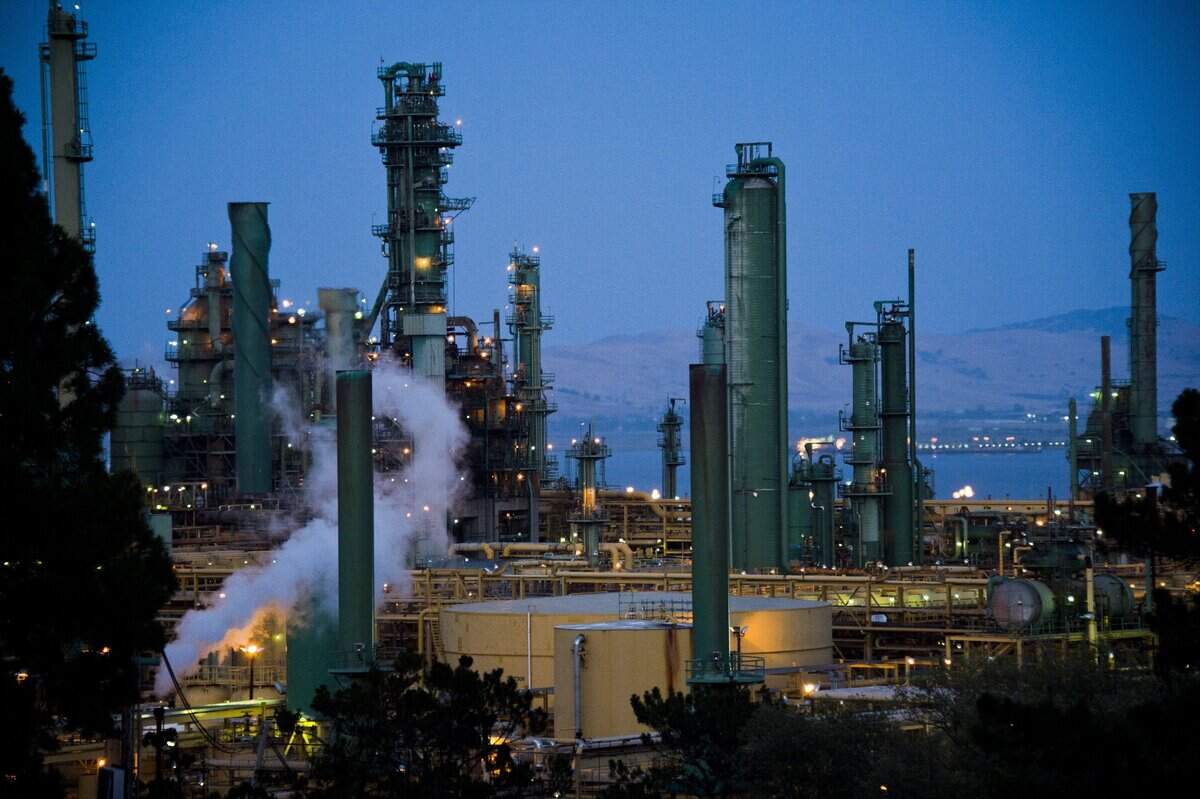
“Over the years, our industry has undergone numerous investigations by multiple Attorneys General and none of them resulted in any allegations of wrongdoing,” association president Catherine Reheis-Boyd wrote. “It’s now time for this legislature and Governor Newsom to start taking responsibility for their own decisions.”
Only six states produce more oil than California. The state’s oil patch, mostly clustered around Bakersfield, produces almost as much crude each year as Alaska.
But can California producers put a dent in gas prices? It’s highly doubtful, according to Borenstein and other experts. They say California’s oil industry, even if it were unleashed by regulators, would have little influence on gas prices. The price of gas is largely dictated by the price of oil — a price that’s set at the global level, not in California.
Stop driving? Not this Sacramento motorist
Olivia Fonseca was begging the Sacramento City Council to right a historic wrong.
A member of a group called the Sacramento Lowrider Commission, Fonseca asked the council May 31 to overturn the city’s 34-year-old ban on lowriding — the age-old practice, especially popular in the Latino community, of cruising the city’s streets in customized cars.
The law hadn’t been enforced by Sacramento police but still constituted a slap in the face toward her community, Fonseca told the council.
“For 34 years, we’ve had this cloud over our head for driving our beautiful cars, our mobile art, on the boulevards of Sacramento,” said Fonseca, describing herself as “a civil rights advocate for the lowrider community.”
The council agreed with her, voting unanimously to take the law off the books as Fonseca watched on Zoom from Councilwoman Katie Valenzuela’s office.
Within days, she was standing beside her 1952 Chevy Deluxe, grinning as a group of lowriders cruised slowly up Broadway. She called the council’s vote “liberation.”
The timing could have been better, though. The council’s vote came just as average gas prices in Sacramento were cracking the $6 barrier for the first time. Fonseca said she and her fellow lowriders haven’t been oblivious to the historic run-up.
She knows of lowrider groups that have begun gathering for events in Woodland as opposed to, say, San Francisco in order to reduce fuel purchases. She was part of a group that met for two hours recently in a restaurant parking lot instead of cruising around. As for her own habits, Fonseca, a construction-industry consultant who mainly works from home, is a bit more careful to cluster her errands to reduce the amount of time she spends on the road.
“I will cut back on my day-to-day driving so I can buy gas and go cruise,” she said in a recent interview.
But take a break from cruising? Not on your life.
She intends to keep on cruising.
“It’s recreational,” Fonseca said. “It’s a form of a hobby, and our form of mental health.”
This story was originally published July 8, 2022 at 5:00 AM.