
Can Lake Tahoe’s clear waters rebound from storms and fires? Report shows declining clarity
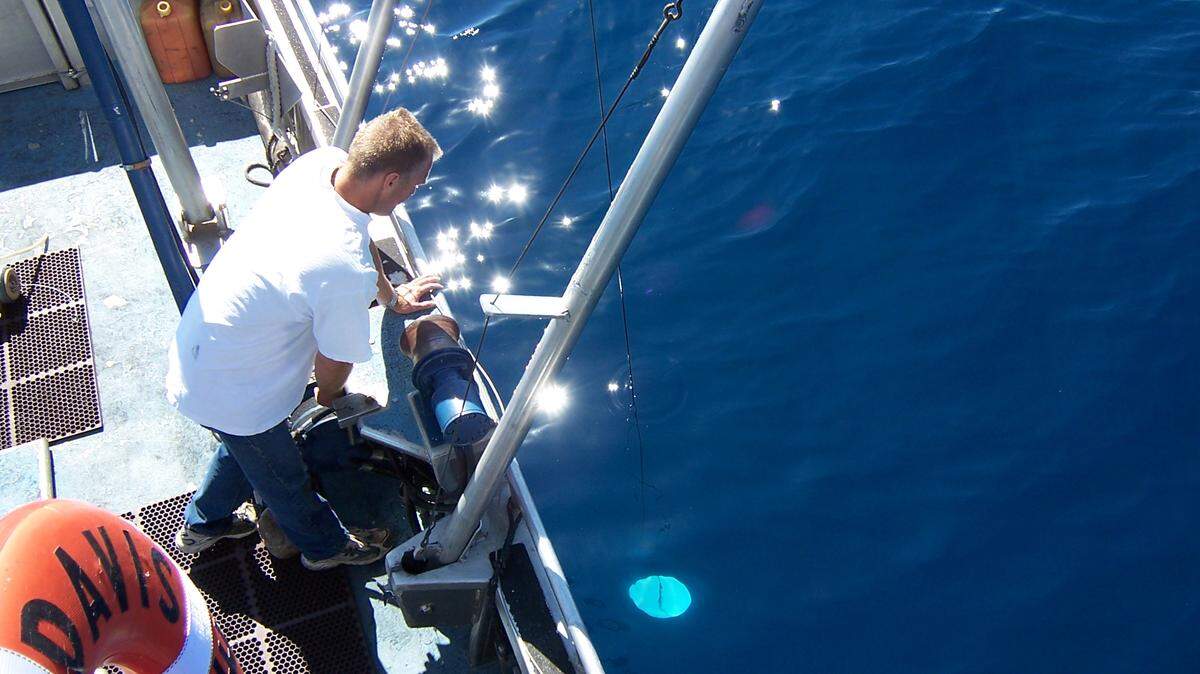
Lake Tahoe’s water clarity declined slightly in 2021, reaching the second-lowest level since measurements began in the 1960s.
UC Davis released its annual Lake Tahoe clarity report Wednesday, finding that the lake’s average clarity was 61 feet in 2021, compared to 63 feet in 2020. Scientists have long measured Lake Tahoe’s clarity by lowering a white Secchi disk into the water, and measuring how long it remains visible.
Lake Tahoe historically had clarity upwards of 97 feet. But water clarity has been in stark decline in the past decades, and became especially hazy in 2017, when historic winter storms caused particles to enter the lake and drove clarity to an all-time low of 60.4 feet.
The lake has since struggled to bounce back, with elevated particle levels remaining in its waters and obstructing clarity, UC Davis researchers say.
“The lake itself is changing internally, and the external inputs that impact clarity and lake health are changing at the same time,” said Geoffrey Schladow, director of the UC Davis Tahoe Environmental Research Center, in the Wednesday report. “We are working with other researchers at Lake Tahoe and with agency partners to not only keep track of clarity, but to adapt management approaches for improving clarity in future years.”
%20UC%20Davis%20Tahoe%20Environmental%20Research%20Center.jpg "Graph_Annual Average Clarity 2021_secchi Chart (c) UC Davis Tahoe Environmental Research Center.jpg")
Lake Tahoe’s clarity generally hits an annual low in the summer, and rebounds in the winter. In 2021, the lake saw a winter clarity of 71.9 feet and a summer clarity of 54.8 feet. According to the recent report, both summer and winter clarity remain on a downward trend over time.
In addition to particles from winter storms, researchers believe smoke from wildfires may be harming lake clarity, although they have yet to determine by how much. Last summer’s Caldor Fire spread into the Lake Tahoe Basin, spewing smoke across the region.
But in the aftermath of the blaze, volunteers from League to Save Lake Tahoe took samples of lake water and found the fire had not significantly altered water clarity. The water’s particle content “was not out of the ordinary for an intense storm,” the league found.
The Tahoe Science Advisory Council embarked on a study to better understand the consequences of smoke and wildfires on lake clarity. The results of the study are expected later this year, UC Davis said in its Wednesday report.
“Extreme weather events and changing lake dynamics are making our investments in water quality even more important,” Tahoe Regional Planning Agency Interim Executive Director John Hester said in the report. “With strong partnerships in the Tahoe science community, we will continue to increase our understanding of how climate-driven changes could be impacting the plan to restore lake clarity.”
According to the report, over 80 organizations in California and Nevada are working toward the goal of restoring Lake Tahoe to its historic 97.4 feet of clarity. The organizations are working under the umbrella of the Lake Tahoe Environmental Improvement Program, and hope to use research to advise policymakers on ways to help the lake become clearer once again.
This story was originally published July 7, 2022 at 5:25 AM.