
‘Minds are blown’: Sacramento State planetarium shows off first images from new space telescope
Images of the oldest documented galaxies and stars were met with gasps at the Sacramento State Planetarium on Tuesday, as astronomers’ dreams of reaching light-years into the past met the future of space imagery.
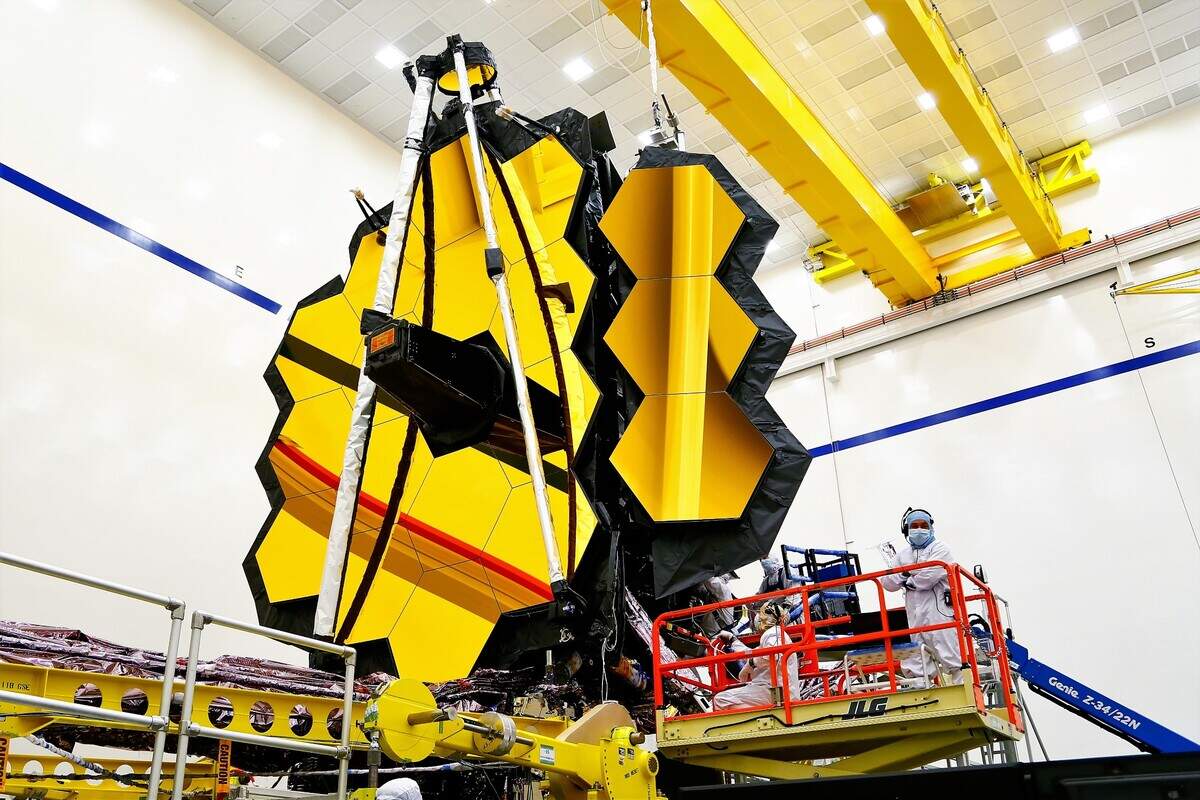
Hundreds gathered at the Tschannen Science Complex to view the first images of deep space captured by the James Webb Space Telescope, the most powerful optical instrument launched into space. Launched on Christmas, the James Webb’s infrared technology has allowed it to capture the oldest, deepest and most detailed light in the universe.
The images released by NASA on Tuesday expand on the discoveries of the Hubble Space Telescope and include images of a stellar nursery, an exploded star and atmospheric readings of the distant planet WASP-96b.
“As amazing as these are, this is just the tip of the iceberg,” planetarium director Kyle Watters said. “They now think the Webb should be able to operate for upwards of 20 years, so this is just the beginning. For years and years to come, we will be treated to incredible, awe-inspiring, gorgeous images of the cosmos.”
“As much as Hubble has become a household name today, James Webb, I believe, will be in the years to come,” Watters said.
During the screenings, Watters explained the scientific significance of each image, comparing them with the images taken by the Hubble Space Telescope and older instruments.
Watters stressed the significance not only of the images captured by the James Webb, but by its ability to return atmospheric readings of distant planets, explaining the significance that this feature could have in the search for extraterrestrial life.
“I suspect that if we ever are able to get evidence of life somewhere beyond Earth, I think there’s a very good chance that Webb making measurements of atmospheric compositions of exoplanets will be the first thing to do that,” Watters said. “There are certain compounds or molecules that really only exist in a planet’s air if there’s something alive on that planet.”
In the future, Watters said, the telescope could allow scientists to make out galaxies at the very edge of the visible universe, peering billions of years back in time to some of the first galaxies formed after the Big Bang.
Space enthusiasts attended the event in droves, in lines that stretched long outside the planetarium door.
“This was so wonderful,” said Sac State professor Cherie Morris-Valdez, who attended the screening, “Our minds are blown.”
This story was originally published July 12, 2022 at 3:07 PM.