
Heart attack or asphyxiation by police? Trial in Elk Grove motorist’s death under way
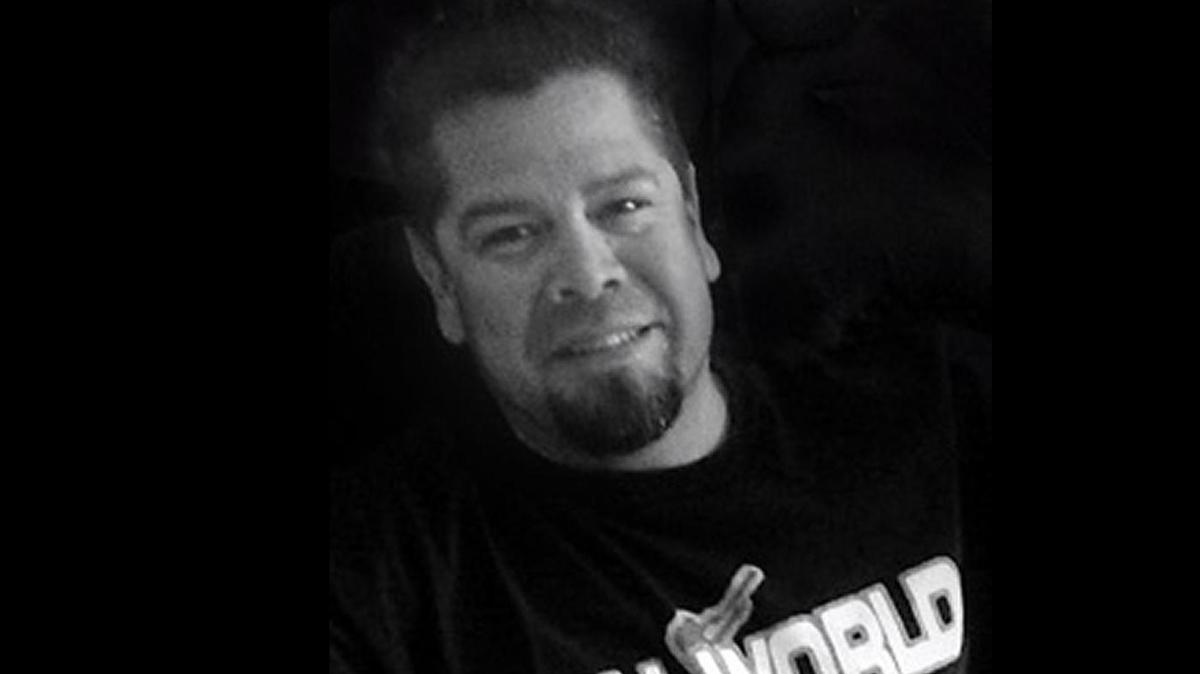
As Daniel Landeros’ widow and children sat watching from a front-row bench in a federal courtroom in downtown Sacramento Tuesday, police body-camera video of his last moments alive flickered on laptops in front of a jury.
“Get him off his nose, dude,” an Elk Grove police officer can be heard saying as Landeros is pressed face-down with his hands cuffed behind his back. “He’s blue.
“He’s turning blue. Wake up! Hey, wake up! Start CPR. Start CPR.”
The video is from Nov. 30, 2016, after Landeros, a 41-year-old tile worker and father of five, was confronted by officers around 10 p.m. following a head-on collision along Elk Grove Boulevard.
Landeros survived the crash with a gash to his forehead, then began walking away as officers called to him to stop, Tased him, then handcuffed and subdued him face down on the ground for several minutes before he stopped breathing and, ultimately, died.
Now, his death is the subject of a wrongful death and excessive force trial that began Tuesday before a jury and Senior U.S. District Judge William B. Shubb, with jurors tasked to make a decision:
Did officers use unreasonable force as they pinned Landeros to the ground until he died — in essence, a George Floyd moment? Or did he die after his heart gave out because of his methamphetamine use, obesity, a pre-existing heart condition and exertion from the collision and the police encounter?
What caused Landeros death?
Woodland Hills attorney Dale Galipo, who is representing the Landeros family along with Sacramento attorney Stewart Katz, told the jury that evidence will show Landeros died from “restraint asphyxia” after four officers placed their body weight — an estimated 900 pounds — on Landeros.
“He should have been sat up, or put on his side,” Galipo said. “The evidence will show he was not. ...
“A reasonable inference from the evidence, he was fighting for his life.”
Santa Ana attorney Bruce Praet, representing Elk Grove and the officers named in the suit, disputed the claims against the police, saying Landeros clenched his fist and squared off as if he planned to fight the officers, and that nothing they did led to his death.
“The real issue in this case is what caused the death,” Praet said. “There’s no evidence anybody put 900 pounds on Mr. Landeros. ...
“(The officers) did their job, and now they’re being blamed for the death of someone who ingested methamphetamine, caused a major traffic collision and died of a heart attack.”
The case pits veteran lawyers who have been involved in police use-of-force cases for decades, Praet on the side of the police, Galipo and Katz arguing for the dead man’s family. And a key may be which medical expert the jury decides to believe about what caused Landeros’ death.
There is little dispute between the two sides on how Landeros and the police ended up facing off that night.
Court papers and the lawyers say Landeros had used methamphetamine, and Elk Grove’s filings say that he “insisted on driving to get a six-pack of beer in spite of having a suspended driver’s license resulting from prior DUIs.”
His wife, Jennifer, went with him not knowing he was under the influence of the drug, and when he began driving at high speeds and running red lights she insisted that he pull over and let her out, court papers say.
“Daniel eventually drove at a high rate of speed eastbound in the westbound lanes of Elk Grove Boulevard into oncoming traffic, which prompted several frantic 911 calls,” Elk Grove’s filings say. “Unfortunately, before any Elk Grove police officers could intercept Daniel, he crashed head-on into three innocent vehicles, creating a major collision with several seriously injured motorists.”
Confrontation after crash
Landeros’ face apparently hit the windshield, leaving a gash on his forehead, and when police arrived they saw him walking away from the scene.
Landeros yelled at officers who asked him to stop, shouting, “F--- you, you’re not real,” court papers say, then turned toward them with a clenched fist.
Officer Samuel Shafer was one of the first to arrive, and testified as the first witness that he tried to use his Taser on Landeros as he fled, but that the initial effort failed, apparently because the darts from the stun gun struck a puffy jacket he was wearing.
When Landeros turned toward him with the jacket open, Shafer was able to use the Taser to subdue him and take him to the ground, Shafer said.
“You’re fake, you’re not real, get the f--- away from me,” Shafer recounted Landeros as shouting before he was Tased.
Shafer said Landeros resisted as he was being handcuffed, and eventually four officers were pinning him down, holding his legs to stop him from kicking and crossing the ankles together and pulling them toward his buttocks to subdue him.
How much weight was on Landeros?
Galipo questioned Shafer about statements he gave to investigators after the incident in which he said he was surprised that Landeros was able to try to raise up against a weight of four officers and their equipment, which he estimated at 900 pounds.
But Shafer said he never meant that literally, that when he was pinning Landeros with his knees he also was resting part of his weight on the balls of his feet.
“The 900-pound thing, the combined weight of all the officers, that’s not what was on his back...” Shafer said. “My knees were on his body but most of my weight was on my toes. I never meant there was 900 pounds on him.”
Shafer called for medical assistance for Landeros, and after several minutes of him being face down someone noticed that he was turning blue, had stopped breathing and was not making any sounds.
Officers began CPR — one administered mouth-to-mouth efforts at resuscitation — but Landeros could not be revived.
The Sacramento County District Attorney’s office later found that officers’ actions were “reasonable” and said the crime lab “confirmed the presence of 1508 (nanograms per milliliter) of methamphetamine and 35 ng/mL of amphetamine” in Landeros’ blood, which the report said “is a toxic level and harmful to the body.”
The D.A.’s report also cited an autopsy performed by Sacramento County forensic pathologist Jason Tovar, who is expected to be called by Elk Grove’s attorneys to testify, as citing the cause of death as “sudden death during restraint and methamphetamine intoxication.”
The trial is expected to continue into next week, and is scheduled to include testimony from police and medical experts, as well as Jennifer Landeros and her children, who range in age from 11 to 23. Some of the younger children left the courtroom during portions of the body camera video presentation.
This story was originally published July 27, 2022 at 9:39 AM.