
‘Scarred, but not moving’: A year after the Dixie Fire, a town strives to recover
Jason Glover looks to the mountains and sees fire – even if it’s not there.
Glover, 43, delivers mail to the small Plumas County town of Greenville, and has done so for the 20 years since he graduated from Greenville’s high school. He knows what the mountains have looked like for decades, and what they look like now.
“It is painful to look around for too long,” Glover said. “These mountains used to be so beautiful.”
The mountains looming over the town remain blackened, every tree burned from fire. The Dixie Fire, California’s largest single blaze, raced down these Sierra mountains on Aug. 4, 2021.
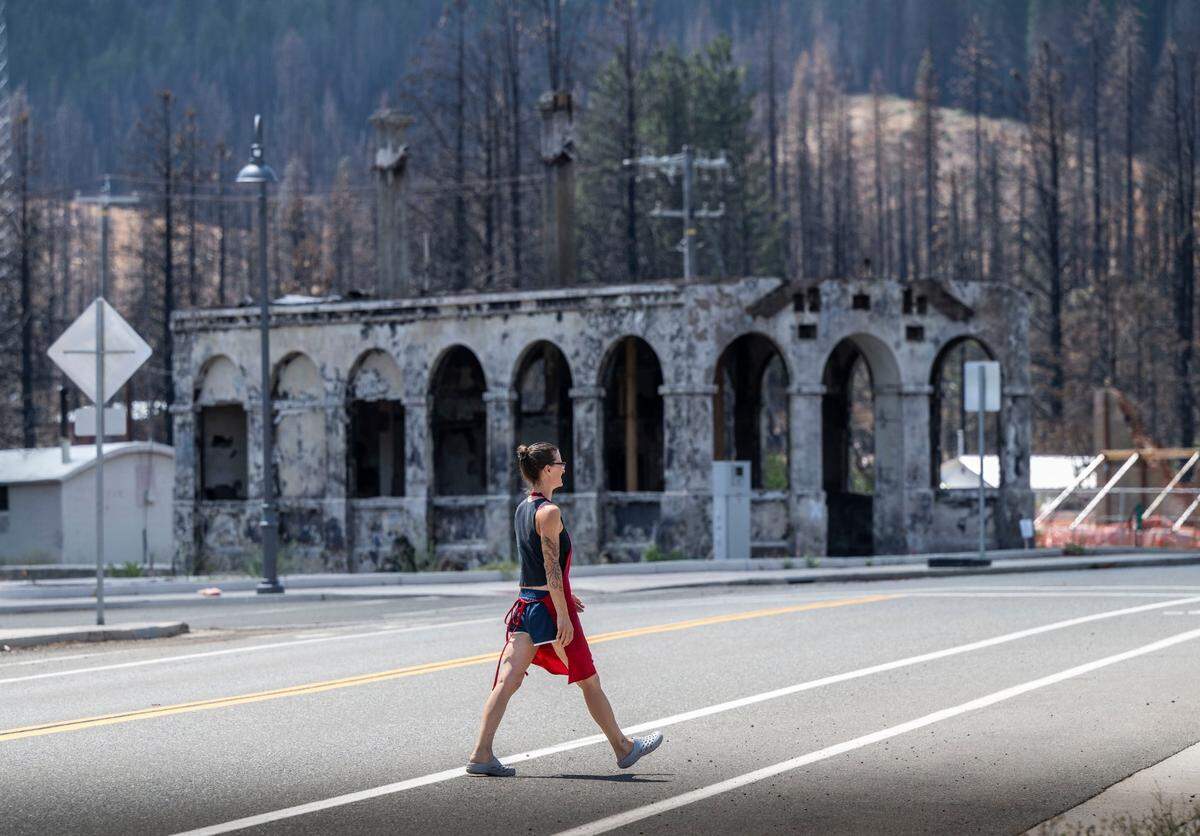
In a span of 30 minutes, the blaze leveled Greenville, leaving behind it piles of ash where historic buildings and community businesses once stood.
The fire also destroyed the nearby communities of Indian Falls and Canyondam, burning nearly 1,000 buildings in total.
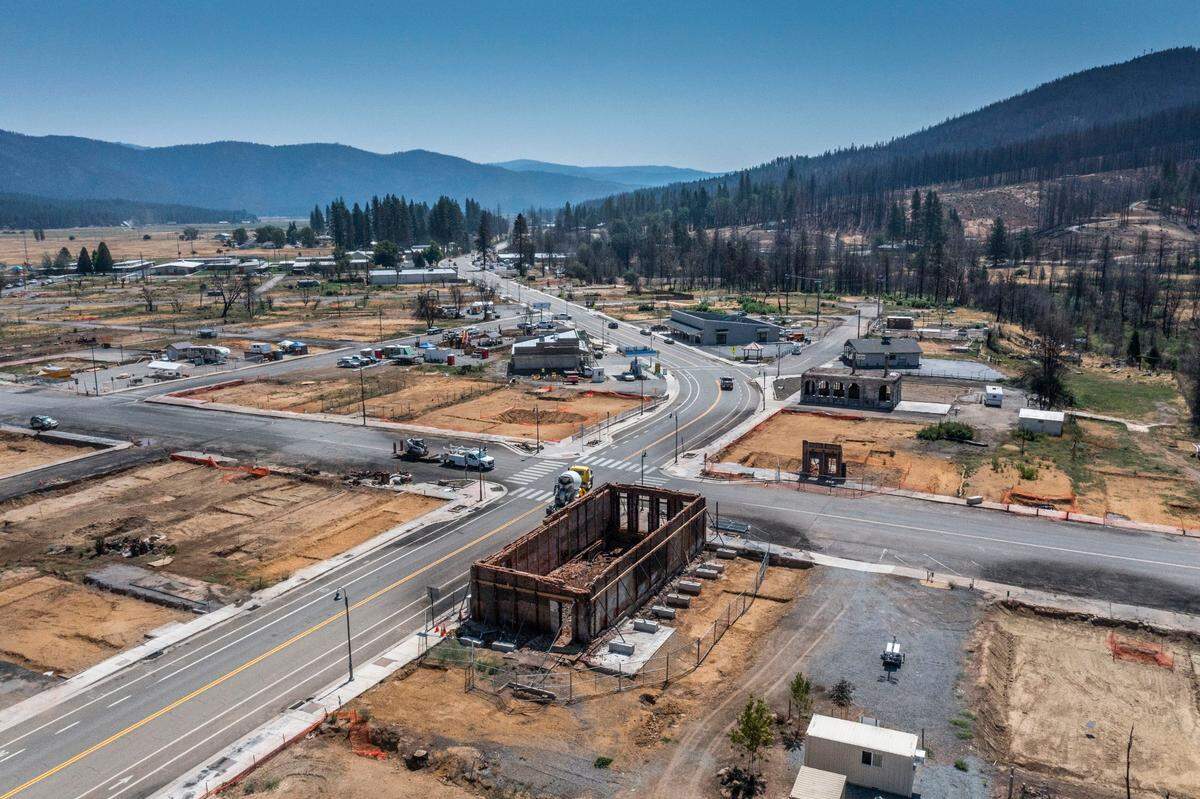
A year later, the ash is cleared from what was once Greenville’s downtown. Glover and his neighbors often glance to the mountains as they talk about the blaze. They also see now, instead of rubble, empty expanses, punctuated by sporadic surviving buildings, pop-up businesses in trailers and passing lumber trucks. They can see grass and flowers growing once again.
In the year since Greenville burned, residents have grappled with the ultimate question that follows the destruction of their town: stay or go. Some, like Glover, find the sight of their charred town too troubling to return to. But others say that they cannot imagine living anywhere else, and are steeled for a rebuilding that may take years.
Coming back to life
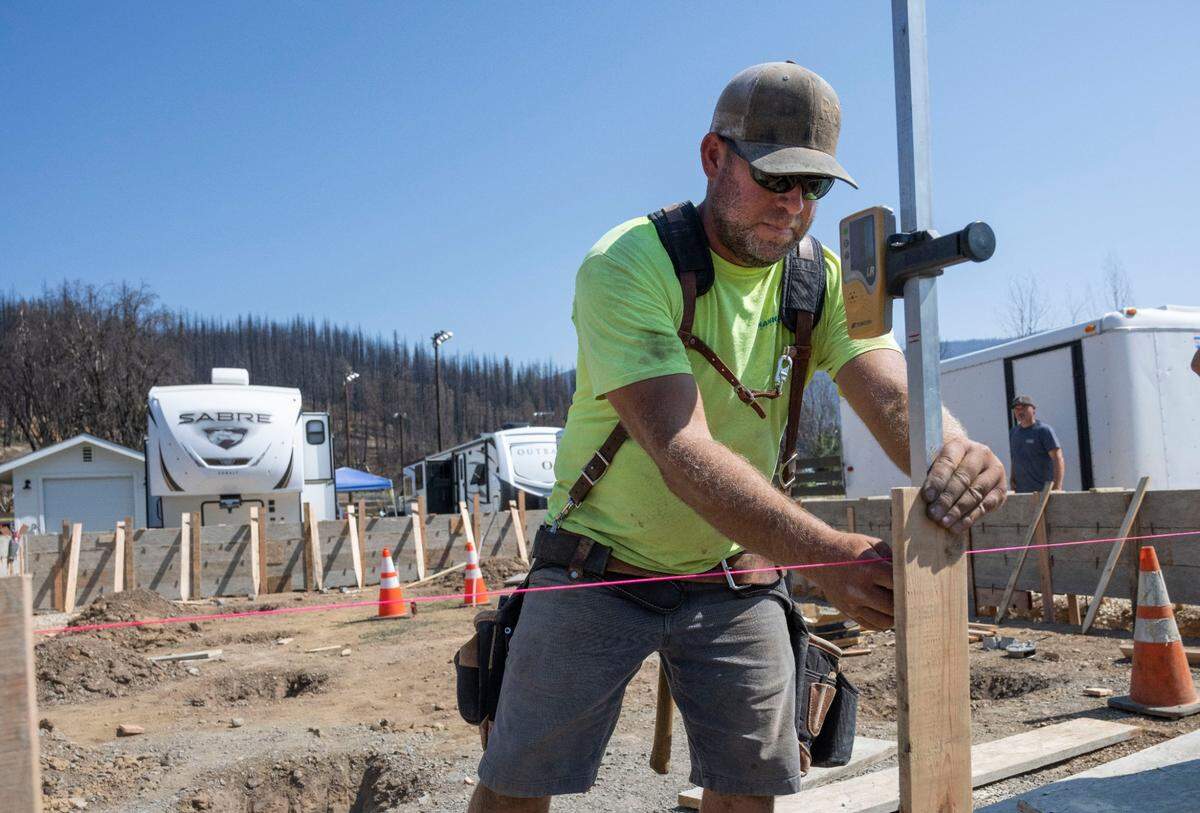
Houses have yet to be fully reconstructed in Greenville’s burn zone. Those who lost their homes have either moved away — some temporarily, some permanently — or live in RVs as they await the town’s revival.
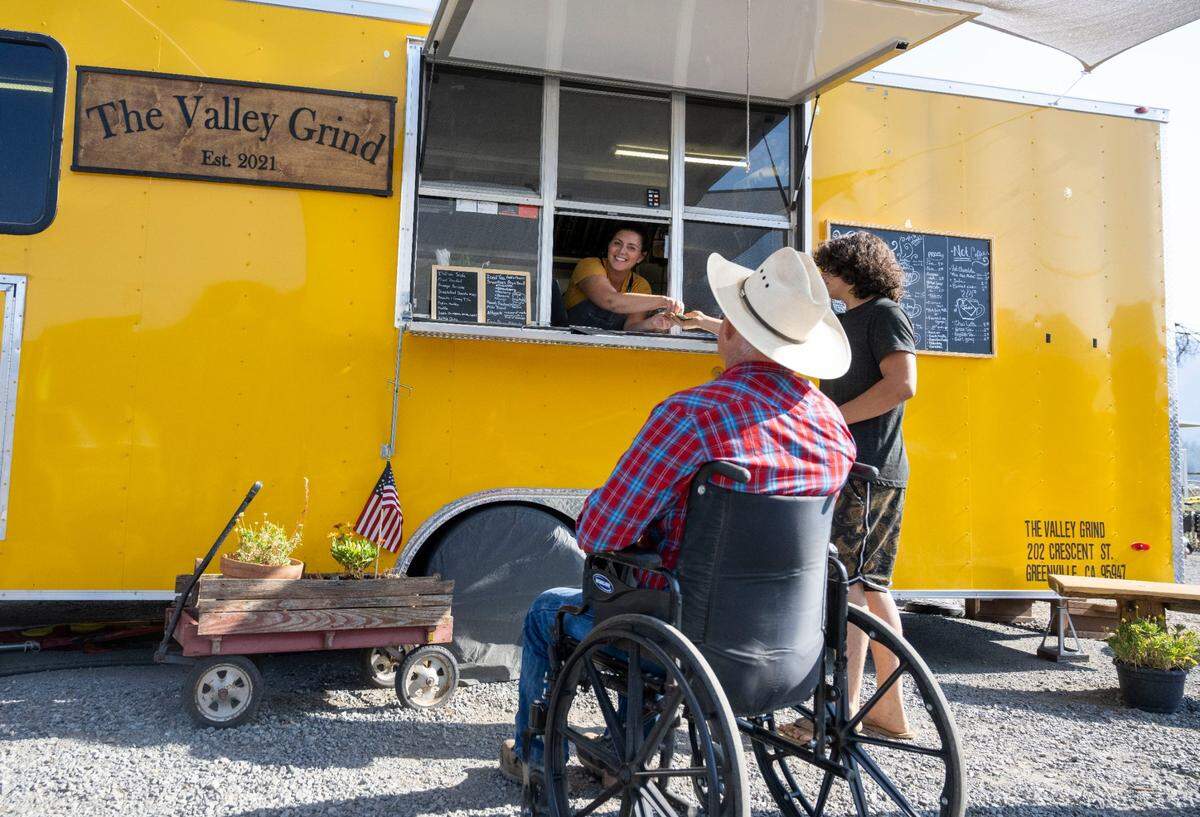
But Greenville, about 150 miles from Sacramento, is slowly coming to life. An impromptu business district consisting of food trucks and trailers has sprung up on what used to be a main road. Locals exchange stories of their recovery at the coffee truck, and hug in the town’s remaining grocery store. A gas station is open. The elementary and junior/senior high school will welcome students back in September.
Residents speak in hushed voices about the challenges still to come. They lack adequate lumber and contractors. They face skyrocketing insurance rates. And they brace for what future fires could do to the town.
Still, the recovery continues.
Sue Weber, 63, co-chairs the Dixie Fire Collaborative, a group of locals and official agencies leading the recovery efforts in Greenville. She said they must remain grounded.
“There is an incredible beauty in this community, of resiliency and strength,” she said. “But it’s a roller coaster ride… and I think that is the nature of the beast. We would be foolish to be always positive or always negative. You have to be practical and realistic and just know that this takes time.”
Rebuilding in the mountains
Greenville is not Paradise.
The Camp Fire destroyed the town of Paradise in 2018. Many Greenville locals volunteered in the recovery effort. After Greenville’s destruction, Weber said, community leaders looked to the rebuilding efforts in Paradise as a model.
But Greenville is much smaller than Paradise, and far more remote.
Weber said that even though the town’s small size is “a plus” — only 800 Greenville homes need rebuilding, rather than more than 18,000 in Paradise — its distance from reliable resources adds complicating layers to an already-daunting rebuild.
The closest towns that can provide resources to Greenville are Quincy and Chester, both 30 minutes away with populations under 2,100. Trucks delivering supplies to Greenville from bigger cities must navigate long stretches of remote mountainous roads, some wiped out by the Dixie Fire.
“We have supply chain issues, but along with that, we just have this remoteness,” Weber said. “So then everything takes extra effort. When you have to travel 30 minutes to get to a hardware store… it is just very challenging.”
Efforts have been made to help bring resources to Greenville. The Rebuilding Greenville Resource Center is open in the nearby town of Crescent Mills, providing free items such as food and clothing to those affected by the Dixie Fire.
Lara Wheeler, 49, who runs the center, said people would first come to the center for food and water, and now mostly come for seasonal gear, or want to meet with disaster managers who can help navigate various rebuilding grant opportunities.
Although the center provides necessary emergency supplies, the area still lacks reliable local services — which may be discouraging people from returning.
“People don’t want to move back here if there aren’t businesses to support them or places to go shop without having to drive to Chester or Quincy, a half an hour either way,” said Kest Porter, 69, a former local principal spearheading economic recovery efforts in Greenville.
That’s reason that he, local business owner Cassie Barr, 43, and other leaders involved in the Dixie Fire Collaborative, decided to open “The Spot,” a temporary business district along Greenville’s main thoroughfare. Business owners have set up food trucks and trailers from which they can sell goods while they await more formal rebuilding.
The Spot, Porter said, is part of the overall rebuild effort. Leaders hope to build back a version of Greenville that is even better than what existed before, he said, and they knew they could not do that if they rushed to put up structures.
The Spot serves as a temporary solution while Dixie Fire Collaborative members “take the time to do some really good planning,” Porter said.
Some vendors at The Spot — such as the Valley Grind, Region Burger and Mary’s German Grill — were either open or set to open before the town burned down. But other businesses are new, the result of people looking to bolster the town’s economy in the aftermath of the fire.
Wanda Carpenter, 70, the owner of the food stand Hawt Dogs, was retired before the Dixie Fire hit Greenville. But she saw a hot dog cooker and stand for sale in town and decided it could be a good way to help with the recovery effort. She now sells hot dogs at The Spot to locals as well as to the construction workers who are increasingly present in town as more people start to break ground on new homes.
“I was not outgoing before the fire,” Carpenter said. “But this whole thing has just made me more community-minded.”
Carpenter is not looking to make money from her hot dog stand. Neither is Amandeep Singh, the owner of Evergreen Market, Greenville’s only grocery store. Although Evergreen Market was one of few buildings to survive the blaze, Singh planned to close the market after the fire. He changed his mind after residents asked him to continue providing food to the community.
He said he has not made a profit since the fire.
“I am here to help the community,” Singh said. “People have said that they need this, so I am here.”
Stay or go?
Businesses are returning to Greenville, and recovery efforts continue through the Dixie Fire Collaborative and the nearby resource center. Yet to rebound fully, the town needs its residents back.
Before the fire, Greenville’s population was around 1,000. Weber said that community leaders hope to bring half of that back. Porter was a bit more optimistic, pointing to an informal survey after the fire that found that 85% of residents hoped to eventually return.
For many whose homes survived the fire, staying is an easy decision. Carpenter, whose home made it through the blaze, said she never considered leaving Greenville.
“We’re too old to start over,” Carpenter said. “And anyway, I don’t know where we would move to.”
Trey Farris, 31, a local teacher whose home survived the fire, did not consider leaving either. He said remaining where such a tragedy happened is difficult, but his attachment to Greenville and those who live there outweighs that.
“Ultimately, this is where I live and this is what I am meant to do,” Farris said. “I have always felt lucky to be here because I feel like it crafted and molded me into a really good person. It just boils down to that… I want to stay because this place made me a good person.”
But for some community members, the emotional consequences have proved too strong to allow them to return right away.
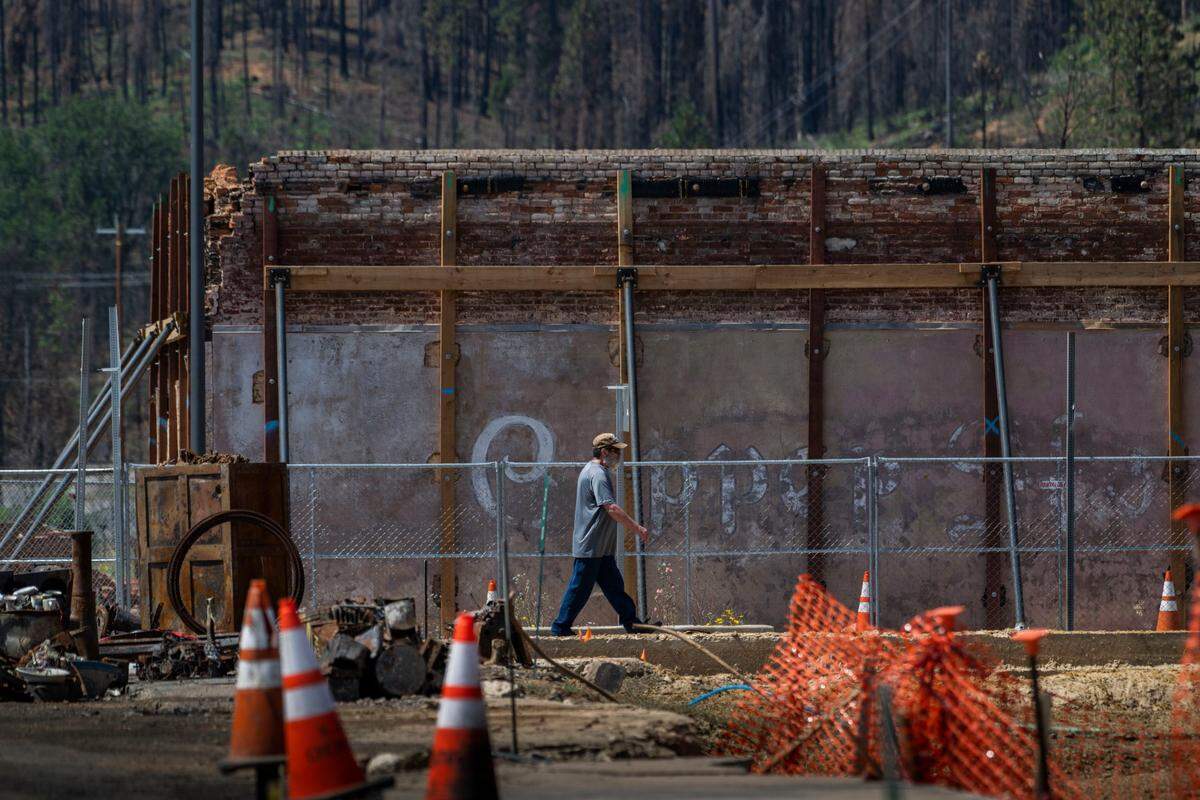
When the Dixie Fire broke out in July 2021, Greenville’s residents spent over a week under evacuation order, unsure what would happen to their town. They were then briefly allowed to return, only for another evacuation to be swiftly issued and the entire town to disappear within the next day.
Nichoel Farris, 51, Trey Farris’s mother, lost everything in the blaze. Her and her husband’s 23-acre apple farm burned in the fire, as did their house. With it, she lost family photo albums, birthday cards and any reminder of her mother’s handwriting.
Perhaps even more significantly, she said, “we lost the future we had envisioned.”
The trauma of that loss has proved too strong for her to return to Greenville, Nichoel said. She has lived in a couple locations in Northern California since the blaze, but cannot face seeing the town.
“I want to go home, but it is like chasing a ghost,” Nichoel said. “I mean, all my trees are gone. … No matter how hard we try, we will never recreate the life we loved.”
“But I do want to go back to Plumas County someday,” she added. “I miss home.”
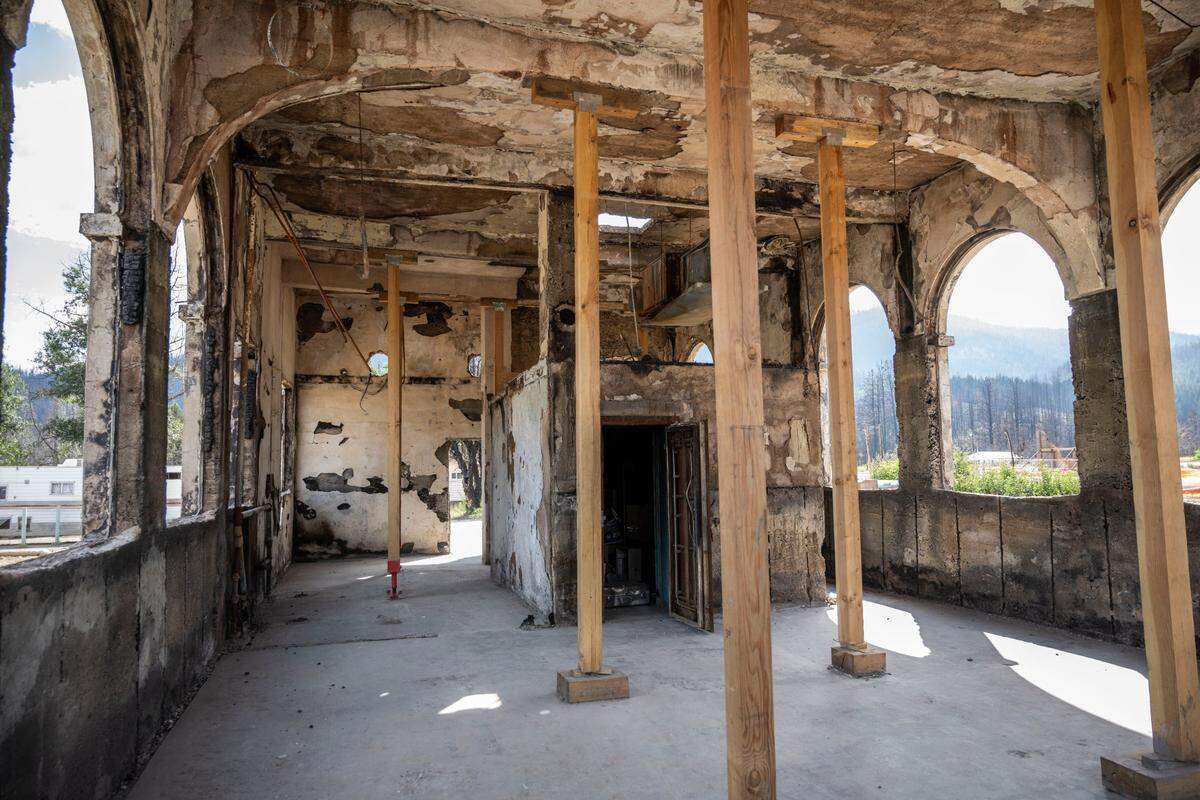
Nancy Presser, the disaster resource program coordinator for Plumas Rural Services, called Greenville a “community in trauma.” The chaos of the blaze and the dual evacuations shook the town’s residents, leaving some, like Nichoel, too scarred to return.
Others fear for what future wildfires could bring.
Wheeler said most people in the town are well aware that once the charred trees dry out and grass starts returning to the burn scar, the mountains surrounding Greenville could burn once more. “It’s not a matter of if, but when,” Porter added.
How does one reconcile the desire to rebuild with the knowledge that another fire could sweep through?
“You get out your rake, you get out the mower, your loppers, and you fire-harden your property,” said Cheri Prior, who lost her home in both the Camp Fire and now the Dixie Fire. “That is part of the day. The other part of the day is getting involved in the Dixie Fire Collaborative and going to meetings and just doing the work.”
Prior is part of a large contingent of Greenville residents coping with the trauma by working and rebuilding. So, too, is Ken Donnell, 69. He has lived there for 22 years and lost his home and multiple businesses in the blaze. He coped by continuing his business ventures, and breaking ground on his new house, on the spot where his previous one burned.
Donnell feels safe in Greenville because he understands the challenges that come with living there. Everywhere has disaster that can strike, he said, and at least in Greenville, “I know what I am up against.”
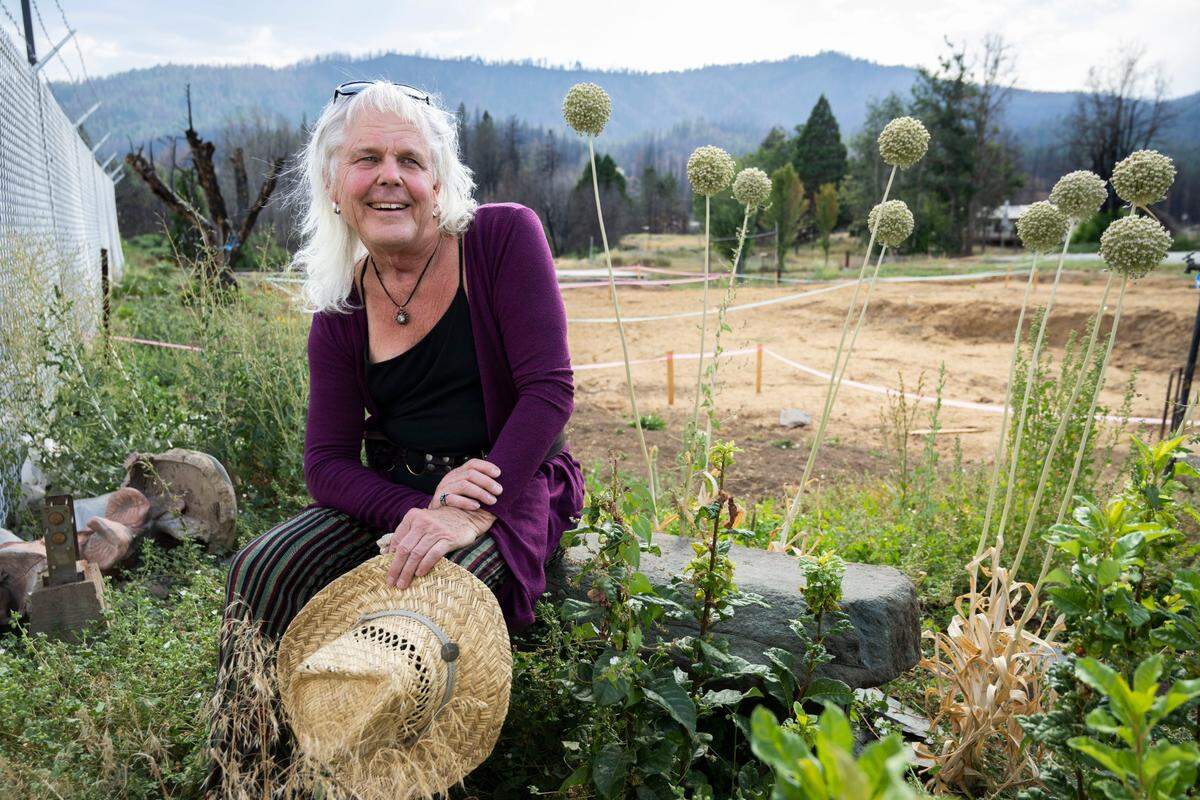
Weber also lost her home in the blaze. But she, like Donnell, responded by throwing herself into the rebuilding efforts, and trusting that “this is where I am meant to be.”
“I look at this as an opportunity to build back better relationships, to build back better firewise,” Weber said. “This is the beginning of a healing process that extends far beyond building a home. We either grab that opportunity, all of us, with both hands, or we don’t. That is what will define us.”
A year later
On Aug. 4, 2022, a year after the Dixie Fire leveled the town of Greenville, residents will gather in the center of town for a celebration.
Wheeler, who is organizing festivities that will last through the weekend, said she wanted to make sure the town had a chance to recognize the progress they made since the Dixie Fire.
“We wanted to do something to sort of commemorate what happened, but we also wanted to really recognize all the accomplishments that we made, because we have made it really far,” Wheeler said. “We’re more than a year stronger at this point.”
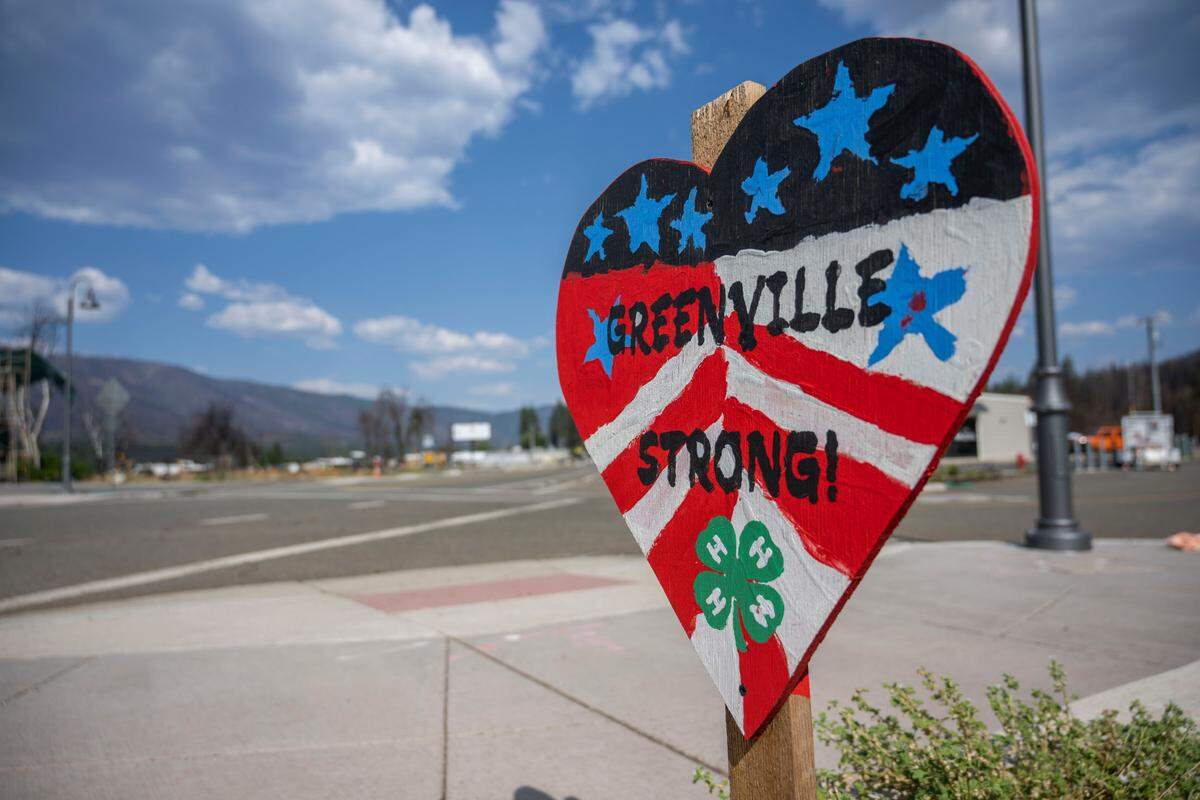
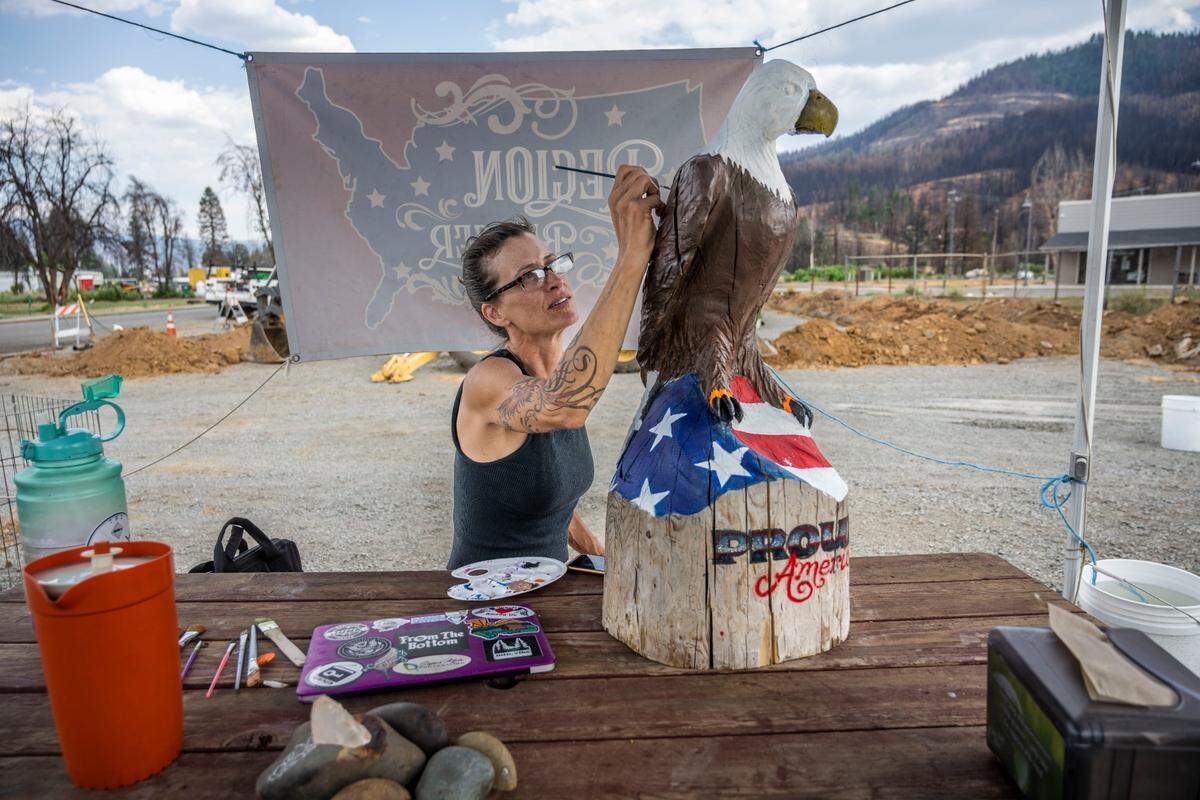
The celebration will take place at The Spot, and residents from Greenville and beyond are invited to create street art that commemorates and celebrates the town. The events will feature food, music and dancing.
But, Wheeler said, the event is not without the recognition that “there is a lot of trauma everywhere.” Emotional support staff will be present at the events, as will representatives from the resource center, who can answer questions about the ongoing rebuilding.
“We have to celebrate that we’re alive,” said Donnell, who is also organizing some of this week’s commemorative events. “We’re alive. I have my health. I have my insurance money. Yes, my community, my family, my retirement was destroyed. But you know, I have my life.”
When Greenville residents gather this week to mourn their loss but celebrate their life, it will be under the shadow of the mountains scarred by fire. Weber said that she believes Greenville gets its character, its stubbornness and its resilience from the presence of those mountains.
She likened Greenville residents, and the town, to the scorched mountains — “scarred, yet not moving.”
This story was originally published August 3, 2022 at 5:00 AM.