
Did Sacramento illegally raise city stormwater fee? Lawsuit might have merit, experts say
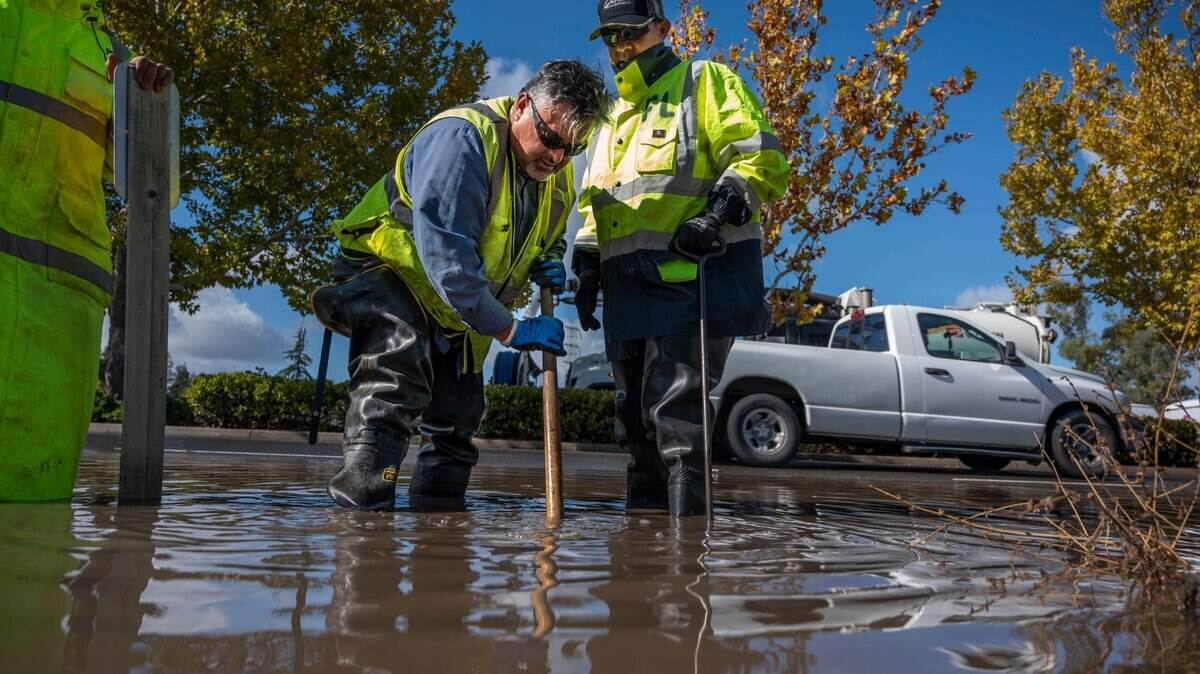
A lawsuit alleging that the city of Sacramento illegally raised stormwater fees is threatening infrastructure plans and putting one of California’s foundational tax laws under scrutiny.
Property owner Dessins LLC sued the city of Sacramento in June, alleging that the city violated state tax law by casting over 2,000 ballots in a measure to raise stormwater fees months prior. The city cast votes for all 2,007 of its properties, influencing the measure, which passed by 1,949 votes.
The lawsuit further alleges that the city violated Proposition 218, the 1996 Right to Vote on Taxes Act, by casting a ballot for each property it owns while not allowing private property owners to do the same.
The approved measure increases the annual stormwater fee from around $135 per property to around $205. The increase will generate $20 million in revenue for the city, which the city says will go toward repairing and improving its 100-year-old stormwater system.
But the Dessins lawsuit throws that plan into jeopardy.
According to the lawsuit, the city sent out 130,071 ballots to the owners of 154,879 land parcels, which plaintiffs say indicates some owners of multiple properties were unable to cast a ballot for each of their parcels.
Further, the lawsuit says that “by casting votes on behalf of City-owned property in favor of a Fee that will effectively be paid to the City, the City subverted Proposition 218’s goal of protecting taxpayers.”
As of Aug. 5, the city had not filed an official response to the lawsuit in court.
Carlos Eliason, spokesman for the city’s Department of Utilities, in a written statement declined to comment on the lawsuit. He wrote that the city has continued to collect the fee since the lawsuit’s filing.
Jon Coupal, the president of the Howard Jarvis Taxpayers Association and one of the principal authors of Prop. 218, said the law is clear that government properties can be part of benefit assessment districts — areas that are taxed in order to fund a public utility — and therefore are eligible to vote when a tax increase is proposed. But Coupal said that the drafters of Prop. 218 envisioned that governments would be voting on taxes levied by other government entities.
“What seems nefarious here is for a government entity to cast a vote for its own assessment district,” Coupal said. “That is what looks different here.”
Coupal added that he found it “deeply troubling” that the city’s votes were the deciding factor in the stormwater tax vote.
“It was never envisioned by us or by the voters (on Prop 218), that you’d have this kind of outcome,” he said.
Chris Micheli, a professor and tax expert from the University of the Pacific McGeorge School of Law, said that should a judge rule against the city, it would likely invalidate the vote Sacramento conducted earlier this year. The city would then have the option to conduct a new vote, or drop the matter entirely.
Micheli said that the lawsuit is most compelling when it alleges that the city treated itself differently than private property owners, by allowing itself to vote on each property and allegedly denying that opportunity to others.
There does not appear to be merit to the lawsuit’s claim that the city participating in the tax vote violated Prop. 218, Micheli said, as Prop. 218 makes clear that government entities can participate in such vote.
“I am not sure that (participating in the vote) is impermissible,” Micheli said. “I think what the real problem is, again, is that they said ‘we’re casting the votes for 2000 plus pieces of parcels that we owned. But you private folks … you only get one vote.’”
At an April City Council meeting in which the city announced the result of the vote, Utilities Director Bill Busath told the council that the city followed all required steps of Prop. 218, including sending one ballot for each parcel of land.
This story was originally published August 9, 2022 at 5:25 AM.