Sacramento event stresses flood preparedness, but it’s the big trucks that steal the show
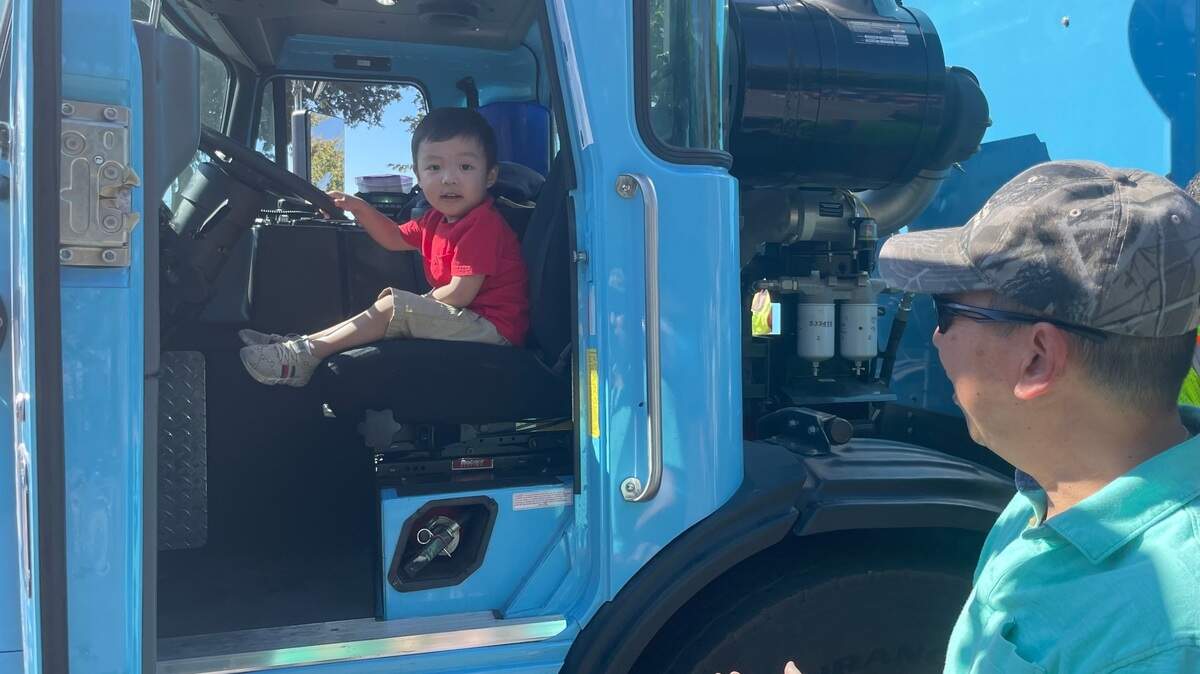
With the Sacramento River levee rising above, children took turns Saturday blowing the horns of garbage trucks, posing for pictures in front of police helicopters and oohing at dump trucks that weighed tons more than the ones that fit in their hands.
The city of Sacramento organized the Highwater Jamboree at Garcia Bend Park in Sacramento’s Pocket neighborhood to remind families to prepare for the possibility of flooding from the river on the other side of the levee, and plenty of people stopped by booths hosted by the Army Corps of Engineers, Farmers Insurance, the American Red Cross and the city’s flood experts.
“We just want to make everybody aware that these levees are there to protect us,” said Neal Joyce, a senior engineer with the city’s floodplain management team. “But if there’s a break, there can be flooding that’s going to force evacuation. So we have a map to show for each area, different levee breaks and scenarios, and what routes can be taken for evacuation.”
In August, researchers at the University of California, Los Angeles, said they had found that, as a result of global climate change, the Golden State is at risk for catastrophic storms that could produce up to four times as much rain than any storm ever recorded.
Joyce and his team handed out maps to Judy Stokes and other Sacramento-area residents and explained the importance of buying flood insurance; having an evacuation plan; packing a go-bag with must-have documents, medications and more; and using media to get the latest weather information. Residents also can visit www.StormReady.org.
Stokes, a resident of the Land Park neighborhood, had just begun talking with the experts at the booths Saturday when she was approached for her opinion of the event.
“I live fairly close to places that are going to flood (if the levees break),” Stokes said, “I just thought this was a funny thing — to have a happy event, educating us about a disaster. I thought, ‘We gotta go see what that is like.’ ... I’m impressed already with it. I’ve got a map that will dictate how I make an escape plan, should I need it, so two booths and it’s already been useful.”
A mother of four boys, Stokes said the helicopters, riderless lawn mower and garbage truck likely would have drawn her to come to the Highwater Jamboree if her boys were still young. More than 900 people registered ahead of time to let city officials know they would attend the free event.
The aircraft and heavy equipment drew the longest lines of residents, young and old. The garbage trunk was especially popular, as evidenced by the many children who couldn’t resist blowing its horn.
Still, Joyce and others had a steady stream of people seeking information. Social scientist Hunter Merritt took a moment to talk about his organization, the U.S. Army Corps of Engineers, after answering a resident’s questions.
The Central Valley used to be an inland sea thousands of years ago, Merritt said, so people living in this region have always known that there was a risk that the Valley would flood and they would have to move to higher ground in the mountains to the east and west.
Merritt lives in South Land Park and keeps a box with important documents ready to go, just in case he and his family have to evacuate quickly.
“People need water, so they live near water,” Merritt said. “That’s how we ended up being as close to the water as we are. It is a flood zone, and it does flood at times.”
Volunteers also did sandbag demonstrations for the public, including a friendly competition showing how they handle leaks from the levee. Local residents with the Community Emergency Response Teams competed against city employees and volunteer firefighters to see who could build an effective sandbag levee the fastest.
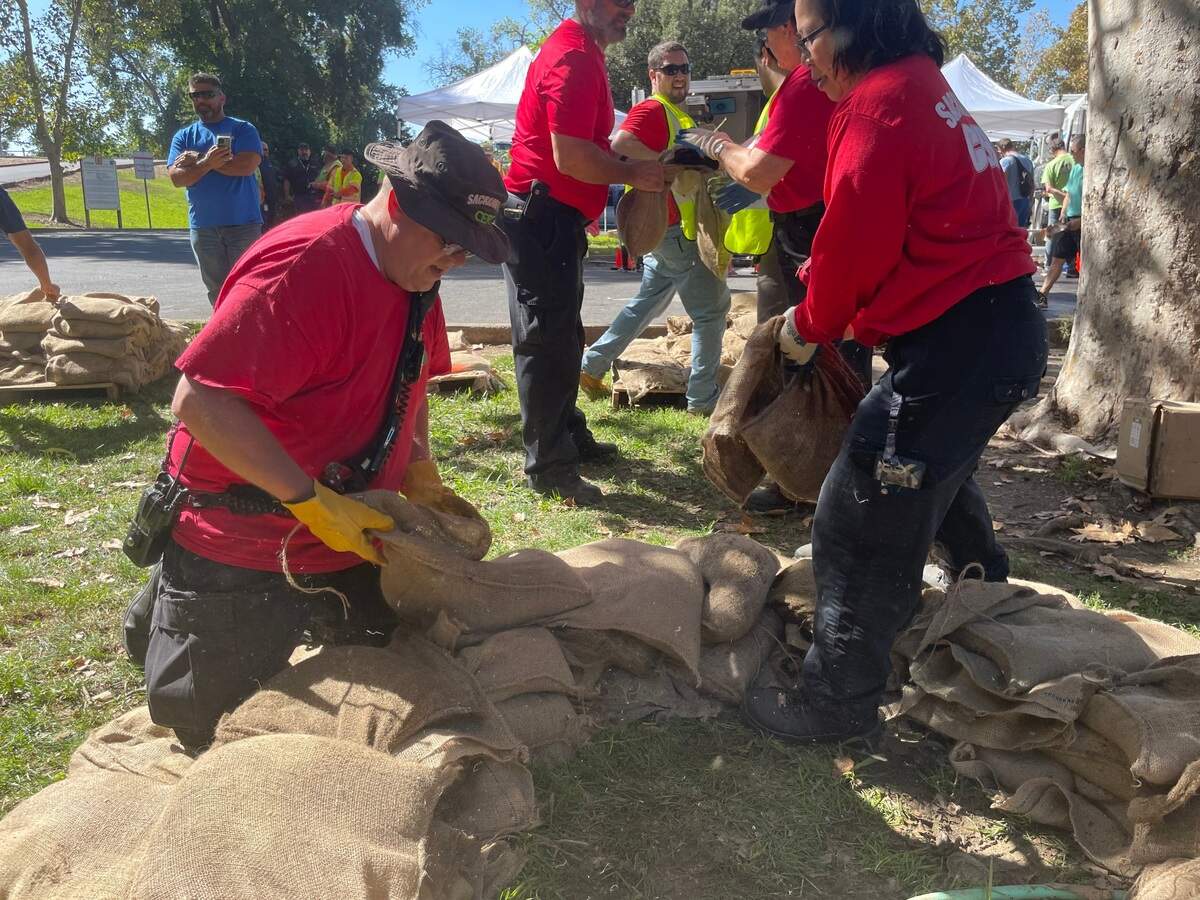
The Community Emergency Response Teams is routinely recruiting and training residents on how to effectively help their neighbors in the midst of a national disaster, said Robert Ross, a shift supervisor in the Sacramento Fire Department’s CERT operation. CERT volunteers have done things like setting up temporary animal shelters in the wake of some of California’s worst wildfires, Ross said, and staffing rehabilitation trailers where first responders can get assistance.
The CERT concept was developed by a firefighter who studied community responses following national disasters, Ross said, and what he discovered was that, because volunteers lacked training, scores of them were perishing in rescue efforts.
CERT allows individuals who want to do house-to-house rescues or mount other such efforts to learn how to do it in the safest way possible, Ross said. The Federal Emergency Management Agency, or FEMA, sets up a region’s CERT volunteer program, he said, and local government agencies supplement any FEMA training with courses of their own.
In Sacramento, the volunteers go through training in how to give medical assistance, how to suppress fires, conducting search and rescue operations, Ross said, and they culminate training with an eight-hour drill in a training facility that mimics real-life conditions.
Thinking of joining? Visit sfdcert.org/ to find out how.
Experts at the event emphasized that residents should take steps to ensure that they and their families are prepared since the Sacramento region has a history of floods. Amid a hundred-year event, it’s possible that the emergency personnel will be overwhelmed, said Eugene Balinski, an assistant civil engineer with the city of Sacramento.
Joyce said: “There’s no way to prepare your home (for a levee breach). You just have to prepare yourself so that you know how to get out. You have to look at what routes will be available. We have maps ... that show which routes will stay open and for what period of time they will be open, so you’ve just got to be prepared to go.”
This story was originally published October 16, 2022 at 6:00 AM.
CORRECTION:
An earlier version of this article incorrectly stated the neighborhood where Hunter Merritt, an employee of the US Army Corps of Engineers, lives. He lives in South Land Park.