
How a $370 million project will improve the Sacramento area’s worst commute
James Lewison has it easy. His commute from Elk Grove to an office in Rancho Cordova normally takes 30 minutes or less.
Then again, Lewison heads out the door for his job at the state Franchise Tax Board well before 6 a.m., when the roads are fairly quiet. He drives back home around 2:30 p.m., before the monster afternoon commute has begun.
And he avoids the dreaded Highway 99 gridlock, opting instead to take the back roads cutting through housing subdivisions east of Elk Grove.
“It’s relatively smooth,” he said.
That’s a rare term to describe the commute to and from Elk Grove, the Sacramento region’s largest suburb. The typical one-way commute for an Elk Grove worker is more than 28 minutes, according to new census data, higher than both the Sacramento region and California averages.
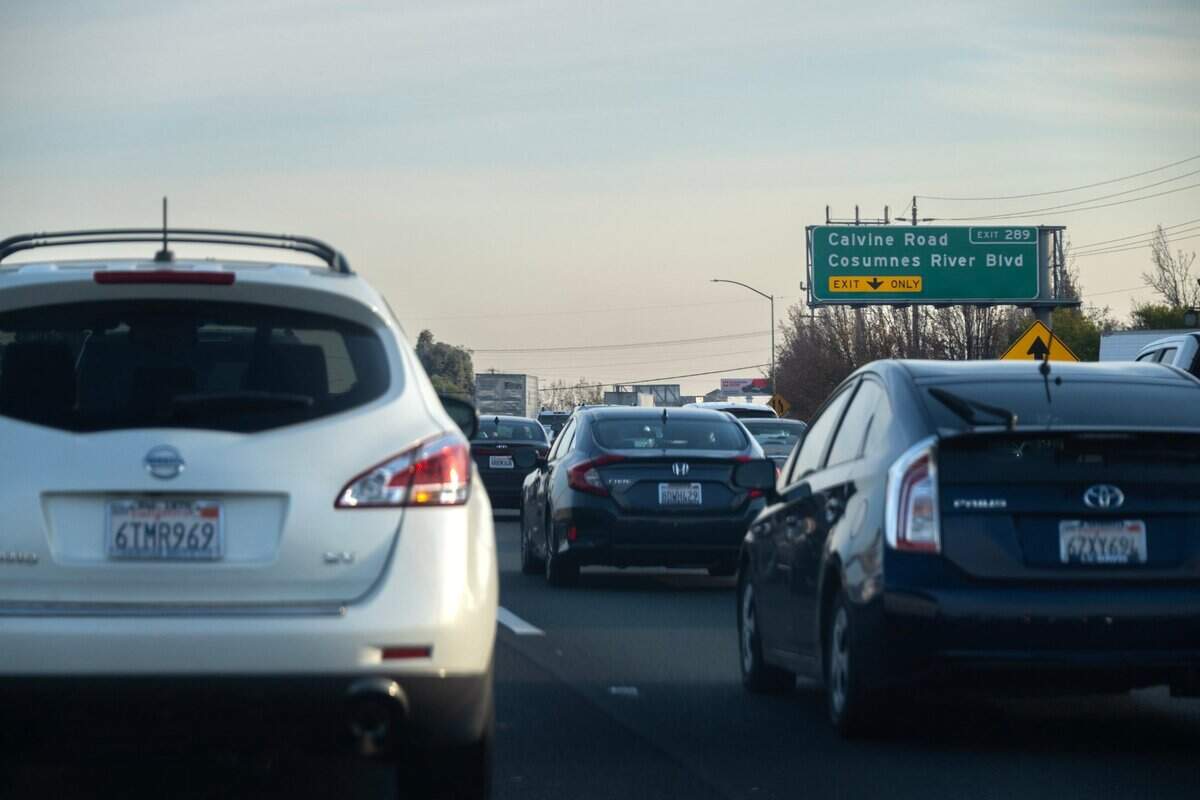
The typical travel time to a place of work from Elk Grove is longer than other area suburbs, such as Roseville, Folsom and Rocklin, and is just slightly shorter than the average commute for someone living in notoriously congested Los Angeles County.
Now, help is on the way. And just in time, as workers begin to trickle back into offices across the region after two years of remote working.
For those Elk Grove commuters lucky enough to live on the west side of town and use Interstate 5, state and local transportation officials are close to completing the largest freeway rehabilitation in the Sacramento region in nearly 50 years: a $370 million project that will add 23 miles of carpool lanes, smoother road surfaces and extended off-ramps on the freeway between the American River in downtown Sacramento and Elk Grove Boulevard. The work is vital in connecting the region’s two largest cities in a part of the county that continues to see rapid growth.
More commute options are on the way as well.
Commuter rail service to the suburb could begin within the next two years. A new station is planned near Laguna Boulevard that would serve Amtrak and Altamont Corridor Express (ACE) trains, linking Elk Grove with downtown Sacramento, Stockton and the Bay Area.
“We are still a society that likes to drive our cars and, for our community, it’s been challenging,” Elk Grove Mayor Bobbie Singh-Allen said. “We really have not had all the (commuter) options. And I know our community is benefiting from these changes.”
No money from failed Measure A
Still, some of the city’s transportation plans may have to wait.
Measure A, a proposed sales tax that Sacramento County voters overwhelmingly rejected in November, would have provided an estimated $348 million to Elk Grove over the next 40 years.
The ballot measure’s opponents blasted the effort as a cash grab for developers and the construction unions that were poised to benefit from projects the revenue would have funded. Opponents also raised concerns that the roads and expressways built with the money would have led to sprawl.
Among the projects proposed in the ballot measure were a new Highway 99 interchange at Whitelock Parkway, the widening of Kammerer Road and an extension of the county’s light rail system into Elk Grove.
The measure also would have provided millions of dollars to the Capital Southeast Connector, an expressway under construction to connect Elk Grove and the Folsom area. That expressway, which will run along the Grant Line Road corridor past areas of Sacramento County slated for new housing subdivisions, is still under construction but “we need those extra dollars to ensure we get it built and get it built quickly,” Singh-Allen said.
Sacramento County Supervisor-elect Pat Hume, the longtime Elk Grove city council member, has worked closely for years on the expressway. The measure’s failure at the polls in November means a less predictable funding stream, said Hume.
“Measure A was an identified funding source that would’ve made it easier and more predictable,” Hume said last week before his final meeting as an Elk Grove city council member. “It means we’re going to have to work harder ... to keep pace with the increase in demand and congestion so we’re not caught behind the 8-ball from a regional mobility standpoint.”
Smoother ride on Interstate 5
The last moments of sunlight are fading in the late November sky and the Wednesday afternoon commute is at its peak on Interstate 5. The scene would have been unrecognizable prior to the pandemic: there are no brake lights in sight and traffic is moving at a sensible 65 miles per hour, all the way from the Highway 50 interchange to Laguna Boulevard.
The afternoon drive home probably hasn’t been this smooth in years.
After three years of lane closures, traffic delays and overnight construction noise, Caltrans is finishing what the agency’s director, Tony Tavares, said was the largest highway project in the Sacramento region since Interstate 5 was completed in the 1970s. Tavares, an Elk Grove resident, called the work “greatly needed” and said commuters who use new carpool lanes along the stretch of freeway will “see their peak commute times drop by almost 13 minutes,” saving Elk Grove residents up to 100 hours per year on the road.
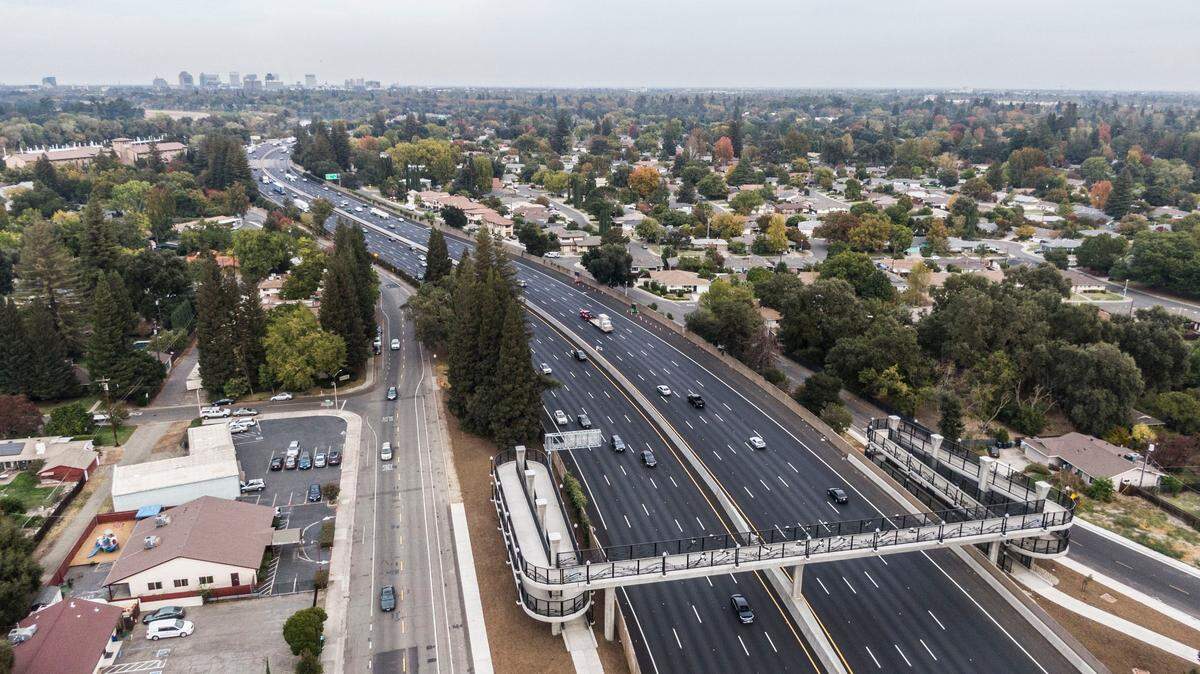
That smoother ride will make living close to I-5 all the more attractive.
Courtney Ellison is Lyon Real Estate’s Elk Grove branch manager. Ellison said homebuyers are often drawn to the city’s west side for its schools, neighborhoods, parks and other amenities, but proximity to I-5’s easier Sacramento commute is also a selling point.
“I think the west side has always been very attractive, but a benefit is being next to 5,” Ellison said. For homebuyers, she added, “it’s a combination of, ‘We want the lifestyle and 5 is a perk.’ So when they’re considering a purchase, that’s one of the factors.”
That dynamic exists because there just aren’t many options for Elk Grove commuters.
Sacramento Regional Transit operates a bus service that ferries Elk Grove workers to downtown Sacramento and the Franchise Tax Board offices in Rancho Cordova, taking over the city’s e-tran service in 2019.
But for many in the city of nearly 180,000 who elect to drive, there’s often but a couple of choices to make: ride in on the newly-rehabbed Interstate 5, or slog through the dreaded Highway 99 commute.
Train service to Elk Grove
Regional planners have talked about extending commuter rail service to Elk Grove for years.
More people walk to work in Elk Grove than take public transit, according to the census. Another 50,000 or so drive to work alone. Could trains help solve the gridlock?
The new Elk Grove train station planned for Dwight Road near Laguna Boulevard expects to be a key link in a chain of stops along the $1 billion Valley Rail Extension Project connecting Stockton to downtown Sacramento and Sacramento International Airport to the north and to the Amtrak San Joaquins route to San Jose and Silicon Valley. The station will have a new platform, ticketing machines, as well as a parking lot and landscaping. Benches, lighting, security cameras and bicycle storage facilities will also be installed.
“A passenger rail station has been on our radar for years,” Hume said. “That’s the conundrum. Often the need comes in advance of the funding to bring it to fruition. Growth has happened to show that there is a demand.”
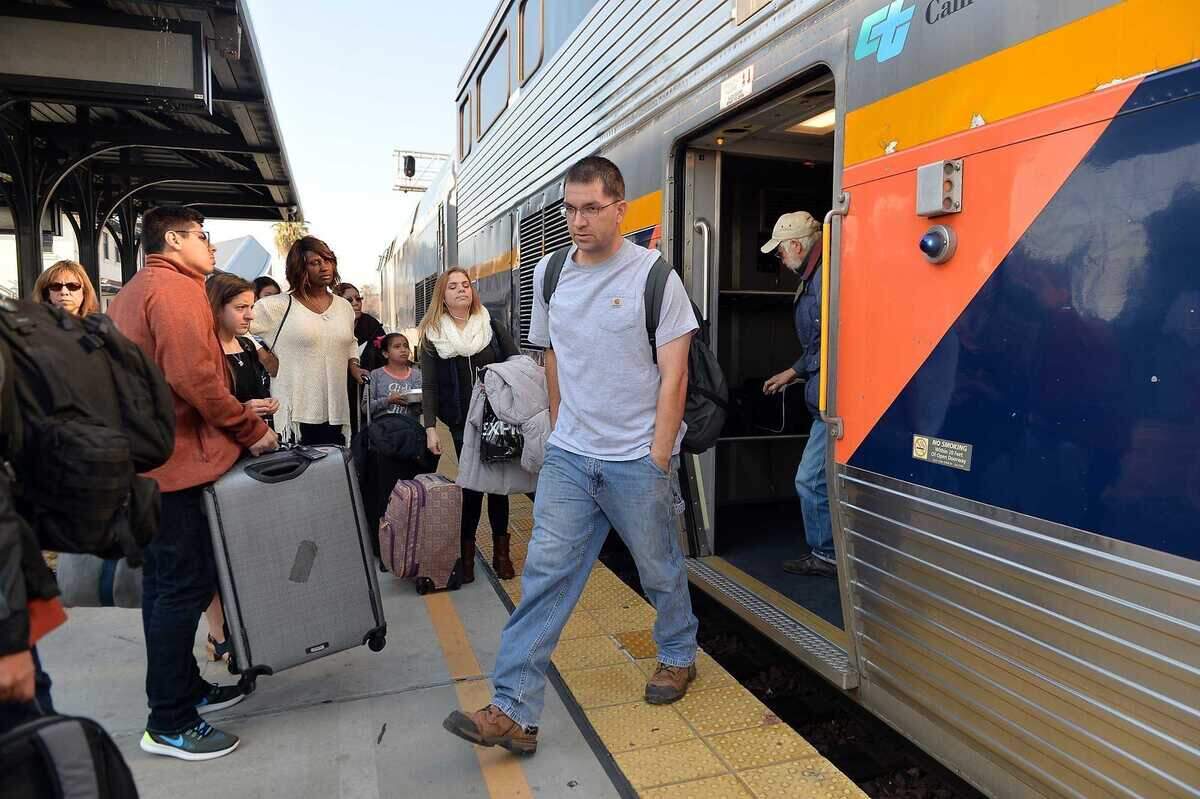
About 10 passengers per hour use the local bus service, Valley Rail said in its environmental study of the Elk Grove station. Whether that number has changed since the pandemic is unclear.
Valley Rail in the same environmental impact report estimated about 890 passengers would board and disembark from the station. The report envisions a mix of paths passengers will use to access the proposed Dwight Road site: park-and-ride or taxi; city bus lines, biking or walking.
“Some of the riders would use transit to access the station or destinations in Elk Grove, which would increase demand for transit,” the EIR stated.
Studies as early as 2008 first targeted Old Town Elk Grove where the historic district’s Old Town Pavilion now stands at Elk Grove Boulevard and Railroad Street. Hope briefly renewed in 2014 with a master plan for a station site south of Sheldon Road near Elk Grove-Florin Road, but those plans failed to materialize.
Among the hurdles to an Old Town or another east Elk Grove site, Hume said, had been Union Pacific, which owns the rail that cuts through east Elk Grove and prioritized hauling freight over carrying passengers, effectively shutting the door on a potential east side site.
“You become pessimistic about the whole project, but now this becomes a good spot to land,” Hume said of Elk Grove’s project piece. “We finally found a spot that will be convenient to the people of Elk Grove. It’s an exciting option that’s been a long time coming and that has become more and more attractive.”
This story was originally published December 21, 2022 at 5:00 AM.
.JPG)