
How can we keep the waters of the Cosumnes River from flooding Elk Grove and Galt?
Fallow and sun-baked in the summer, the Cosumnes River comes to life in the wet winter months. Sierra snow melt and valley rains meet at Michigan Bar near Rancho Murieta feeding the waterway for the final leg of its journey through south Sacramento County.
Most years the Cosumnes minds its own, winding through broad, flat fields, pastureland and ancient oak groves, farmers and ranchers taking their share. Groundwater seeps into the soil there, filling the taps of the cities to its north and south, booming Elk Grove and smaller cousin Galt. And the river creates home and habitat for thousands of native and migratory birds at Cosumnes River Preserve as it flows into the Delta.
January’s record-setting rains have also shown the meandering Cosumnes to be what it has always been — one of California’s last free-flowing rivers and, as such, capable of unstoppable force.
The Cosumnes’ earliest caretakers have known this for generations. January’s flooding is one of many in the long history of this river. The name “Cosumnes” is said to have spawned from the phrase “Place of the Salmon” in the regional Miwok language dialect historically spoken in this area.
“Our people’s relationship with the river has existed since time immemorial, and we know the strength it can possess,” Wilton Rancheria tribal Chairman Jesus Tarango said. Tribal elders, in particular, have borne witness many times.
Tarango walked alongside Gov. Gavin Newsom during the governor’s inaugural march to the State Capitol Friday, which was a relatively calm weather day sandwiched between the region’s weekend storms. He took a moment to talk about the river.
“A lot of our elders are out there, but they’re strong, they’re tough and they’ve lived there their whole lives, so this isn’t the first time for them,” Tarango said. “But they’ve lived there their whole lives and they’ve been through this before, so our job is to support them and give them what they need.”
Where’s the high ground?
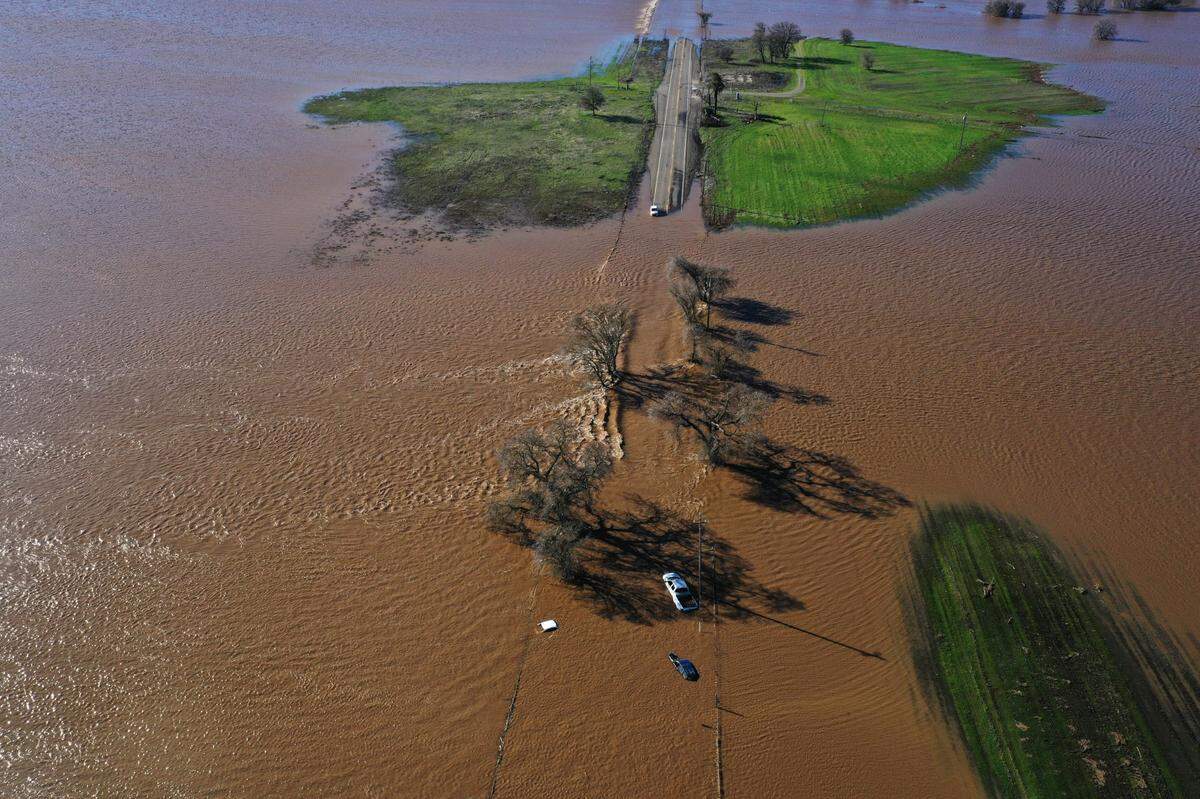
The push to control the flow of the Cosumnes better grows when those living near it see overtopped and crumbled levees, inundated pastureland and farm homes surrounded by rising water, desperate motorists stranded atop submerged cars in the middle of a major California highway, news reports about those who did not survive.
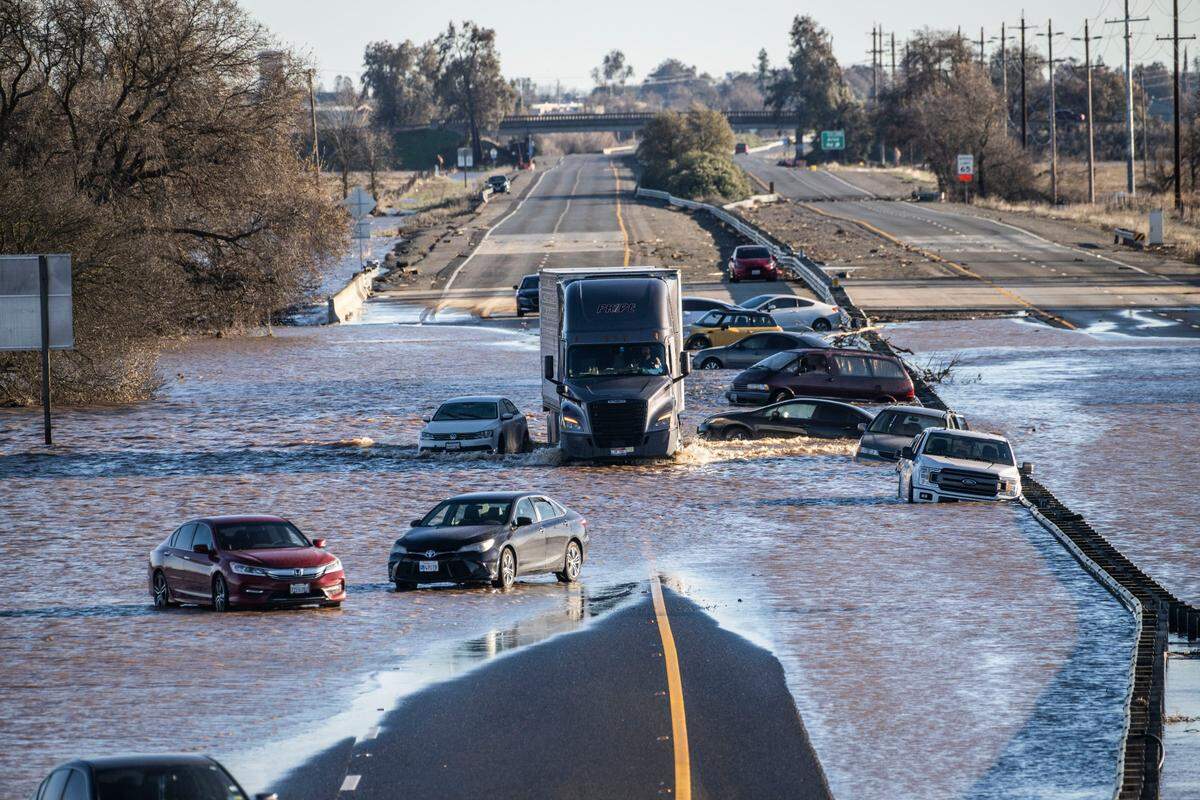
Flooding has claimed three lives so far — an Oklahoma man and two women from San Leandro and Orland. Two of the victims were swept out of their cars or trapped inside them as floodwaters submerged Highway 99 and Dillard Road. The third was found off New Hope Road near Galt.
Cosumnes Fire Department had rescued at least 50 people trapped in their vehicles, fire officials said Jan. 2, acknowledging that a more accurate number was likely “significantly higher.” The department, which serves Elk Grove, Galt and the hard-hit unincorporated south county at the heart of the flooding, reported 259 calls for service from New Year’s Eve through New Year’s Day, officials said Saturday. The number was twice what crews see in a typical 48-hour span.
Local levee control districts have scrambled to shore up miles of earthen levees under the threat of more pounding rain. On Tuesday, the California Nevada River Forecast Center predicted the river would remain above monitor stage through Thursday afternoon if current weather patterns hold.
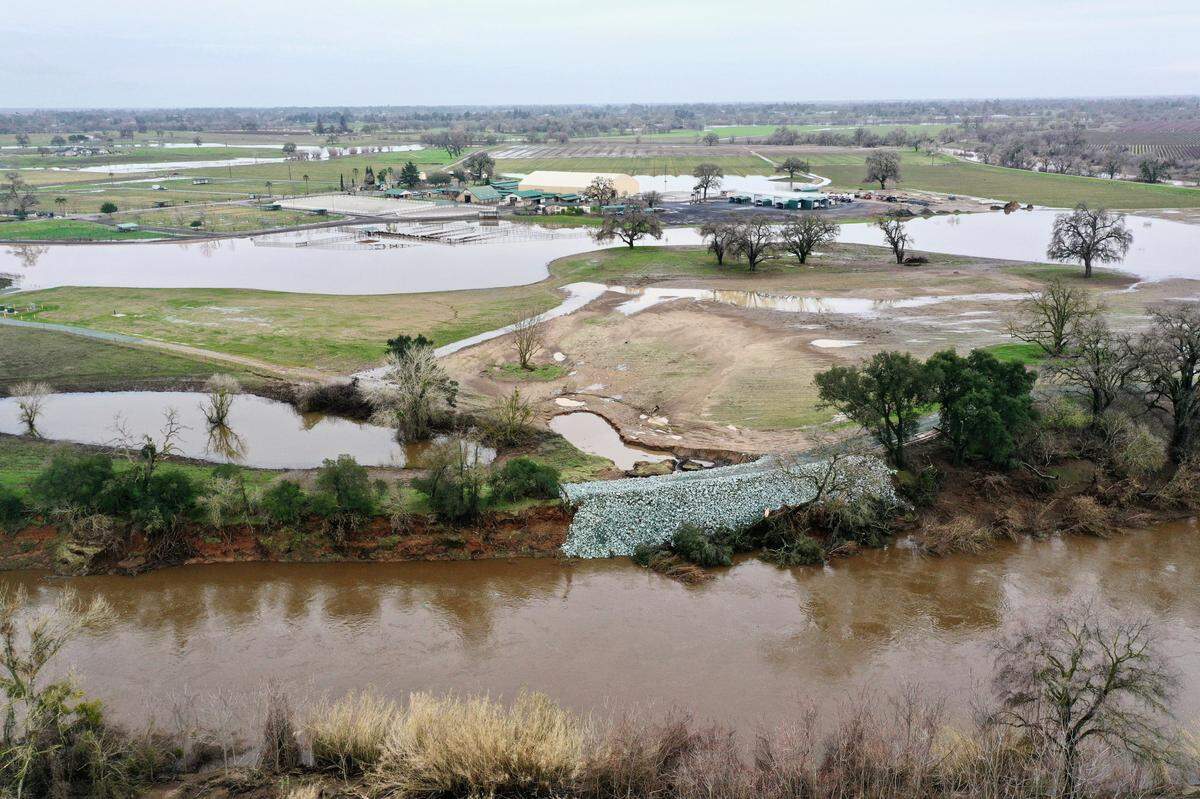
Leaders of Reclamation District 800 Cosumnes said they have identified 11 trouble spots, three of them breaches, along the 34 miles of levee that they’re responsible for maintaining. Because of flooding, they haven’t been able to assess every section of the walls extending from Rancho Murieta to the north down to Freeman Road in the southern area of Wilton. But their biggest concern on Monday was the roughly 100-yard breach on the levee at Bradley Ranch Road on the river’s Sheldon side.
Also urgent are fears of a repeat of New Year’s Eve, which brought scenes of motorists perilously waylaid by rushing waters on Highway 99 south of Elk Grove — the product of what California waterways expert Jeffrey Mount called a “legacy effect.”
It’s “what I refer to in flood management as a bad plan poorly implemented,” Mount said. “It was a bad plan to take the Highway 99 route through there without elevating it much higher. That’s the problem. It actually drops down … into the floodway of the Cosumnes, and there’s just not enough room for the water to get through it.“
Look at nearby railroad bridges in the region, though, and it’s obvious that generations further removed had a better grasp of how high they needed to build a bridge to withstand a swollen and fast-moving Cosumnes.
But it has been challenging to find a more permanent solution to manage the still-wild Cosumnes River, especially as climate change has brought warmer storms. Whether it’s a Pineapple Express or an atmospheric river, these weather events dump rain in both the upper and lower elevations of the Cosumnes. Consequently, melting snow from the Sierra Nevada joins with the rainfall and quickly overwhelms the levees meant to hold the water back.
“The Cosumnes is important to life in the valley,” said Mount, a senior fellow at Public Policy Institute of California and a founding director of UC Davis’ Center for Watershed Sciences. “It’s highly important as an ecosystem. It’s highly important as a relatively natural hydrology because there’s little of that left, which is why there’s so much conservation interest on that river and why you’ll likely never see any development on the river.”
As it spills across a broad swath of the valley, the Cosumnes provides just the right amount of water and nutrients to supply the dense gallery forests that once were a common feature of Central Valley terrain. And, that combination of water and forest attracted sandhill cranes and other migratory birds like the ones that draw visitors annually to the Cosumnes River Preserve.
Wilton’s reclamation district leaders have said that the Cosumnes river bed has filled with sand and rocks over time, making the bed shallower. They have advocated for dredging to allow it to hold a greater volume of water.
Most needed, said reclamation district board member Mark Hite, is a federal or state agency stepping up to help rebuild and restore these levees, so they can withstand higher water. The district has applied for federal funds in the past to improve the levees he said, but the agency has never received enough money to do all the work they have proposed.
Above a rushing Cosumnes River at Wilton Bridge on Monday, board member Leland Schneider estimated his district would need about $50 million to make the levees whole again even before January’s flood-storms — an amount that dwarfs its $500,000 yearly budget.
They’re unlikely ever to be able to dredge, Mount said, because of the concern that it would harm the aquatic life and nearby plants that are benefiting from the status quo.
Tarango of the Wilton Rancheria said that attempts to control or develop the river would harm both the Rancheria and the waterway, and he urged that the river be allowed to exist as much as possible in its natural state.
Cosumnes connections
Ancestors of the Wilton Rancheria were forcibly relocated after California statehood to what is now Wilton, alongside the Cosumnes. The river remains central to the lives of the people of the Wilton Rancheria.
“Historically, our community was deeply connected to the Cosumnes River,” Tarango said. “The flora and fauna of the river provided our communities with sustenance like deer, elk, salmon, tule, medicinal plants, and of course the oak trees and acorns that are native to the region.”
“That location, while limiting compared to the historic freedom our people had, is right along the Cosumnes and allowed tribal members access to a landscape that was critically important to their physical and spiritual health,” Tarango said.
“The Cosumnes is representative of our Indigenous people and attempting to ‘tame’ the river or further develop it would not only be harmful to the Rancheria but ultimately would lead to the decline in the health of the river itself,” Tarango said. “This is our homeland and means everything to us.”
Measuring the money flow
The equation of economics and environment also weighs against plans to dam the Cosumnes.
“I must tell you the reason there’s no dam there is it never made any darn sense. It just never made sense,” Mount said. “Building a dam only makes sense if it makes economic sense and environmental sense, and neither is the case on the Cosumnes.”
State water planners have at times discussed erecting a dam on the Cosumnes. Each time, Mount said, the idea was squelched by the river’s relatively low Sierra headwaters and resultant smaller snowpack. The Cosumnes springs at about 7,500 feet, far lower than the high alpine origins of the American and Mokelumne rivers at well above 9,000 feet.
Partly because dams are built largely to contain waters from snow runoff, potential projects on the Cosumnes died at the discussion table.
“If you don’t have a big snowpack, it’s really hard to justify building a dam just to store your snow runoff which is what so much of our dams do. They store a lot of the runoff from snow,” Mount said. “It just never made economic sense (on the Cosumnes), even though it comes up all the time, it never makes economic sense. And it sure as heck doesn’t make environmental sense. Dams have a really big environmental impact, and you’ve got to be careful when you go advocating for building a dam.”
Gold Rush-era settlers who first farmed the floodplain built levees to try to tame the Cosumnes’ flows. More people moved into Wilton, Herald, Clay and townships further west, to Franklin and Point Pleasant.
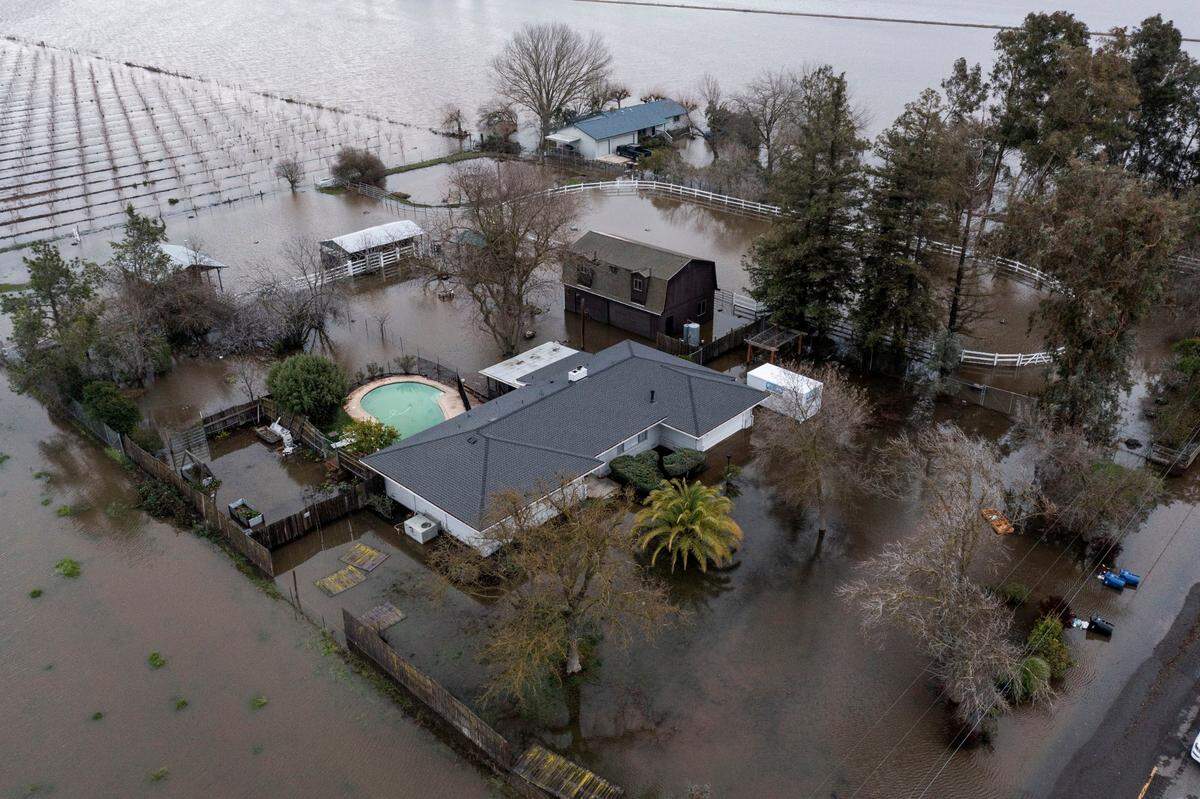
Today, the area’s farming and ranching roots continue to run deep in the soil here. Nearly three-quarters of the acreage here is zoned for agriculture. But thousands of homes sit here, too — 5,000 residential lots in the area roughly between Elk Grove and Galt, per Sacramento County property records. Just a few miles to the north along Grant Line and Kammerer roads, Elk Grove’s rapid growth is also evident. New subdivisions continue to rise as do plans for a relocated Sacramento Zoo, while work continues on Kubota Tractor’s new regional headquarters on Grant Line and Waterman roads. Though federal flood maps show that , within Elk Grove, virtually nowhere is prone to flooding, local evacuation orders were extended Sunday to homes and roads in parts of Elk Grove’s Rural Community north of Wilton.
The land in and around Wilton is also horse country. Horse ranches and hobby farms abound — and are expensive. The typical home value in Wilton, for instance, is around $950,000, or almost double the typical home value in Sacramento, according to Zillow.
The small-acreage ranchettes are popular here with more affluent Californians seeking a rural lifestyle; and a number of places around Wilton are out of the floodplain. But those areas down in the floodplain concern Mount most.
“It’s just those parts in that area which are down in the floodplain, protected by those very weak levees. They’re not robust levees. They’re not intended to be robust levees,” Mount said.
“We don’t throw people off the floodplain. As a general rule of thumb, we don’t go down and say, ‘You can’t live here anymore. You’ve gotta move out,’” Mount added. “So once they’ve established themselves down there, they take on the flood risk themselves, and, frankly, it’s just not a surprise when these floods come along, and they have.”
Between two larger watersheds, the American and Mokulumne rivers, nearly all of the 80-mile long Cosumnes River is unregulated, Mount said, both a blessing and curse for the nearly 19,000 people who live in the rural and semi-rural area between Elk Grove and Galt.
“As a medium-size watershed, it has no major reservoirs on it. The rest of it is what they call unregulated. There’s no way to regulate the flow on this.,” Mount said. “On the blessing side, this makes the Cosumnes really important as as an environmental resource. That’s why the Nature Conservancy and other groups are so heavily involved particularly in the lowermost Cosumnes because it has a natural flow regime, which is darn hard to find in California.”
“While it is terrific for agriculture out there on that floodplain and habitat,” Mount continued, “It’s not a good place to live. And that’s the challenge. The levees that are built on the land are not in particularly great shape. They’re not robust levees. They are certainly not urban levees. They don’t meet any of the standards — the federal standards and certainly the state standards — for what we call urban levees that protect an area, so everybody who builds out there is at pretty high risk. That’s long been known.”
Risk became reality on 2022’s final day, the volatile mix of rain and snow combining for a churning stew that threatened to overtake the Wilton Bridge at Michigan Bar even as crews rushed rock and earth to reinforce it.
“It was a pretty intense storm in the watershed. You’re draining an entire watershed to that point, that single point,” Mount said. “All that water running off the watershed comes out like a fire hose below Michigan Bar and Rancho Murieta and then tries to spread out across the floodplain.”
Kirsti and Tim Rauser’s century-old Wilton farmhouse was dry on a blustery Wednesday. The water that surrounded their Davis Road home had receded but an atmospheric river was streaming their way. From the Rauser’s window during floods like this one and in calendars past — 2017, 1997, 1986, 1982 — “the whole world’s a foot deep,” Tim Rauser said.
“This area is ag area, so all of Wilton becomes a river, a weir. We’ve flooded, receded, and we’ll be flooded again,” Kirsti Rauser said. “It’s the joys of owning land, I guess. It’s great here — except when it isn’t. It’s ‘This too is life’s rich pageant.’”
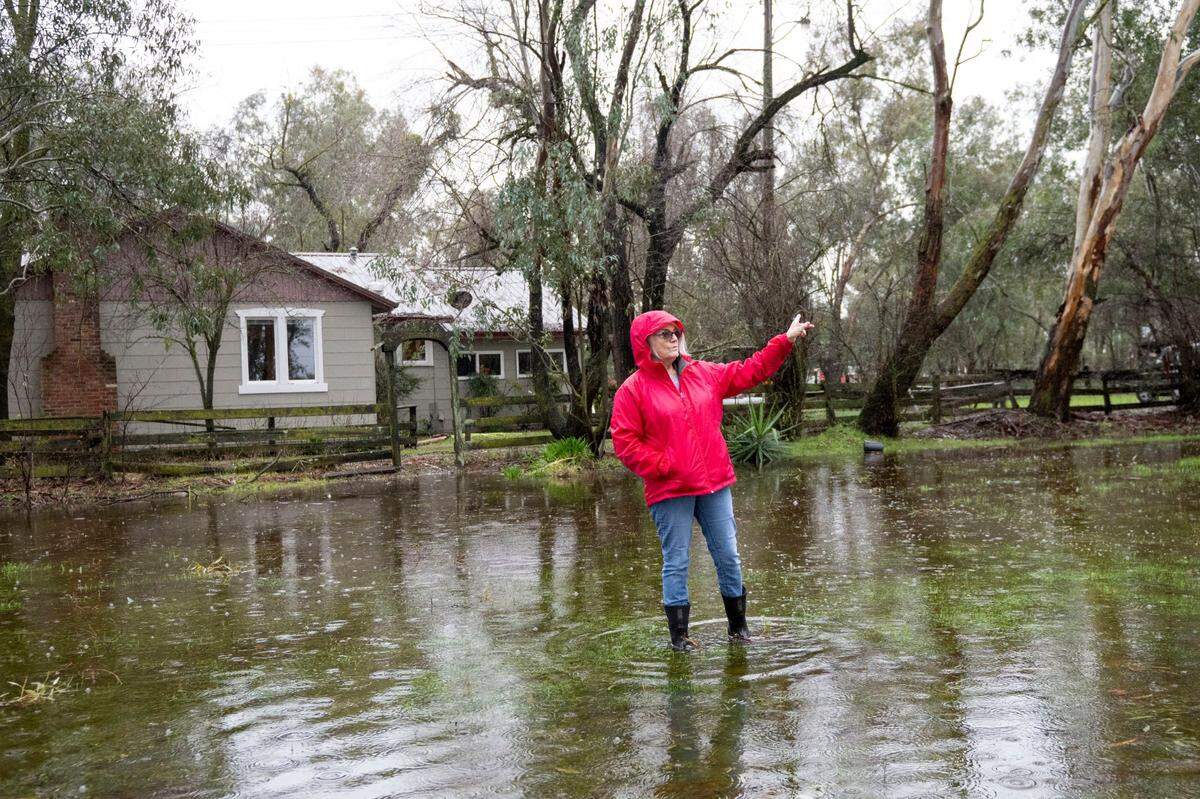
Born and raised In Elk Grove, for years a Wilton resident, Tim Rauser has spent a lifetime on and around the Cosumnes River. Now 70, time has given him a winking world-weariness that recalls an off-brand Jeff Bridges. He well knows the salt and the sweet that comes with life along the river.
“It used to be the fear of the unknown. Now we’re old and wise, and it’s the fear of the known,” Rauser said, facing the threat of more flooding as heavy storms are set to again crash into Northern California and the Central Valley. “It’s like, ‘Here we go.’ It’s huge. It’s going to wash our sins away.”
“The levees are lifting the water 20 feet over the valley. Once we get a Pineapple Express, that doubles that,” Rauser continued. “At Michigan Bar, we know that (the water) will be here in four hours. Living on the river has been very exciting for years. But there’s also the woe.”
This story was originally published January 11, 2023 at 5:00 AM.
.JPG)