He collapsed during a Sacramento marathon. Weeks later, a father’s recovery stirs hope
Augustina Kuen waited near the finish line in downtown Sacramento, excited for what was shaping up as the race of her husband’s life.
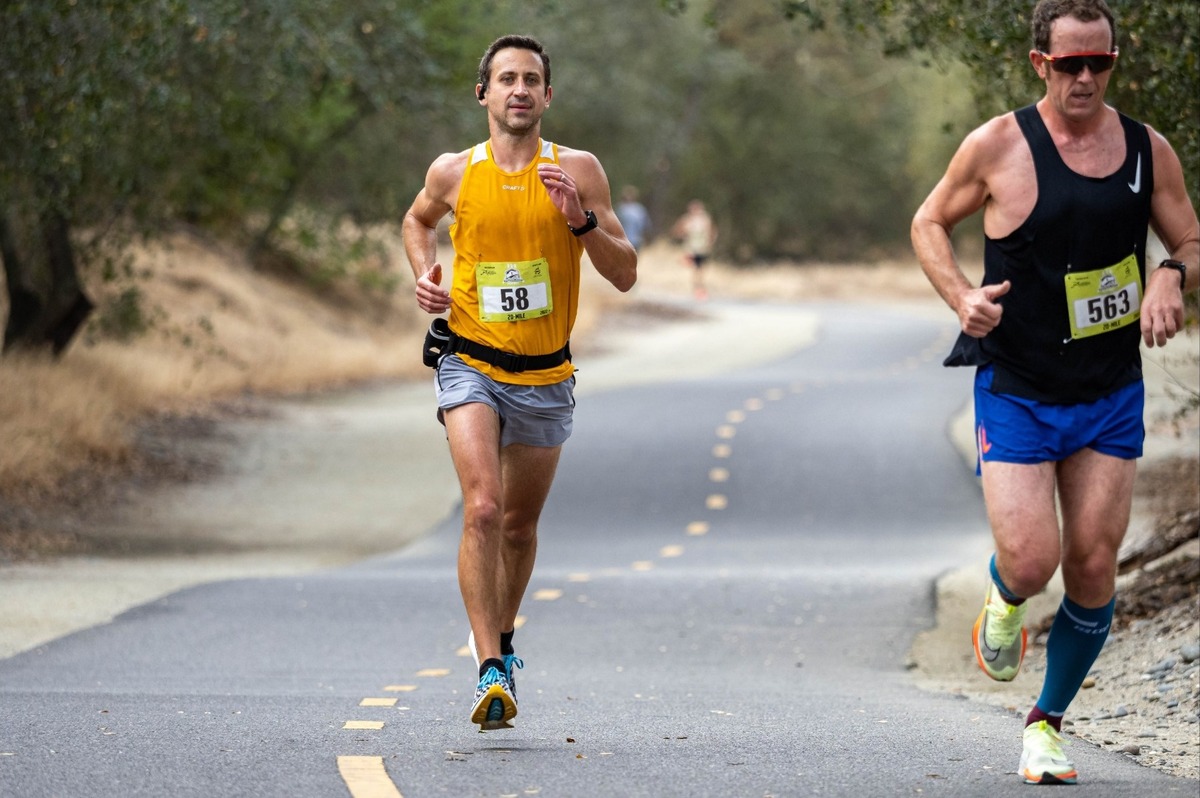
As she tracked his progress online in the 2022 California International Marathon on Dec. 4 via an e-race tracker, she saw that Aaron Kuen appeared to be on pace for a final time of about 2 hours and 48 minutes.
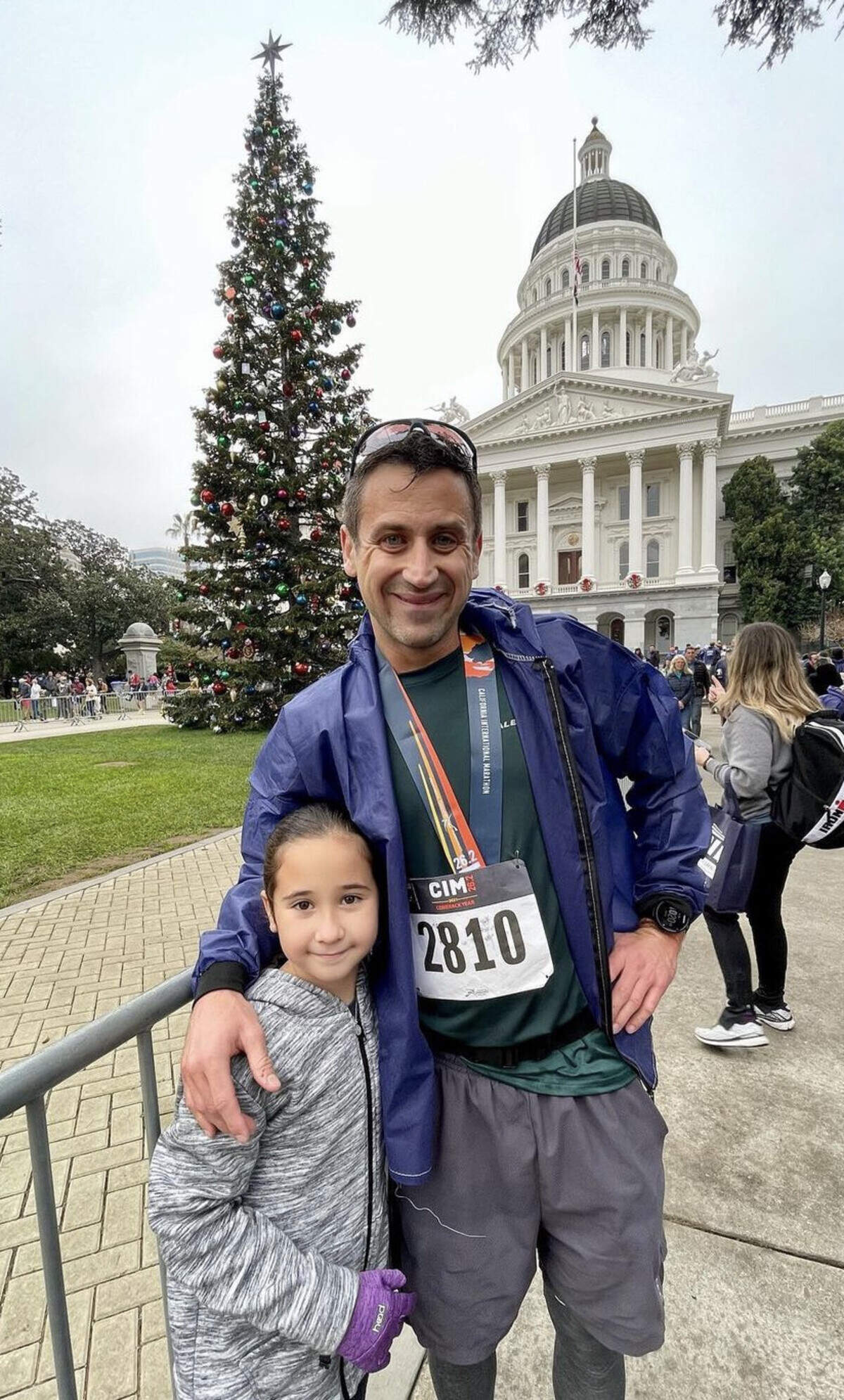
He had powered through more than 25 miles of the 26.2 race, which stretches from suburban Folsom to California’s Capitol building and is one of the state’s most prestigious distance running events.
For Kuen, a 37-year-old Army veteran who picked up running nearly two decades ago while serving in Iraq, a 2:48 marathon would have been good for a top 8% finish among the CIM’s nearly 8,000 total entrants. He would have placed right around 100th out of 730 runners in the men’s 35-to-39 division.
It would have crushed his own personal record, set at the 2021 CIM, by more than 15 minutes. And it would have almost certainly qualified Kuen for the 2024 Boston Marathon, widely considered the world’s most prestigious run, based on qualifying criteria for the 2023 edition.
Augustina watched and waited, accompanied by the older two of her and Aaron’s three daughters, ages 8 and 4.
The trio held banners. They rang bells as thousands of other runners powered to the finish.
Aaron never did.
“It suddenly stopped. At first, we kind of hoped it was just a glitch,” she said of the e-tracker. “But it wasn’t moving.”
About 10 minutes later, she checked it again.
“It went from L Street to Sutter Hospital. At that point, I knew this was very serious.”
She would soon learn that her husband had experienced a condition known as rhabdomyolysis – the release of damaging proteins and electrolytes from muscle tissue into the bloodstream.
It’s a rare condition for the general population, but relatively common among athletes and first responders, brought on by intense physical exertion. In milder instances, it can cause cramps, muscle pain and fatigue, sometimes for days. Rhabdomyolysis affects about 26,000 people per year, according to the Cleveland Clinic.
Cases like Kuen’s, severe enough to strike his kidneys and stop his heart midrace, are far rarer.
The freak incident, first chronicled last month by Outside magazine, saw Kuen rushed to Sutter Medical Center in midtown Sacramento after he suffered cardiac arrest.
Nearly two months later, Kuen has moved from a coma to a vegetative state, and is now in treatment at a Bay Area subacute rehab center. Uncertainty clouds his recovery and future.
But since the marathon tragedy, Augustina – helped by a vast support network including friends, family, Aaron’s coworkers, the running community and a crowdfunding campaign that has raised tens of thousands of dollars – has worked as a tireless advocate for her husband, whose gradual improvements have inspired hope for her family.
‘It’s small steps’: Progress for Kuen in weeks since marathon
Soon after Augustina saw her husband’s race tracker had pinged at a hospital, she got word from race organizers and an EMT, who told her Aaron had collapsed and stopped breathing, but had been brought back, she recalled in a recent interview with The Sacramento Bee.
She packed their 8-year-old daughter, Norah, and 4-year-old, Olivia, into a two-seater stroller, rushed to their van and headed to the Sutter emergency room. The couple’s youngest daughter Amelia, 2 at the time, stayed at home with Augustina’s father on race day.
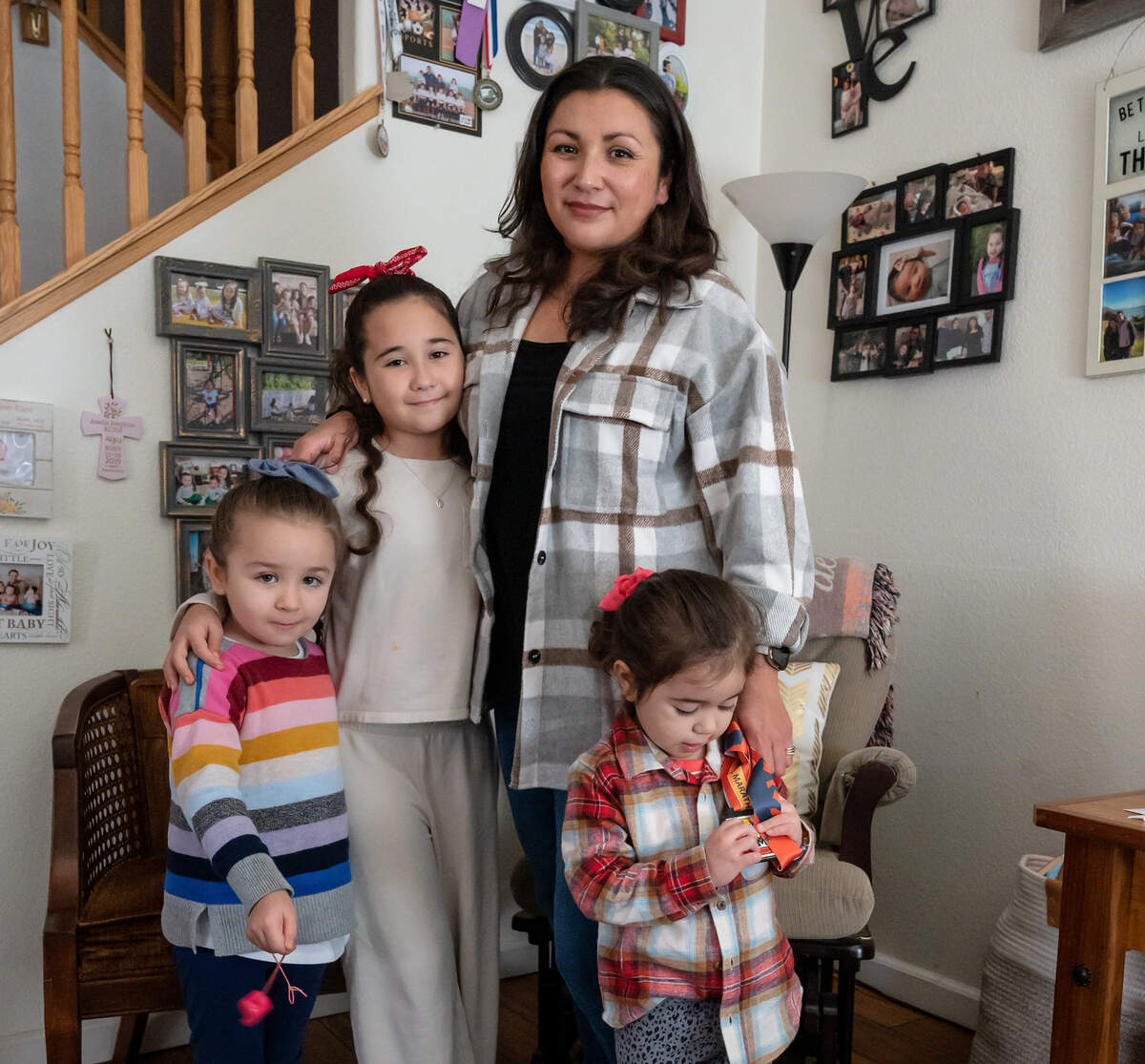
A team of five doctors and nurses at the hospital told Augustina her husband had been resuscitated quickly, placed on a ventilator and was stable.
“They were hoping he would wake up in the first few days. He opened his eyes, but he wasn’t responding in the way they’d hoped.”
An MRI on Kuen’s third day at the hospital revealed he had suffered hypoxic ischemic injury, a traumatic brain condition.
The outlook was not good.
Soon after the MRI, doctors recommended hospice care.
“Instinctively, it felt just too soon for that word,” Augustina Kuen said. “I needed, obviously, time to process what I was being told.
“That night, I reached out to people I knew within the running community. They all got back to me, encouraging me to wait, to not put him in hospice, to not take him off the ventilator.”
With Aaron’s youth, good physical shape and three young daughters also major considerations, Augustina followed the running community’s advice. Aaron was eventually transferred to the couple’s home hospital, Kaiser Permanente South Sacramento.
After a whirlwind of phone calls, Augustina determined the best long-term option would be the Journey to Recovery Unit at Santa Clara Valley Medical Center in San Jose.
His progress created a predicament: Kuen’s body recovered at a remarkable rate, Augustina said, and by late December he was stable enough for discharge from the hospital.
But neurologically, he was not yet ready to be transferred to an acute rehab center.
Several nursing homes and long-term care facilities told Augustina no, and that Aaron would need interim assistance until he’d be able to withstand acute rehab.
Augustina successfully lobbied for Kuen to be treated in the interim at the Bay Area Healthcare Center, a subacute rehab center in Oakland.
Aaron on Dec. 29 transferred there, where he remains in a vegetative state – one state below “minimally conscious,” which is the stage required to be moved into acute rehab.
A vegetative state, according to Harvard Medical School, is defined by appearing “to be awake but does not respond meaningfully to the outside world.” The person may make small movements or vocalizations, but cannot yet speak or follow commands, as one would be able to do in a minimally conscious state.
Augustina said she has seen signs her husband is moving toward minimal consciousness, though that is a determination that will ultimately need to be made by a doctor.
“It’s small steps,” Augustina said. “Can he track a photo with his eyes? And then he began moving his right hand.”
“He had a moment on (Jan. 8) where I was talking, and he began to cry. I didn’t know if it was reflexive … I called his name, and he looked at me. There was no delay.”
The day after he cried, Kuen began to wiggle his toes.
Last Thursday, he “went from tracking, to moving his right hand (to) moving his left hand.” Aaron’s older sister, Tracy Conroy, visited the same day. When she did, he cried again, Augustina said.
The day after the marathon, Aaron’s parents, Sue and Chuck Kuen, flew from Wisconsin and visited their son for a week, along with his two sisters, Tracy and Ashley.
Aaron can’t yet speak, but Augustina said he will now open his mouth when she talks to him.
“It’s so hard to describe how beautiful those subtle signals are. Going from complete liveliness to just laying completely still, the fact he turns his head is beautiful. The fact he grips his hand when you ask him to is beautiful.”
Kuen is breathing on his own, Augustina said, though he still has a tracheostomy tube inserted as a precaution.
The progress has surprised nurses at times, she said.
“‘Oh my gosh, he’s clenching his neck. He’s trying to hold his neck.’ Those little things, those little muscle movements that he’s trying to control.
“Things on Day 3, when they said that word ‘hospice’ to me, they said he wouldn’t be able to.”
Running started as ‘therapy,’ became a passion
Kuen, born and raised in Horicon, Wisconsin, served in the Army during the Iraq War, from 2003 to 2006.
“When he was in Iraq, he would hop on the treadmill, and that was his therapy,” Augustina said.
Kuen has been running in some capacity ever since, but caught the “marathon bug” about five years ago, Augustina said.
Distance running became a passion, and one he excelled in.
“He honed in on it,” Augustina said. “’How much further can I go? How much faster can I go?’”
As Outside reported, Kuen was running 60 miles a week as he trained for last year’s marathon. He finished eighth out of 704 entrants in Sacramento’s Run the Parkway, a 20-mile race held Nov. 6.
Kuen ran the Parkway race at a 6:20 pace, almost identical to what he would run a month later at the marathon.
Scott Abbott, the race director for CIM since 2013, said Kuen prepared “masterfully” for the December marathon, working “very, very hard” under a training regimen with Fleet Feet.
Kuen collapsed close to the 26th mile marker.
“Because he was on L Street so close to the finish line, obviously there are a lot of people around – spectators, public safety officials, members of our event team,” Abbott said.
A CIM staff member was the first to respond to Aaron. That staffer was relieved by a police officer who continued to provide chest compressions before medical personnel arrived, brought back Kuen’s circulation and transported him to the hospital, according to Abbott.
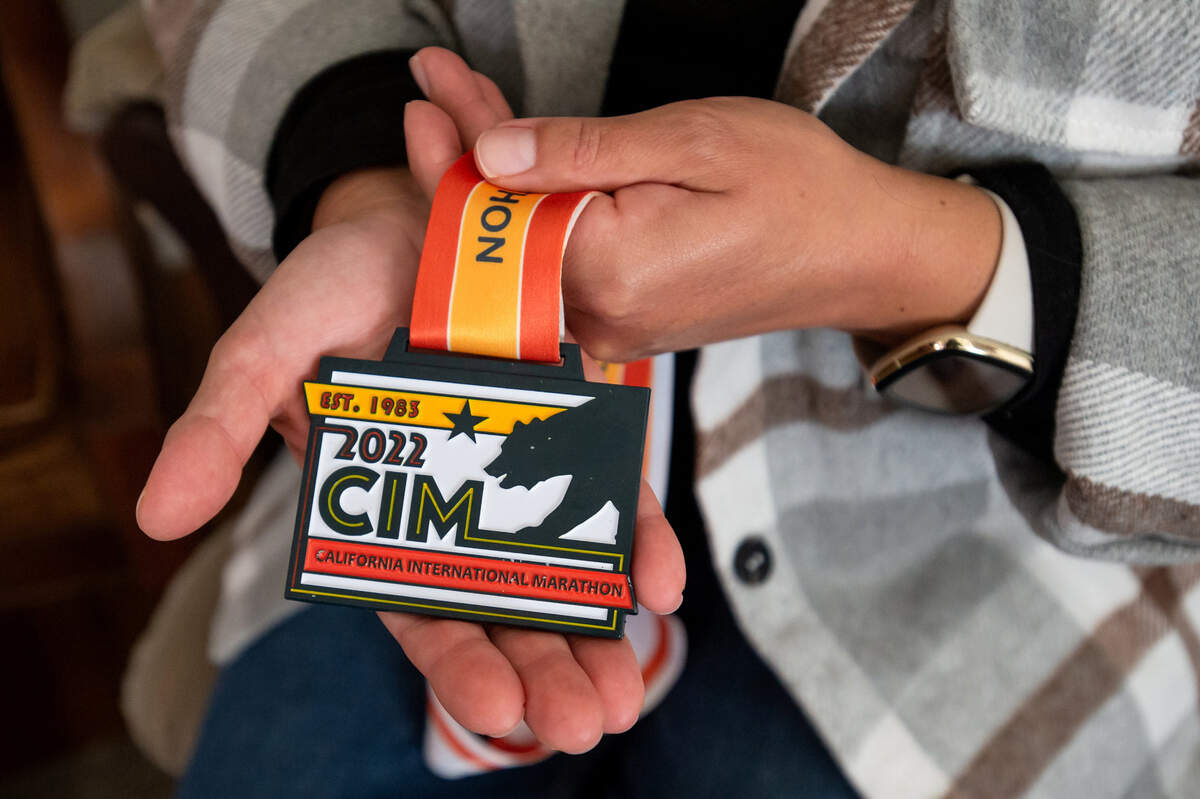
Abbott stayed in close contact with Augustina the rest of race day and visited Sutter Medical Center later that day, bringing Aaron’s finisher’s medal and other gifts.
“He put together such a great race, ran 26 of the 26.2 miles, and definitely we consider him a finisher of this race.”
A ‘girl dad’
After returning from Iraq, Kuen earned his bachelor’s degree in business at the University of Milwaukee, then his MBA at Sacramento State. He has worked for about the past decade at VSP Vision Care, most recently as a finance manager.
Augustina, once a substitute teacher at Elk Grove Unified School District, is a stay-at-home mom.
The two met in 2008, while Augustina was living in Oakland and Aaron in Napa.
Their oldest daughter, Norah, turned 9 four days after the marathon. Their youngest, Amelia, turned 3 later in December, the same day Augustina got the call saying her husband would be accepted at the Oakland facility.
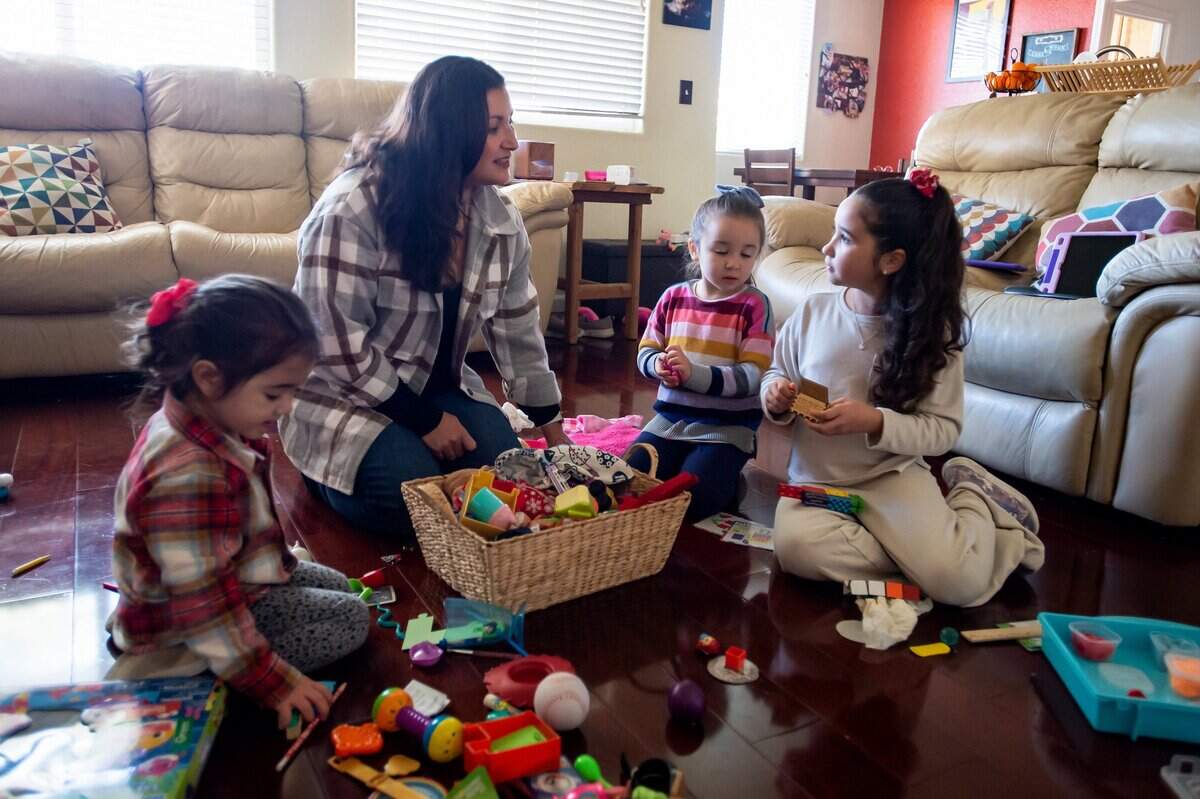
Kuen is a hands-on “girl dad” to Norah, Olivia and Amelia, their mother said.
“He rolls around on the ground with them. He plays with them no matter how tired he is,” Augustina said. “So him suddenly disappearing has been very hard.”
The three girls haven’t seen their father in person since the race, Augustina said, due to hospital and facility regulations.
Kuen had been working from home since the start of the COVID-19 pandemic, making the recent tragedy and transition that much harder for their three girls.
Drives to and from Oakland in recent weeks have also been challenging for Augustina, especially as pounding storms have drenched Northern California for nearly all of January.
Their daughters visit Aaron virtually via tablet video to say their nightly prayers for him, Augustina said.
Friends, loved ones and runners pitch in
Augustina has been able to rely on a deep roster for help and support, from family and loved ones to friends and neighbors.
A group of Aaron’s friends at VSP helped to set up a GoFundMe page to support the Kuen family – a step Augustina said she was initially “shy” to embrace. The crowdfunding effort as of Tuesday had raised more than $52,000 across more than 650 donations.
“They’ve all just shown up,” Augustina said. “The running community has shown up. Runners far and wide have emailed me, and just given so much emotional support.”
Abbott, the CIM race director, said Kuen’s case is in some ways “perplexing,” coming in a relatively young runner with no known health conditions.
“It’s very unexpected, and it’s very rare, so that’s something that rocks us deeply – not just us as event producers, but us as the running community,” he said.
“In this particular case, I think there’s a lot to be learned about rhabdomyolysis and what, in this case, made it come on so severely.”
Kuen had been scheduled for a key evaluation Jan. 24 to help determine the next steps in his rehabilitation, Augustina said. That assessment had to be postponed after Augustina caught the flu.
Aaron is still classified as unconscious, she said Tuesday, but is “making movements and meaningful improvements that typically come before a breakthrough.”
Until then, she sees potential in every small moment of progress. How far that potential can go, she said, “is gonna be up to time, and God, and Aaron.”
“Of course, there’s no guarantees. We don’t know how this story’s going to end.”

This story was originally published February 1, 2023 at 5:00 AM.