
Where are fallen trees in Sacramento taken? Here’s the journey the canopy takes
At least 1,000 tress haven fallen in Sacramento since the New Year’s Eve storm — several on homes, cars and people.
After the dust settles, a tree that was once planted in the ground to provide shade and oxygen is destined for a new role that’s much less glamorized but equally important. The fate of a fallen tree depends on where it tumbles, but it’s usually recycled in some shape or form.
“Tree debris, as organic material,” spokeswoman Brenda Bongiorno with the Department of Waste Management and Recycling wrote in an email to The Bee “must be processed per state law into compost/mulch/biofuel and is not allowed to be disposed of in a landfill.”
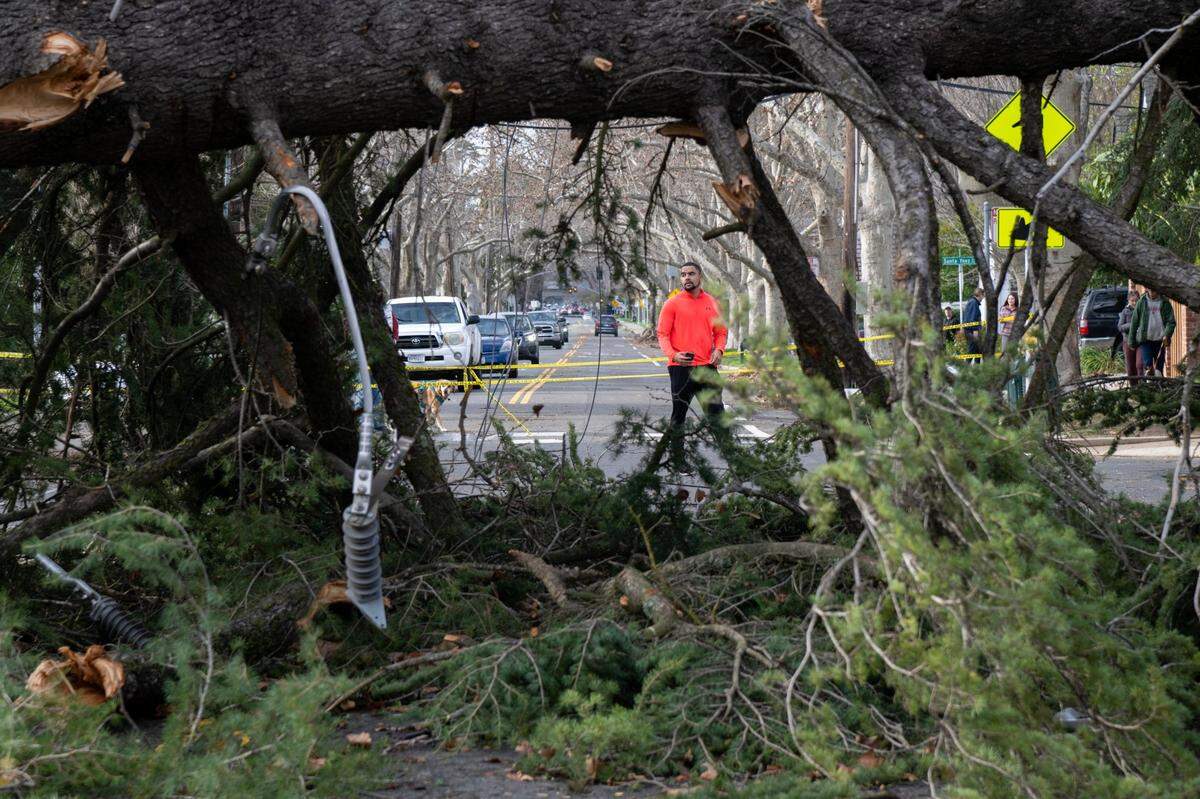
Scott Shaw, owner of Fair Oaks Arborist, a family-owned tree company, said his crew processes large trees pulled from homes and cars into wood chips and firewood. The material is then delivered to clients within the Sacramento area free of charge.
Larger logs are transported to TruWood Builders, a Sacramento company that turns the wood of California trees into furniture and decor.
“It’s a cost effective way to get rid of it...we try to never take anything to a landfill, Shaw said “because I rather it be repurposed the best it can.”
Where do Sacramento County’s fallen trees go?
Trees that fall within Sacramento County parks, said Sacramento County spokeswoman Kim Nava in an email to The Bee, are typically processed into small pieces with a wood chipper. The mulch is then spread throughout parks as needed.
Trees that fall on Sacramento County roadways face a similar destiny.
The Sacramento County Department of Transportation chops and chips the canopy and disperses the mulch along public streets. Wood that’s not used for public roadways is taken to Kiefer Landfill in Sloughhouse or North Area Recovery Station in North Highlands.
Large stumps that can’t be processed at the sites, Bongiorno said, are transported to a contracted biomass facility. Animal and plant material like wood, according to U.S. Energy Information Administration, is turned into heat and fuel.
Trees, branches and stumps collected by the Department of Waste Management and Recycling are usually shipped to waste manufactures Recology and Agromin and Yolo County. The contractors turn the material into compost, mulch and biofuel for profit.
What happens to trees that fall in Sacramento city?
The rules on fallen trees in the city of Sacramento are similar to Sacramento County, besides a few details.
Tree debris collected at city parks, said spokeswoman Gabby Miller with the city in an email to The Bee, are made into mulch and spread throughout various parks in the city. Some park trees are hauled away by contractors.
Trees that fall on public roadways in the city are shipped to Northern Recycling LLC in Yolo County, which processes tree debris.
The green material, according to Northern Recycling LLC’s website, is turned into compost, mulch, biomass fuel and soil.
This story was originally published January 21, 2023 at 5:00 AM.