
Golden 1 Center draws thousands, but that land was significant to people even before the arena
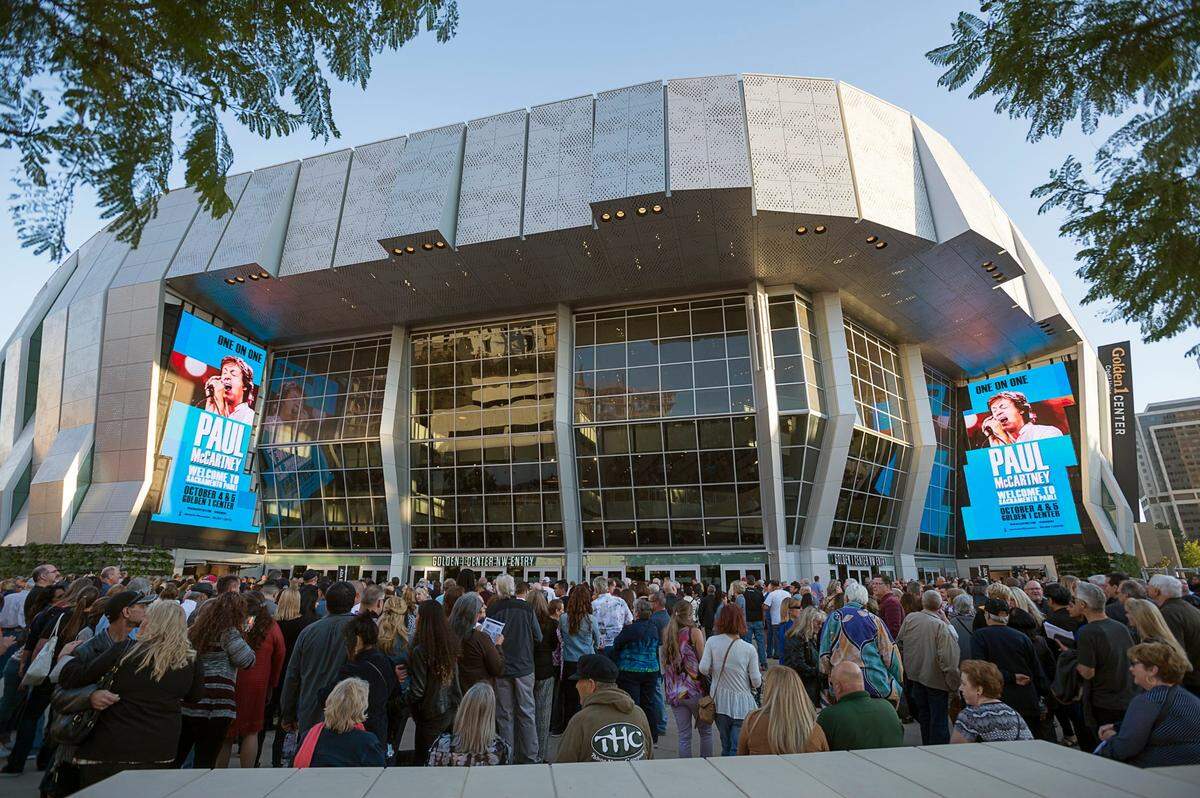
Go to an event at Golden 1 Center today and there’s no question it defines downtown Sacramento. This is deliberate, with Sacramento Kings officials and local leaders having centered much of their economic development strategy downtown around a pristine arena and nearby amenities in the Downtown Commons and along the K Street Mall.
Kings owner Vivek Ranadivé described the arena as “kind of the 21st century cathedral,” in an interview for Comstock’s magazine. Close to half a million spectators have been to Kings games this season as of this writing. Many others have been to concerts such as Paul McCartney or Lady Gaga since the arena opened in 2016.
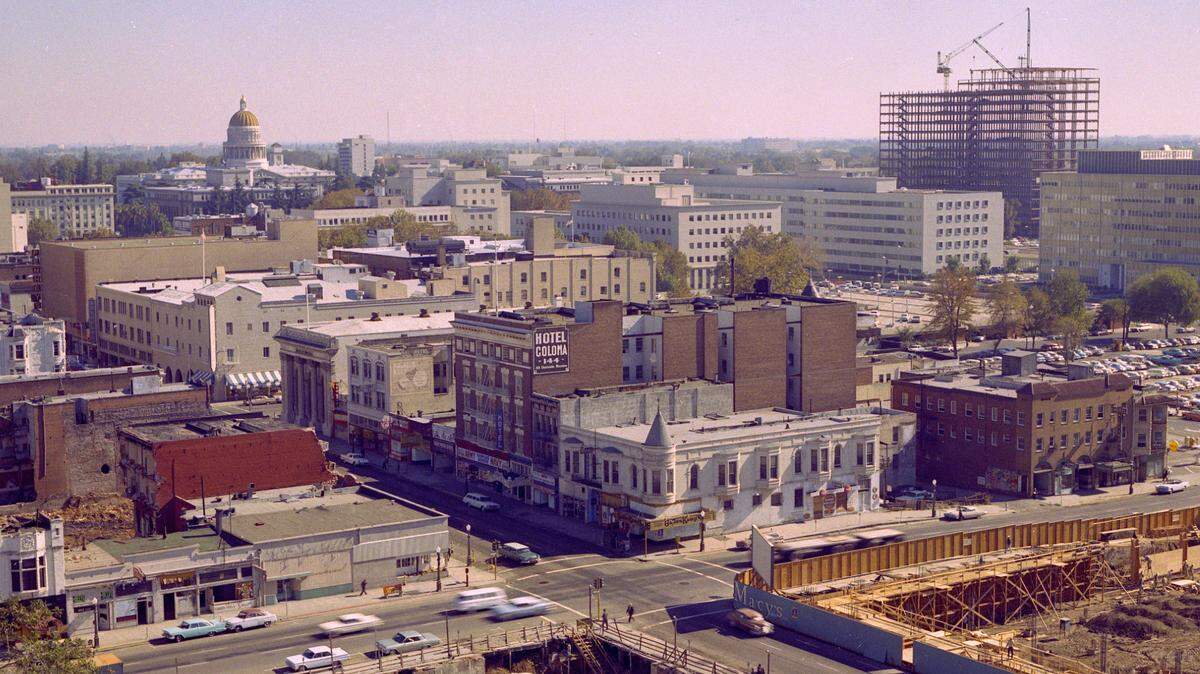
The area has long been meant to draw people in from other parts of the region, ever since the former Sacramento Redevelopment Agency demolished several blocks in the mid-20th century to build what later became Downtown Plaza.
“It was intended as a destination to get people to come back downtown,” said William Burg, a local historian who has written prolifically about the part of Sacramento that existed prior to redevelopment, the former West End.
But what’s been on this land in the last 60 or so years is not the full story. While there are scant reminders at Golden 1 Center, which sits between 5th, 7th, J, and L streets downtown, there’s a rich and varied history associated with these blocks.
Native Land and early settlement
A number of groups can trace lineage to this land, but the first were Native American tribes such as the Nisenan and Maidu. When weather permitted, tribes kept seasonal villages near the close-by Sacramento River, Native Dads Network deputy director Albert Titman said.
The city added a land acknowledgement in late 2021 before council meetings, as a nod to “Sacramento’s Indigenous People’s history, contributions, and lives,” according to its text. Nothing of the sort can be found at Golden 1 Center. Titman said he hoped some of the area could be restored “to its sacredness,” with space for ceremonies.
Sacramento incorporated as a city in 1850. One year prior, Freemasons held their first meeting in Sacramento history north of K Street and about 100 feet west of 6th Street, per a collection of Masonic papers kept at Central Library’s Sacramento Room. The meeting likely occurred around what today is an open-air plaza between the arena and the Kimpton Sawyer Hotel.
In the early days of city history, nearby land also functioned as a prominent horse market, according to Mark Eifler’s book, “Gold Rush Capitalists.”
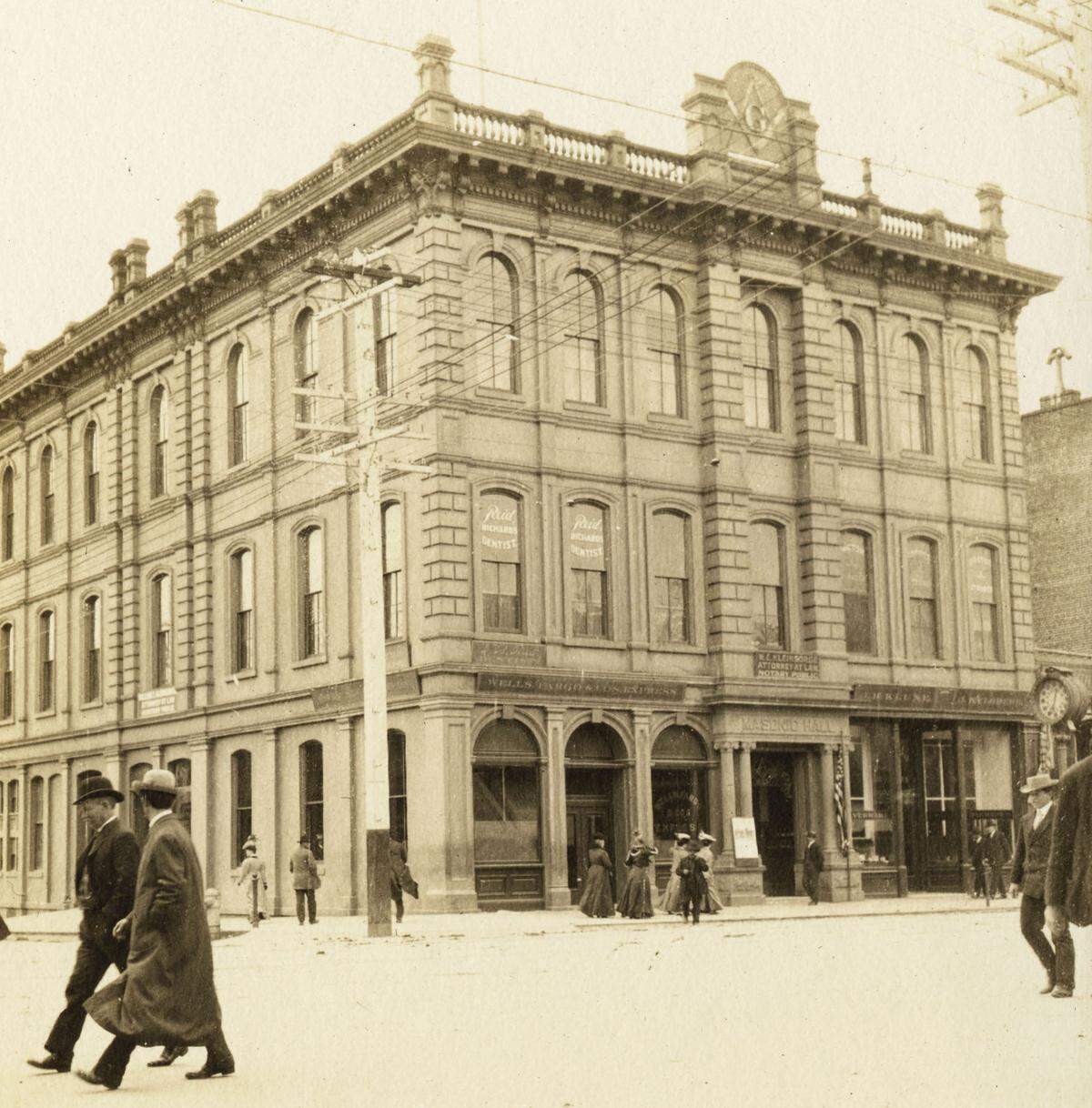
In 1865, Masonic Lodge No. 58 built an ornate temple at the southwestern corner of K and 6th streets, around where arena sections 104 and 105 are now located. The temple operated for Masonic purposes until 1920 when a temple that still stands was built at 12th and J streets. The former temple was sold in 1921 and demolished the following year for a Bank of Italy building.
“The razing of the old Masonic Temple will mean the destruction of one of the landmarks of Sacramento,” the Sacramento Bee noted in February 1922.
Freemasonry is a fraternal organization, with about six million members worldwide. While it’s maybe not the giant it once was, it still has many members who care about its history, such as its connection to Golden 1 Center’s land.
In 2014, 450 Freemasons attended a ceremony to lay a cornerstone for the arena. A team spokesperson at the time, who had an uncle involved in Masonry, supported the idea, according to Tristan Brown, a member of Masonic Lodge No. 40 in Sacramento. Shaquille O’Neal, an honorary Prince Hall Freemason, which is the Black branch of Freemasonry in North America, had a stake in the Kings then, too.
Russ Charvonia, a past grandmaster of Masons in California, said he had a lump in his throat during the cornerstone ceremony, which occurred on “somewhat hallow ground.”
Forgotten links
Clearly, there is some awareness about the historical significance of Golden 1 Center’s land, to a variety of interested parties.
A spokesperson provided a written statement from the Kings, saying they were “tremendously proud to be an integral part of downtown Sacramento’s vibrant community, continuing the long and rich legacy of this area.”
The Kings have been mindful to some extent about honoring the region’s history within the arena, having installed neon signs for businesses like Tower Records and Shakey’s Pizza in recent years. But some historic uses for the land the arena sits on or near have gone unrecognized.
Redevelopment required demolition in 1962 of a number of local landmarks between J, L, 5th, and 7th streets when much of the four square blocks were leveled for the mall project.
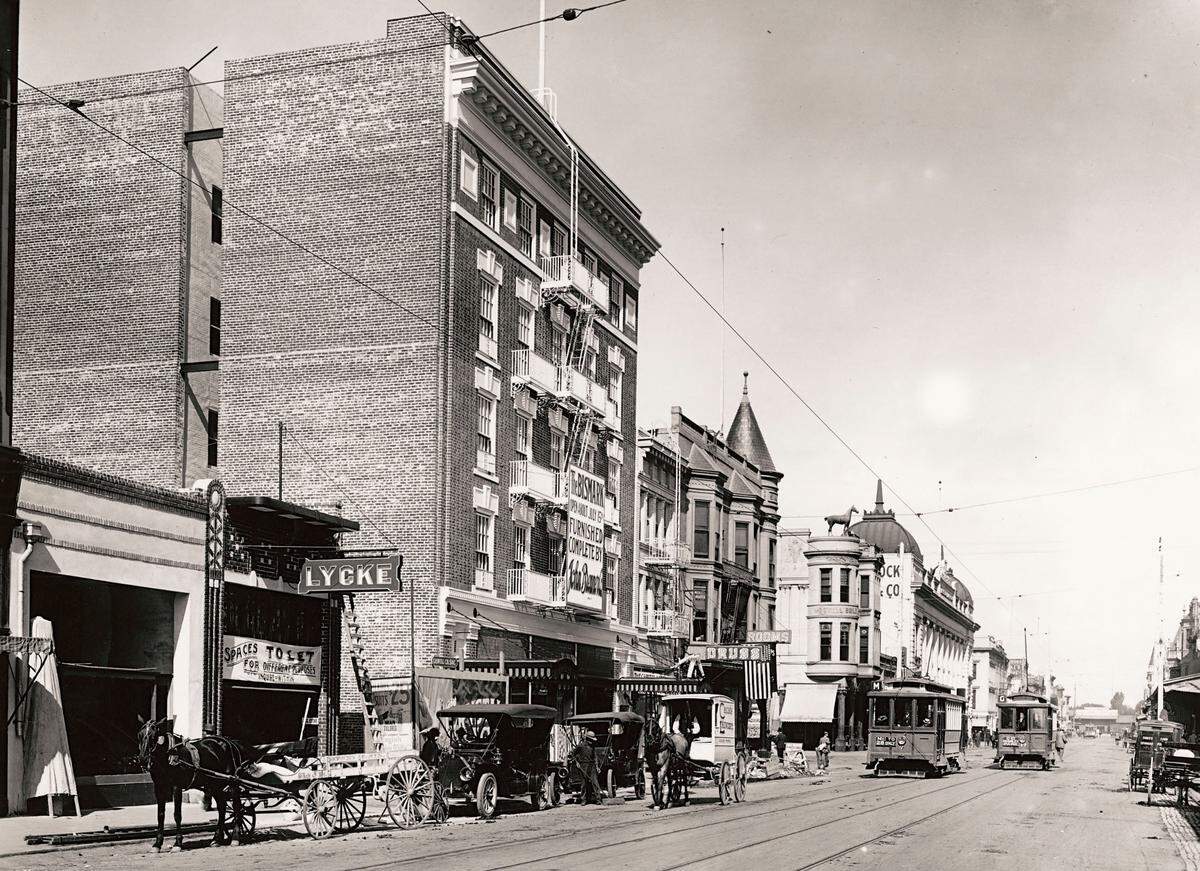
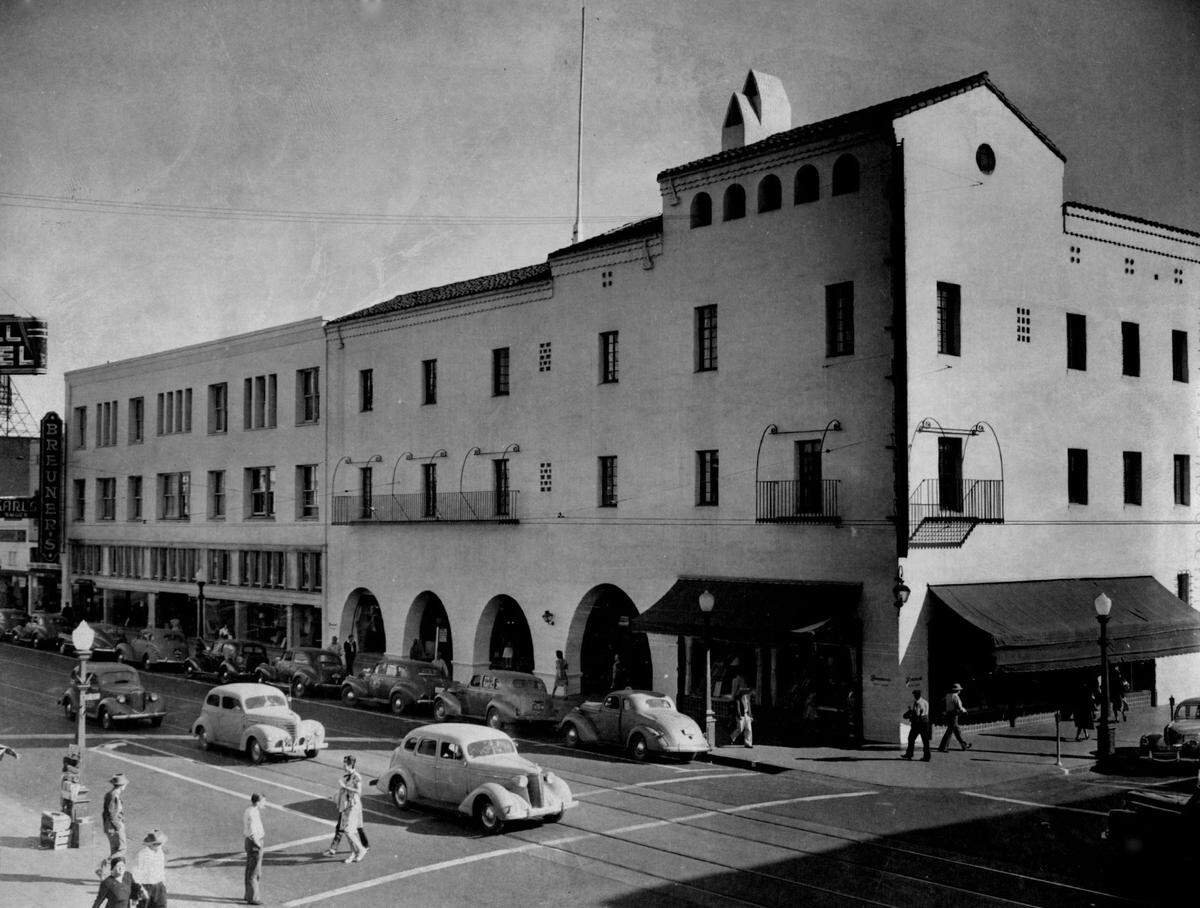
There was the Capitol Theatre at 615 K St., located roughly where a Haagen-Dazs ice cream shop now stands. Then there was John Breuner & Co., the first store for what later became the Breuners Home Furnishings chain, which opened at the southeastern corner of 6th and K in 1856, near where section 106 of the arena is now located.
The Golden Eagle Hotel stood about where Sauced BBQ & Spirits now stands, hosting former U.S. President Ulysses Grant in 1879. The hotel was the first headquarters in California for the Republican Party. Democratic headquarters were across the street. Occasional fights between the two groups in the 1860s and ’70s included rotten eggs, according to a book, “The WPA Guide to California.”
There are no remnants of the Capitol Theatre or Golden Eagle Hotel where they stood. No memento exists inside the arena for John Breuner & Co.
In his office, Sacramento Central Labor Council Executive Director Fabrizio Sasso keeps a tattered, leatherbound book with minutes from his organization’s first meeting on Aug. 25, 1889. The meeting, which included tailors, printers, brewers, and a variety of other professions, was held at the William Tell Saloon at 519 K St., located near where an $8 million sculpture of a piglet by Jeff Koons now stands.
Sasso said he found it fitting that the land was his group’s first meeting site, since union labor built and operates the arena. He said he’d like a plaque to honor the site’s labor history past and present, “some kind of formal recognition on this land… but it hasn’t been picked up by others yet.”
It’s unclear if any reminder can be found near the arena of First Methodist Church, which opened in 1859 and was one of several forerunners of First United Methodist Church which opened in 1925 at 21st and J streets and still holds services. Joan Haug-West, a church historian said she’d heard of a plaque honoring the former church, though she’d never seen it.
The old church, also known as the Sixth Street Church, merged in 1918 with Central Methodist, with the former continuing to hold evening services and other events thereafter, according to a First United Methodist Church history prepared in the 1980s. The Sixth Street Church was demolished in 1938 following a fire.
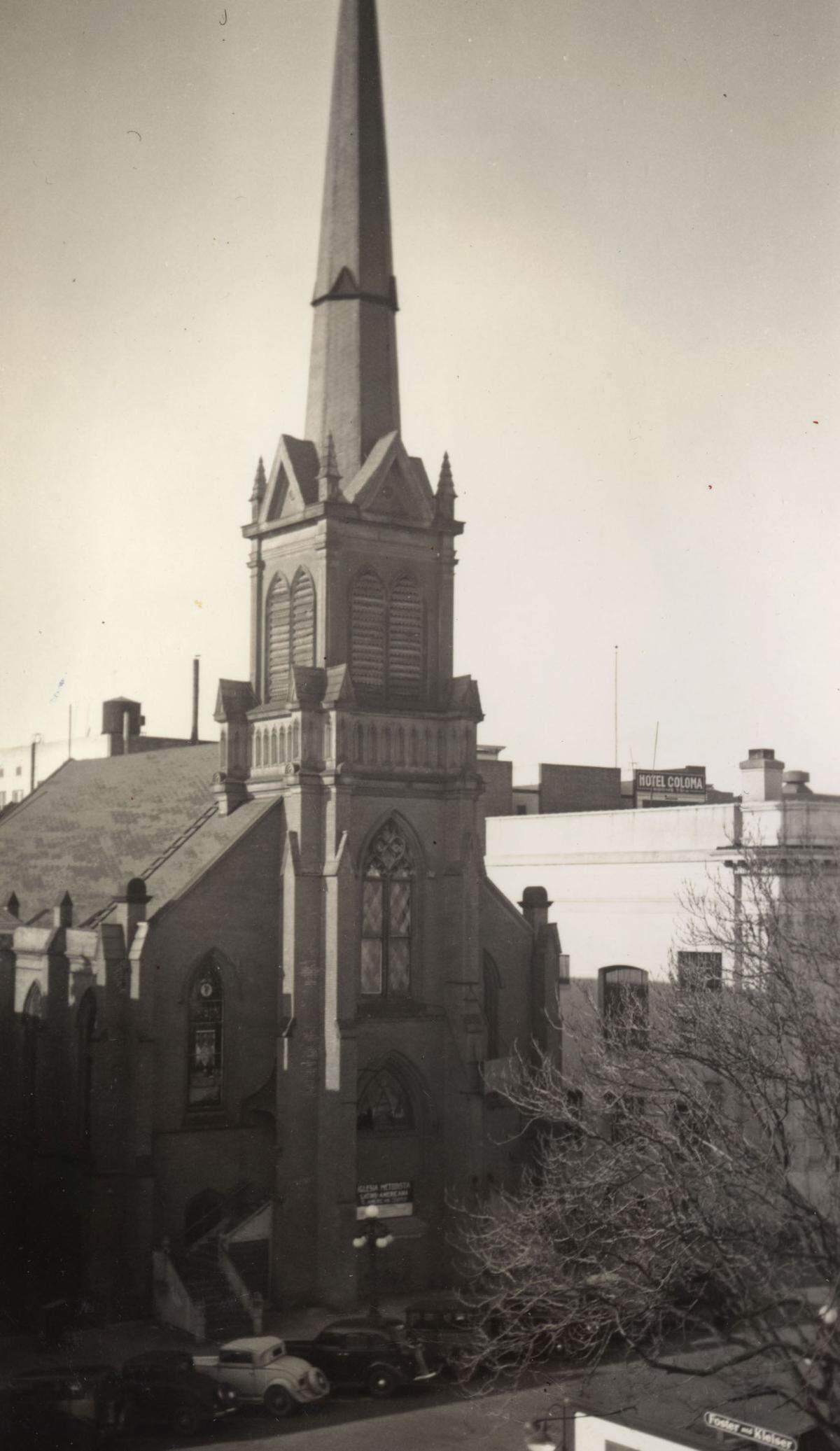
A Volunteers of America mission opened on the former church site in 1941. The mission, which was located near Sacramento’s skid row, helped people experiencing homelessness and others until the former redevelopment agency purchased the building in 1961 to demolish it.
VOA now has a mission several blocks over near Richards Boulevard. There doesn’t appear to be any nod at the arena today to a mission having existed on-site. Knowing it was there leaves Christie Holderegger, president and CEO of Volunteers of America Northern California & Northern Nevada with mixed feelings.
“It makes me feel proud that we had such a strong tradition that carried throughout the country, continuing to do that ministry,” Holderegger said. “But then it makes me sad that it went away.”
‘A neighborhood that had a real function’
Other parts of the blocks where Golden 1 Center now sits had different purposes.
Burg said a deconsecrated Presbyterian church across from First Methodist Church became a jazz club in the early 20th century. The Clayton Hotel along 7th Street, which later became Hotel Marshall, also featured jazz through its Clayton Club, Burg noted.
In the 500 block of K Street, there were gambling halls, Prohibition speakeasies, and houses of ill repute, all of which occasionally dot archival Sacramento Bee coverage. Along 6th Street, a number of bars were torn down in 1962 to make way for the mall, including Frank’s, Gold Nugget, and Cliff House.
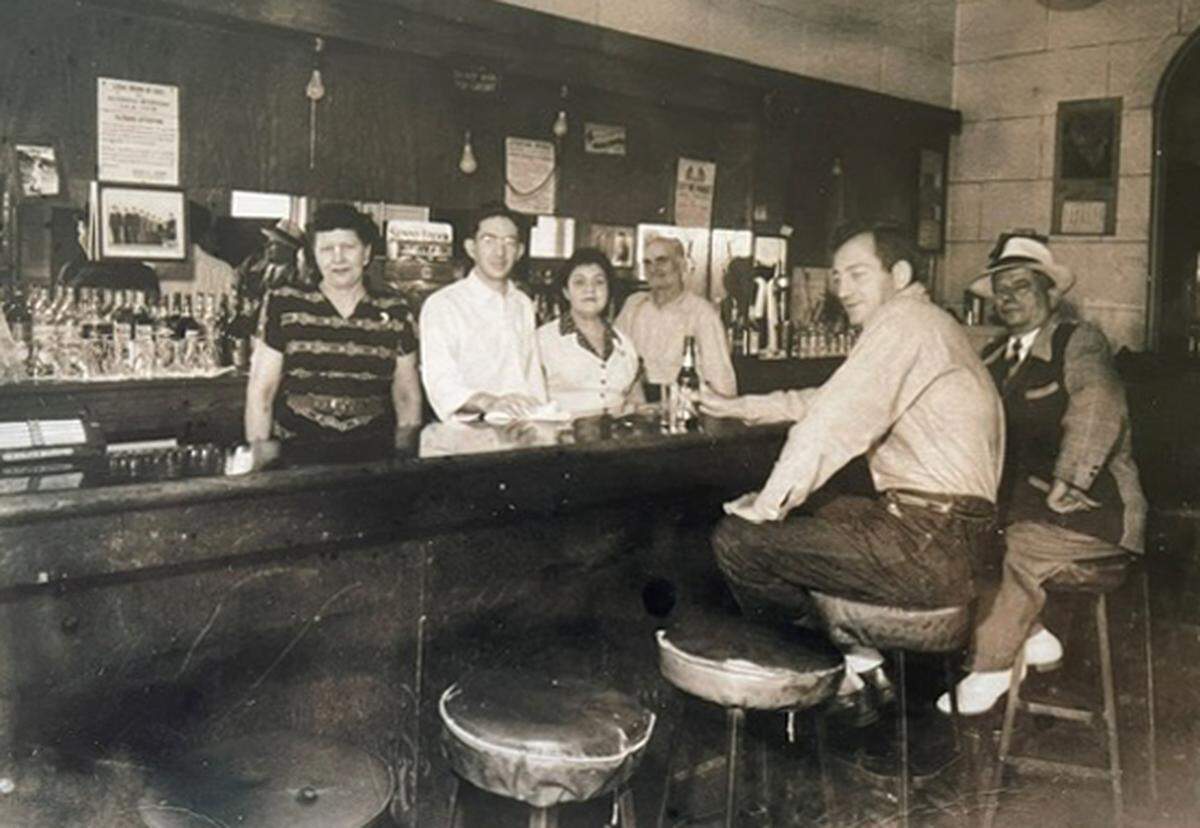
“It was a street without inhibitions,” an unnamed regular told the paper that June. “You could go down there and have a lot of fun without being afraid of someone finding out you were getting drunk, betting the horses or visiting with some strange woman.”
Frank’s had been run by a group of brothers including former minor league baseball player Gus Stathos, a Sacramento native who’d gone to spring training with Jackie Robinson through the Brooklyn Dodgers organization in 1946. Stathos’ daughter Paulette Cervantes, whose father died in 2017, said after Frank’s closed, the brothers ran another restaurant, the Hawaiian Hut in West Sacramento.
The most common thread about all of the pre-1960 buildings that were located between J and L and 5th and 7th streets is that nearly all are gone. Burg said that aside from two walls of the former Hotel Marshall, only the former Ramona Hotel – which was built along J Street in 1930 and is now owned by the Church of Scientology – still stands.
“It wasn’t necessarily the safest neighborhood or the tidiest neighborhood,” Burg said. “But it was a neighborhood that had a real function.”
Writer Graham Womack was standing courtside at Golden 1 Center for a media event last September when it hit him: He might have been standing in the same spot where his great-grandparents were married in 1919.
Inspired to research the area, he found a robust and largely-forgotten history associated with the blocks where the arena now sits. It’s land that’s transformed repeatedly in Sacramento’s history, but has somehow often been a key part of its plans and story.
Womack is a fourth-generation Sacramento-area resident who enjoys looking more deeply at the place where his family’s story is set.
This story was originally published February 9, 2023 at 6:30 AM.