Report sheds light on die-off of 20,000 fish at UC Davis lab. Here’s what happened
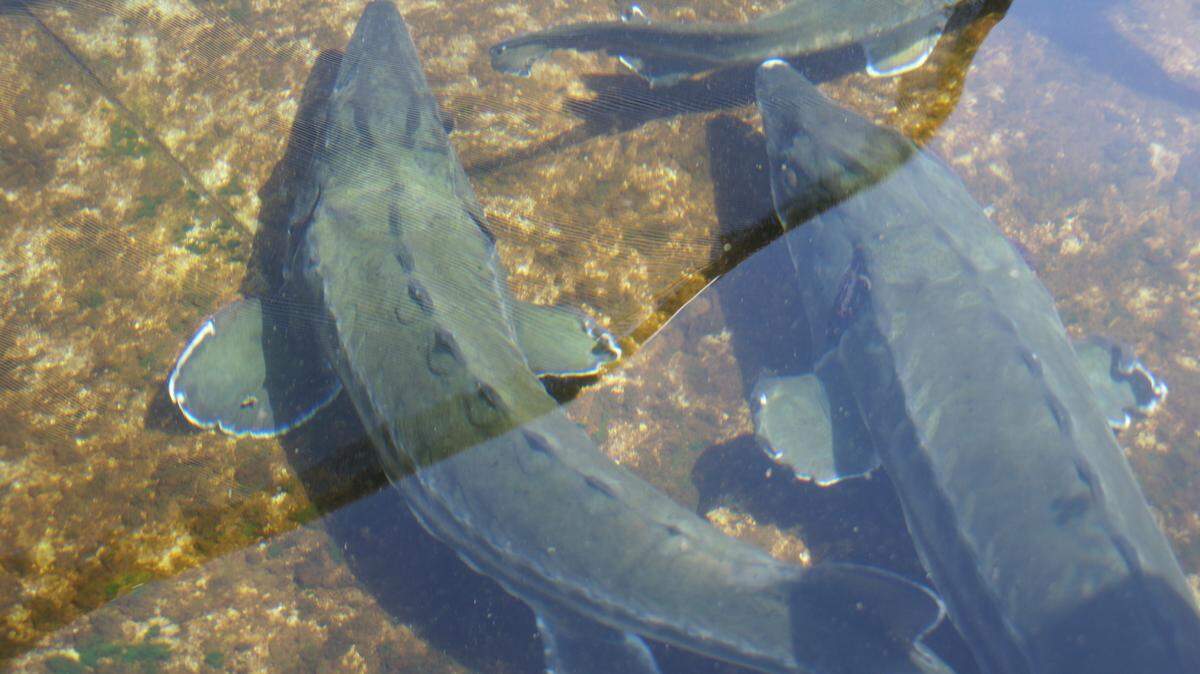
An outside investigator found that an August mass die-off at a UC Davis fish lab was caused by a malfunctioning aquarium sewage system that gave “no early warning signs of an impending catastrophe.”
The fish died Aug. 9, and the university published the investigator’s report March 1. Some endangered or threatened native California species, including Chinook salmon and green sturgeon, perished in the incident.
Anthony P. Farrell, a University of British Columbia professor emeritus who studies fish, said he had “unfettered access to information and individuals related to the fish mortality event.” His report offers new details of the horrifying mass death. It also says the lab is likely understaffed.
What happened in the lab that morning?
According to the report, an undergraduate employee walked into the Center for Aquatic Biology and Aquaculture around 8 a.m. on Aug. 9. That student conducted a routine inspection and discovered a tank full of dead fish. They immediately notified the lab director, Linda Deanovic. Deanovic sent out an email to senior veterinarians and other Davis personnel at 8:24 a.m., with the subject line “Complete Loss of Fish.”
“Hi Everyone,” she wrote. “Almost every single fish in a flow through system at CABA is dead.”
She explained in the email that she did not receive an alarm about a water shutdown, and the water in the tanks was still running. “I am going to look around the facility,” she wrote, “to see if I can identify the problem.”
Farrell’s report, which is based on interviews, documentation, a site inspection and new data analyses, says that lab workers, researchers and vets marshaled immediately. Among nearly 20,000 animals that had lived at the facility, they found scattered survivors, some of which they had to resuscitate: six sturgeon, about 100 tilapia and 11 frogs. Four of those sturgeon died, leaving an estimated 102 fish survivors along with 11 frogs and eight tadpoles.
The total fish death toll was 19,711.
Staff moved quickly to clean up the scene. Sacramento Rendering Company came for an emergency pickup. By the end of the day, most of the bodies were gone.
But people who responded to the lab were haunted. Some people, Farrell wrote, cried for days.
Chlorine was the immediate suspect
Someone at the lab opened the fiberglass lid of an outdoor tank early in the inspection that day; a strong chlorine smell wafted out. Lab personnel believed chlorine had worked its way into aquaria, but it was unclear how that might have happened.
In the course of investigating, it was determined that mineral deposits built up in part of the mechanism that disinfected the wastewater coming out of the “fish pathology” shed — where diseases were studied. The wastewater from the shed was injected with sodium hypochlorite before making its way to an onsite storage pond. That sodium hypochlorite was never supposed to get into a fish tank.
The mechanism that injected the sodium hypochlorite into the water, however, had been retrofitted 30 years ago to switch from a gaseous chlorine disinfecting system to a concentrated sodium hypochlorite solution. And, as Farrell explained, “concentrated chlorine makes water alkaline, and any minerals naturally dissolved in hard water tend to come out of solution, much like boiling hard water in a kettle.” This unanticipated problem caused mineral deposits to form in the pipe over decades.
A year and a half of chlorine measurements from the wastewater show the mechanism had been functioning normally at least up until Aug. 2. But eventually those mineral deposits functionally blocked the holes through which chlorine made its way into the outgoing wastewater.
With that path blocked, the chlorine was forced into the water pump at the wellhead, where the municipal water supply was, unbeknownst to lab workers, mixing into the water that then flowed through almost every single aquarium in the lab. That hadn’t been a problem in very small concentrations, but on the night of Aug. 8 and the morning of Aug. 9, the amount of chlorine in the aquariums skyrocketed.
The fish were poisoned.
What now?
Farrell made many recommendations in the report, some of which are already being followed. The lab, he said, should have a backup well water supply and should fully sever all the aquarium pumping systems from the university’s municipal water system, which contains some chlorine. Among other suggestions, he advised daily monitoring the fish pathology wastewater system — previously, the monitoring schedule was weekly — and possibly switching from a chlorine-based disinfection process to an ozone or UV light system.
He also pointed out staffing problems in the lab.
Two years ago, he wrote, the lab was reduced to one full-time support staff, one 60% time support staff and a handful of part-time students. Additionally, last June, the lab lost its facilities manager of five years, Matt Stone, to a full-time position at the university’s Teaching and Research Animal Care Services. According to the most recent available records, when he worked at CABA in 2021, Stone had a base pay of $39,000.
“My recommendations, which are largely hindsight, should further this objective” of greater safety, he wrote. “That said, future operations at CABA will require foresight, which will need adequate personnel and assigned time for such considerations.”
This story was originally published March 3, 2023 at 4:27 PM.