Local

The Yolo Bypass is filled with water after some dry years. Here’s how often that happens

Interstate 80 drivers and Capitol Corridor riders and have been treated this year to the spectacular three-mile journey over the flooded Yolo Bypass, which last received flows from the Sacramento River over the Fremont Weir in 2019.

The Yolo Bypass floods only intermittently – sometimes staying dry for years. Though it receives water from several streams and canals on its western edge, widespread flooding of the bypass depends largely on high water in the Sacramento River spilling over the weir at its northern mouth.

This year, rains in January and March have filled the Sacramento River high enough to send water into the bypass.

The bypass is a critical flood-control corridor that diverts high river flows to protect the city of Sacramento. It also serves as farmland and a wildlife area.
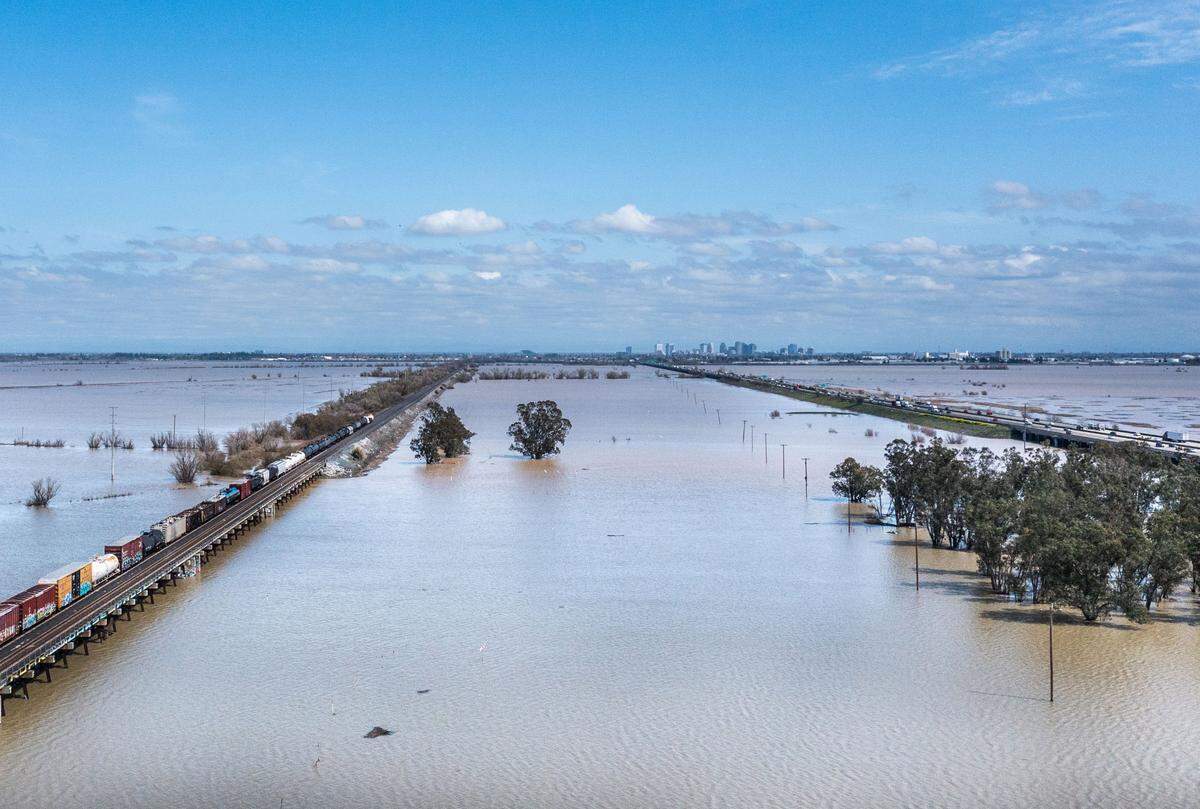
The Sacramento skyline floats over the flooded Yolo Bypass on Monday afternoon. The bypass, which is crossed by Union Pacific railroad tracks, left, and the roughly 3-mile Yolo Causeway that carries Interstate 80, right, floods when the surface of the Sacramento River reaches 32 feet and water overtops the Fremont Weir at its north end. It has been inundated twice this year after a dry spell going back to March 2019.
The Sacramento skyline floats over the flooded Yolo Bypass on Monday afternoon. The bypass, which is crossed by Union Pacific railroad tracks, left, and the roughly 3-mile Yolo Causeway that carries Interstate 80, right, floods when the surface of the Sacramento River reaches 32 feet and water overtops the Fremont Weir at its north end. It has been inundated twice this year after a dry spell going back to March 2019. Hector Amezcua hamezcua@sacbee.com
Get one year of unlimited digital access for $159.99
#ReadLocal

Only 44¢ per day

SUBSCRIBE NOW