Tahoe gears up to fight a tourism triple threat: Traffic, trash and high housing costs
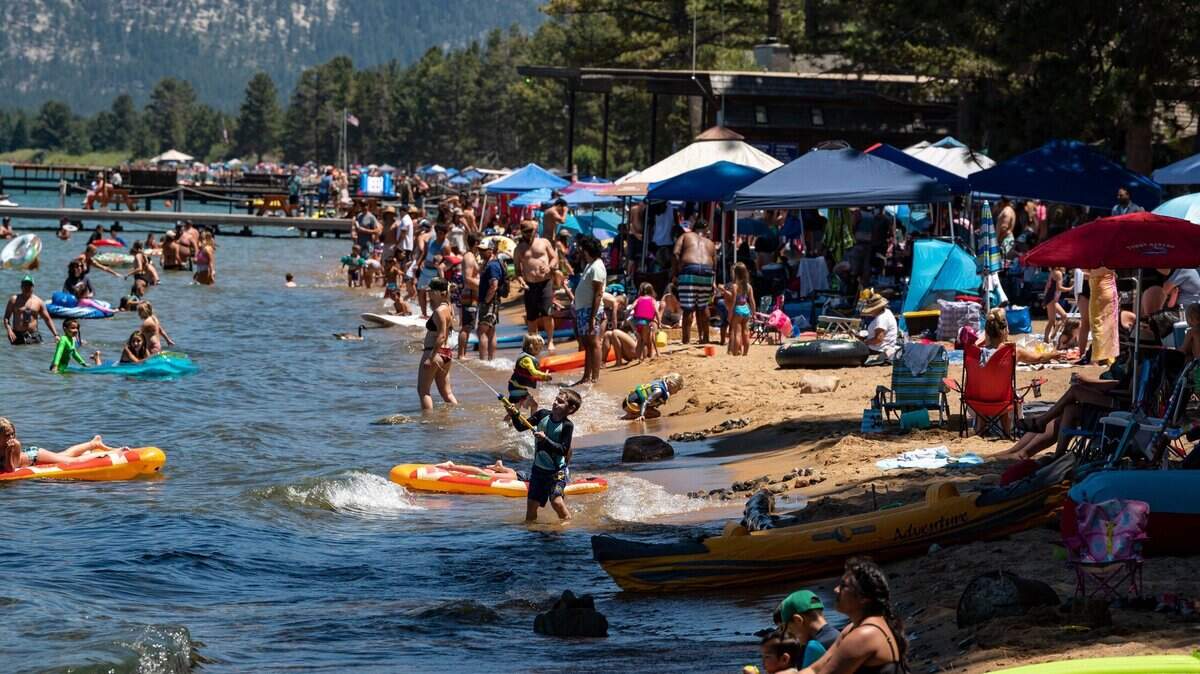
A group of 17 Tahoe organizations laid out a plan on Tuesday to save the ancient lake and the communities surrounding it from the impacts of intensely concentrated tourism.
Residents — including more than 1,100 locals who responded to a survey for the Lake Tahoe Destination Stewardship Plan — identified littering, traffic congestion and the soaring cost of housing as three of the most urgent priorities.
Locals are outnumbered by tourists in the Tahoe region, which is home to 54,000 people in the basin and another 17,000 in the nearby city of Truckee. Meanwhile, a study conducted to inform the stewardship plan found more than 2 million individuals visited the area and spent money there in 2022. Tourism has risen in recent years, along with the population of more remote workers who competed against longtime residents for limited housing.
The Tahoe shoreline circles through five counties, and, as Kirstin Guinn of the North Tahoe Community Alliance said, its problems require a coordinated regional response.
“The need for lake-wide action — it’s always been present,” she said. “But it became really obvious as we experienced the pandemic. And so we’re really taking that wisdom and applying it across the board.”
Tahoe trash, traffic and worker shortage all tied to high rent
Guinn described trash cans overflowing with refuse that blows into the fragile lake ecosystem; tourists who leave their dogs’ poop on trails; and hundreds of people who abandon broken plastic sleds in the forest.
The trash is an education problem: visitors may not know that trash left next to a full receptacle can end up blowing away or harming wildlife. It’s also a workforce problem: the region faces a worker shortage, which extends to public sector workers.
And a shortage of affordable housing has exacerbated that shortage, as fewer people can afford to live close enough to fill jobs. That lack of housing has fed into traffic, as some workers have been forced to commute from farther away, spending more time on the network of mostly two-lane roads. The plan calls for the region to become less car-centric, completing a basin-wide network of bike trails and adding more shuttle and bus service, both of which could serve tourists and workers alike.
One of the first and simplest prongs of the plan will roll out this summer, Guinn said: Local teens will be deployed as “ambassadors” to popular tourist spots, where they’ll provide a friendly face and help people learn how to better dispose of trash.
Through these summer jobs, the teens will be “educating people; directly solving whatever their issue is that is preventing them from doing the right thing; making sure they know what the right thing is and how their individual behavior contributes to everything.”
Affordable housing is a thornier problem. “There’s a lot of individual efforts going on right now, and we’re kind of hoping to bring them all in under the stewardship plan,” Guinn said.
Her own organization has supported Placemate, which has enrolled 28 properties as of April 2023 into a program that incentivizes the owners of second homes to rent them out long-term. Guinn’s organization is also supporting Placer County’s pre-development work on a new housing development.
This story was originally published June 21, 2023 at 5:00 AM.
CORRECTION: This story has been updated to clarify the role the North Tahoe Community Alliance is playing in two affordable housing efforts.