
Coyotes prowl in Sacramento neighborhoods. How should you report a sighting?
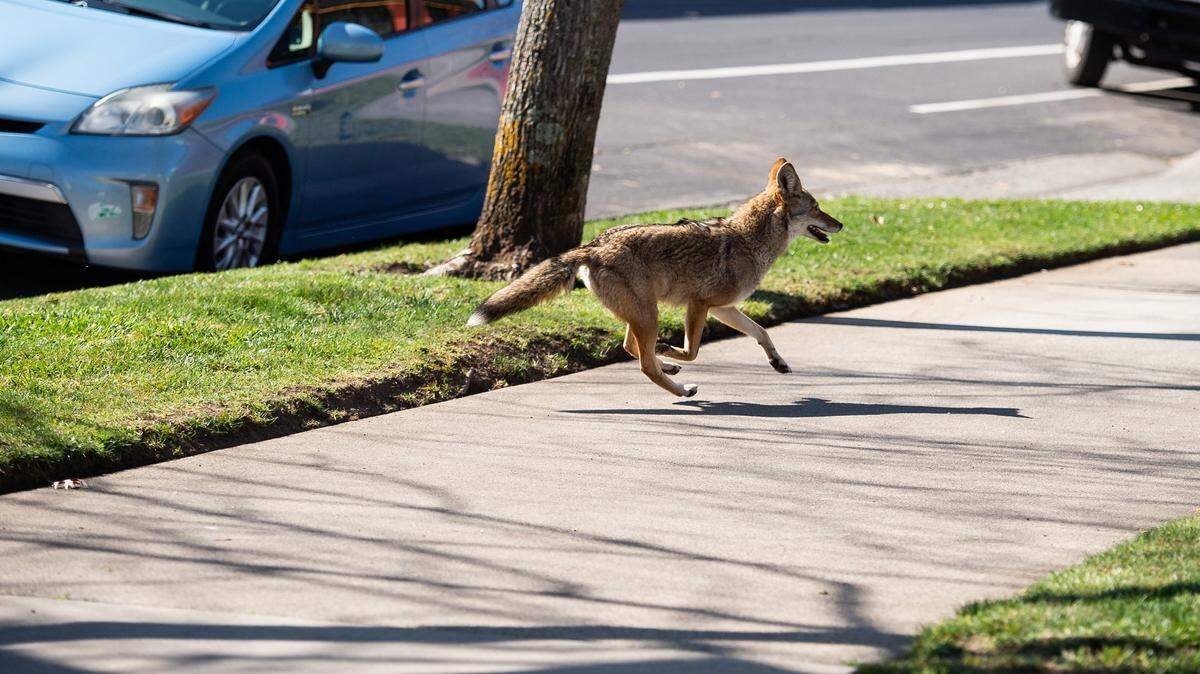
If you happen to see a medium-sized dog-like animal with a long, slender snout, pointed ears and bushy tail, it’s probably not your furry friend.
Your best bet is to stay away.
Coyotes are known for occasionally wandering from their habitats in grasslands and deserts into urban parts of California.
According to the city of Sacramento, coyotes often use trails, roadways, highways and flood control channels to travel. And they tend to drink water from swimming pools, street gutters, sprinklers, leaking hose and pet dishes left outside.
“Coyotes are wild animals and should be treated as such,” the city stated on its website. There have been reported coyote attacks on dogs and people in Sacramento and throughout California.
A reader asked The Bee how to report coyotes and what do they do about these sightings.
If you see one in your neighborhood, here’s what to do:
How to report coyotes
Generally, if you see a coyote, stay away and make noise so it can go away on its own, the California Department of Fish and Wildlife advises.
If it approaches you, yell or use noisemakers and make yourself appear large by waving your arms. And be sure to keep your pets on a leash and don’t let them roam from home alone.
If the coyote looks sick or injured, you can call 311 to get animal control services dispatched.
If it attacks a person, go somewhere safe and call 911 and then your local department of fish and wildlife services. For Sacramento, it’s 916-322-8911; the north central region’s Rancho Cordova line is 916-358-2900; and northern region’s Redding line is 530-225-2300.
You can also report sightings online to the CDFW. These can be for simple sightings or to report nuisance, animal welfare checks, public safety concerns and property damage.
What happens after your report
Peter Tira, a spokesperson for the CDFW, said that reports help the department keep track of incidents or wildlife hotspots.
“The bottom line is that Sacramento offers a lot of natural coyote habitat – particularly along the American River Parkway,” he stated in an email to The Bee.
“CDFW will only intervene in very limited, extreme circumstances such as a coyote attack on a person, which is very rare.”
This story was originally published June 30, 2023 at 1:25 PM.