
This beautiful Sacramento street could earn national historic designation. Here’s why
The Montgomery Way Gateway Historic District in Sacramento’s Curtis Park neighborhood is one of 13 nominated California areas passed by the State Historical Resources Commission to be added to the register of federal historic designations.
Commissioners unanimously voted during their quarterly meeting Friday to submit all 13 properties to the National Register of Historic Places. One property remained “in limbo” according to a spokesperson from the commission’s office. Alpha Omega Chapter of Sigma Chi Fraternity House was approved during Friday’s hearing, but the spokesperson said there was a remaining question of the property’s ownership.
Sacramento already has dozens of streets and properties recognized on this list, including the Sacramento Historic City Cemetery, Crocker Art Gallery and the California Historic Governor’s Mansion.
Residents of Montgomery Way spoke during the public comment portion of the hearing, both in support and opposition of their residential street’s nomination. Those who opposed the historical reservation of their district referred to its history of racial housing segregation, arguing it was a “step backward” and “would honor a divisive, elitist and racist past.”
“To allow this to go forward will continue the abominable contribution to disparities of race and ethnicity,” said Frances Freitas, a Montgomery Way property owner.
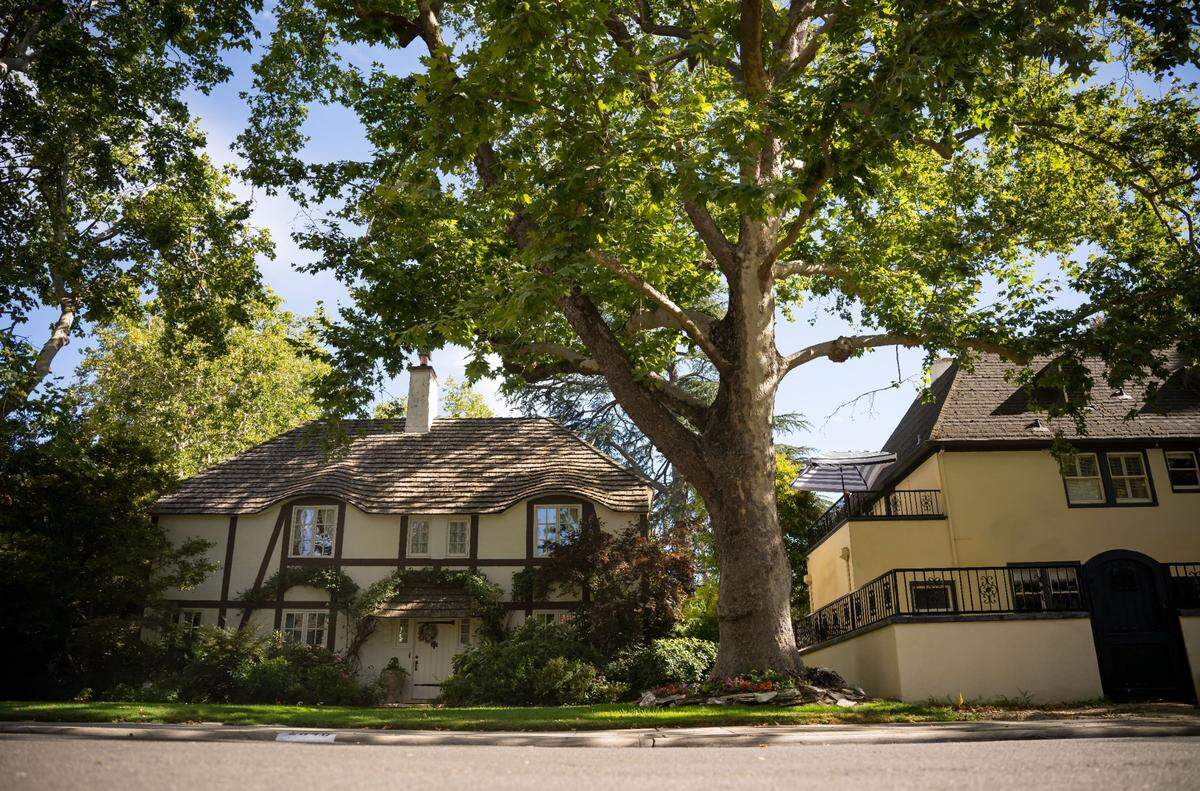
Those who were in support spoke to the preservation of the historical architecture of the homes lining the street. Sharon Kaplan, owner of a Tudor revival home on Montgomery Way with her husband, said she was “proud to own and care for this piece of Sacramento history.”
Many of the homes along the block — bookended by East Curtis Way and Franklin Boulevard — were designed by Dean & Dean, an architectural duo of brothers James and Charles. Their firm was responsible for many stately homes in the capital city before the Great Depression took root. The pair also designed downtown’s Memorial Auditorium and the Sutter Club, as well as Sacramento City College’s original buildings and Trinity Episcopal Church in midtown.
“We have 14 Dean & Dean designed homes on our street, along with one home that was built by Frank Williams,” Kaplan said. “All of these were prominent architects and builders of that time.”
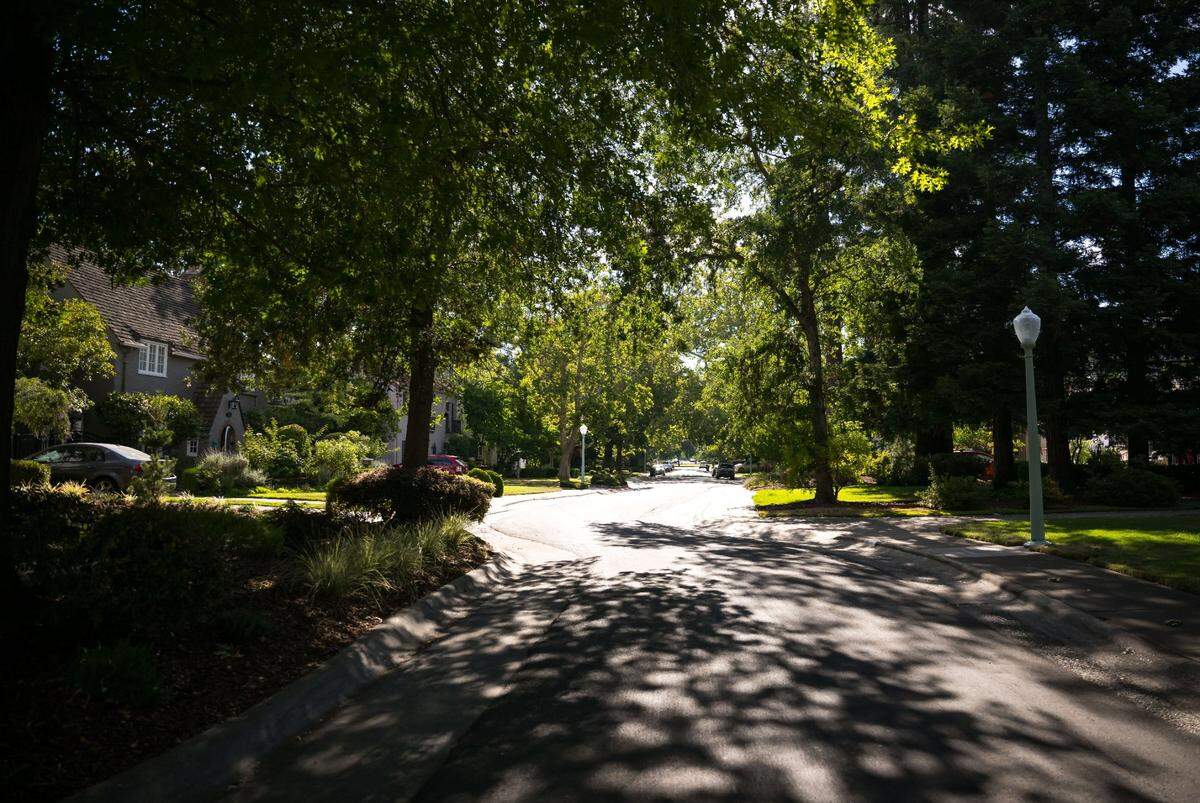
Historical significance of South Curtis Oaks
All but two of the 23 homes in the subdivision, known as South Curtis Oaks, were built between 1922 and 1937, according to a district record from California’s Department of Parks and Recreation. The nomination record to the state commission noted 18 contributing properties on Montgomery Way and three non-contributing properties.
The homes of the neighborhood were nominated for their historical architectural significance and the association of their development with the Better Homes for America movement. This campaign was a national trend initiated by then-Secretary of Commerce Herbert Hoover to boost home ownership before the Great Depression.
“The Better Homes movement stands on the belief that our people, by well-planned measures, can obtain for themselves a finer type of home and family life,” Hoover wrote in a 1926 pamphlet “Guidebook for Better Homes in America.”
South Curtis Oaks was built to reflect a “period of dramatic growth and economic prosperity in the Sacramento Valley,” according to the neighborhood’s nomination form. This lineup of architectural home designs was influenced by Italian, Spanish, Tudor and Mediterranean revivals to showcase influential business and social leaders of the Sacramento community.
The Anne Hathaway Cottage, a Tudor revival located at 2640 Montgomery Way, was registered as a federal historic designation in 2019. This home, built in 1923, was one of several designed by Dean & Dean in association with the Better Homes movement.
At the other end of the block, the home of J.C. Carly at 2761 Montgomery Way was registered in 2006. The man this home was named after operated a major Sacramento real estate company that built several of the Montgomery Gateway properties.
A history of housing discrimination
Carly’s firm, which employed Dean & Dean as its chief architect, levied deed restrictions in South Curtis Oaks based on racial discrimination, according to the district’s nomination form. Although a 1948 Supreme Court ruling struck down these covenant restrictions as unconstitutional, Carly resisted the push for housing integration.
That push was buoyed by residential maps created by state and federal agencies that segregated some neighborhoods as more or less-desirable based on the race and ethnicity of current residents, a process known as redlining.
Homeowners in redlined areas were less likely to receive federal loans without default, institutionalizing racial housing segregation. That wasn’t the case on Montgomery Way.
Thomas Lane, who lives at the J.C. Carly House with his husband, Spencer, said Montgomery Way’s architectural significance deserved the distinction as a federal historic district, despite its checkered past.
“I do think that is beside the point,” Lane said at the hearing. “I doubt very much that Spencer and myself would have been invited to live on Montgomery Way in 1922, being a gay couple and Jewish.”
Commissioners during Friday’s hearing did not deny the tactics used to keep the neighborhood out of minorities’ reach. However, the sole mission of the commission is to evaluate the historical criteria of submitted properties, according to Janet Hansen, one of the state commissioners.
“I don’t think a nomination is celebrating that history — it’s acknowledging the truth of a development of a neighborhood,” Hansen said.