
A walk through Sacramento’s Old City Cemetery can provide an interesting history lesson
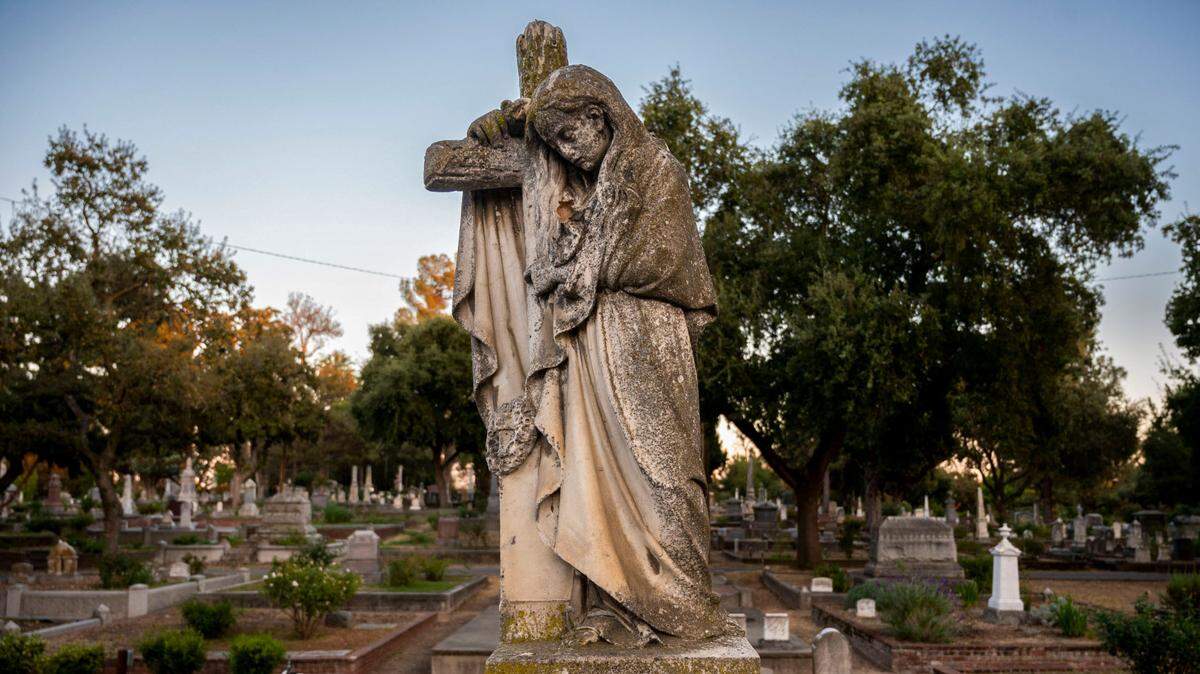
William Lawrence estimated he was running on maybe three hours of sleep in the last 24 hours.
Lawrence, a firefighter-paramedic for Sacramento Fire Department, helped organize a cleanup on Oct. 10 at Sacramento Historic City Cemetery. The task for Lawrence and roughly a dozen other fire personnel: Clean the Exempt Fireman’s Plot, where volunteer and paid firefighters for the city started being buried in the mid-19th century and have been interred as recently as 2001.
Having finished a paramedic shift around 8 that morning, Lawrence made his way over to the cemetery with a box of donuts for the other firefighters, who were all volunteering their time. Another of the men brought a box of coffee.
“It takes a team,” Lawrence said. “Nothing here happens with just one person.”
For some people, Old City Cemetery is a place to go on guided tours or even just morning walks. But for others, this is a place that still holds personal significance.
Finding the family plot
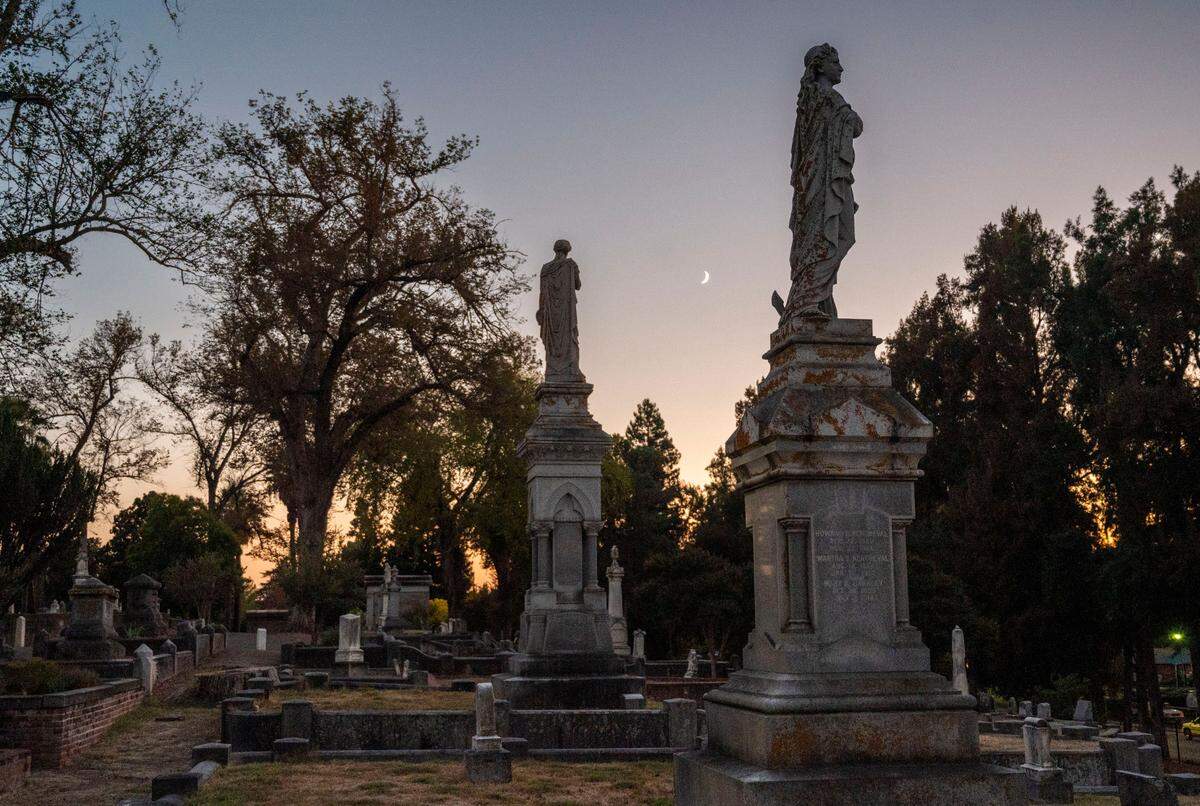
Ellen Robinson-Haynes was happy she could find her historic family plot without getting lost.
Old City Cemetery is located at Broadway and Riverside and next to two other graveyards directly south, Masonic Lawn Cemetery and Odd Fellows Lawn Cemetery and Mausoleum.
Robinson-Haynes, who wrote or edited for the Sacramento Bee from 1981-93 and lives in Land Park, was out walking her dog Winston with a friend on a road between the Old City and Masonic cemeteries when they encountered a reporter. She quickly offered to show a plot where eight members of her family are buried.
People in the plot include Robinson-Haynes’ great-great-grandfather Robert Robinson.
Robinson came to California in 1850, according to an info card from the Crocker Art Museum, which has a portrait of Robinson that is not on display. In time, Robinson became law partner of Edwin B. Crocker; negotiated deals for the Big Four, a popular name at the time for the men who led efforts to build the transcontinental railroad; and received an appointment from Abraham Lincoln as provost marshall in 1863.
Robinson-Haynes became interested in recent years in the historic family plot, is interested in being buried in it and said she’s walked “endless miles” in the cemetery with her husband.
“The Buddha said you should go hang out in eternal grounds – which were the places where they laid out the bodies – as a way of remembering that life is short and we’re all headed in this direction,” said Robinson-Haynes, who is now a chaplain.
She added, “There’s something for me about walking through here and just realizing at one time the vastness of these lives and now all we know about them is on these markers.”
It’s not to say that everyone in this cemetery has been forgotten to history. One of the Big Four, Mark Hopkins is buried here (with the others, Charles Crocker, Collis Huntington and Leland Stanford buried in Oakland, New York City and Palo Alto respectively.)
Other notable people buried in Old City Cemetery include: John A. Sutter Jr., who founded and planned the city of Sacramento in 1848; Hardin Bigelow, who was the city’s first mayor; and William Stephen Hamilton, a son of American founding father Alexander Hamilton.
Marcos Breton wrote about William Hamilton for The Bee in 2016, after Lin-Manuel Miranda’s groundbreaking musical stirred renewed interest in all things Alexander Hamilton. Breton noted that one of Miranda’s songs was about hopes that men of Alexander Hamilton’s generation had for those who came after them.
“William Hamilton was only 6 years old when his father was killed,” Breton wrote. “Sadly, his life lends extra poignancy to Miranda’s lyrics. He did not realize the promise of his father’s generation.”
Archival websites are also making it easier to rediscover more obscure burials in the cemetery, such as the earliest-known Sacramento firefighter to die in the line of duty, Charles Gillespie. Upon his death in 1884 at 39, The Bee referred to the English-born Gillespie as “one of the oldest and best known firemen in Sacramento.”
Gillespie died when, while driving a horse-led truck for the Hook and Ladder Company to a fire downtown, he attempted to navigate a tight railroad underpass at 6th and R streets and struck his head on heavy timbers. “He was a favorite of his brother firemen and many of them wept upon hearing the news,” The Bee noted.
Some Sacramento Fire Department personnel teared up near the end of a ceremony on Oct. 13 as Chief Chris Costamagna read the names of Gillespie and 41 subsequent city firefighters who’d died in the line of duty, most of whom aren’t buried in the Exempt Fireman’s Plot.
“As it gets closer to the end, it gets harder, because you know the people,” Costamagna told attendees.
A ‘very unique’ cemetery
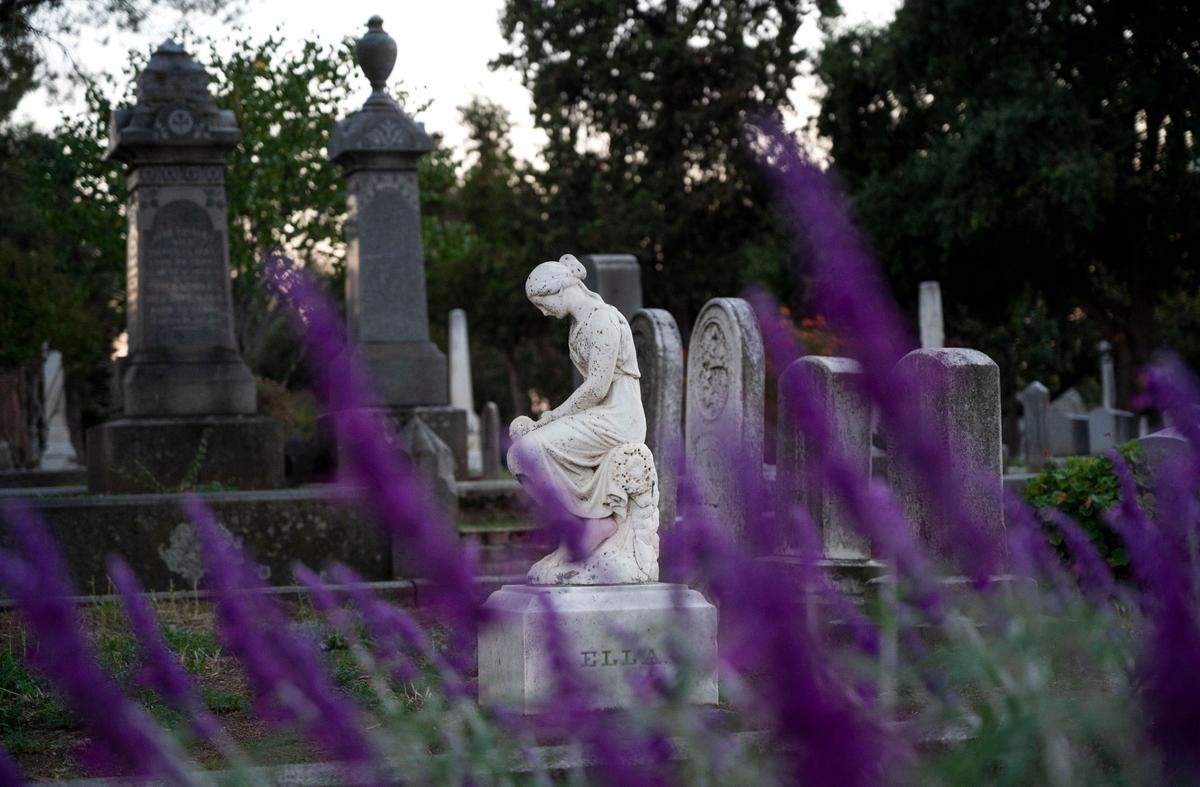
Old City Cemetery was added to the National Register of Historic Places in 2014, in part because of its diversity, said Marcia Eymann, city historian for Sacramento.
“Anybody and everybody is buried there, which makes it very unique,” Eymann said. “Most cemeteries throughout the United States are designated by the religion that you’re based in or by your race.”
Lori Bauder, who manages the cemetery for the city also noted the graveyard’s lack of segregation.
“I always caveat that with the fact that they did have to have money to be able to buy a plot,” Bauder said. “So unfortunately, there were a lot of African Americans that may not have been able to make that much money.”
Still, there are African Americans buried in the cemetery, such as Marcus Langley, who fought for the Union Army during the Civil War and died in Sacramento in 1899.
Nelson Ray, according to a plaque in front of his family plot, secured his release from slavery and “worked in the gold fields of Northern California to buy the freedom of his beloved wife and three of his eight children bringing them west across the plains by wagon train in 1854 to establish a home in Placerville.”
The plaque noted that it took until 1877 when “the rest of the Ray family shattered by the child-slave markets of Missouri was finally reunited in Sacramento.”
There’ve been efforts in recent decades at Old City Cemetery to better tell the story of people buried there, with Eymann’s center providing placards that are installed around the grounds. One is dedicated to May Hollister Woolsey, who died at 12 of encephalitis in 1879. A trunk of her belongings was found sealed behind a wall of her home a century later, the placard notes.
The cemetery also includes a plaque installed in 2001 for its Old Tier Grounds, which was located just north of Broadway and was an unmarked final resting place for more than 3,000 pioneers, including 200 Chinese immigrants who died between 1851 and 1855.
All told, Old City Cemetery has headstones for people who died as far back as 1849 and as recently as this summer.
Rob Rivett, a 76-year-old Fair Oaks resident said ashes for his mother Virginia Rivett were scattered at Lake Tahoe after she died on July 1 at 98 in Roseville. She has a headstone, though, at Old City Cemetery in a plot where other members of her family, including her husband are buried.
Virginia Rivett worked hard in life, with family meaning everything to her. It was important to her to be remembered, her son acknowledged. That said, being buried in a historic pioneer cemetery appears to have been of little concern to her.
“She never did talk about that,” Rob Rivett said. “She just wanted to be where the family was.”
Would you like to visit?
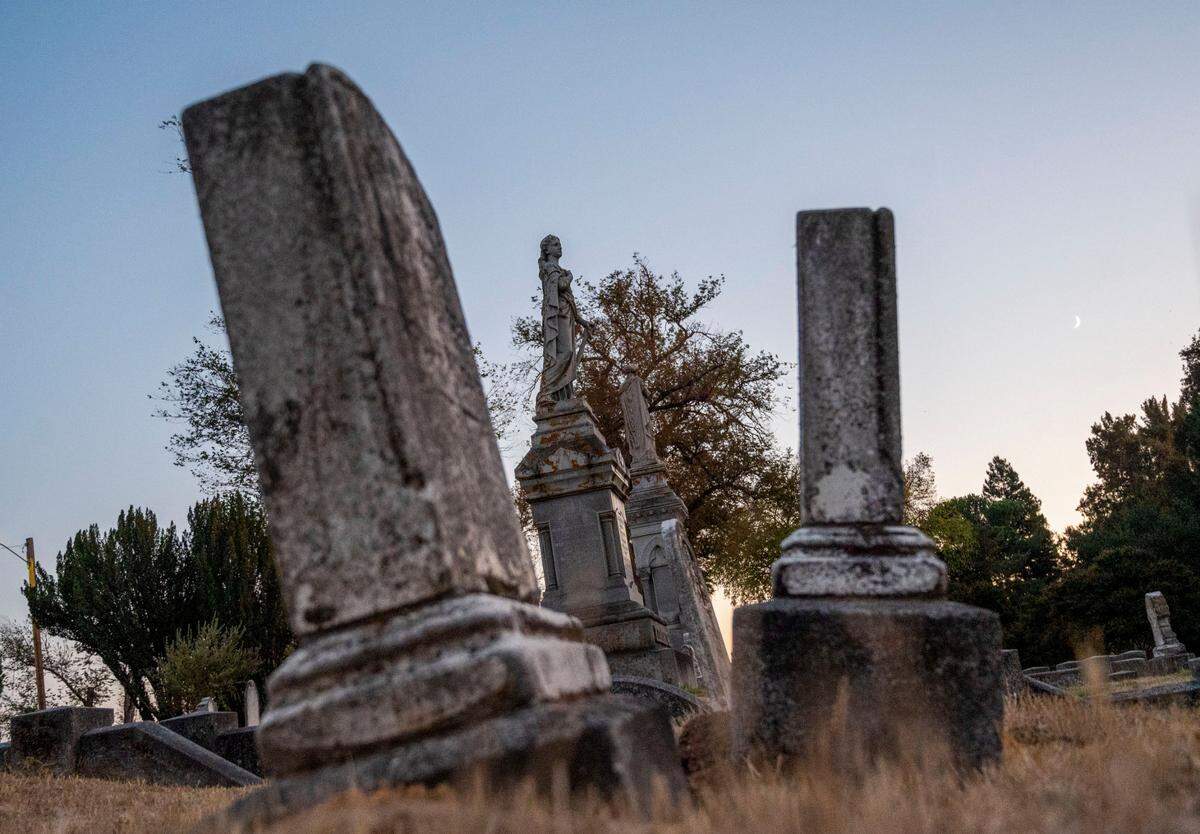
The Old City Cemetery is open daily 7 a.m. to 7 p.m. daily (March through October). Hours are adjusted for the winter months with a 5 p.m. closure. You can find a walking tour brochure at https://bit.ly/OldCemeteryBrochure.
The Old City Cemetery Committee, a nonprofit group dedicated to preserving the site, offers guided tours for a fee (tickets range from $10-$35). Information about available tours can be found at historicoldcitycemetery.org/tours-events