
Is Sacramento food waste program working? Officials say it’s nearly impossible to measure
When Sacramento residents learned they’d be required to recycle their food waste as part of the state’s overarching mission to fight climate change, many had questions about how to integrate the new law into their everyday lives.
Sacramento’s organic waste program is just over a year old and still, there’s confusion about what food scrap goes in which bin. Reader Stefany Lara wrote to The Sacramento Bee’s service journalism team, which focuses on answering community questions, looking for an update on the program since its launch in July 2022.
“Myself, I make a (good) faith attempt to follow the new regulations,” she said. “But I can’t say I’m perfect in terms of keeping up with my compost.”
The Bee consulted spokeswomen Jesa David with the city of Sacramento Recycling & Solid Waste Division and Brenda Bongiorno with the Sacramento County Department of Waste Management & Recycling to get an understanding of how Sacramento’s food waste programs have materialized over the last year.
Here’s what we found.
1-year food waste recap
Both the city and county’s residential food waste programs launched in July 2022 to be compliant with Senate Bill 1383, a California law that mandates all jurisdictions provide organic waste collection services to residents and businesses.
SB 1383 has a lofty goal: Reduce the state’s climate pollution to the point where it feels like 3 million cars have been taken off the road.
“California’s climate crisis gives no time to delay cutting organic waste pollution,” the California Department of Resources Recycling and Recovery, also known as CalRecyle, wrote on its website.
Sacramento’s system — where residents are mandated to toss their food and yard waste into the same green-colored organics containers for weekly pickup — makes it nearly impossible for officials to determine if people are complying with the law, officials said.
“We’re never going to be able to really know exactly how much food waste is being recycled,” David said.
Still, the city saw a substantial increase in organic waste collection between the 2022 fiscal year (65,100 tons) and the 2023 fiscal year (76,800 tons). During the same period, garbage weight decreased by 9,100 tons.
For reference, a small car weighs about one ton.
SACRAMENTO COUNTY NUMBERS
The county faces similar obstacles with its food waste program in unincorporated areas (which do not include Sacramento, Folsom, Elk Grove or other cities within the county limits).
In an email, Bongiorno said Sacramento County’s data on organic waste collection is not an “accurate indicator or metric” to measure their food waste program.
The county collected 94,453 tons of organic waste and 140,177 tons of garbage in the 2022-23 fiscal year. That’s an increase from 73,851 tons of organic waste and a decrease from 150,460 tons of garbage in the 2021-22 fiscal year.
The requirement to toss food waste alongside food-soiled paper and yard trimmings — in addition to the winter rainstorms that toppled trees and scattered branches across the county — could be the reason for the notable jump.
In January, the state endured record-breaking rainfall that caused flooding, downed trees, left people without power, destroyed homes and killed close to 20 people, including several in Sacramento County. Winter storms that continued through March created the deepest snowpack recorded across the Sierra Nevada in at least 40 years.
While high precipitation and fallen branches can skew the weight of yard waste, David said it’s “unlikely that only rain is responsible for such an increase in one year.”
But Bongiorno said it “likely” is.
The city and the county use waste management companies to process their organic recycling.
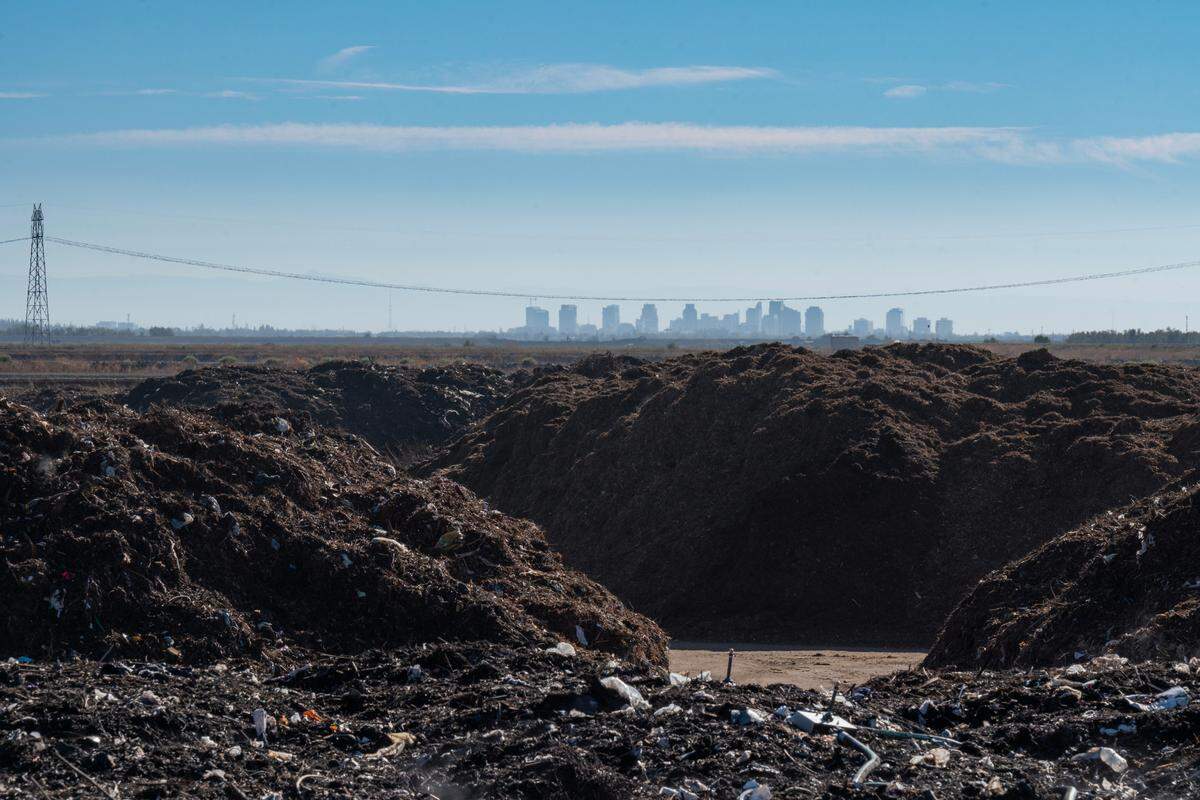
Your bins are being monitored
Starting in 2024, SB 1383 allows jurisdictions to begin fining their residents for not properly recycling their organic waste.
Sacramento will take a different approach to enforcement for now.
The city has data reporting systems that help monitor who is and isn’t putting their organics cart on the curb for weekly pick up.
Officials could pull a sample of homes from its 89 routes and physically check inside their organics bins. Educational material will be given to homes with a significant amount of incorrect items inside of them like hard plastics, garden hoses and clean paper and cardboard.
The county has similar programs in place to evaluate what residents are tossing in their organics carts including a “lid flipper” program and cameras on its garbage trucks.
“When in doubt throw it out. Better to put it in the garbage if you’re not sure,” David said.
Over the last year, both jurisdictions have remained focused on educating residents about their food waste programs and efforts will continue into the new year.
This story was originally published November 7, 2023 at 5:00 AM.