Ukrainians and Russians are at war. In Sacramento, they protest together
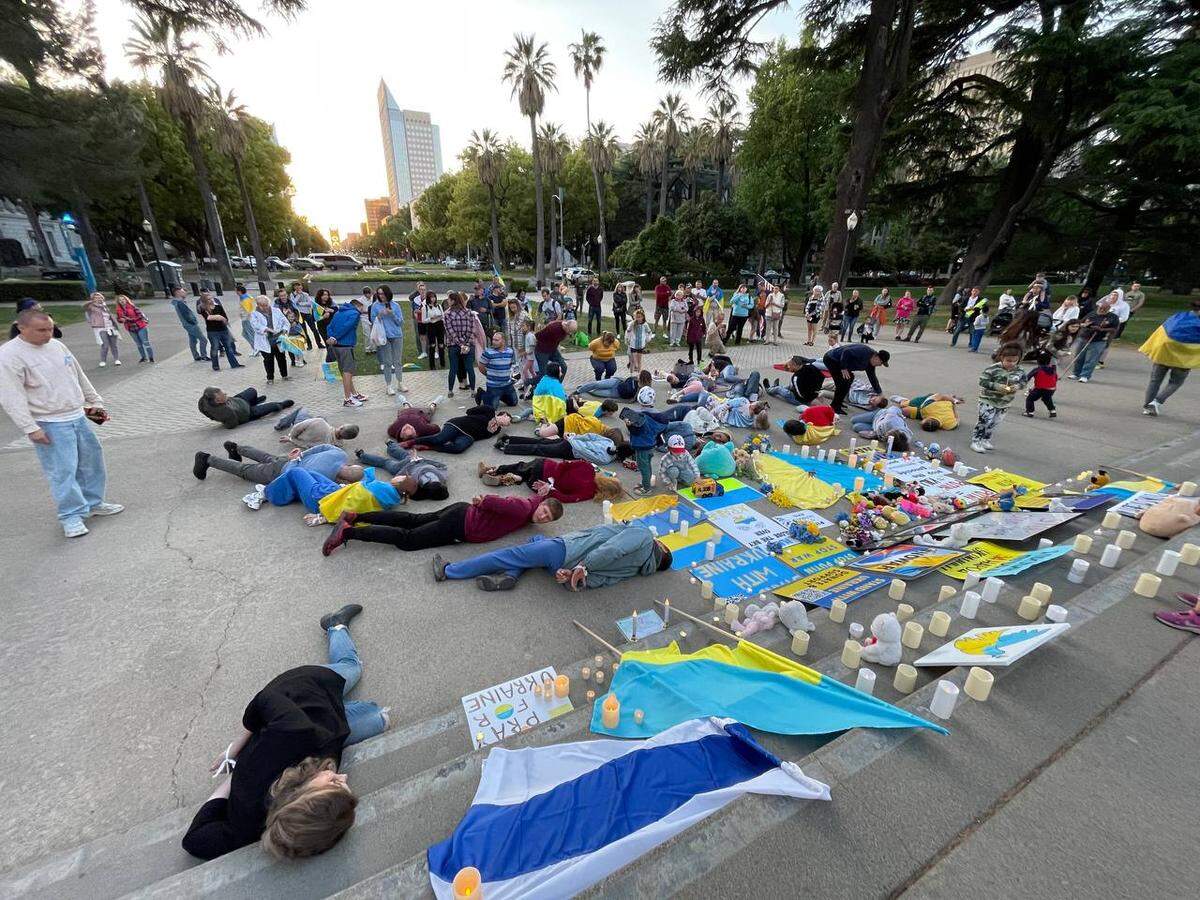
On a chilly Christmas Eve, when many people in Sacramento were home wrapping presents, watching football and playing video games, hundreds of refugees gathered on the steps of the state Capitol, as they do on the 24th of every month, to protest Russia’s ongoing war against its neighbor Ukraine.
The protests aren’t your typical bullhorn fare. They have an artistic flavor that includes music, poetry, and flash mobs. The organizers say the protest art boosts morale at a tough time.
World leaders and public attention have become distracted by the spiraling conflict between Hamas and Israel. Critical aid for Ukraine is stalled in Congress. Far-right politicians are gaining power in Europe, further threatening the coalition that has helped Ukraine survive the Russian onslaught over the last 22 months.
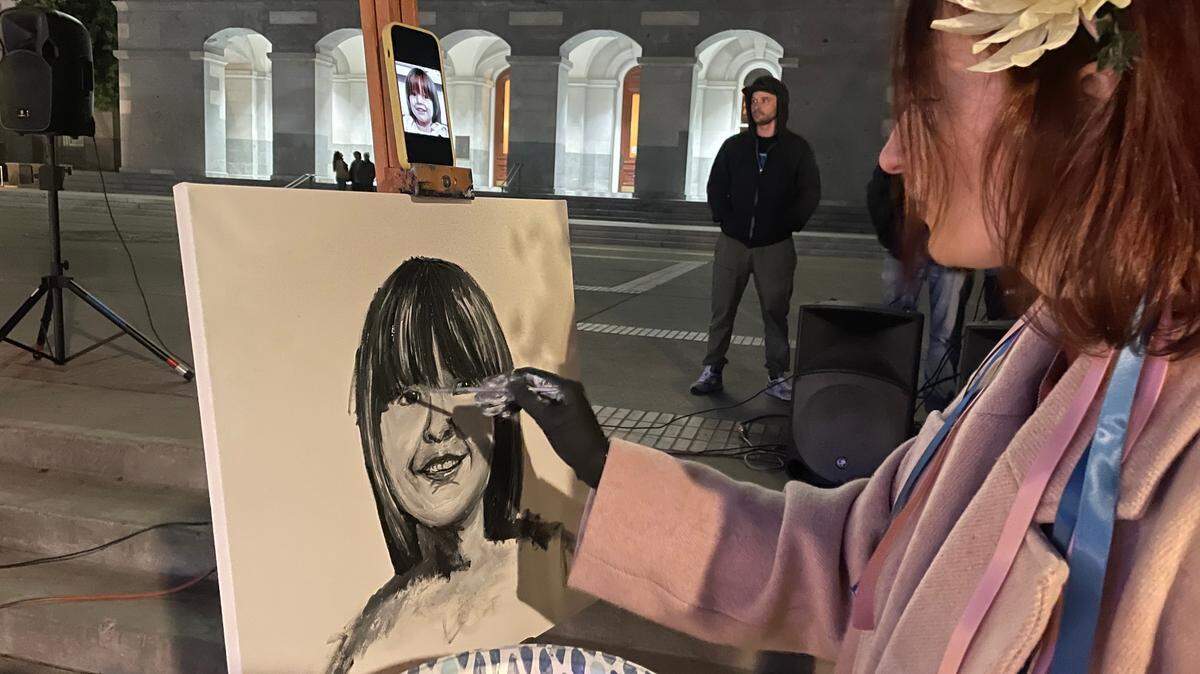
Still, the mood at Sacramento’s monthly protests remains defiant. At last month’s event, amid the protest, a graphic and visual artist who made her way to Sacramento from Kyiv two years ago, Yulia Konakh, created a painting of a smiling boy who was killed tragically during the first few days of the war.
Konakh said she chose to depict 4-year-old Sashko Yakhno because, “Unfortunately, I cannot remember all the stories because there are too many of them. But one face remained in my mind since the beginning of the war. Sashko and his grandma were in a boat that was supposed to take them to safety, but it never did. The angelic look of this beautiful boy stuck in my brain. That’s why I chose Sashko for my art performance.”
Konakh’s paintings are more than just performance art. They are also sold by Sunflower organizers, sometimes for as much as a thousand dollars, with the proceeds going to buy war supplies such as trench candles to keep soldiers warm and thermal vision goggles.
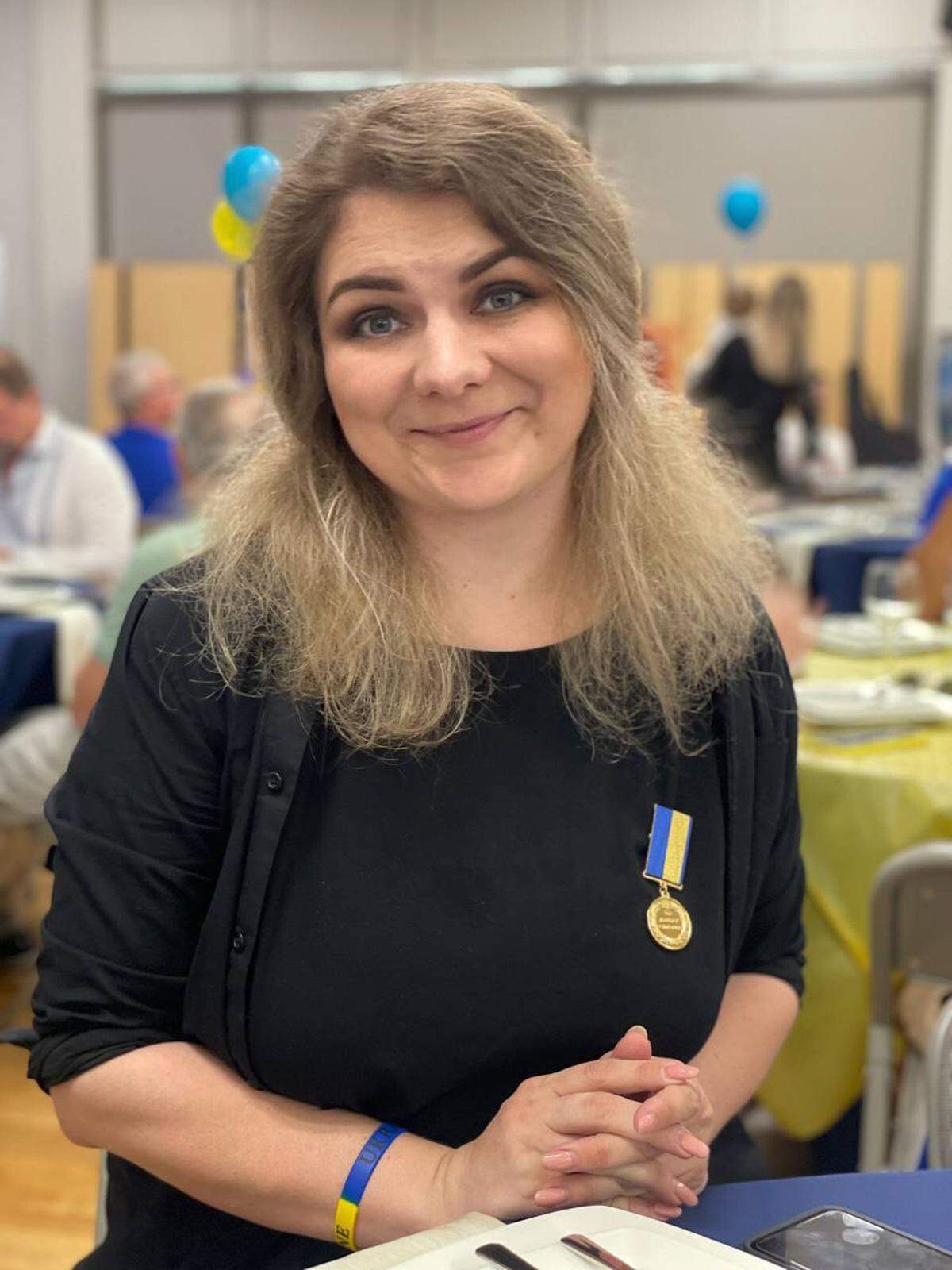
“We are not out here just saying the war is wrong. We are out here actively supporting Ukrainian defenders,” said Anna Berbeneva, one of the monthly protest founders. She added, “Ukrainian defenders are people like you and me; they are artists and musicians, clerks from stores who are supposed to be with their families, and they have been forced to defend themselves.”
It’s not surprising that there would be regular pro-Ukrainian protests in Sacramento, a city with the nation’s highest per-capita population and third-largest Ukrainian population — more than 20,000.
What, perhaps, is surprising? Berbeneva is not Ukrainian. She is Russian.
Using art and creative online organizing, a striking number of the monthly protesters are anti-Putin Russian dissidents — many of whom were activists with Russian dissident Alexei Navalny’s anti-corruption organization, and fled Russia for Sacramento. Together with Ukrainian refugees, they have sustained a robust campaign of resistance in Sacramento.
Sacramento also has a substantial Russian immigrant population, numbering more than 20,000. And many have ambivalent feelings about openly siding with Ukraine in its fight against Russian soldiers. But others, such as Berbeneva, have strongly aligned with the Ukrainian cause.
Sacramento’s unique coalition has its roots in the days following the breakout of the war on Feb. 24, 2022.
“I was so horrified by the depth of Putin‘s immorality,” said Berbeneva, who fled Russia in 2014. “I couldn’t stop crying.”
During an impromptu protest, she met another woman weeping on the steps of the capital, Olena Avtukh, a Ukrainian immigrant who came to Sacramento in 2014.
Paying homage to a symbol of Ukraine — the sunflower — the two women formed an organization called the Sunflower Society Sacramento. The group organizes a monthly protest at the Capitol that draws around 200 Ukrainians and Russian foes of Putin.
Olena’s daughter, 21-year-old Daria Avtukh, who was at American River College until transferring to UCLA this fall, plays a crucial role in defining the Sunflower Society’s online activism, which includes a rich Instagram, Facebook, and Telegram presence with professional-quality photos, videos, and artwork.
“I actually changed my major to communications because of these rallies,” she said. “I realized that this really fulfills me. I have this passion for uncovering and reporting the truth and sharing it on social media.”
A whirling dervish during rallies, Daria is also the reigning Miss Ukraine California, a competition she won in Sacramento last year. She said she laughed when friends prodded her to join the competition.
“I really am not into pageants. But my friends were like, ‘you do so much activism, this is a way to highlight what is happening in Ukraine.’”
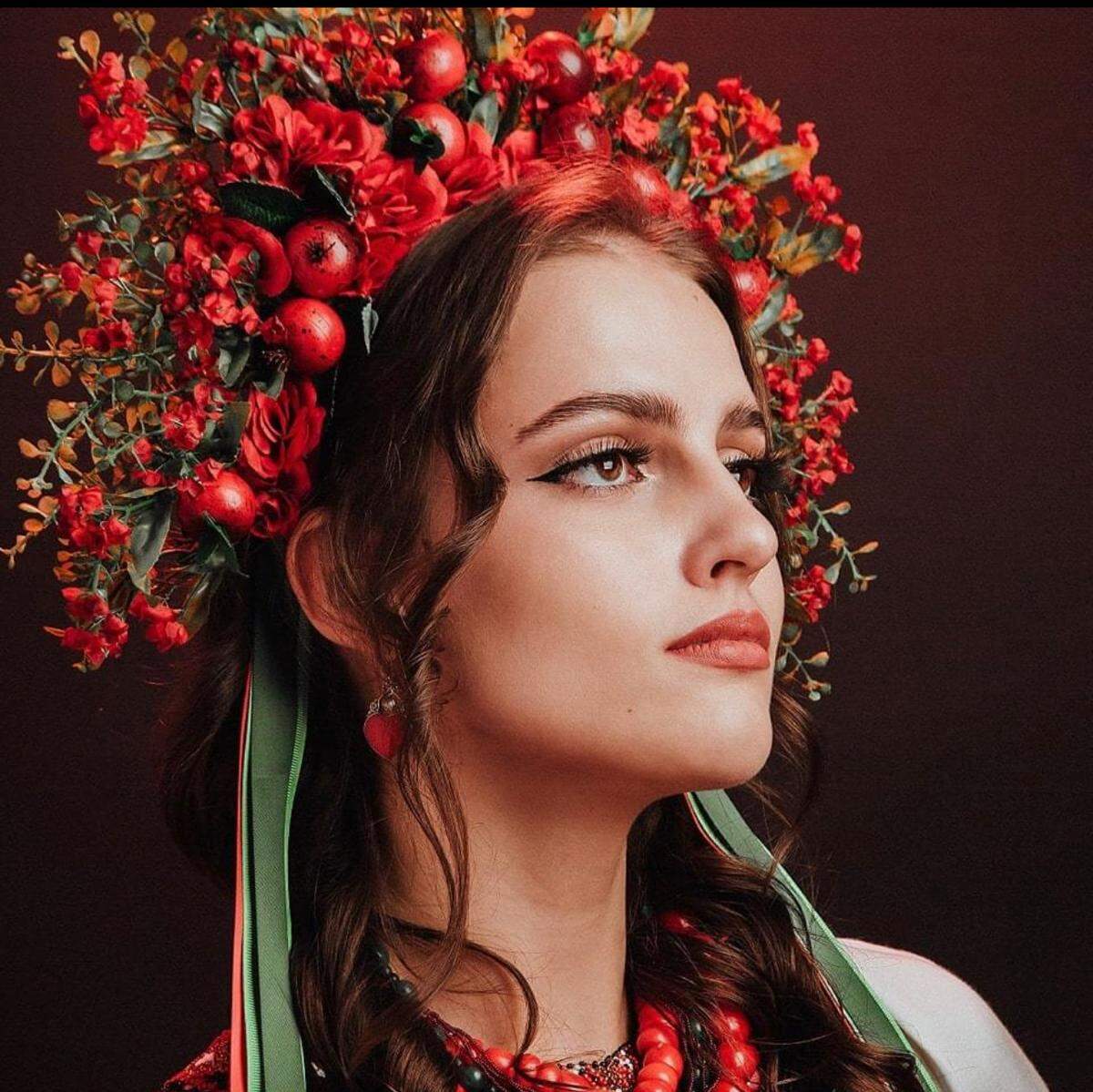
That cause, Avtukh said, remains her defining motivation.
Organizers told The Bee they are often reminded of the consequences of the war during the Sunflower Society protests.
After Russian forces retreated from the city of Bucha in April, 2022, evidence emerged of a massacre of hundreds of civilians by Russian soldiers. The Sunflower Society held a flash mob to bring the human rights atrocity home. Participants, with their hands held behind their back, some draped in Ukrainian flags, held a die-in on the Capitol steps.
“There was this one guy, he was older in his 70s or 80s. We were kind of worried about him lying on the ground,” Berbeneva recalled. “But he said, ‘I have to do this. I was there.’ He had escaped from Bucha weeks earlier, and there he was in Sacramento.”
Russians drawn by the freedom to protest
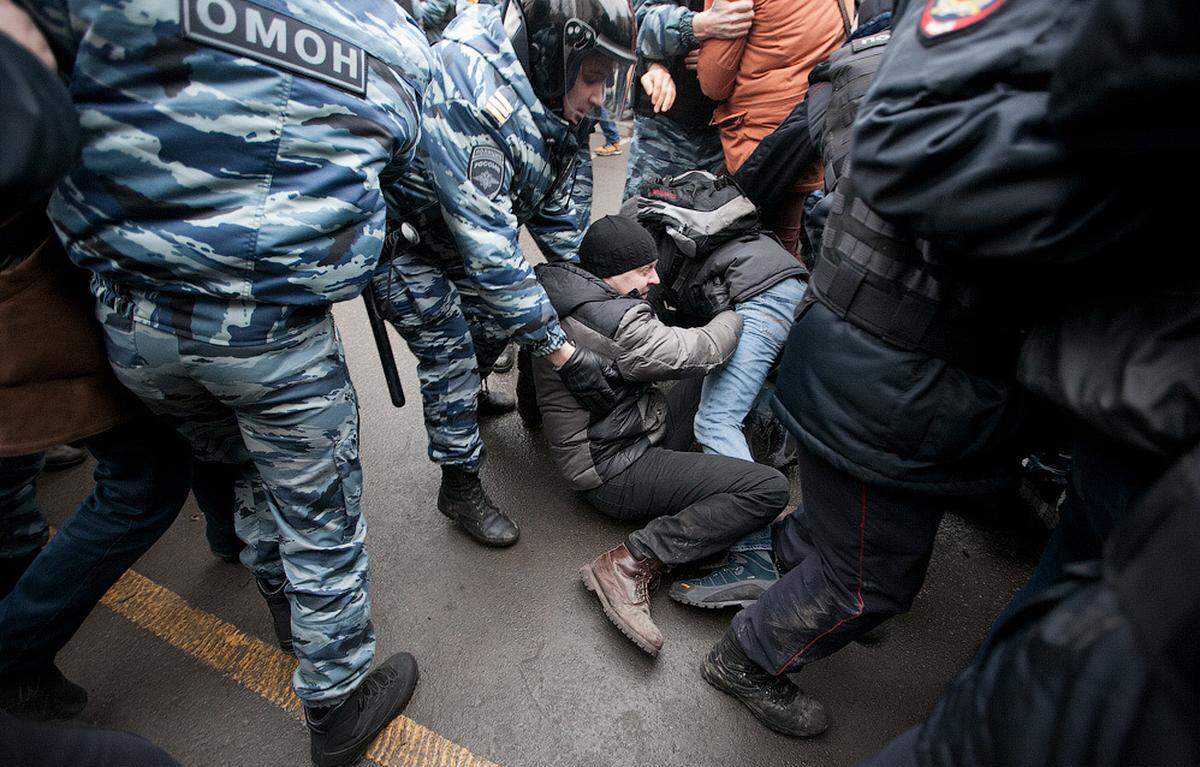
These days, anti-protest laws in Russia are so repressive that even having a Ukrainian flag button, or making a critical remark on social media, or in a classroom, can land a person in a prison camp.
While hardly a household name, Anna Berbeneva is a factor in why so many anti-Putin Russians, who escaped that repression, made a bee-line for Sacramento once they arrived in the United States.
Before they fled Moscow, Berbeneva’s husband, Mikhail Berbenev, worked on Alexei Navalny’s 2013 campaign for Moscow’s Mayor. Navalny won enough votes to force a runoff, independent election observers say, but was denied that chance because of election fraud.
Mikhail Berbenev was arrested in Moscow and detained multiple times protesting Putin’s first incursion into Ukraine and the annexation of Crimea in 2014. The couple with two toddler children feared he could be subjected to a long prison sentence, so they fled to the United States, requesting asylum.
Embracing the remarkable freedom to organize and speak freely — Anna Berbeneva said people sometimes take that for granted in the United States – she operates a slew of social media sites with information for newcomers.
“The idea is they don’t even have to contact me; all the information to plug into a community is there.” The Kremlin, Berbeneva said, is well aware of what is happening in Sacramento, and has blocked internet access to sites she is affiliated with.
“But word spreads,” she said.
At the Christmas Eve rally, Maksim Kirilyshev, holding an “Arm Ukraine Now” sign, is an example of that word spreading.
Kirilyshev said he heard about Sacramento as an anti-war and pro-Navalny activist back in the Siberian city of Novosibirsk.
Then Navalny was poisoned, and later imprisoned. Kirilyshev became determined to leave, he said, when he was attacked by paramilitary thugs who recognized him on the street. His 10-year-old son tried to protect his father and had his arm broken in the scuffle. “That was enough.”
Anxiety about the future
The Sunflower Society does more than just raise awareness through monthly protests. Organizers also pride themselves on lightning-fast responses to desperate needs from the front lines in Ukraine. In December, according to Berbeneva, Sunflower activists sent 2,500 warmers for defenders freezing in trenches, thermal vision goggles, and they are currently fundraising to send three drones.
“The world is distracted right now, to be sure,” said Igor Buzan, a quality assurance engineer who left Ukraine after the war began and splits his time between Prague and Sacramento.
“For a lot of Americans, the war is abstract,” he said, during a a recent interview at Temple Coffee, “but for us, the war is as real as this coffee cup. When we get requests we know we need to act fast, because if we are too slow, people could die.”
Buzan and other organizers acknowledged that they do feel frustrated that arming Ukraine has become tied with other issues such as border security, and anxiety about what change the ongoing presidential election could have.
“The price that America is paying right now is tiny compared to what’s going to happen if Ukraine falls. What country will be next?
“Then you’re going to be sending your siblings, your children, your grandchildren, to war. And at that moment, you’ll be thinking, ‘How could we not stop this? Why did we not send some old Abrams tanks to Ukraine?’”
Asked what people could do in Sacramento to help, Berbeneva said a great first step could be to attend the monthly rally at the Capitol, every 24th of the month at 6 p.m., or to send words of support through their Instagram page.
“Our grassroots movement is not a Ukrainian and Russian thing, it’s a human thing.,” she said. “Like President Zelensky says, you don’t have to be Ukrainian to support Ukraine — you just need to be human.”
This story was originally published January 5, 2024 at 5:00 AM.