
Japanese Americans from Sacramento region return to WWII Arkansas incarceration camps
It was a homecoming of sorts for Mits Yamamoto, but not to a home that his family had wanted.
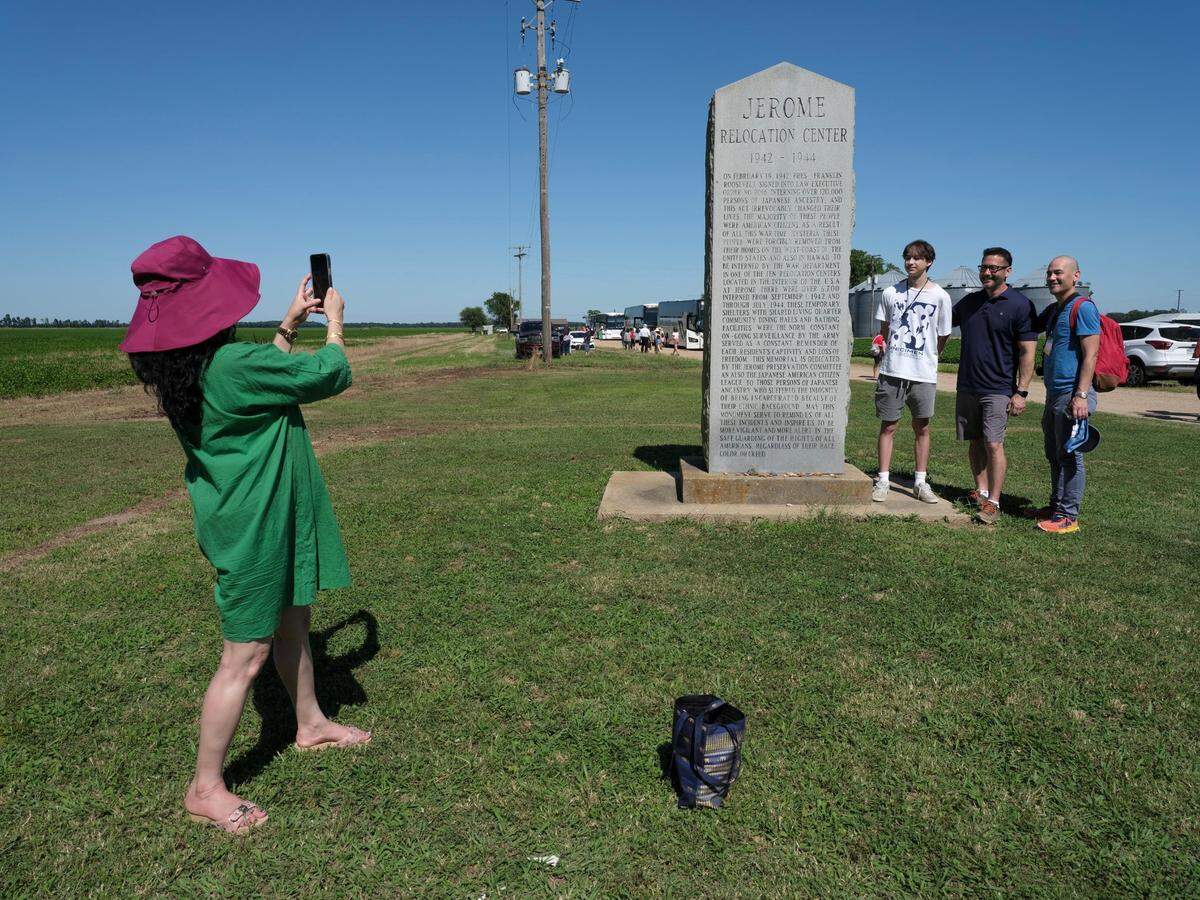
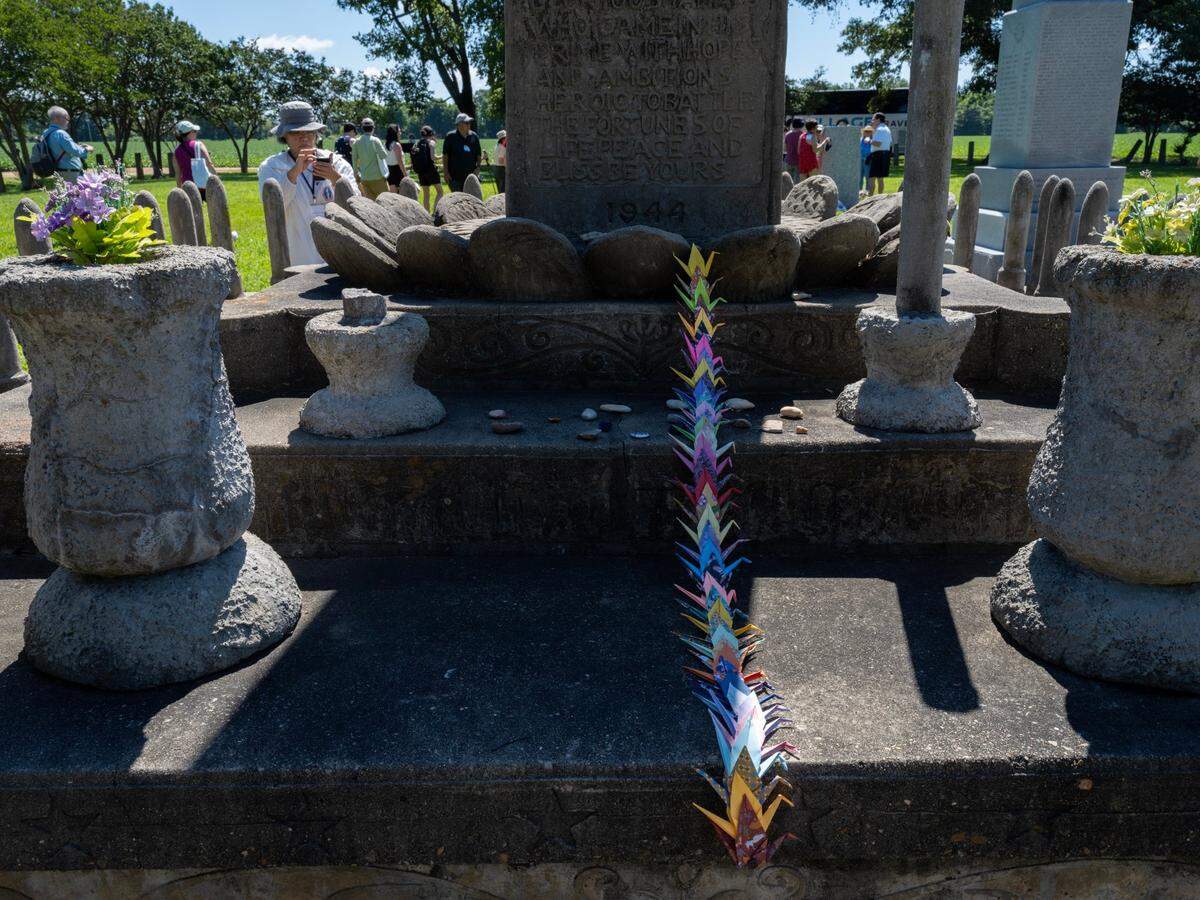
A caravan of four buses was carrying him and other survivors last month to the sites of the Jerome and Rowher incarceration camps, built during World War II to hold thousands of Japanese Americans who lived on the West Coast. It was a two-hour drive from Little Rock, Arkansas, and the 20 survivors were joined by 185 of their descendants on the pilgrimage.
“In December 1941 Everything turned upside down,” said Yamamoto, a 98-year-old Sacramento resident who was sharing his memories with the younger generation. “I didn’t even know about it until that night because there’s no TV — I just happened to turn the radio on and found out.”
Jerome and Rowher, just 26 miles apart, were two of the 10 camps administered by the War Relocation Authority that held 120,000 Japanese Americans, two-thirds of which were American citizens.
Soon after Japan’s attack on Pearl Harbor, President Franklin D. Roosevelt signed Executive Order 9066 on Feb. 19, 1942, which authorized the forced removal of Japanese Americans from the West Coast to inland “relocation centers.”
The Arkansas camps held over 16,000 people, many from Sacramento communities like Florin and Elk Grove. Others were from places like Stockton, Fresno and Los Angeles.
San Jose resident Roy Matsuzaki celebrated his 91st birthday on the warm, humid day when he returned with his daughters to the Jerome incarceration camp.
“That’s where I lived for about three years,” he said pointing to the green farm field bordered with trees. “I haven’t been here since 1942.”
Matsuzaki was nine years old when he left his Elk Grove home for the Jerome incarceration camp in 1942 with one suitcase. When the camp closed, he moved down the road to the Rohwer camp.
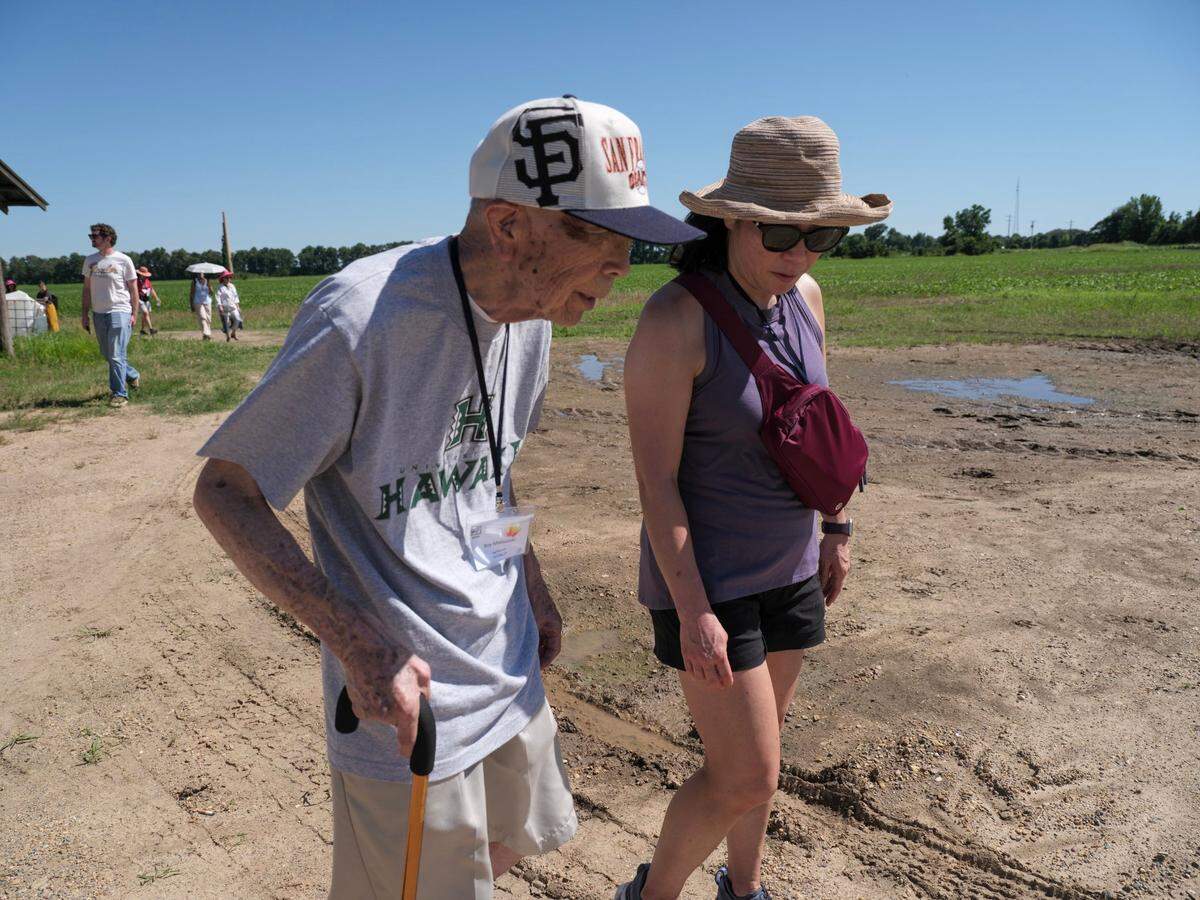
“It brings backs 80 years of memories. We thought ‘what the heck kind of place is this?’” he said. “You were put into barracks. We had two barracks for my two sisters, my brother and my mother and father.”
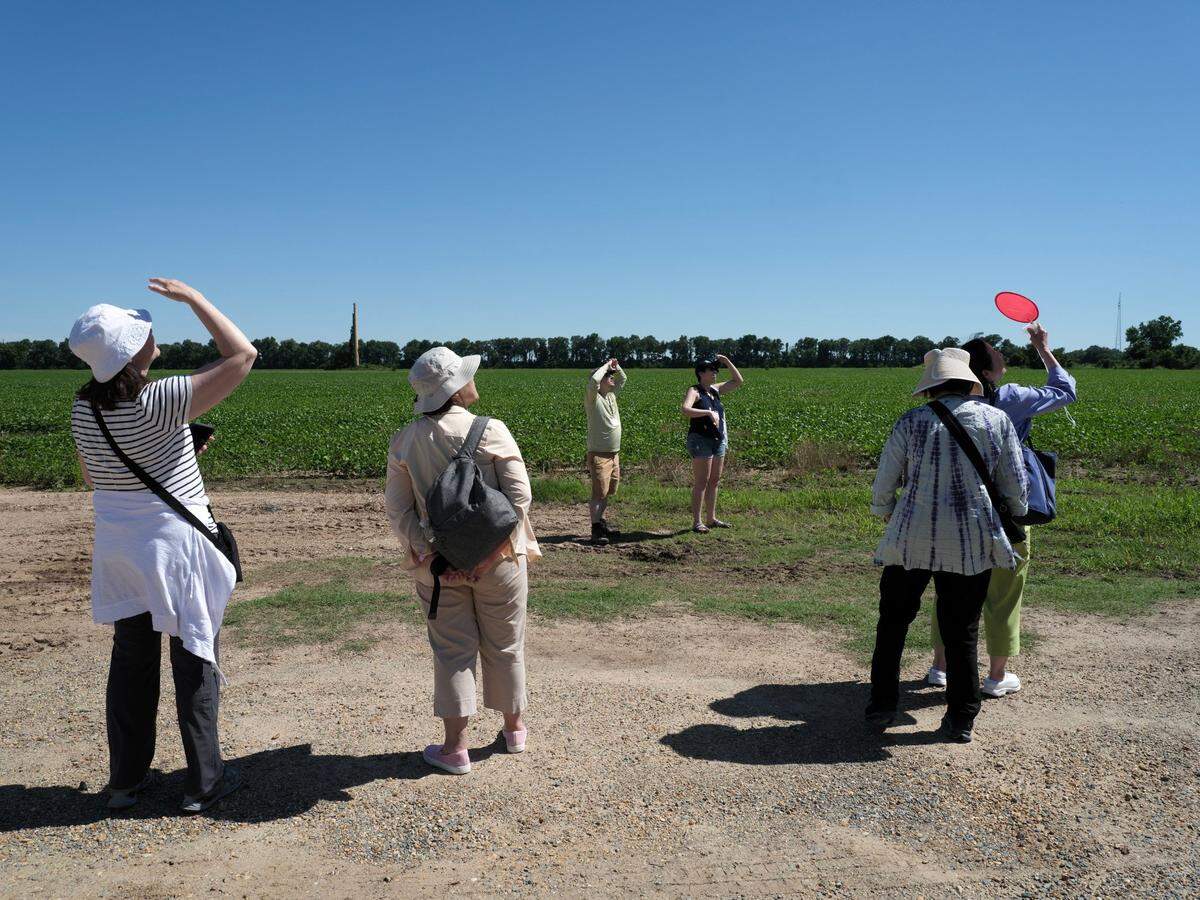
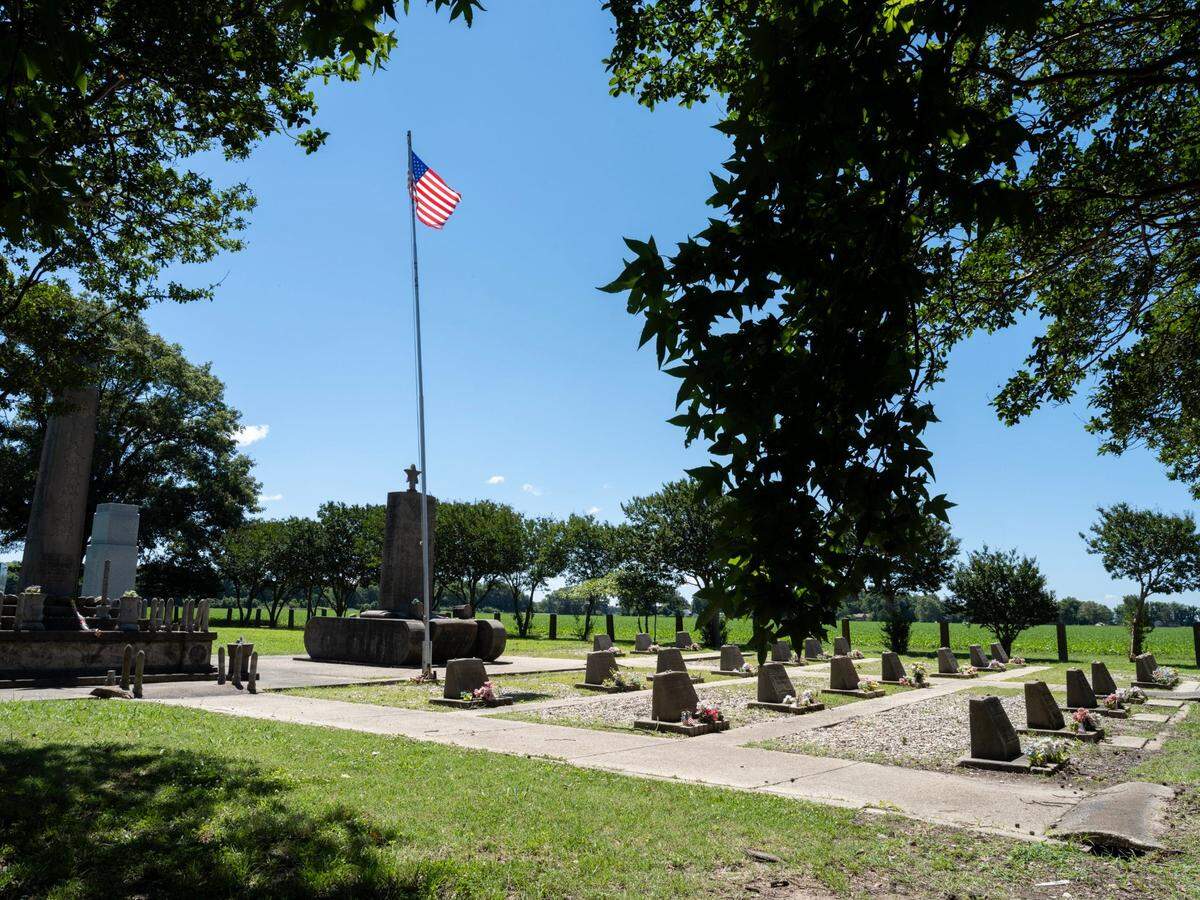
Walking with small, fast steps and assisted with a cane, Matsuzaki explores with his daughters the farm fields that now occupy the site of the camp. The only reminder of its existence is a smoke stack.
“I remember a grocery store across the street, the owner didn’t care how we went in but we were restricted to that area. But the guards were along each corner.”
“You can’t realize what the government spent on building these things.”
The Jerome camp held 8,497 Japanese Americans at its peak. It was a one-mile square camp set in swampy woods that were prone to flooding. Summers were rainy, hot and humid, with mosquitoes and poisonous snakes. The winters were cold with temperatures that could drop to zero. The tar paper-covered barracks offered little protection from the elements.
Yamamoto, walking with his daughter Ginny Yamamoto Syphx, recalled that the last time he visited the Rohwer site it was raining and he could not walk the ground he experienced in 1942.
“My mission was to see where it was. It’s just a big old field now,” he said. “There’s no barracks… no towers or no barbed wires or nothing, you know?”
When Ginny asked her father why he wanted come back, he said “because this was my home.”
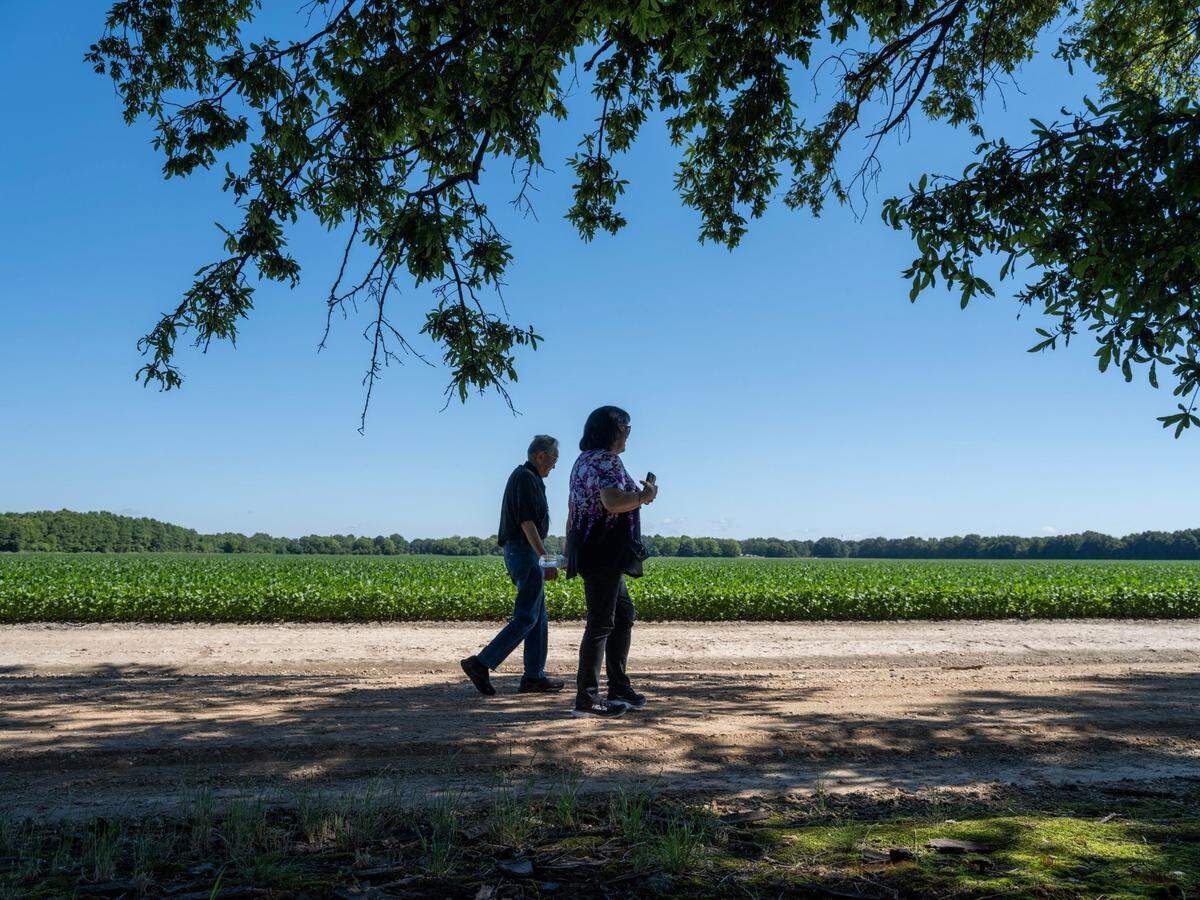
Twin brothers Tad and Yukio Yoshikawa, 89, grew up in Stockton, where their parents had a barbershop and owned their own home.
“All we see is monuments,” said brother Tad as they walked the site for the first time since 1945. “It would have been nice if they kept one block intact to show what it looked like.”
“It’s so long ago and we were so young I don’t remember a lot, except we had to go to school and study,” said his brother Yukio.
Their family was able to rent their Stockton home, and when they returned home after the war they had a place to live – unlike many.
“For the first couple of months, my father put up a mattress against the window in case somebody threw rocks at our house.”
Now San Jose residents, the brothers became engineers and worked in the aerospace industry: Yukio on the Hubble space telescope, and Tad on the Gemini mission to put a man in space.
“Nobody would talk about (the incarceration) after the war,” Tad said.
As Denise Hayashi and Doreen Kasson walked the Jerome site with their father Roy Matsuzaki, he talked about how attitudes have changed about talking about the experience.
“You see something: more friendship and more talking together,” he said.
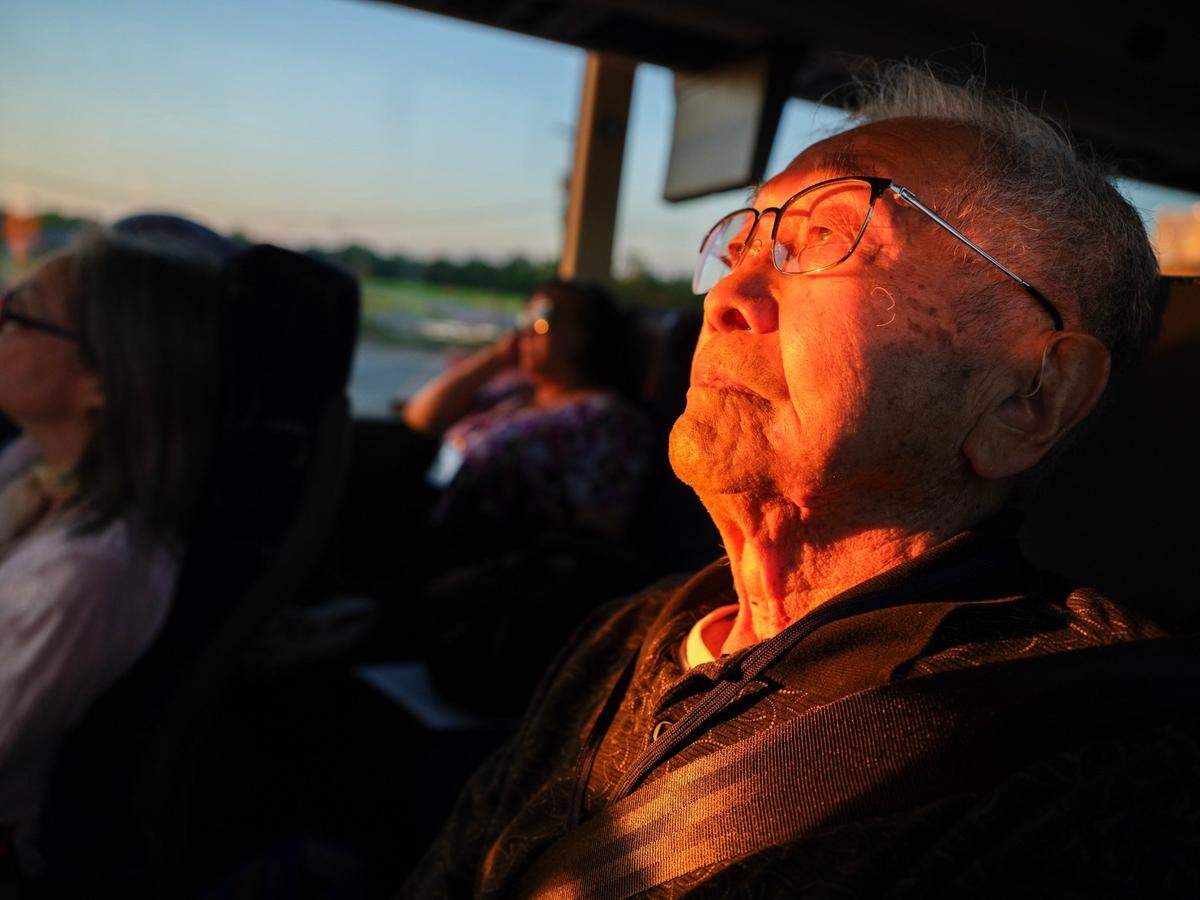
During a quiet moment of reflection after visiting the two sites, Yamamoto sat back in seat in the bus as the setting sun reflected on his face. Like many of his generation, he didn’t talk about his experiences in the camp after returning home.
“Some people say it was shameful but I don’t feel that way.”
This story was originally published July 7, 2024 at 5:00 AM.