Sacramento closes Camp Resolution, evicting homeless disabled seniors. ‘Failed experiment’
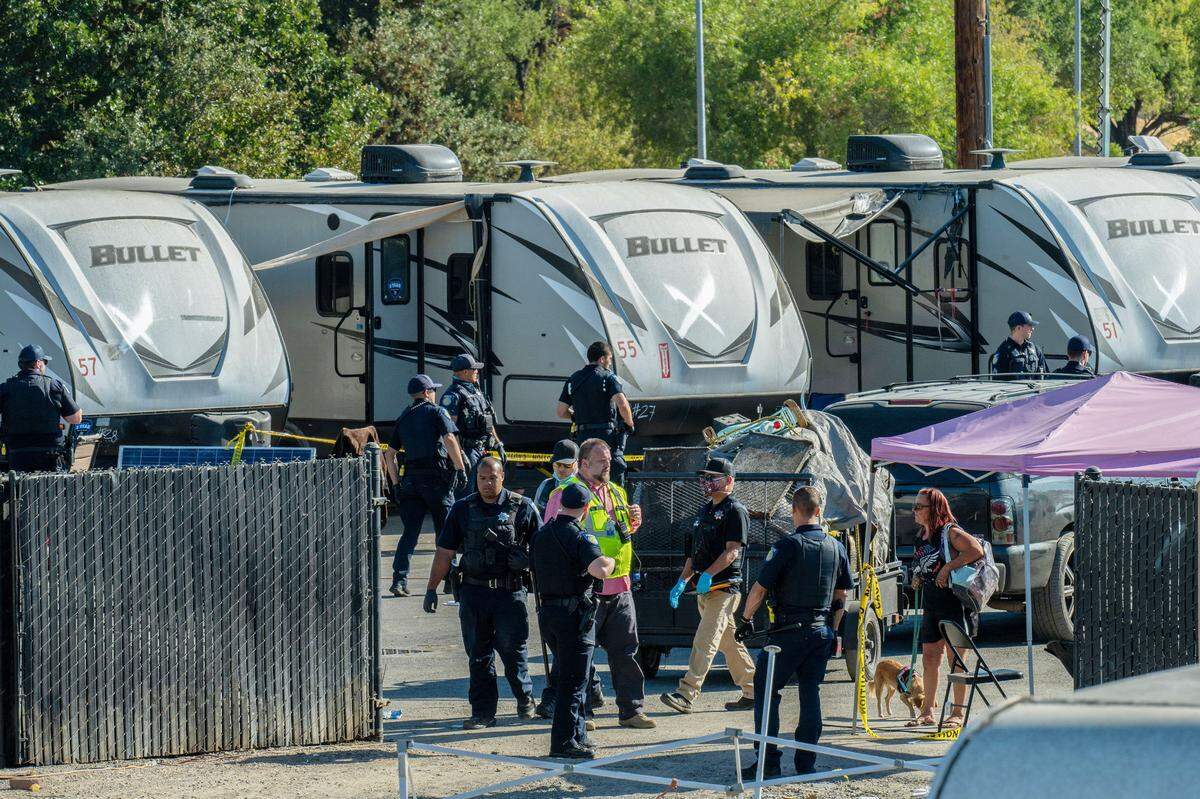
In a first-of-its kind operation, Sacramento police officials Monday declared a homeless camp a crime scene, enclosed it with caution tape, then broke through a metal gate with bulldozers and welding equipment.
It marked the end of Camp Resolution, a tight-knit camp comprised largely of disabled seniors the city is now calling a “failed experiment.”
After over two years of allowing about 50 homeless people to live in city-issued trailers at city property, the North Sacramento lot is again vacant.
The closure of the camp was relatively peaceful, with most residents leaving voluntarily. Although a handful of protesters shouted at officers, the overall mood was somber. Police cited four people for resisting, obstructing or delaying officers, a misdemeanor, though bystanders said they were not camp residents.
Before closing the camp, the city offered all residents of Camp Resolution a shelter bed. Some accepted them, while others did not, contending they were promised permanent housing, not shelter.
Betty Edwards, 60, accepted a motel room from the city where she could stay indefinitely and bring her two small dogs — not usually allowed in city motels. But her broken down trailer, a gift from her brother full of sentimental items, was still parked inside the gates as tow trucks entered.
“That’s my home! I got everything in there,” Edwards screamed across the police tape as she sobbed to Brian Pedro, head of the city’s Homeless Incident Management Team. “Let me get my trailer outta there! That’s where everything is!”
Others like Satearah Murphy, 35 of Sacramento, were not given the option to keep more than one dog if she goes to a shelter. She didn’t want to have to part with one of her pitbulls, Mississippi and Bane, so she did not go. She will probably sleep in a tent on the sidewalk tonight, she said.
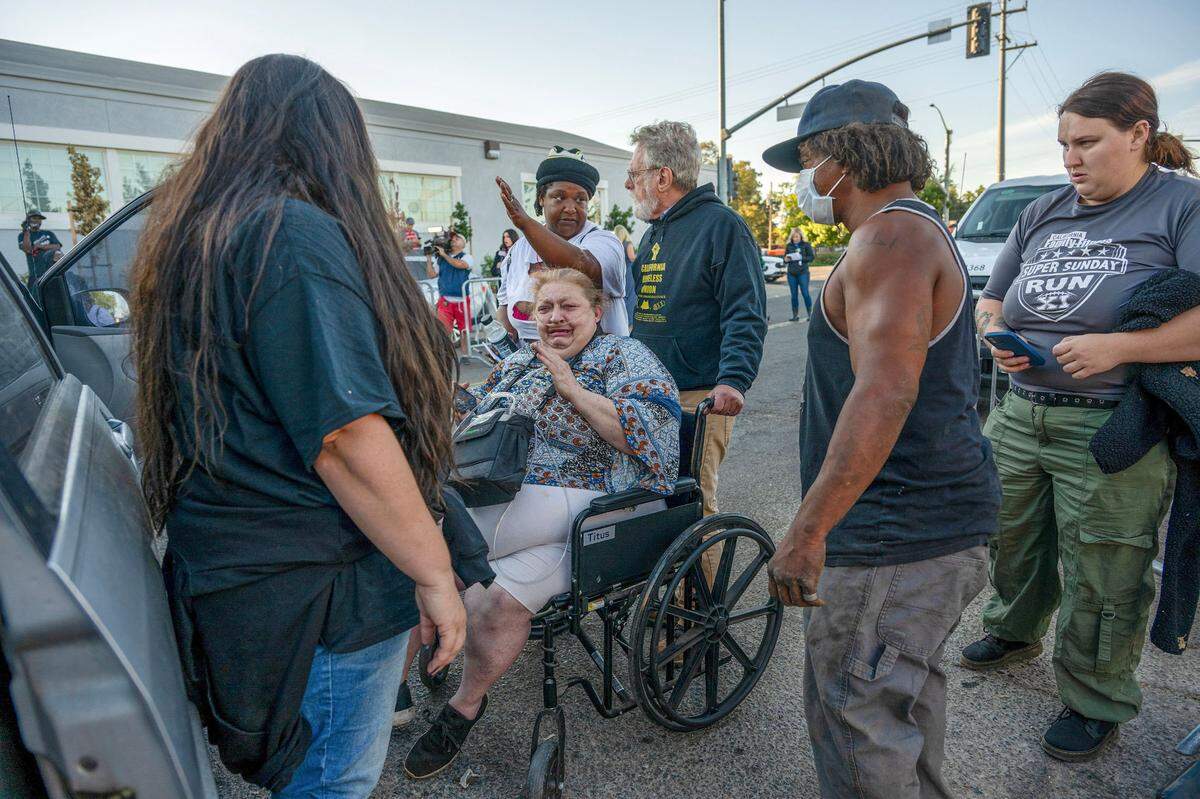
“I won’t part with my dogs,” said Murphy, whose arm is injured from a bullet. “One is my protection and the other my emotional support.”
Other residents were concerned that the trailers and tiny homes at the city’s Roseville Road shelter site do not have electricity for air conditioning or cooking.
Staying in shelters is the best shot at getting permanent housing eventually, however, according to Mayor Darrell Steinberg.
“City crews and representatives of health and service organizations are on site today to get people how are willing into services and shelter,” Steinberg said in a statement Monday. “I certainly hope they accept as this is the surest path to obtaining permanent housing.”
How we got here
Camp Resolution came to be after The Sacramento Bee reported the city had payed $617,0000 to pave and fence a city lot for a homeless shelter that never opened. A handful of homeless women broke in and started camping on the lot.
Instead of clearing them off the property, as the city had in the past, the city got on board. It signed a lease with Safe Ground Sacramento, a nonprofit run by civil rights attorney Mark Merin, which was running a Safe Ground at 12th and C streets. It dropped off trailers from the state that had been sitting empty, for guests to use. Unlike other shelters, which cost several million dollars a year to run, the site did not cost the city anything.
Due to vapor contamination, a state agency allowed people to live in the site in trailers, but not in tents on the ground. The type of contamination that’s present is not harmful to people in vehicles because they’re raised off the ground, the California State Water Resources Control Board has said.
Things went smoothly for over a year.
But in an April letter, the city said there were people sleeping in tents and that the camp would close in May. The city then backed off on that plan after residents begged the City Council for more time, and people stopped camping on the dirt. On May 15, the homeless union sued the city, seeking a judge order barring the city from closing the camp until all residents are in permanent housing. The judge has so far ruled in the city’s favor on that case, but it is still active. Meanwhile, in July, Merin, the lease holder, sent a notice to the city of plans for lease termination, which is effective Monday.
Merin has said that although the lease is ending, it would be up to the city whether to clear the residents off the site. The lease states, “upon the expiration or termination of this lease, lessee shall peaceably vacate the premises and deliver the premises, vacant of all guests to city.”
However since it’s a city property and city trailers, the city could have let the camp stay.
The city posted notices at the camp earlier this month stating the residents were in violation of a state law against trespassing.
Business owner thankful
Although the camp only had about 50 official residents, it attracted unhoused people to camp outside the fence along the bike trail, sometimes who engaged in criminal activity — part of the reason the city soured on the experiment.
Dmitriy Dolotov, the owner of Stellar Built, an off-road vehicle shop two blocks from the camp, said the closure of the homeless encampment will be beneficial for his business.
Since the camp started in 2022, he said the area has gotten noticeably worse with a huge uptick in crime. At least twice a month, his business yard experiences break-ins.
“If you look at our fence, the entire thing is patched up,” Dolotov said Monday. “It was constantly getting messed with. They were cutting locks, they were cutting gates.”
Dolotov stressed that did not know whether the trespassers were residents of Camp Resolution or other homeless people who were attracted to the area after it opened.
But many of his customers are scared for their safety when they drop off their vehicles, he said. Frequently, Dolotov also sees needles and other drug paraphernalia scattered around the neighborhood.
“Nobody wants to be out in the cold, but I’m glad that there’s an option for them to go elsewhere,” he said. “It’s positive for the business, it’s positive for the neighborhood.”
The camp’s ending may mean the city won’t try to open a Safe Ground again. But with the city facing a projected $77 million deficit for the fiscal year that starts July 1, and state and federal funding not drastically increasing, it may be the only model it can afford.
The homeless union, working with Disability Rights California, is trying to get a court hearing Friday, said Anthony Prince of the homeless union.
“Today is one battle but this is a war,” Prince said.
The city is still deciding what to do with the lot, city spokesman Tim Swanson said.
This story was originally published August 27, 2024 at 5:00 AM.