
A killer’s home looms large in historic Sacramento district. What other stories live there?
The most infamous occupant of 1426 F St. in Sacramento was convicted murderer Dorothea Puente. But her story is not the only one associated with the house.
Puente, who died in prison in 2011, was convicted of killing three residents of a boarding house she ran at the F Street address in the 1980s. She was also charged for six additional deaths, but the jury couldn’t reach a verdict and a mistrial was declared. Her former house still draws onlookers who take pictures or even wander the property, where bodies were buried.
Less-known, perhaps, are the many people who lived at the address long before Puente. There’s the man who ran a detective agency from the house in the 1920s. There were the railroad employees. And there was a man who had previously lived at the address when he appeared in court in 1903 following a mysterious death of someone connected to him.
Today, the house still stands because it has been listed since 1985 by the city as a contributing resource to Sacramento’s Old Washington School Historic District. The district, one of 31 in the city, is filled with homes over 100 years old, people compelled to live in them and many past stories worth telling.
What the Old Washington district consists of today
When Daniel Abbas opted to follow baseball in recent years, he sought a favorite team. As a fan of the Sacramento Kings, who went 16 years without making the NBA playoffs, Abbas felt drawn to supporting an underdog and researched baseball’s worst team. That’s how Abbas came to wear a Baltimore Orioles hat.
It’s this kind of thinking that brings people like Abbas, who lives in an early 1900s house on 14th Street, to the district.
Here is one of Sacramento’s oldest areas, where some of the first buildings in the city can be found, such as the Victorian that now houses Milka Coffee at 15th and G streets and dates to 1861. There’s a good chance that anyone who lives in this district will be in a house with some history, with the city counting 184 contributing resources, or buildings with historic value, in a report updated in 2020.
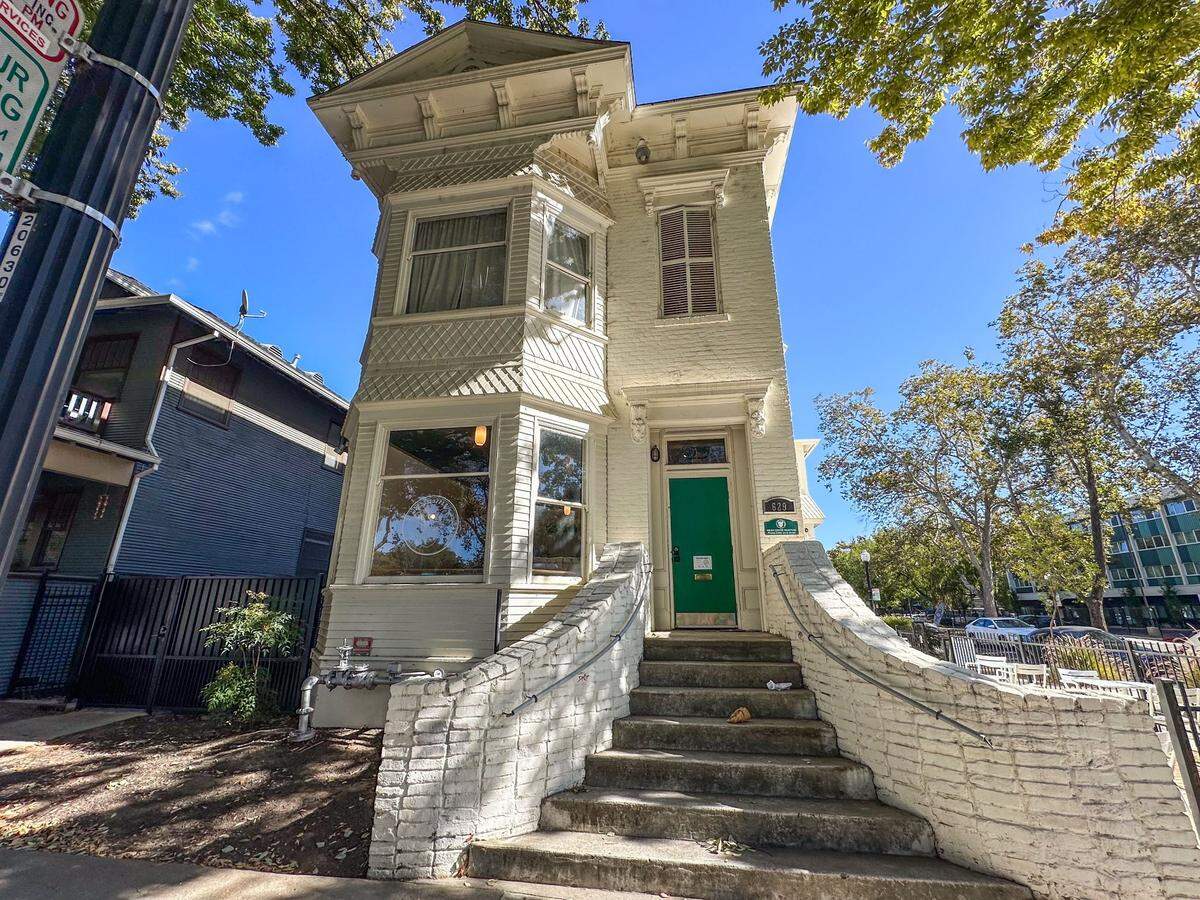
Not every house listed as a contributing resource in the Old Washington district is in its original spot. Realtor Kyle Wells said his listing at 610 14th St. was moved from 14th and H streets in the 1980s. Originally a two-story Victorian built in the 1880s, it was placed atop a brick story at the new location.
The district is centrally-located, spanning parts of the city’s Alkali Flat and Mansion Flats neighborhoods, from roughly 12th to 16th and C to G streets. District residents can walk or ride their bikes to jobs in other parts of the central city or head to events at nearby Golden 1 Center or the SAFE Credit Union Performing Arts Center. They can also enjoy close proximity to one another.
“I work in city planning, so I like historic neighborhoods,” said Hannah Woolsey, who lives on 14th Street. “Because they’re denser and you kind of get to know your neighbors a lot more than previous places we’ve lived.”
There are tradeoffs, though, for living here.
While many of the buildings in the Old Washington district have been fixed up in recent years, some still look like they’ve seen better days, with faded paint or rotted front steps. Occasional properties are unlivable, with signs from the city warning people to not enter due to unsafe conditions. These houses are protected from demolition due to their historic value, even if they become uninhabitable.
Sometimes, however, the properties are brought back to life. Reed Doll and his wife live in a turn-of-the-1900s Craftsman on F Street that endured a fire in recent years before being repaired. He said the house still has old brick and a non-working, but historic fireplace inside.
“We do love it here,” Doll said. “It’s nice looking around the house and seeing… how they used to kind of do things.”
Living in one of these historic houses demands owners exercise patience, with renovation work particularly painstaking due to the city’s requirements for historic properties.
When Ashish Haas Gupta and his husband Steve Gupta Haas tried to update windows at their 1912 Craftsman at 1301 D St., the city forbade them from installing windows from Home Depot. Instead, the city connected the men with a company that did the 21-window job “one window panel at a time,” Haas Gupta said, prolonging his words to match his meaning. “It took them over a month.”
The reason for the city’s care could be a response to the slipshod approach to historic preservation in decades past that culminated with the 1973 demolition of the Alhambra Theatre. Henry Feuss, a preservation planner with the city, said this event helped jumpstart the local historic conservation movement, while the 1963 destruction of New York City’s Penn Station did so nationally.
Feuss sees civic value in Sacramento’s historic districts, due to the character and distinctive architecture they feature.
“It really gives an identity to Sacramento’s neighborhoods,” Feuss said. “And without the buildings that are there, you’d really lose a lot of that.”
How the Old Washington district came to be
The buildings that were selected as contributing resources in the Old Washington district in 1985 were chosen due to their historic character rather than their residents, which reflected common thinking with historic districts back then, Feuss said.
This approach continues to some degree locally, with the city selecting its most recent historic district in South Land Park earlier this year due to Eichler homes located there.
Times could be changing a little, with the city currently working on potential historic districts in Sacramento’s LGBTQ+ neighborhood Lavender Heights and the New Helvetia housing project adjacent to the Old City Cemetery that attorney Nathaniel Colley desegregated in the 1950s.
The stories of the people who once lived in the Old Washington district are worth remembering, too. The district has seemingly always attracted an eclectic mix of residents.
Interior designer Stephen Da Silva and his partner live at 414 15th St. in a Queen Anne Victorian that dates to 1901, according to city records and a historic survey conducted by a San Francisco firm in 1976.
The house has only had three owners, Da Silva said during an interview on his front steps. One past resident was John A. Black, who lived there 48 years before his 1954 death. His Sacramento Bee obituary described him as a retired railroad conductor who’d handled runs to Tehama County and Sparks, Nevada.
Today at 1301 D St., Gupta Haas and Haas Gupta pride themselves on having a welcoming house for their friends and neighbors. It’s been that way at the property before, with the Sacramento Star noting in April 1918 that a Mrs. M. Burke living there had held a party for Belgian relief.
Then there’s the house at 1426 F St., built in 1895 by F.S. George, according to a historic survey from 1976 by a San Francisco firm. Throughout the house’s existence, it has drawn an almost-continuous stream of residents, representing various backgrounds.
There were the people Puente drugged and murdered while she lived at the house in the 1980s, her victims typically elderly or destitute individuals whose Social Security checks she could cash. Puente was convicted of killing Leona Carpenter, Dorothy Miller and Benjamin Fink.
The house drew working class people long before this, too, such as Jerome Ganoung, a painter who lived at the address late in life prior to his death at 87 in 1964. His wife Olive Mae Ganoung had previously lived at the property with her parents, Enoch and Minnie Roberts, according to the 1940 U.S. census.
Ads can be found from 1920s newspapers listing an M. A. Carpenter operating the Northern California Detective Bureau from the address. In 1923, the Sacramento Union said the firm was providing “a genuine secret service to individuals, corporations or the authorities.”
Aside from Puente, the two most well-known residents at the address might have been either attorney Charles B. Harris or William H. Wood. A city directory from 1902 listed Wood living at the address and working as a railroad passenger agent. His 1932 obituary in the Reno Gazette Journal described him as a “well known railroad man of Sacramento.”
Harris lived at 1426 F St. just prior to Wood and his wife. Harris’s 1924 obituary in the Sacramento Union would describe him as someone who “engaged in the practice of law here for many years and was well known among members of the legal profession.”
Briefly in 1903, Harris was engulfed in scandal when the body of Daniel B. Kearney was found floating near Oakland, with a letter from Harris’s wife in his pocket. Harris appeared at an inquest into Kearney’s death, vehemently denying any involvement and seeking to provide affidavits from witnesses who said he was in Sacramento at the time.
“I have been dragged into this affair and it is only just to me that these affidavits should be presented to this jury,” Harris said, according to the Sacramento Bee of March 21, 1903.
The San Francisco Chronicle reported the following day that the inquest couldn’t determine if Kearney met with an accident or foul play or died by suicide. The paper added, though, that it was clearly established that Harris “was in no way or whatever concerned in the disappearance or death of Kearney.”
Current 1426 F St. owners Barbara Holmes and her husband Tom Williams bought the house at a foreclosure auction for $227,000 in 2010. They were aware of its ties to Puente. Mostly, they just needed a home that was less remote than where they’d been living outside of Placerville and a place where Holmes’ elderly mother could also live.
“It met our needs at that time and the whole history of the Dorothea – that’s his thing,” Holmes said, referencing her husband.
Due to his sense of humor, Williams leaned into the house’s history associated with Puente. He posted a sign telling people to not blame the house for the crimes that occurred there but the “awful woman that did it.” He also installed a mannequin resembling Puente out front that has stirred controversy and was gone for a time, but is back now.
Have there been unusual occurrences at the property? Sure. There was that time Holmes’ mother said she’d seen Puente’s ghost by her bed. And more people visited the property after a 2022 episode of the Netflix docuseries “Worst Roommate Ever” on Puente, according to Holmes’s and Williams’s nephew Chad E. Williams, who was living with them then.
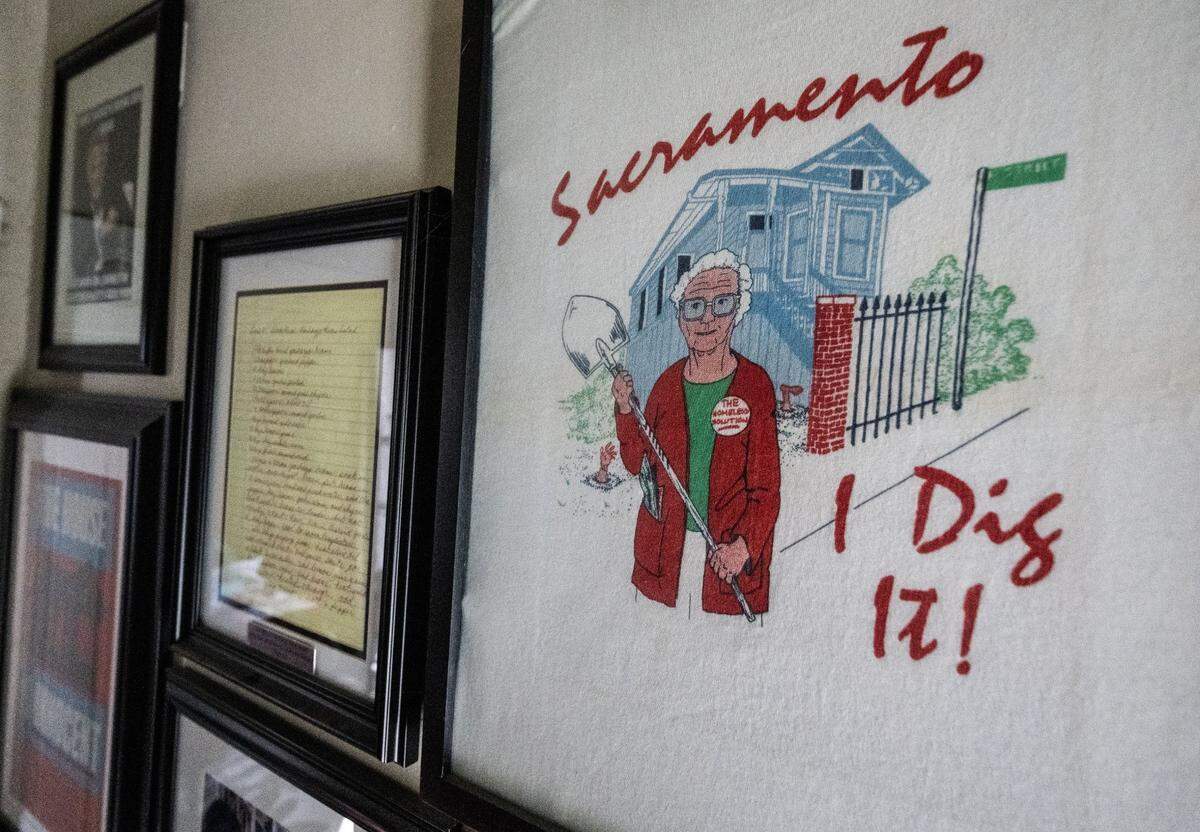
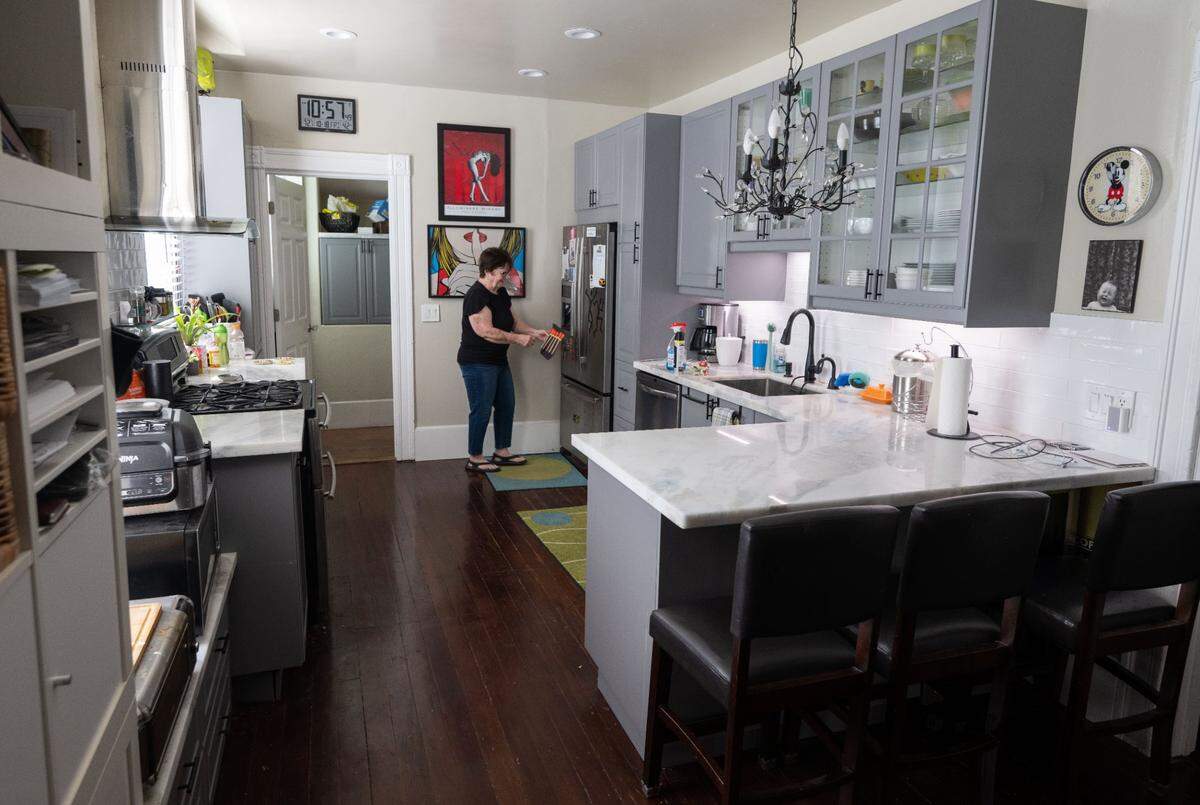
For the most part, though, this is just where Holmes and Tom Williams live. Inside their house, there are no signs of the horrors that once occurred. There is decoration related to James Bond, of which Williams is a fan. The white-backsplashed kitchen looks like something featured on HGTV. Sometimes their grandchildren, ages 5 and 9, come by to play.
At the end of the day, they’re just the latest caretakers of a property that has a long history and will likely long outlive them.
“When I was really little, I lived down here in one of these houses,” Williams said. “I can’t remember much about it, and my mom told me about it, and I remember riding my tricycle up and down all the time. And I love that house and this one strikes me the same way.”
This story was originally published October 27, 2024 at 5:00 AM.