Caltrans said widening I-80 will increase and decrease emissions. Check out the documents
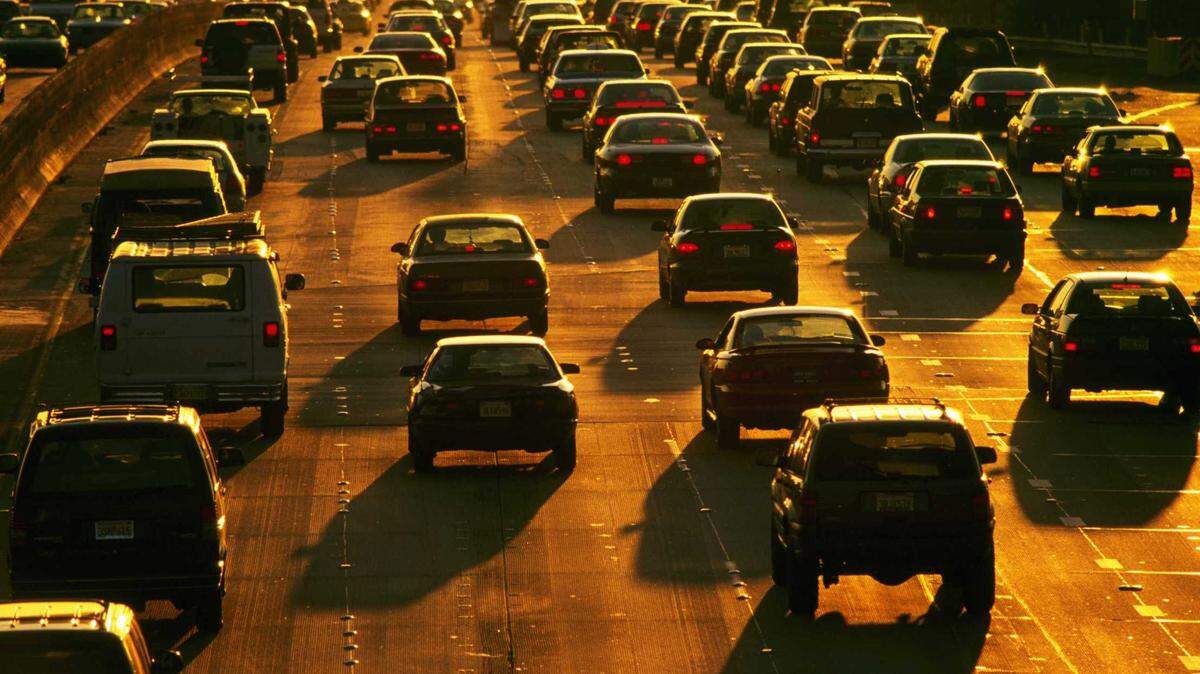
Caltrans forged ahead with a freeway-widening project between Davis and Interstate 80’s split with the Capital City Freeway in West Sacramento while facing claims that the project would increase harmful emissions and undermine California’s climate goals.
Documents obtained by The Sacramento Bee in response to a Public Records Act request show that the state’s highway agency itself made contradictory assessments of the project’s effects on the climate.
A grant application submitted by Caltrans District 3 to the California Transportation Commission — a separate agency that has the same parent agency — says in multiple sections that widening the freeway would both increase and decrease harmful vehicle emissions.
In 2024, Caltrans wrote that the managed lanes project would be “reducing public health and economic harms (i.e. decreasing carbon monoxide (CO), nitric oxide (NOx), and volatile organic compounds (VOC) emissions compared to the No-Build alternative).” It said it was “projected to decrease PM2.5, PM10, and CO2.” It said it would “decrease CO2 emissions by roughly 25 tons per year” compared to a scenario without the extra lanes.
In other parts of the document, Caltrans wrote that building the new lanes would “increase CO2 emissions by 22,573 tons per year on average and increase CO emissions by 6 tons per year on average.” In a table in Appendix D, all types of air pollution were shown to increase. That appendix also said emissions “are expected to increase due to the project which is a direct result of increased vehicle miles traveled.”
Later, in Appendix E, a box was checked saying the project would “reduce greenhouse gas emissions.”
How to explain conflicting answers on emissions?
UC Davis professor Susan Handy, the director of the National Center for Sustainable Transportation, objected to the I-80 widening project. She explained that converting vehicle miles traveled to greenhouse gas emissions is “a pretty direct correlation, but it does depend on speeds.” Stop-and-go traffic leads to higher emissions than freely flowing traffic.
But, at a certain point, even freely flowing traffic will produce more emissions — and, eventually, more stop-and-go traffic — if enough cars are added to any road.
After hearing a list of Caltrans’ conflicting claims, Handy laughed and said, “That’s ridiculous.”
Caltrans did not respond to a question about the discrepancies in its grant application. Handy pointed out that this contradiction could be explained by Caltrans using different modeling assumptions for different analyses, which the agency has done before.
In comments on the I-80 project’s environmental impact report, finalized this year, Caltrans acknowledged that it had used different modeling assumptions about vehicle miles traveled for different parts of its analysis. The agency used estimates from UC Davis’ National Center for Sustainable Transportation vehicle miles traveled calculator for its induced travel demand mitigation plan and for an induced vehicle miles traveled impact analysis. It used different estimates for vehicle miles traveled from its own calculator to determine the other vehicle emissions described in the environmental report.
Amy Lee and Jamey Volker, researchers at the center, joined Handy in submitting a critique. As Handy put it, “Their emissions estimates are based on an underestimate of the increase in (vehicle miles traveled).” Caltrans responded to the critique by saying the agency was not required to use the same modeling assumptions for all their calculations.
District 3 said that its own calculator provided a certain “level of detail,” and that’s why it was used for the environmental analysis.
Handy contends that the agency’s analysis was “fundamentally flawed.”