Afghan woman wanted in grisly Swedish murder case ordered extradited, Sacramento judge rules
An Afghan woman facing extradition in connection with a grisly international murder case will be turned over to the government of Sweden, a magistrate judge ruled Wednesday in Sacramento federal court.
Wajiha Korashi, 25, is accused of murder in Sweden in connection with the death of her lover, whose mutilated body was found in the woods near Stockholm earlier this year. Her husband, Farid Vaziri, is also being sought by Sweden and the European law enforcement agency Europol.
Korashi’s federal public defender says Sweden did not offer proof that Korashi was involved in the slaying.
But Swedish prosecutors say that Korashi, who fled Afghanistan to Sweden in 2020, was involved in the homicide, seeking to purchase date-rape drugs and false passports in advance, and then fleeing through Sweden, Denmark and Germany before winding up in Elk Grove, where her sister lived.
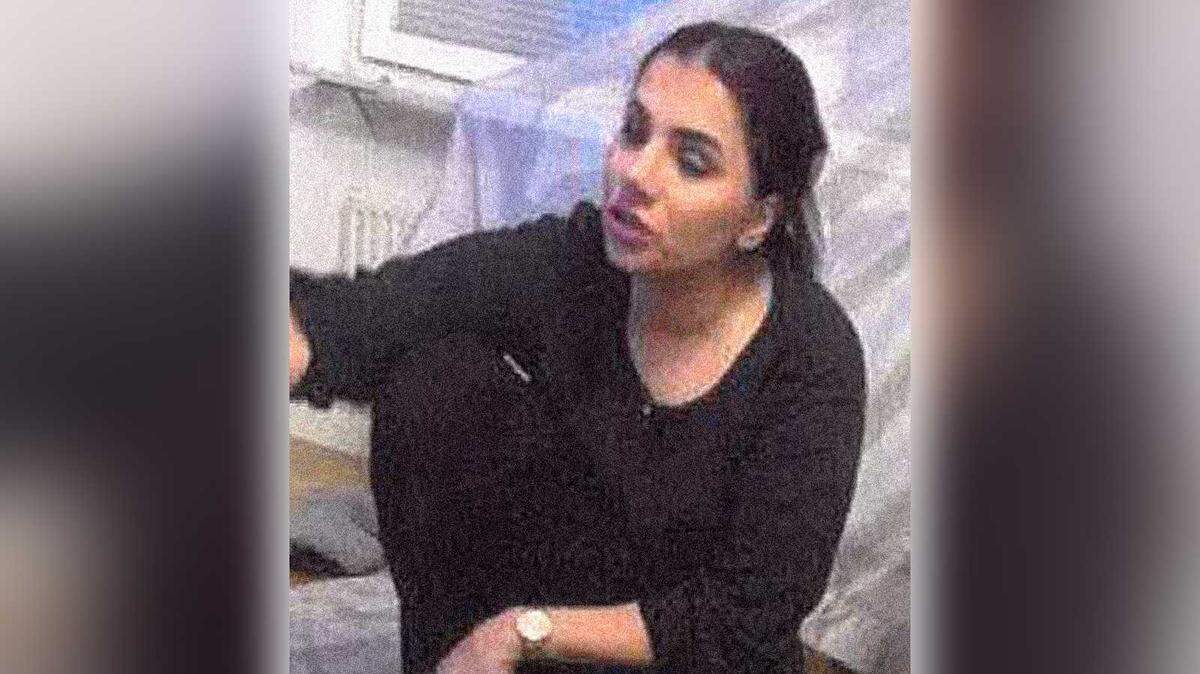
The 25-year-old mother of two is being held in the Wayne Brown Correctional Facility in Nevada City. At Wednesday’s hearing in U.S. District Court in Sacramento, she wore an orange jail sweatshirt and a chain around her waist, in contrast to photos included with prosecutors’ documents.
Because of the way extradition treaties work, neither the Swedish government nor the U.S. prosecutors arguing on its behalf had to provide the same type of evidence that would be required in a U.S. criminal hearing. Instead, a detailed statement by Swedish prosecutor Cecilia Tepper was admitted, along with statements from U.S. authorities about Korashi’s likely method of entry into the country after fleeing from Sweden.
Rather than proving guilt, prosecutors had to show that the Swedish government had probable cause to seek Korashi’s arrest in the two crimes of which she is accused: murder and disturbance of the peace of the grave.
Federal public defender Rachelle Barbour argued that while the information from Sweden was indeed admissible in the case, it was not enough to establish true probable cause to arrest her. To do so would be “a new low” in standards of evidence, she argued before U.S. Magistrate Judge Chi Soo Kim.
But Assistant U.S. Attorney Audrey Hemesath detailed specifics of the Swedish case, pointing to Korashi’s efforts to locate drugs that could render someone unconscious, and the presence of her cellphone and a car matching the description of one she had rented in the woods near where the body was found. The flight with her husband and children through Europe and entry into the U.S. over the Mexican border — where her brother was arrested and authorities believe she and her husband also crossed — further bolstered Sweden’s case, she said.
Kim ruled that the evidence presented by Sweden was sufficient, and authorized Korashi’s extradition to proceed. She will remain in custody while the process continues, Kim said.
There is a limited process to appeal an extradition order, but Barbour said it might be better for her client to face the legal system in Sweden rather than wait for that process to play out. She maintained her client’s innocence.
It was not immediately clear how long it would be before Korashi would be sent to Sweden. Authorities have not released the whereabouts of her young children.
This story was originally published October 30, 2024 at 12:20 PM.