
Fire wipes out two Northern California landmarks, one wanted, the other not. What’s next?
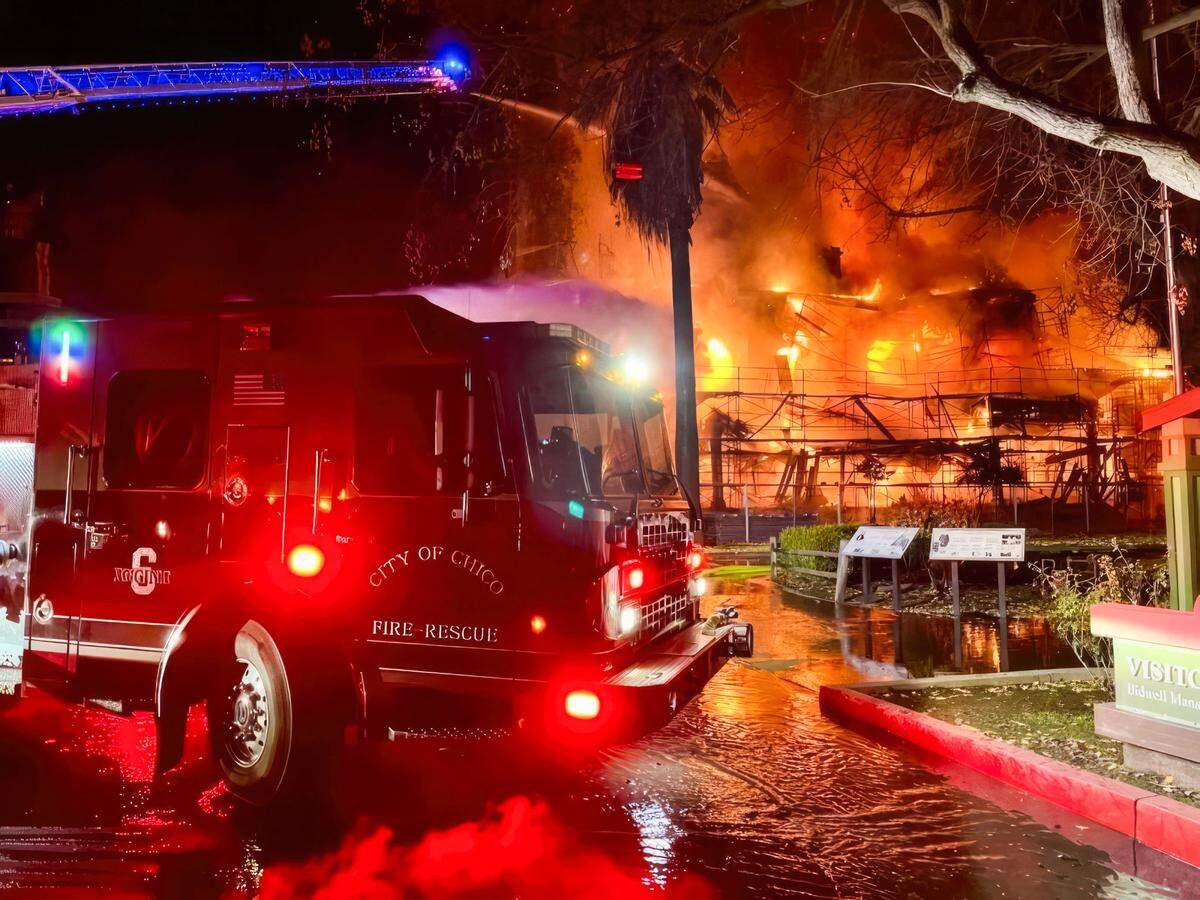
The faces changed throughout the day but the size of the gathering behind the yellow police tape held steady on the path beside the Bidwell Mansion where smoke drifted Wednesday from the historic building.
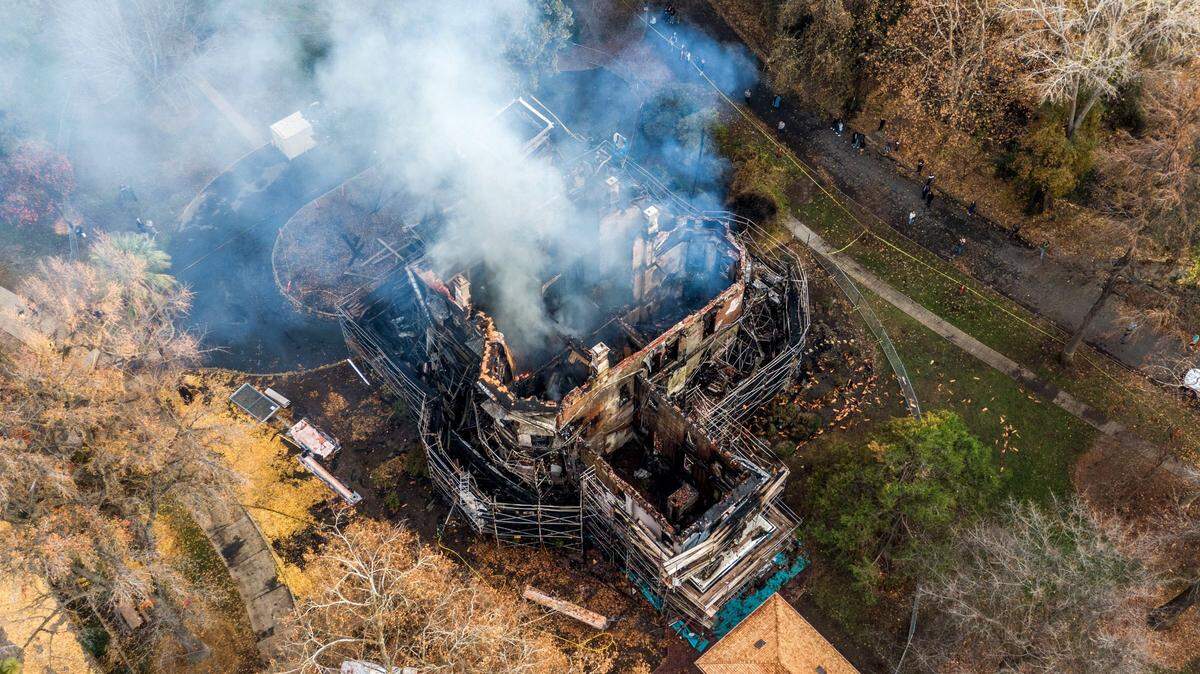
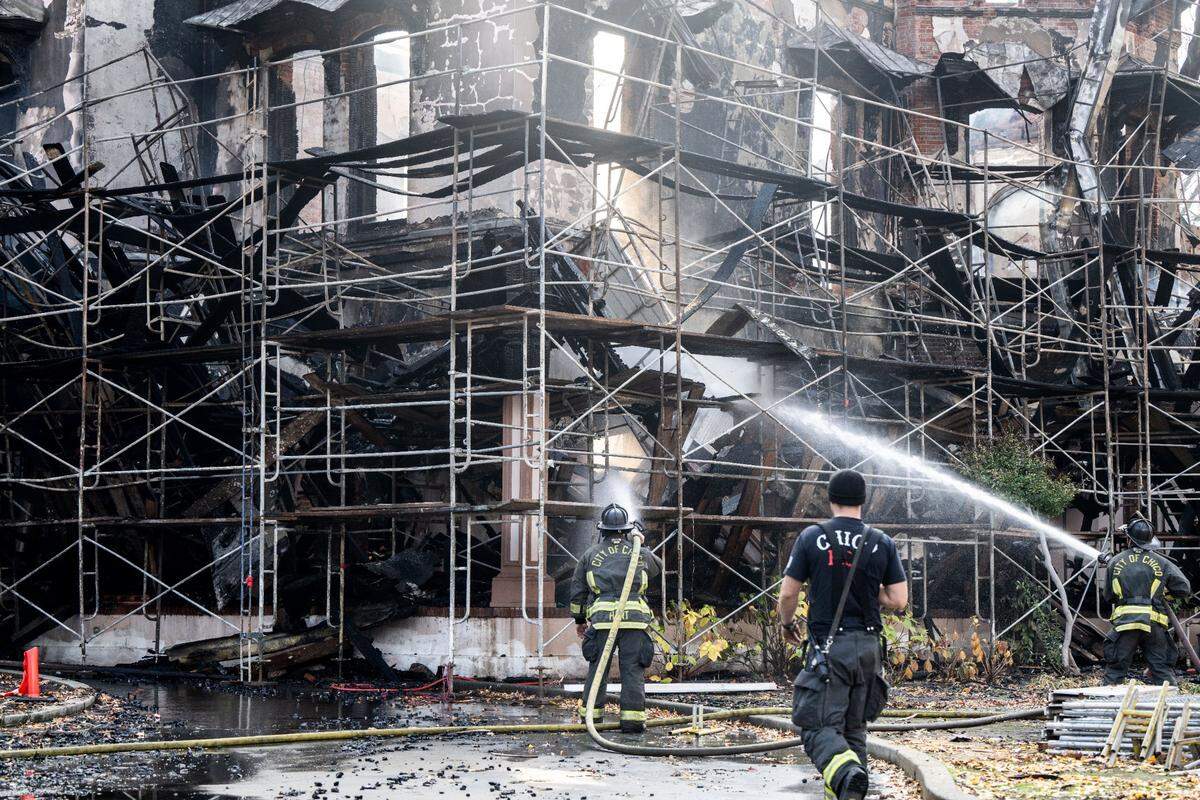
Those from the community — residents, students and onlookers — watched the smoldering remains of the historic Chico landmark, which was destroyed by fire early that morning and continued burning into the night while firefighters kept watch.
Chico resident Lauren Rafe stood beside her young sons, Ben and Henry, who waved to her husband, Aaron, a local firefighter inside the chain-link fence surrounding the mansion.
The mansion on the edge of Chico State’s campus, about 90 miles from Sacramento, was one of the first places she visited when she moved there as a student about 20 years ago.
“It’s an icon of Chico,” she said. “You live here, you’ve been to the mansion, you’ve toured it.”
The investigation into the cause of the fire was ongoing as of Thursday, as was the response of a community coming to grips with the loss of its centerpiece, more than 150 years old and tied to its founding.
Meanwhile, another Northern California landmark fell that morning.
Not far down Highway 70, local officials and Marysville residents from its small downtown, about 40 miles from Sacramento, watched demolition begin on Hotel Marysville, a once-vaunted structure of their own.
The namesake hotel in Marysville and the mansion belonging to the man credited with founding Chico were each taken by fire, losing with them a physical reminder of the histories of their towns.
The affection for Hotel Marysville existed in the past while the memories and connections to the Bidwell Mansion were contemporary, living with the residents of Chico young and old.
In other words, one building was wanted while the other was not.
But what does that mean for the future of two towns grappling with the loss of key pieces of their culture and identity?
Bidwell Mansion: ‘It’s older than the town’
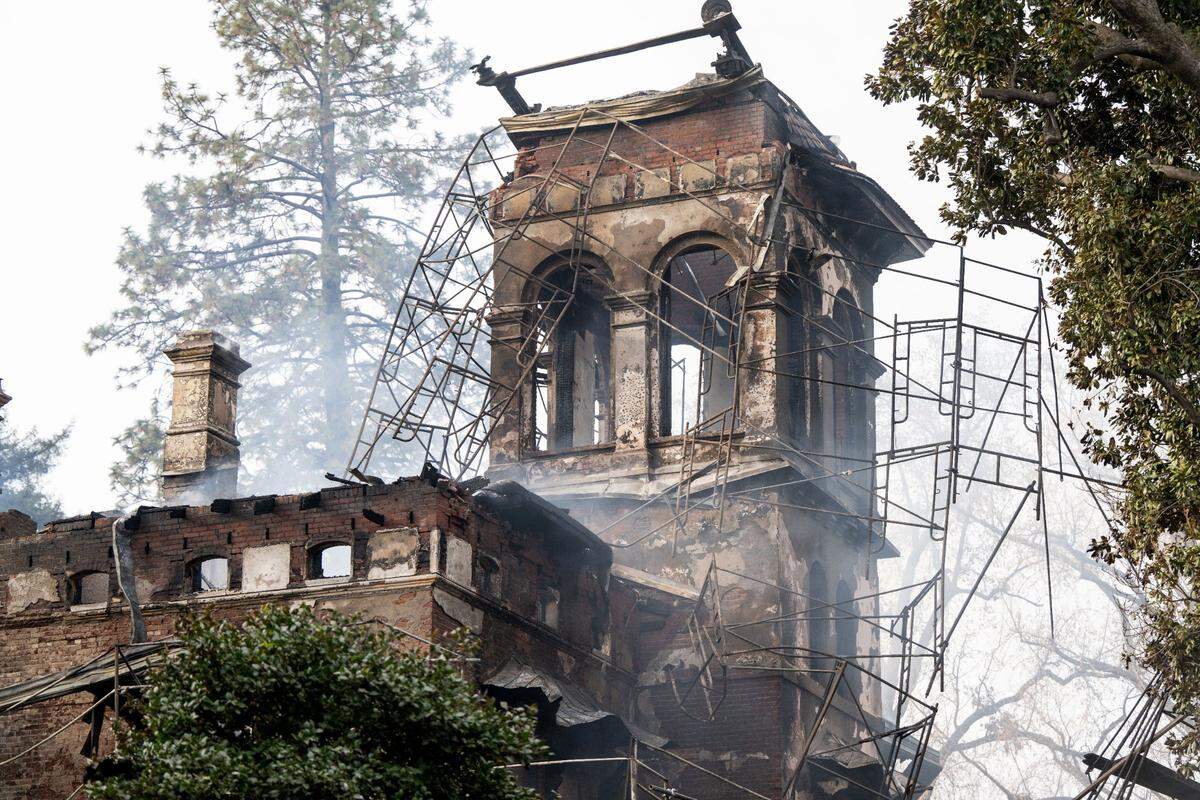
Flames ravaged the Bidwell Mansion on Wednesday, shocking community members and university students who held varying degrees of connection to the historic building. Restoration work began this spring on the mansion, a focal point of the town and state historic park, with plans to reopen the Victorian home and museum to the public in early 2025.
Hotel Marysville caught fire in June, ending hopes that it may one day be rehabilitated and sparking a legal dispute that ended with the city taking title and arranging for its demolition.
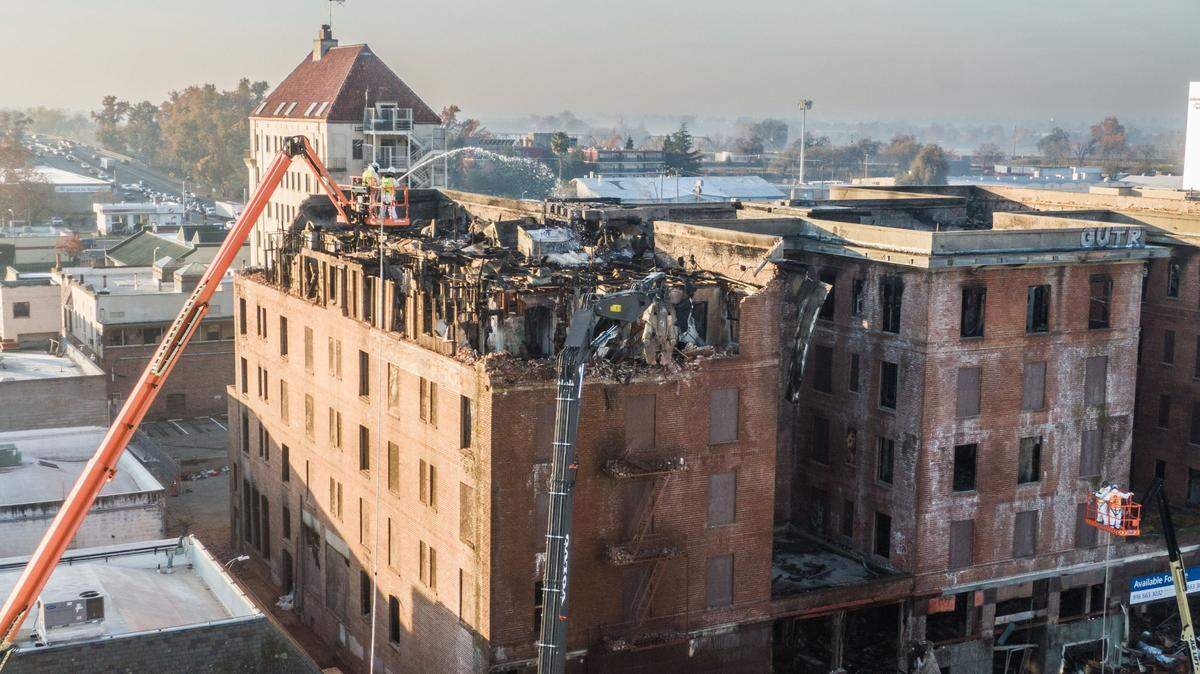
That demolition began Wednesday morning with more celebration than sadness. At the same time, firefighters about an hour north contained the blaze at the historic mansion, a place many in the north state have learned from and toured, which was virtually unrecognizable from its original self.
Andrew Coolidge concluded his second and final term as Chico mayor last week, days before the mansion fire, his city’s most beloved landmark. Coolidge, a native of Yuba County, also brings a perspective of the star-crossed story of Hotel Marysville, whose final chapter is being told by a wrecking crew as demolition began to tear down the battered brick building in the heart of the city’s downtown and a center of controversy for decades.
It’s a tale of the celebrated and the condemned, two vastly different landmarks now reduced to rubble.
“It’s terrible. It’s just such a symbol for Chico,” Coolidge said Thursday in the aftermath of the Bidwell Mansion fire.
It’s part of Chico’s origin story, and 156 years later, continued to give the city its sense of place.
“In a literal way, it’s the center of town,” he said. “It’s tied to every aspect of the city. It’s very traumatic.”
The fire stripped the iconic light-pink exterior from the mansion’s frame. Mangled scaffolding for its renovation stood twisted outside the brick walls. Black char facing the structure ran vertically up a large tree on an island of land circled by the home’s roundabout driveway. The heat torched a nearby palm tree, leaving a blackened trunk. The carriage house west of the main home appeared largely unscathed.
“For Chico, it’s like when Parisians lost Notre Dame,” Coolidge said. “If St. Louis were to lose the (Gateway) Arch. It’s something like that. It’s been here for 160 years. It’s older than the town.”
The town: ‘Because of him, Chico is here’
John Perrine stood beside his son Patrick, 12, near the yellow caution tape and looked at what remained of Bidwell Mansion. He and his wife, Cynthia, a Chico native, wed there years ago.
“It’s the symbol and face of Chico,” Perrine said.
“The whole landscape of Chico is really defined and identified by the Bidwells, what they did and how they did it,” he added.
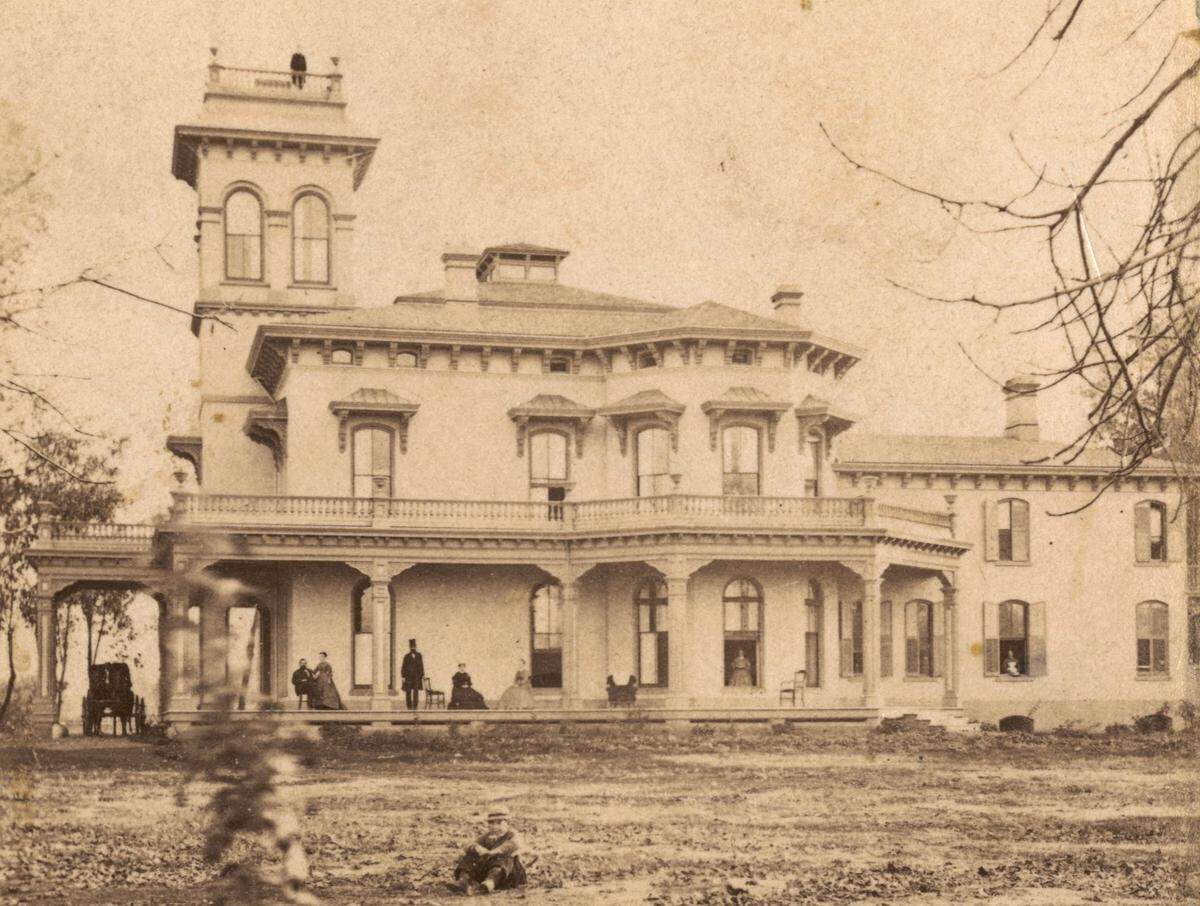
Bidwell Mansion, most recently a museum and historical site, was once home to John and Annie Bidwell, California pioneers widely credited with founding Chico who were prominent among California’s formative history during early statehood.
The 8-acre donation of their cherry orchard long ago laid the bedrock for what’s now California State University, Chico.
The mansion lies near Bidwell Park between the campus and neighboring downtown, a bridge of sorts between the community and the university the Bidwells helped to create.
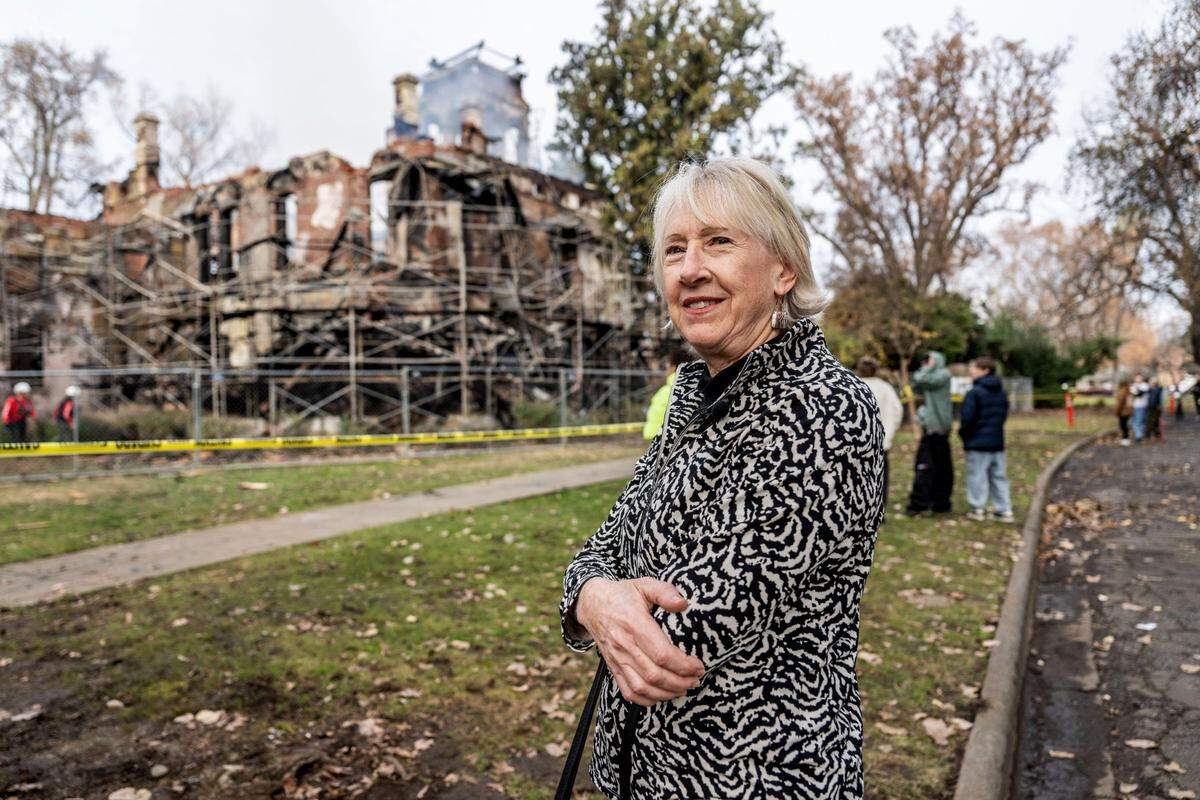
“Because of him, Chico is here,” said Sandy Hill, 86, who was born and raised in the city of more than 100,000 residents.
She was one of the many who stopped to see a landmark she had seen many times before, but never like this.
“We’re losing all of our history is what’s scary,” she said. “We’re losing all of our historical places, it seems like.”
“Anything in the 1800s or 1900s we seem to be losing, changing it,” she continued. “Young people don’t seem to be interested in history. It’s really sad.”
History: ‘It looms large in the north state’
Michael Jasinski of California State Parks is a historian and weighs the loss of the physical items lost in Wednesday’s mansion fire. These are, he said, the fabrics and materials and items that give modern-day Californians a window into an earlier world.
“In the European-American era of California, it’s monumental,” he said of the Italianate estate. “It looms large in the north state — the introduction of the flour mill, agriculture, industry.”
He is also a third-generation graduate of Chico State with deep ties to the city of Chico and its university. Through that lens, he sees how emotional the loss is and how that, too, is framed by history.
“I understand the loss of historic fabrics and materials — the historical facts. It’s a fine detail,” he said. “To have it happen this way, it’s more ephemeral a thing.”
Bidwell Mansion, he said, is what differentiates Chico in state history from larger cities such as Sacramento.
“With history, in a lot of ways, we hold on to things,” he said. “When we see that go up in flames, we see how tangible our lives are. We take for granted that these things will forever be a part of our community and our lives.”
Bidwell’s past has been scrutinized in relation to the Mechoopda people, who lived on the land where Chico is now and were displaced and affected by the rush of settlers and miners who came to the area not long after Bidwell crossed the Sierra Nevada into California.
“We lose some of the context, the experiences of the people, with Indigenous communities,” Jasinski said. “We lose that tangible link to the past. We include the Mechoopda people and (tell) the challenging history of this past. We see that Annie Bidwell was a progressive woman. We see these threads of history that illuminate the past. It provides a window into broader subjects at a personal level.
“Those windows into the past are more valuable in person than in text.”
With the loss of historical landmarks comes the challenge of educating future generations about the past, something that the mansion has done for a long time, particularly with area fourth-graders, Jasinski said.
“It’s going to be more of a challenge,” he said. “As a historian, a Californian, as we look to that past, we will have to be more creative in telling a more complicated history.”
Hotel Marysville: ‘Good riddance’
The loss of Hotel Marysville was similarly shocking for its locals six months ago when a fire destroyed the old building.
But there was little sadness Wednesday morning when the grasp of the high-rise excavator began pulling chunks of the hotel to the ground.
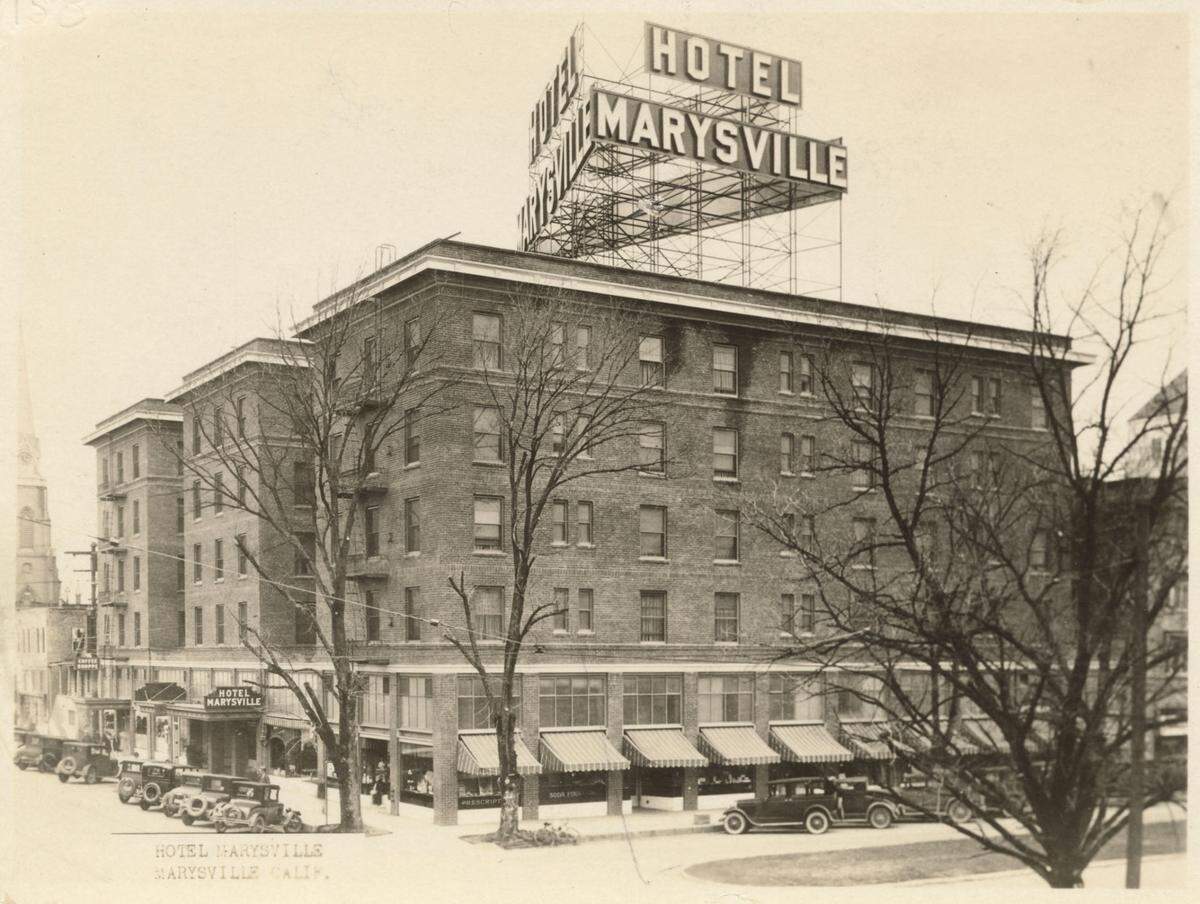
The brick high-rise marked the city’s skyline and stood apart in the town’s 20th-century history at the time it opened in 1926 — an accommodation more akin to those in larger cities such as San Francisco. But its status faded and, by the late 1980s, it had closed for good.
Despite intermittent efforts to revitalize the building in the decades that followed, it sat empty for nearly 40 years before catching ablaze the night of June 15.
“When you go a few decades where it’s a major stain on the city, it’s hard to resurrect those feelings,” said Marysville Mayor Chris Branscum. “Good riddance.”
The aftermath of the fire was complicated by a legal dispute between city officials and the Feather River Plaza LLC, which owned the property at the time. The two sides eventually settled out of court, with the company giving the city title to the property and $700,000.
Although the building held historical value to some, its property value was estimated at less than the cost of tearing it down.
The decades-old questions of what to do with the iconic, but decrepit, building were finally answered, first by its own devastating fire, now by demolition crews.
“It’s been a longtime issue of controversy in Marysville,” Coolidge said. “Both are very iconic locations, but took different paths. When (the hotel) fell into ruin, there were a lot of different efforts to save it, but they never came to fruition. It was in the center of town, but you’d never put it on a postcard.”
He praised the city’s handling of the hotel in the fire’s aftermath; its demolition poised to make way for new development and the steps toward revitalizing the city’s struggling downtown.
“Mayor Branscum did the best job he could with what he had,” Coolidge said. “Unfortunately, the city didn’t have the investment of millions of dollars to revive it, so they didn’t really have a lot of options. While it was a centerpiece of the town, it was an albatross more than anything else.”
Future for the mansion: ‘You want to see it restored’
Perrine, who had looked on at the mansion’s remains Wednesday beside his son, said the history and influence of the Bidwells have a foothold in Chico with or without the accompanying mansion.
“If it’s not here there will still be a Bidwell Park and Bidwell presence,” he said. “I just can’t imagine they wouldn’t rebuild or do something. It’s so central to the psyche of Chico.”
On Saturday, state parks officials began using an excavator to continue their survey of the mansion’s hulking remains.
“The excavator will remove destroyed components of the building to allow investigators greater access to the interior as they continue their investigation,” officials said. “It remains too early to discuss the future of the state historic park.”
Reeling from the loss of its iconic landmark, residents hold out hope that it can return someday, determined that Bidwell Mansion will rise from its ashes. Local philanthropy North Valley Community Foundation has set up a fund, Restore Bidwell Mansion, with money to be directed toward rebuilding.
“Mainly, you want to see it restored and people will rally around that,” Coolidge said. “The town’s not going to tolerate the disappearance of this building.”
This story was originally published December 13, 2024 at 5:00 AM.