
CapRadio and Sacramento State spent $1.6M to rent office, stopped paying — and never moved in
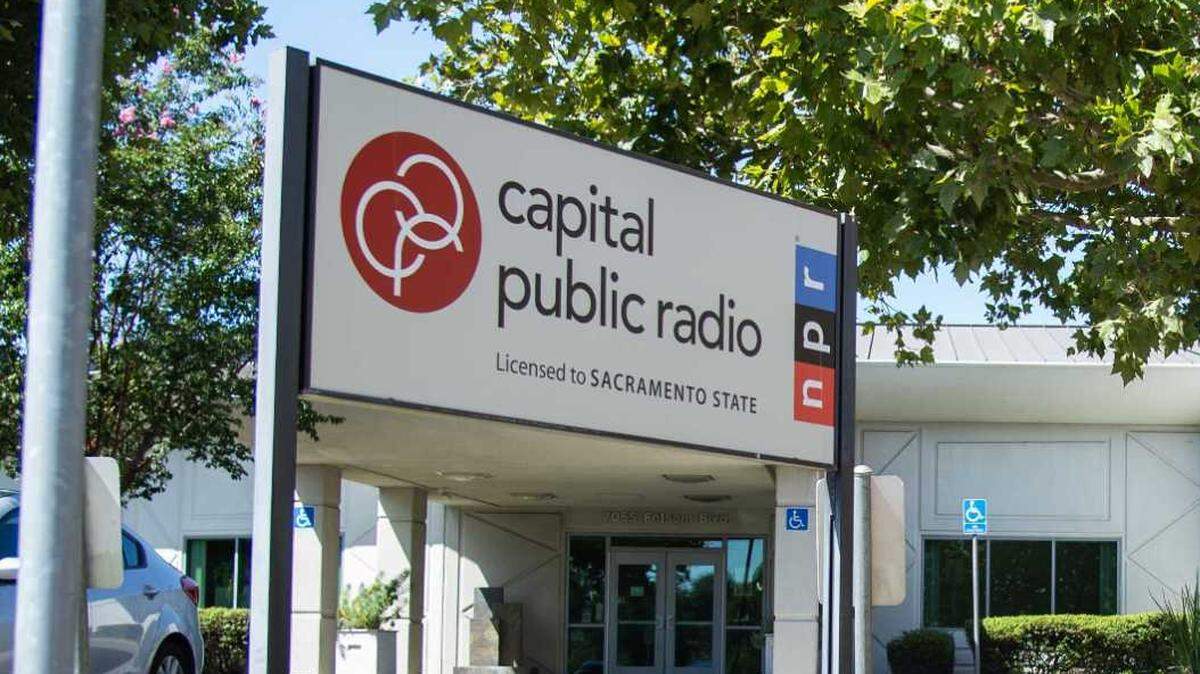
Sacramento State and its auxiliary Capital Public Radio have stopped paying rent for a downtown building — once planned as the station’s new headquarters but that CapRadio never fully moved into — after sinking about $1.6 million in rent payments for the office space in just under two years.
The lease for the three-story building at 730 I St. was signed March 1, 2021, by CapRadio’s general manager at the time, Jun Reina, and a partial owner of the building, Bay Miry.
Miry’s wife, Katherine Bardis-Miry, served on CapRadio’s board while the lease was being negotiated and when it was signed. Bardis-Miry, one of 14 board members who resigned in October 2023, has said she recused herself and skipped board meetings or arrived late to them in order to avoid any conflicts of interest.
Sacramento State commissioned a forensic examination by accounting firm CliftonLarsonAllen, released last August, that identified Bardis-Miry as one of four former board members with potential conflicts of interest. The same report flagged financial discrepancies involving Reina’s spending of station funds.
CapRadio and its lawyers appear to have contended in emailed exchanges since last year that the lease — set to last until at least 2036 — is void under California law preventing conflicts of interest at auxiliaries within the California State University system. Neither Sacramento State nor CapRadio have paid rent on the building since last summer, spokespersons for each confirmed.
Chris Bruno, CapRadio’s chief marketing and revenue officer, said the station halted rent payments because its current headquarters on Sacramento State’s campus “meets our needs.”
Emails between attorneys for CapRadio and 730 I St. ownership reviewed by The Sacramento Bee show that the appearance of the ethical impropriety, and potential related legal issues, prompted discussions about the future of the lease beginning shortly before the final rent payment, which was made in July 2024.
A CapRadio attorney in May 2024 reached out to Miry, requesting a meeting about the “future of the downtown lease at 730 I Street and related matters,” according to emails released by the university in response to California Public Records Act requests. The emails were also included in an unredacted version of the audit released last month.
“We want to discuss how California’s conflict of interest laws governing ‘auxiliary organizations’ like CPR under the Education Code impact the lease, in addition to California nonprofit fiduciary duty and self-dealing laws and federal charitable tax laws,” CapRadio attorney Bruce Scheidt wrote May 24, 2024, to Miry, “and any steps that may need to be taken with respect to governmental bodies and otherwise as a result of those laws, in order to try to seek an amicable resolution.”
Mark Ellis, an attorney representing Miry, in an email responding to Scheidt cast doubt that conflict-of-interest laws could affect the lease.
“I think I have the gist that you may argue there was some undisclosed conflict of interest here,” Ellis wrote back on June 2, 2024. “I must say from the documents I have briefly reviewed and from a quick reading of the applicable statutes that appears preposterous. I understand documents demonstrating the disclosure of any relationship apparently at issue here were produced months ago. Is that not true?”
The documents provided showed no further discussion regarding whether the meeting took place after Scheidt broached the idea in May 2024. The last rent payment was made July 1, 2024, by the university, Sacramento State spokesperson Lanaya Lewis confirmed.
Miry, a prominent local developer, did not respond to requests for comment.
Bruno did not answer a question asking whether the lease is void under state laws governing board members’ conflicts at nonprofits and auxiliaries, and referred to the forensic examination delving into the station’s finances.
“CapRadio reserves all rights with respect to the findings set forth in the (CliftonLarsonAllen) Report, including as it relates to the lease,” Bruno said. Bruno did not elaborate further on what CapRadio is reserving rights to.
The California Education Code says contracts and transactions by California State University auxiliaries may be nullified if a board member could gain a financial interest with their approval. A portion of the CliftonLarsonAllen report summarizing former board members’ possible conflicts of interests cites that section of the Education Code.
What did CapRadio and Sacramento State each pay?
CapRadio embarked on a grand vision in 2016 to move from its office on Sacramento State’s campus to 1010 Eighth St. But that plan evolved as the station then also leased a second piece of prime real estate on 730 I St., a 60,000 square foot space, about two blocks away from the Golden 1 Center.
The plans at 1010 Eighth St. and at 730 I St., a block away from one another, did not materialize as once intended. CapRadio, faced with financial turmoil, laid off several employees and cut music programming.
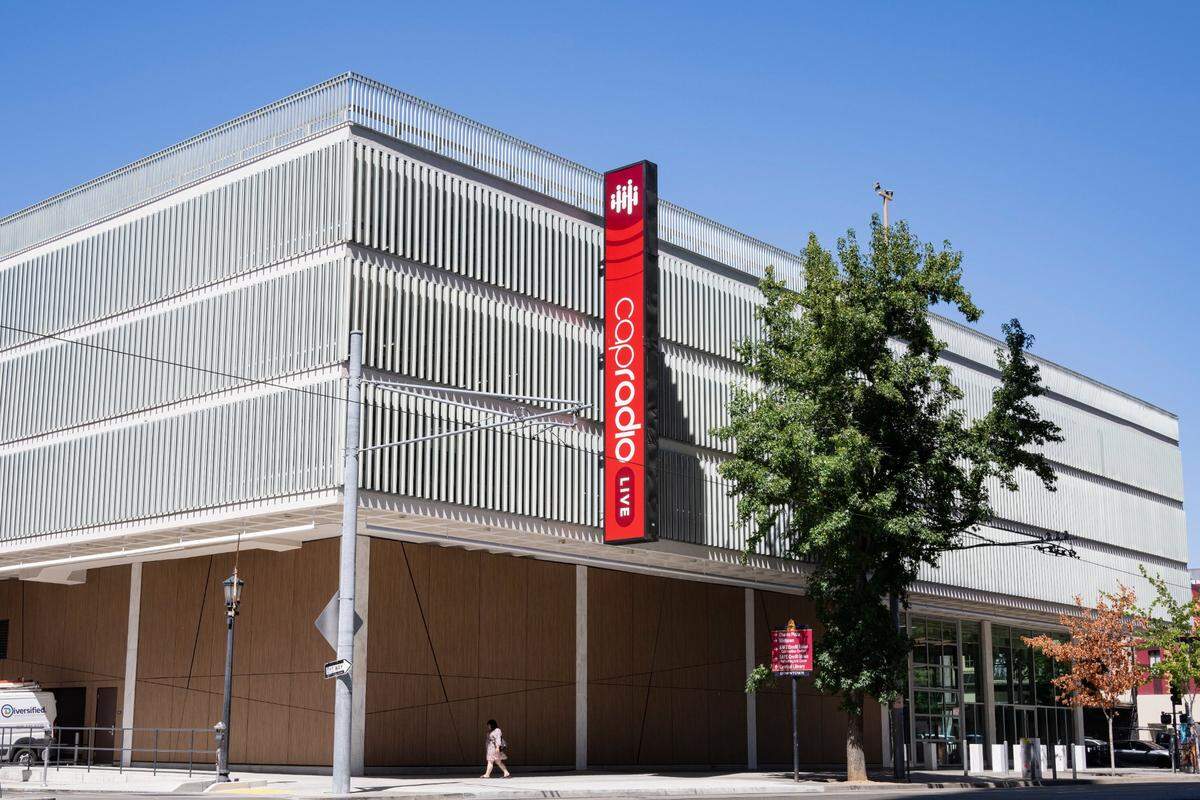
CapRadio and Sacramento State have collaborated to open a new event space at 1010 Eighth St. set to open early this year.
CapRadio, which was set to occupy about 34,000 square feet of the 730 I St. building, began paying rent on it in September 2022, about 18 months after the lease was signed. The station paid a total of $758,741.06 until Sacramento State, which co-signed on the lease in June 2023, took over the payments.
In March 2023, the station pulled funds from its operating budget — intended to pay employees and keep the radio functioning — rather than its capital campaign created to raise money for the move downtown, according to financial documents provided in response to a public records request.
The station made its last payment in July 2023, according to CapRadio and Sacramento State. The university, starting in August 2023, paid at least $847,865.04 through the last payment in July 2024, according to the documents.
That adds up to a grand total for $1,606,606.10 paid over 23 months by the two entities for the building, which is on the city’s historical registry.
In his email to Miry, Scheidt said that a representative from the California State University system would be present for the meeting CapRadio requested about the lease.
Sacramento State declined to comment on whether it was involved in conversations about the future of the lease with Miry and his attorney.
“At this time, we cannot speak further on 730 I Street,” Lewis wrote.
The financial crisis at CapRadio came into public view after the California State University in September 2023 released an audit which Sacramento State President Luke Wood said found widespread financial mismanagement at the nonprofit radio station.
Wood requested the forensic examination, conducted by local accounting firm CliftonLarsonAllen, which was publicly released last August with heavy redactions. The report linked Reina, the former general manager, to more than $450,000 in expenditures “without corresponding evidence of expense reports and/or receipts.”
The forensic examination identified Bardis-Miry and three others whose service on the CapRadio board may have posed a conflict of interest. The report had redacted the board members’ names, but The Bee reported their identities months before Sacramento State ultimately posted a mostly unredacted version of the audit in January.
Email: ‘Obvious conflict of interest’
Then-CapRadio general manager Rick Eytcheson, who retired from the station in 2020, also has previously said that CapRadio was in negotiations to secure a lease on the building when Bardis-Miry joined the board, and her service did not affect lease negotiations.
Bardis-Miry was appointed to the board in July 2019. October 2019 board meeting minutes show Bardis-Miry was asked to step out of the meeting as Eytcheson reported they were “exploring” moving into the 730 I St. building.
Bardis-Miry remained on the board while the lease negotiations were underway and when it was signed on March 1, 2021.
Former Board Chair Andrea Clark emailed Bardis-Miry in September 2023 asking Bardis-Miry to relay her involvement on the board as it related to discussions about the lease. The California State University was releasing an audit that same day and auditors were asking about possible conflicts of interest, according to the email.
Bardis-Miry noted her husband shared “certain things” with her regarding the lease and so she avoided meetings discussing the lease, the email said.
“A couple board meetings this year I either didn’t attend or joined late since, although I have no ownership, there is an obvious conflict of interest with what I know through certain things Bay has shared, especially with some of the payment items that came up earlier this year,” Bardis-Miry wrote in an emailed response to Clark on Sept. 27, 2023.
The meeting minutes for a March 25, 2021, board meeting — after the lease was signed — noted the lease was active and showed Bardis-Miry present. Her conflict was not noted in the meeting minutes.
Bardis-Miry did not respond to requests for comment. Eytcheson did not respond to a request for comment.
What does California law say?
A section of the California Education Code states a contract or any other transaction is void if a member of the auxiliary organization’s board of directors is “financially interested.” There are some exceptions, including if the conflict of interest is properly disclosed and noted in meeting minutes.
The CSU audit did not delve into the alleged conflict of interest posed by Bardis-Miry’s involvement on the board. But the report did note more generally that “conflict-of-interest (COI) statements for board members were not retained.”
“The COI policy states that members of the board should complete an annual COI statement,” the audit said. “However, CPR could not locate signed statements during the audit period because the staff member responsible for maintaining the statements was on sabbatical leave.”