
Yuba City can’t keep state funds for affordable housing unless it finds $7 million it doesn’t have
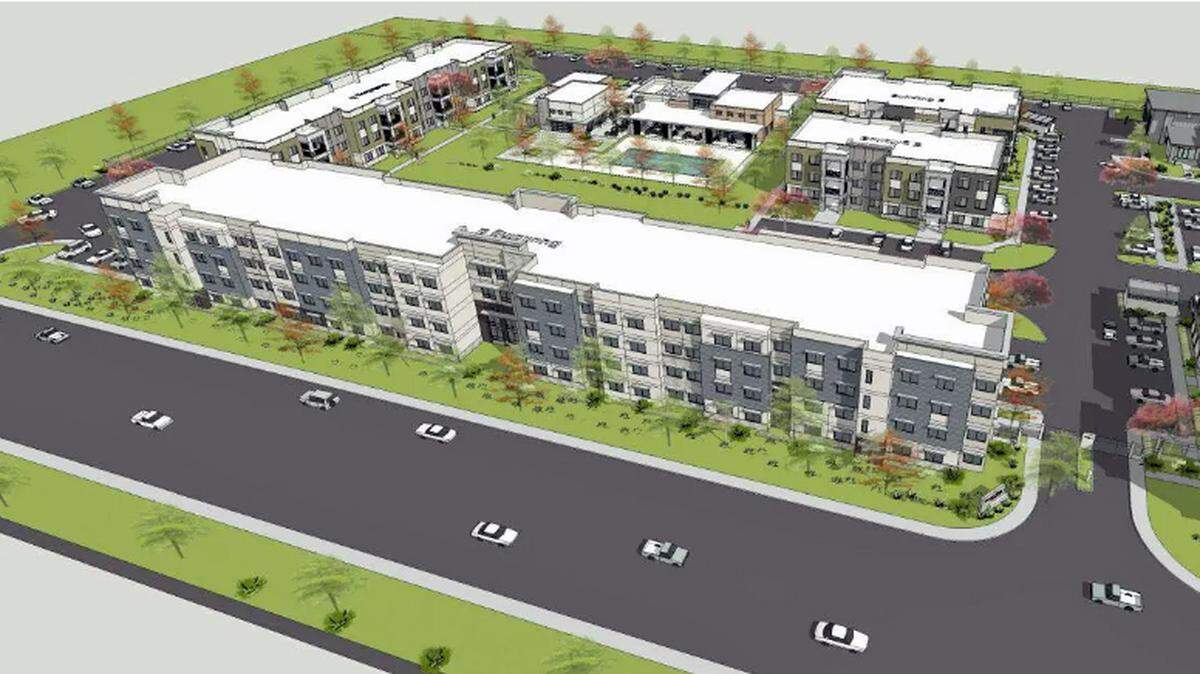
More than $7 millionstands in the way of an affordable housing project that has been in the works for years. And neither Yuba City nor Habitat for Humanity Yuba-Sutter have it in hand.
The city and nonprofit have partnered for more than three years on Merriment Village Apartments, a planned 218-unit complex for low-income housing on Walton Avenue, north of Franklin Road, with an estimated cost exceeding $75 million.
Now the two sides are scrambling to resolve the funding gap and save the project to avoid returning more than $24.6 million in state dollars received through the California Department of Housing and Community Development’s Homekey program.
The state agency granted the funds to build a four-story building with 80 units as the first phase of the larger project. But with construction required by contract to begin in the coming weeks, the nonprofit reached out to city officials requesting a $7.5 million line of credit to make up the shortfall, triggering a quick “no” in response while raising the need for another solution on short notice.
“We all agree that this is a good project,” said Yuba City mayor Dave Shaw at a special meeting Monday. “The city wants it to go forward. We have to overcome a gap funding issue.”
After holding a special meeting this week, the city and nonprofit are hoping to reconcile with the state agency to keep the housing project alive.
How did we get here?
The project began in early 2022 when city and Habitat for Humanity officials selected the nearly 7.5-acre site on Walton Avenue. In addition to seeking the Homekey dollars, the city and nonprofit partnered to seek funding from Affordable Housing and Sustainable Communities, another state program.
For its part, the city waived nearly $1.8 million in fees and in October received Homekey program funds — more than $24.6 million — directly from the state. The Homekey program aims to fund and coordinate state and local partners to expand more quickly housing options, particularly for those who are homeless or near homelessness.
The city and nonprofit only had about 15 months to finish the project when they were awarded more than $24 million in funds last February. By last July, the nature of the very short deadlines became more clear.
State requirements pegged construction of the first building to complete a year after the funds were awarded, which would have been in February, with full occupancy required by this May.
Joseph Hale, CEO of Habitat for Humanity Yuba-Sutter, on Monday told city officials that the nonprofit had invested about $3.7 million into the project over the past 18 months. He said the organization has a variety of revenue streams throughout the year that can go toward the project costs, and that it would not plan to tap into the line of credit.
But council members, dealing with budget problems of their own, quickly ruled that out.
“You burned almost two years of circling around and around and around, trying to find a wish and a prayer, and that to me is not a sound way of going about developing something that is so important to this community,” said Councilmember Michael Pasquale.
Funding the gap
Last summer, council members expressed concern over the project timeline and the city’s obligation to repay the funds if agreed terms weren’t met. That’s also when Habit for Humanity informed the city of the roughly $7 million gap between grant funding and construction bids.
The city and nonprofit in July entered a contract that put responsibility for the shortfall on Habitat for Humanity, which put together a plan to account for that funding. After first denying the nonprofit’s request for more time, the state agency in January extended the timeline to allow for construction to complete in October 2026.
However, the urgency escalated earlier this month when Habitat sent the city an email asking for an unsecured line of credit for $7.5 million to cover the funding gap.
City officials rebuffed that request, expressing confusion and frustration, particularly in light of recent financial struggles that have caused the city to cut back on services.
“It struck me as odd knowing what I think most people know about our financial situation here in the city that someone would ask us for a $7.5 million unsecured loan,” Boomgaarden said. “That’s tough, right? We’re not flush at all.”
With construction now required to begin in April, to comply with the state contract, the city and nonprofit are on short notice hoping to work with the state agency on finding a solution.
“Time is not a luxury that we have,” Shaw said.
Affordable housing challenges
To salvage the project and avoid returning more than $24.6 million to the state, council members talked about either scaling back the project’s first phase or asking the state housing agency for more funding.
In February, Long Beach returned $5.6 million to the state after failing to find land to settle 33 tiny homes — which the city had already bought for $2 million — that would have served as temporary housing for homeless people, the Long Beach Press-Telegram reported.
Yuba City council members floated whether to ask for the funds that Long Beach returned.
“California is in need of a housing correction,” said Councilmember Toni Cole. “Things are really out of control and I feel like this kind of challenge is going to become more frequent.”
Johnny Burke, Yuba-Sutter Homeless Consortium executive director, said that the fate of housing projects such as Merriment Village could affect other housing and homelessness funds Yuba and Sutter counties receive due to new accountability measures that Gov. Gavin Newsom announced in February, tying local progress on housing to future state funds.
Burke said that over the past six years, about $10 million of such funds have come to the counties and the homeless consortium.
“Somehow, someway we need to make this happen,” he said.