Across different cultures, hundreds march in honor of Cesar Chavez in Sacramento
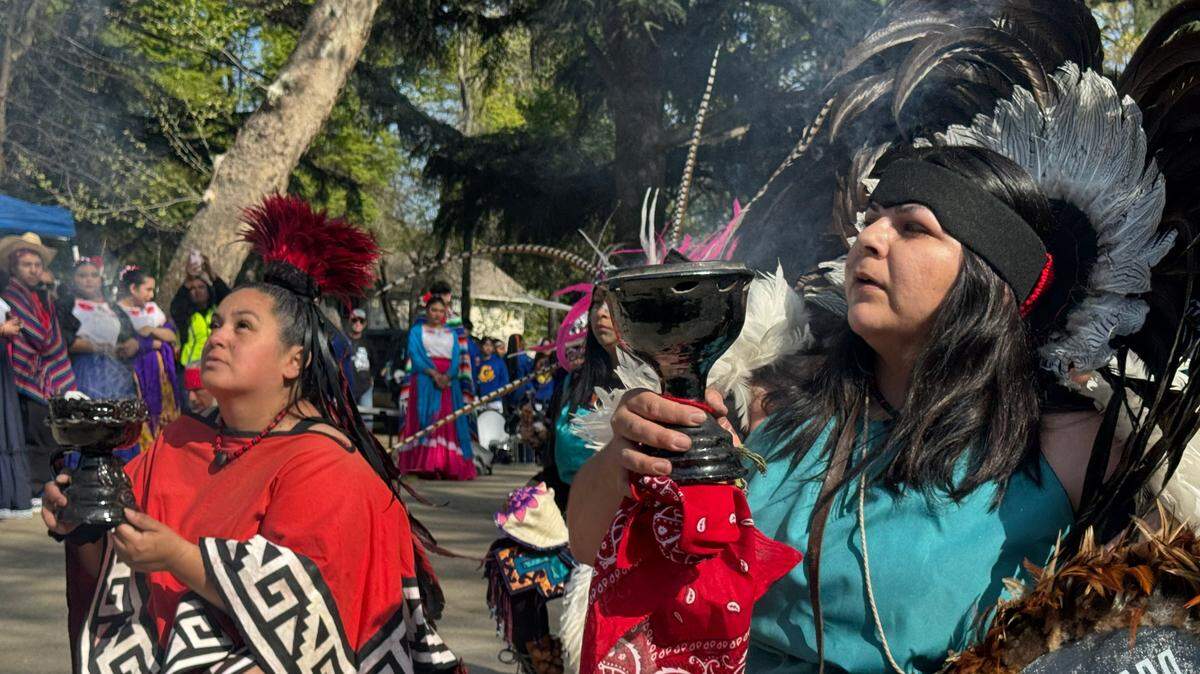
With Aztec dancers leading the way, hundreds of people from around California marched Saturday from Sacramento’s Southside Park to the state Capitol and back to honor the legendary civil rights activist and labor leader César Chávez.
Born March 31, 1927, Chavez dedicated his life to improving the conditions of farm workers in the United States, particularly in California. The state observes his birthday as a state holiday, and government offices and many businesses will be closed Monday.
Through signs, chants, speeches and conversations, the participants signaled that the struggle remains.
Bakersfield resident Armando Elenes, the secretary-treasurer of the United Farm Workers, said Chavez’s struggle continues today in the agricultural industry but that it now also has spilled into the nation’s urban cores, where even legal residents are being targeted by U.S. Immigration and Customs Enforcement.
“We’re marching to continue that whole struggle that Cesar and all the other farm worker leaders started and remind people that there’s still a lot of more work to do, whether it be fighting back against the Trump administration regarding the ICE raids or whether it be pushing so that basic human rights are respected,” Elenes said.
The festival honoring Chavez’s legacy was not just about politics or labor. It was also a celebration of culture. Miwok and Nisenan elder Matt Franklin welcomed everyone to the ancestral land of his people and performed a song to bless all assembled.
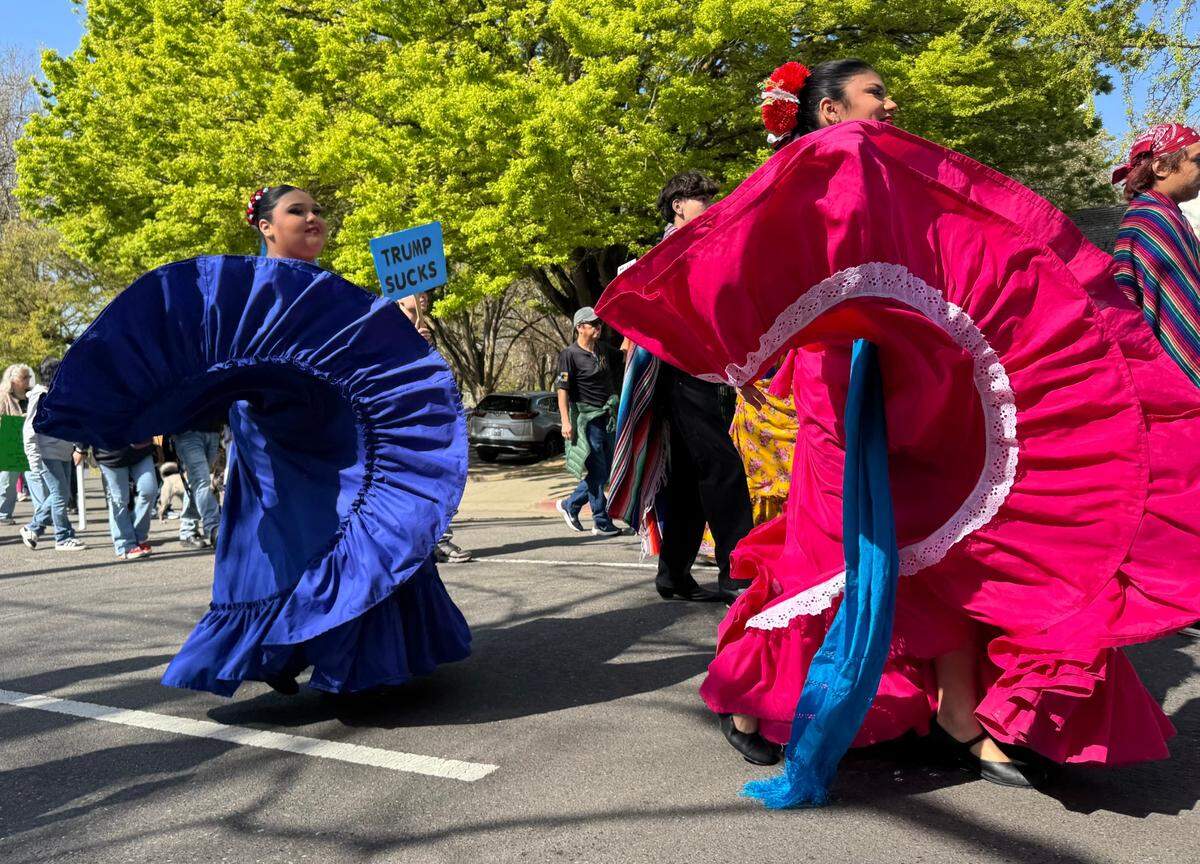
A folklorico dance troupe from Grant Union High School fanned and swirled their colorful skirts as they brought up the rear of the march through downtown Sacramento streets, keeping rhythm with their schoolmates in Grant’s well-known Pacer Drum Line.
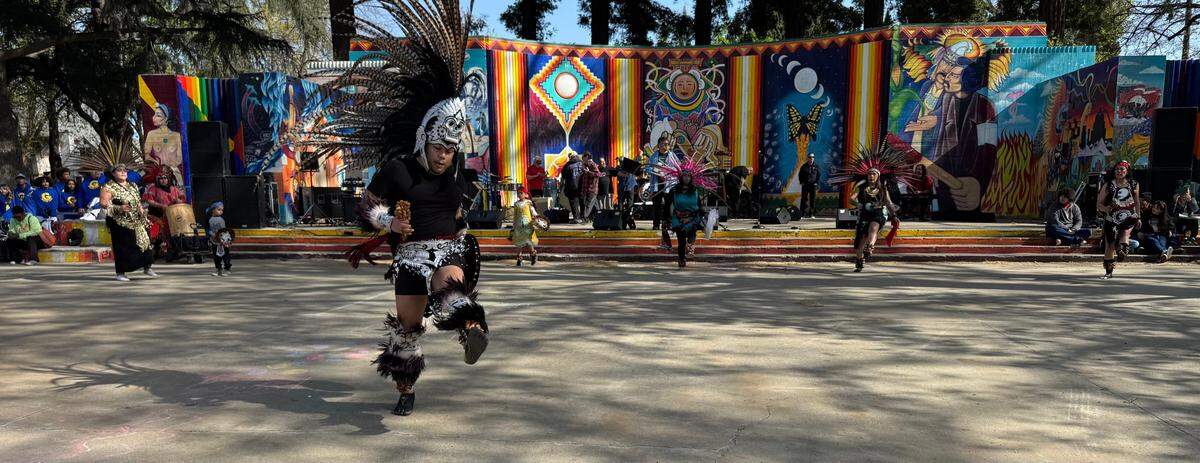
Leading the way in the march, Aztec dancers purified the air with incense made by burning the resin of the copal trees. They also opened the festival at Southside Park by performing a ritual — dancing ancient steps passed down by their elders, blowing conch shells and beating drums to connect with natural elements and filling the open air with the aroma of copal.
Citlalin Rodríguez, a 34-year-old sahumadora, or incense waver, danced alongside her children as part of the Kalpulli Itzkuauhtli Aztec dance troupe. She said her family has been involved in activism and cultural traditions for generations, and her eldest daughter had taken her first steps within the Aztec dance circle.
“We’ve been marching since we were little, like her,” Rodríguez said, pointing to one of her younger daughters. “Some of my first memories in Sacramento are picketing Safeway during the (UFW) strikes. We want to teach our children that we belong on this land. We belong in these roles and in this community.
“It’s crucial to preserve these traditions,” said the mother of four, especially in the face of a society that has tried to erase the histories of Black, brown and Indigenous people. “Our ancestors sacrificed their lives to protect these traditions, and so it’s our job to teach our children, teach future generations, and show people that we’re still here and we’re still indigenous.”
César Alvarado, a 54-year-old organizer for SEIU from Mendocino County, made the journey to Sacramento early Saturday from the coast with two vans full of supporters.
“My name is César too, so that’s huge,” he said, and Chavez inspired him to volunteer for the UFW and get involved with fighting for social justice.
Alvarado brought his children to these very same type of marches when they were young. “I have pictures of my kids when they were 3 years old at this march, and now they’re in their 30s. It’s been a life journey,” he said.
Fabrizio Sasso, executive director of the Sacramento Central Labor Council, fired up the crowd before they departed on the march, telling them: “Cesar Chavez was a warrior who stood up to the rich and powerful and said no más. No more exploitation, no more poverty wages, no more abuse of working people.”
He called upon Latinos, Blacks, whites, Asians, Indigenous people and immigrants to stand together, shouting “Si se puede!” (“Yes, we can!”), a rallying cry originated by Chavez contemporary Dolores Huerta.
The words would be heard many times at Southside Park and in Sacramento streets as the day honoring Chavez’s legacy unfolded.
But there were many other signs held high by demonstrators: “Power to the people! Fight fascists!”, “Brown and Proud,” “Full Rights for All Immigrants.” “First they came for Mahmoud Khalil,” a handmade sign referencing a legal resident who was scooped up by ICE after organizing protests against Israel’s actions in the Gaza Strip.
Elenes, who has been with the UFW for more than 25 years, said that he gets inspired when he thinks of the gains achieved by Chávez, Huerta and their contemporaries and he hopes others do, too: “César Chávez means empowerment. He means hope that it can be done, that things can change. We just have to keep on fighting.,”
Saturday’s march has ended, but Elenes said thousands of people will be head Monday to the Central Valley City of Delano to spend Cesar Chavez Day in demonstrations. It was in Delano in 1966 that Chavez led scores of peregrinos — pilgrims, in English — on a 340-mile trek to Sacramento over 25 days.
Labor experts have credited that historic march with bringing national attention to the farm workers’ struggle for basic improvements in their working conditions.