
How have water and floods shaped Yuba-Sutter history? New museum exhibit explains
In the beginning there was water and land, rivers and floodplains. Now there are levees and dams, and centuries of history brought by the rivers dictating the fate of Sutter and Yuba counties.
Knowing the history of the land, a reasonable person may wonder how — more than why — people have lived there for so long. A new exhibit at the Sutter County Museum delves into that answer, showing the history of floods and human intervention in the Yuba-Sutter area.
“Especially with flooding, that’s something people have been wanting for a long time, to have a more thorough flood exhibit that really tells more of the Yuba-Sutter story,” said Molly Bloom, Sutter County Museum director. “That’s been a big void in our permanent exhibit. I know that means a lot to a lot of people here because it is so personal.”
The museum’s new flood exhibit walks visitors through the evolution of the land surrounding the Sutter Buttes and extending past the Feather and Yuba rivers.
Water and floods have shaped the landscape, from the Nisenan people who lived there before settlers turned the ground to farmland, and more settlers eroded the landscape during the Gold Rush, to the modern-day infrastructure protecting more than 180,000 people who call Sutter and Yuba counties home.
“You have a lot of people here who lived through four or five major flood evacuation events and so it means something to everyone,” Bloom said.
Yuba-Sutter’s flood history
The exhibit begins with the Nisenan, who lived near the rivers and would find higher ground, often near the Sutter Buttes, when the rivers rose and flooding began. Settlers and farmers who arrived after them built levees, essentially “mud fences,” meant to wall off and contain rising waters, according to the museum.
The introduction of hydraulic mining during the Gold Rush washed away vast chunks of the landscape, particularly in Yuba County, flushing tons of sediment into the river system and ultimately reshaping the rivers themselves. The sediment-dense waters caused more severe flooding and led to clashes between farmers and miners, culminating in a judge’s ruling in 1884 that effectively banned hydraulic mining in California.
Still, the damage from decades of the practice had erased a significant part of the landscape and reshaped the river system.
More than a decade before that court order, Sutter County officials created Levee District 1, the first of such districts formed in California for more locally organized flood protection. The levee district remains active and is one of several local entities comprising the Sutter Butte Flood Control Agency.
“It’s always evolving and changing,” said Michael Bessette, executive director of Sutter Butte Flood Control Agency. “Levee repairs, levee improvements, levee maintenance, it’s a continuous thing.”
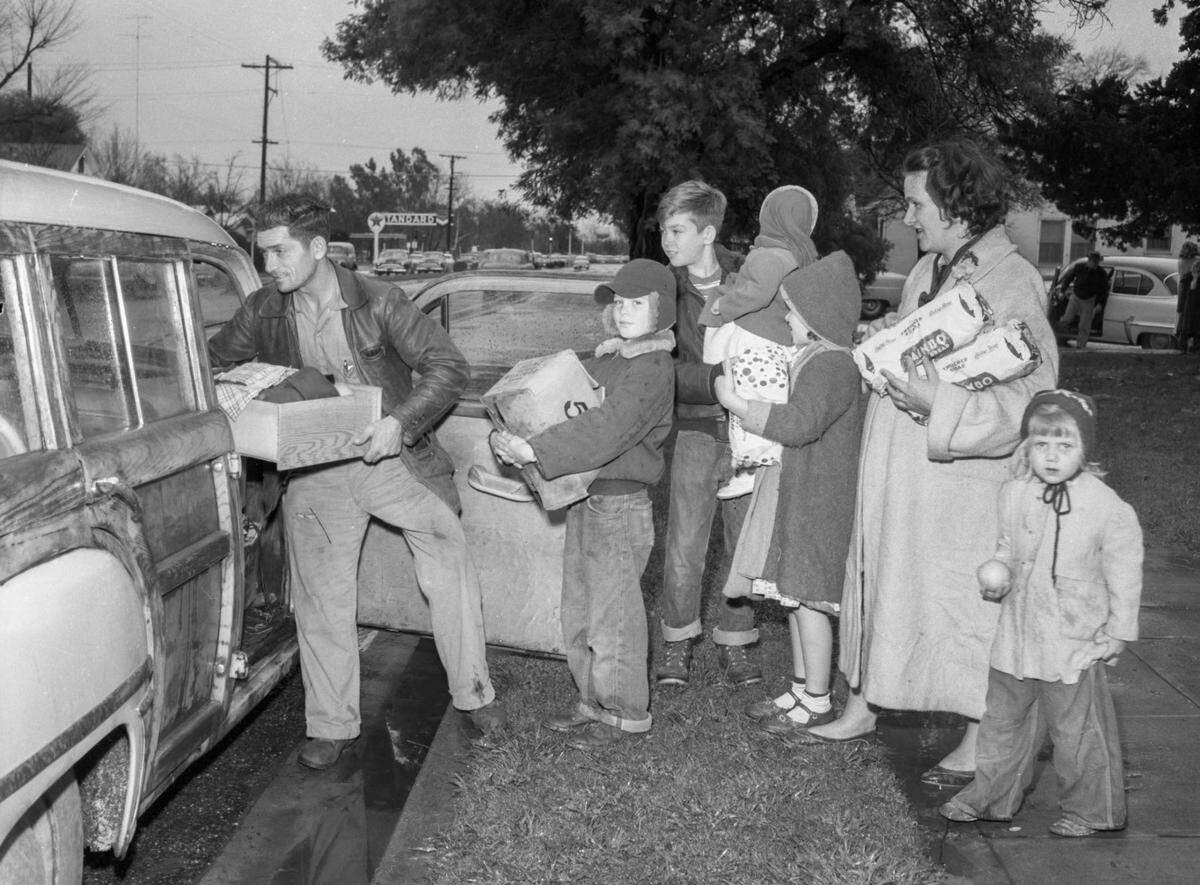
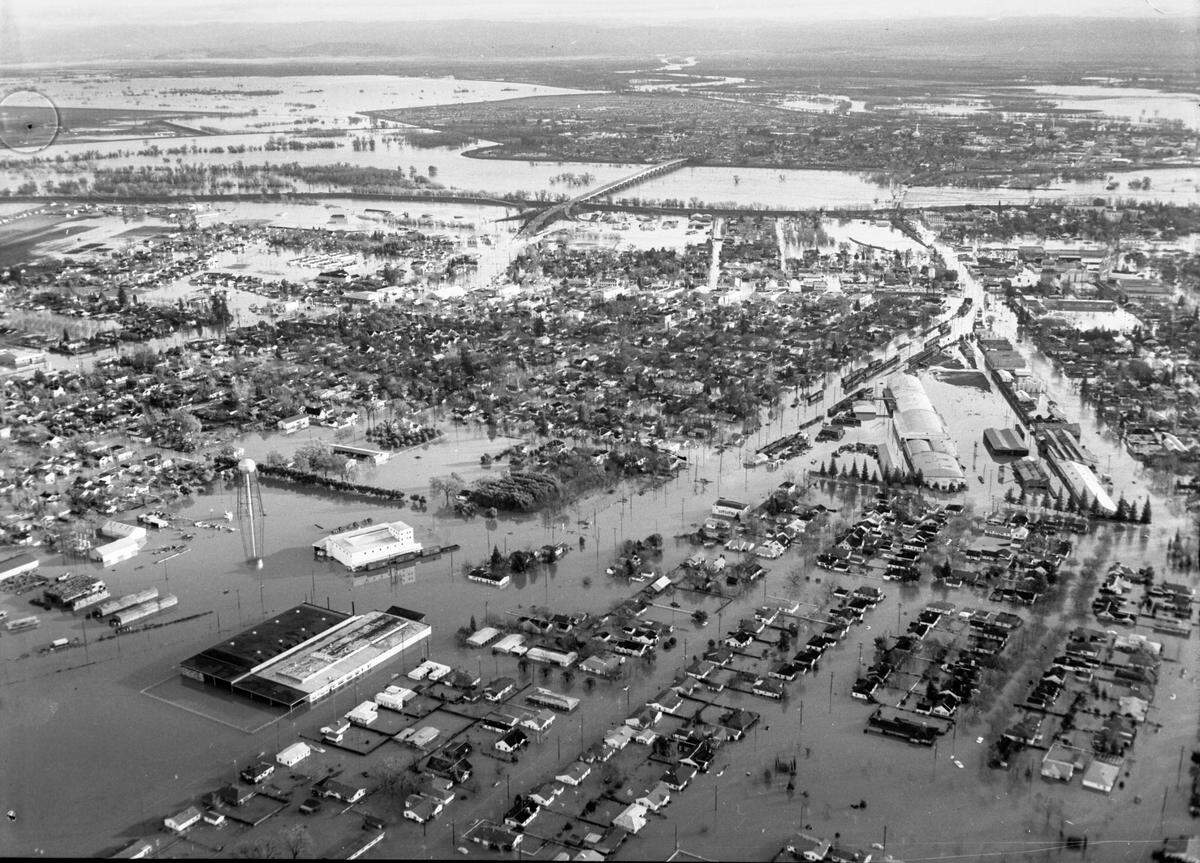
The Army Corps of Engineers improved the locally constructed levee systems in the 1920s and ‘30s, Bessette said, after which the state took over maintenance and operations. But flooding persisted, including the flood of 1955, which submerged 90% of Yuba City after a levee broke at Shanghai Bend, killing 37 people and stranding far more, according to the museum.
The Oroville Dam, upstream of the Feather River in Butte County, was built in the 1960s, for the first time allowing people an element of control over the river’s flows. New Bullards Bar Dam, built and operated by Yuba Water Agency, a citizen-driven effort to protect Yuba County and manage its water supply, was completed atop the Yuba River in 1970.
“Before that it was unregulated,” Bessette said. “Whatever Mother Nature sent our way is what was received.”
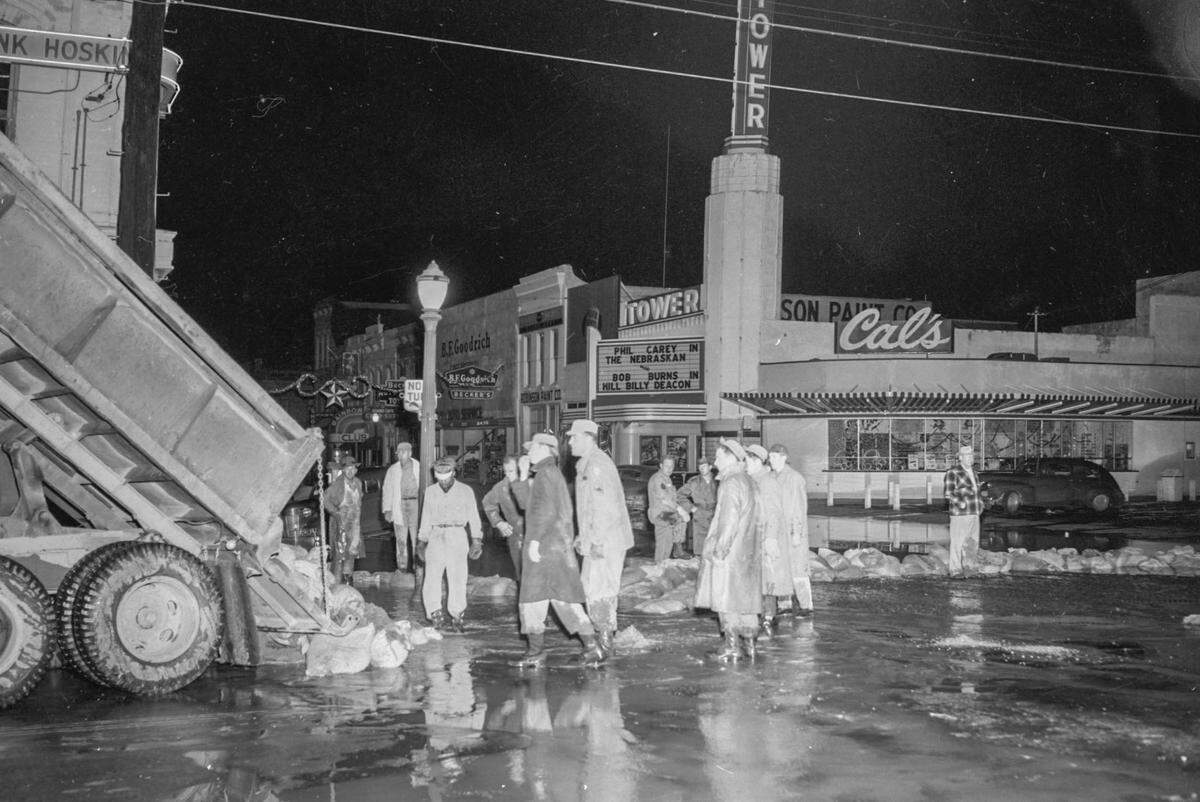
Major floods in 1986 and 1997 struck Yuba County south of Marysville, causing extensive damage and leading to further efforts to shore up and reshape parts of the levee system protecting the flood-prone communities.
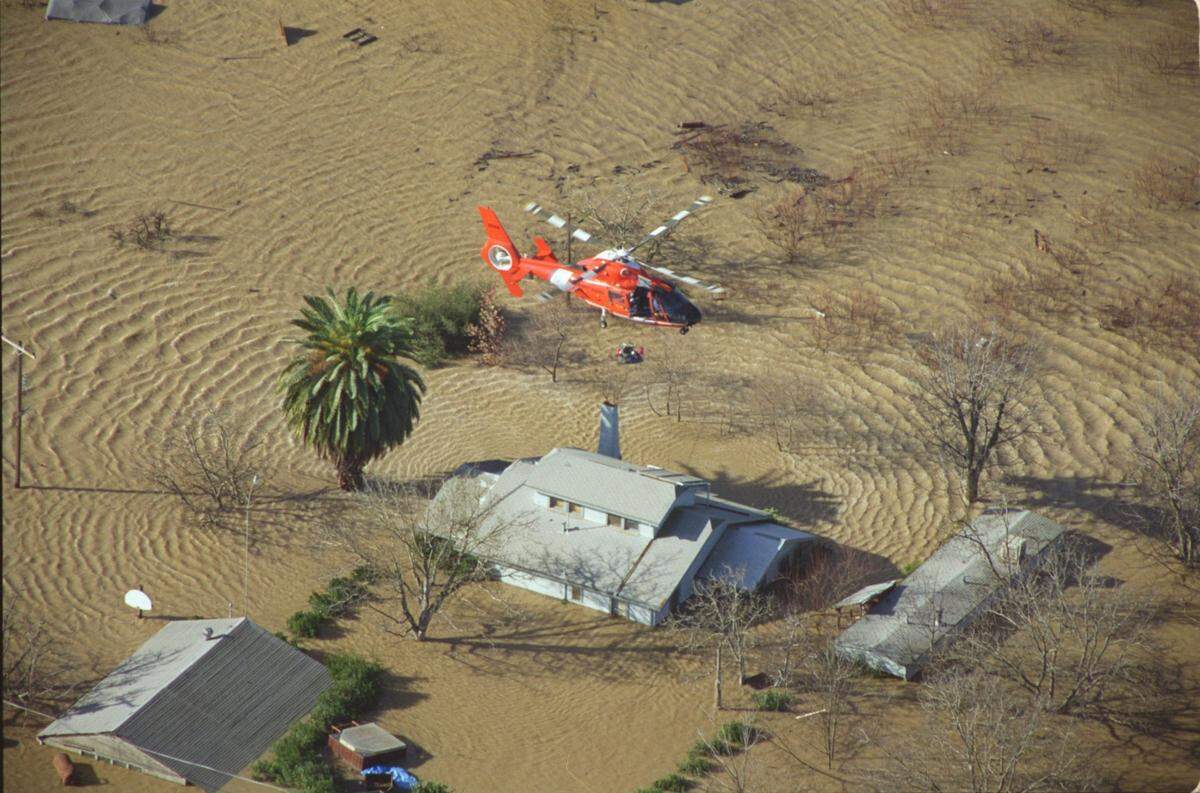
Most recently, fears that the Oroville Dam’s emergency spillway would fail caused more than 180,000 people to evacuate. That scare was added to the rolling log of flood crises, and stood as a reminder that flood risks and protections against them continue to evolve.
“It’s never just (that) you fixed it, you can walk away and you’re good forever,” Bessette said of levees and dams. “That’s not the case unfortunately.”
Inside the exhibit
The free exhibit, open during the museum’s regular hours, Wednesday through Saturday, hosts artifacts and informative displays chronicling the history of the land, with items ranging from recreated Nisenan relics to an actual gold pan and candlestick holder used by miners during the Gold Rush.
A slide viewer shows stills taken during the floods. Audio receivers are programmed with interviews from survivors of the 1955 flood, recorded shortly after the incident happened. Aluminum cans from Anheuser-Busch that held drinking water and were handed out after various flooding disasters rest on display. Information on how to prepare for, and if necessary, navigate floods is weaved into the programming.
About 700 students visit the museum each year, Bloom said. To increase that reach, the museum plans to help groups and schools with transportation to the museum, and to make available traveling trunks with artifact kits bringing pieces of the exhibit to classrooms.
“The idea is to have the museum reach people in as many ways as possible,” Bloom said.
Sutter County Museum
Phone: (530) 822-7141
What: Permanent exhibit on history of flooding
Where: 1333 Butte House Road, Yuba City
When: Opened Saturday, April 26. The museum is closed Sunday-Tuesday. 9 a.m.-5 p.m. Wednesday-Friday. Noon-4p.m. Saturday
Admission: Free
This story was originally published April 27, 2025 at 5:00 AM.