Trump cuts leave California weather forecasters scrambling as fire season looms
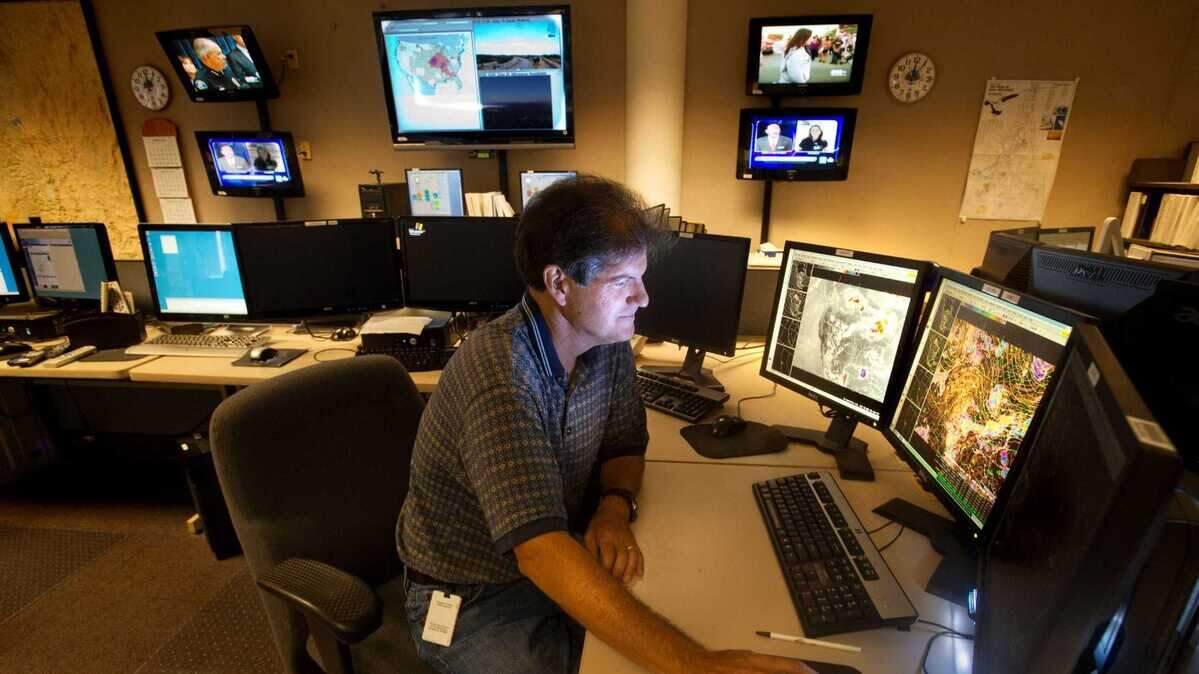
The National Weather Service ceased 24/7 operations at two offices that forecast weather for the entire Central Valley and much of the Sierra Nevada, facing steep staff shortages after cuts from the Trump administration.
The Central Valley offices in Sacramento and Hanford started “going dark overnight” last week because they each have about half the workers they should have, said Tom Fahy, legislative director of the National Weather Service Employees Organization.
“The Trump staffing cuts have been so egregious,” he said, pointing out that six other offices nationwide have or will soon end around-the-clock hours, as reported last week by The Washington Post. Fahy said that between 2010 to 2025, about 600 employees left the National Weather Service, many of them retiring. Under President Donald Trump, he said, almost 600 people left in three months.
A person with knowledge of office staff levels, who requested anonymity for fear of retaliation, said that Sacramento would have 16 meteorologists if it were fully staffed; last week, it had seven vacancies. Hanford, the person said, should have 13 on staff; last week, it had eight vacancies.
Critical assignments that must be completed overnight, including reports that are published every day before dawn, are now being handled by other offices, such as Monterey, Oxnard and Reno, Nevada. In the event of a severe weather emergency, meteorologists will report for duty. But, according to Fahy, the workload is unsustainable in an agency whose remaining employees are already stretched thin.
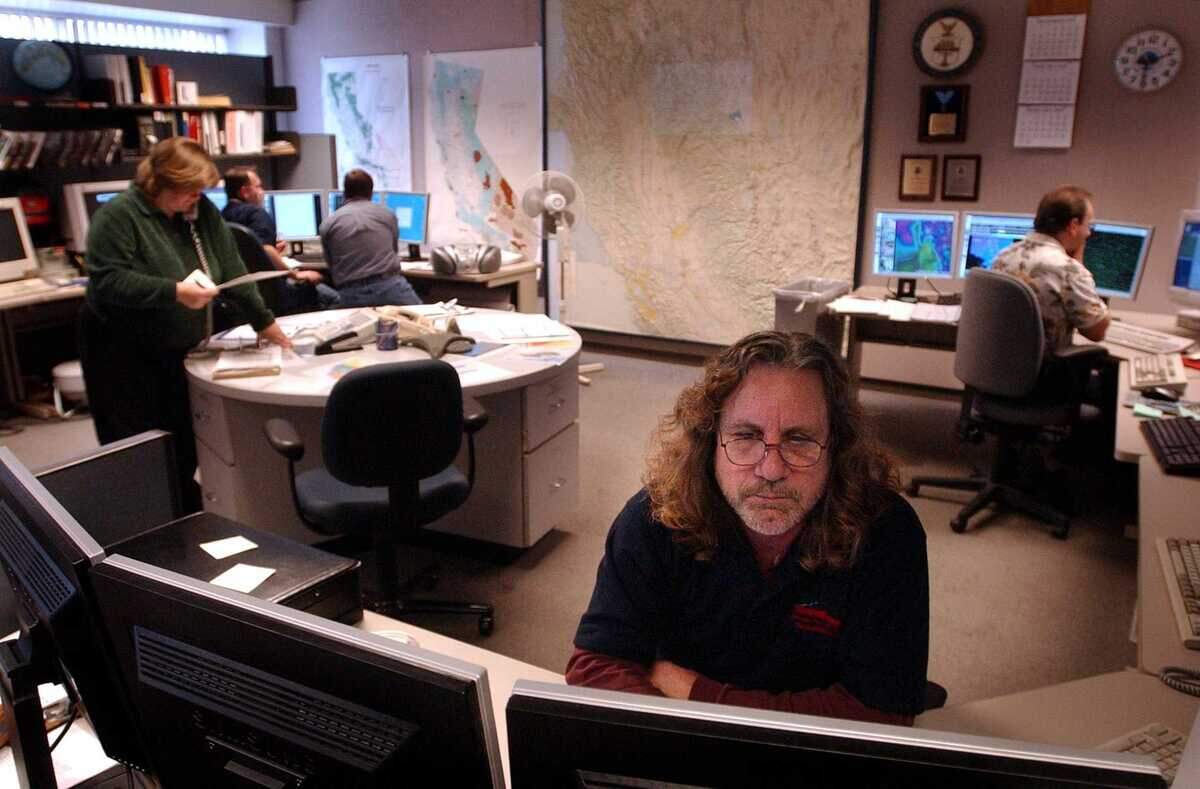
Daniel Swain, a climate scientist at UCLA’s Institute of the Environment and Sustainability, said, “day-to-day, on an average day like today, for example, probably not likely to be a life-threatening problem.
“But imagine for a moment we’re in the middle of a wildfire crisis, as we were in July or August of 2020,” Swain added, “or any number of extreme wildfire events that made very rapid nighttime advancements in the last decade or so.”
A spokesperson for the federal agency did not respond to specific questions about the staffing levels in California. But she provided a written statement from the parent agency’s Kim Doster, the communications director for the National Oceanic and Atmospheric Administration.
“The National Weather Service continues to meet its core mission of providing life-saving forecasts, warnings and decision support services,” Doster wrote. “In the near term, NWS has updated the service level standards for its weather forecast offices to manage impacts due to shifting personnel resources.” The agency, she wrote, “continues to ensure a continuity of service for mission-critical functions.”
But, as an unpredictable and sometimes deadly fire season approaches, Fahy said that the cuts would imperil Californians.
Trump and Musk cuts kneecapped forecasters
Southern California already faced massive wildfires in January — normally the rainy season. Those fires killed at least 30 people and destroyed much of Pacific Palisades and Altadena in Los Angeles County. The National Weather Service has predicted high risk from wildfires during this year’s dry season. Meteorologists working for the federal government closely coordinate with local and state agencies during severe weather events. They build relationships with decision makers and help elected officials and emergency responders make decisions such as when to close schools or when to issue evacuation orders, and in which areas.
The Department of Government Efficiency, or DOGE, was launched under President Donald Trump, who appointed businessman Elon Musk to lead the agency as it reduced the federal workforce and slashed funding.
“The DOGE people (are) coming in and telling the president, ‘All these agencies are bloated,’” Fahy said. But with its typical workforce of around 4,000, he said, “The National Weather Service is one of the smallest agencies in the federal government.”
Swain gave, as an example, the storm that caused the Oroville Dam crisis in 2017 and led to evacuations.
That, he said, “happened in the middle of the night.” If it happened today, the immediate response could fall to another office. “People from outside of the region do not have the connections with local emergency managers, do not have the connections with local emergency officials who might be ordering evacuations, and you don’t have, necessarily, the local domain knowledge, meteorologically speaking, to tailor the warnings or forecasts to that area when they are needed most.”
Fahy said that the National Weather Service was hit with the same DOGE strategy as many other agencies: Fahy said about 100 relatively new probationary employees were immediately laid off; about 200 medium-term employees took “deferred resignation” offers; and about 300 longtime workers agreed to early retirement.
“People left because they’re afraid,” he said. “They’re afraid of this administration, they’re afraid of what’s going to happen.” He said that many people were reasonably scared that the administration would pursue a “reduction in force” — mass layoffs.
Other cuts to the Sacramento office on El Camino Avenue in Arden Arcade have already been noticeable.
The office announced in recent weeks it would reduce monitoring and posts on its popular social media accounts, cutting back on real-time updates. Officials said the move was due to limited staffing, and encouraged residents to rely on alternate sources for weather alerts.
It also announced the discontinuation of the downtown Sacramento weather station on April 29, citing siting issues that did not meet climatological standards. The station’s closure will end three routine climate reports by June 1. The Sacramento Executive Airport will remain the official site for local climate data.
Fahy advocated for Trump’s administration and Congress to, at a minimum, bring back probationary employees, who are “already trained and prepared to meet the mission.”
With the major cuts to staffing, it’s also unclear how quickly the agency would be able to provide an on-the-ground meteorologist to coordinate closely with first responders in the event of another major California wildfire.
“Whenever anything is out of the ordinary — anything goes wrong — that’s when this could be a genuinely life-threatening problem,” Swain said.
In the event of a large-scale California weather emergency, he added, “You can imagine how some of those (adjacent) offices, which are, again, already themselves severely understaffed and working under great pressure and honestly duress, in some cases, might be pretty occupied with their own problems if it’s 3 o’clock in the morning and they’re on their own skeleton crew and they say, ‘Oh, by the way, there’s an emergency in the entire Sacramento Valley that’s also your job right now.’
“Imagine how that will go.”
This story was originally published May 21, 2025 at 5:00 AM.