
Layoffs at Sacramento-area charter school spark fear for Afghan refugees
AI-generated summary reviewed by our newsroom.
- Highlands Community Charter School faces layoffs after audit probes funding mismanagement.
- School closure threatens refugee students' access to English and social services.
- Audit finds credential violations which impacts on Afghan refugees on campuses.
As a child growing up in Pakistan, Khalida Omar dreamed of wearing a doctor’s white lab coat to help anyone who asked. But her aspirations died when her brother forbid her from attending school, stopping her education at seventh grade.
Omar eventually married, becoming busy with raising their child and caring for family in Afghanistan. Then, her family fled home when the Taliban recaptured the country in August 2021 as American troops withdrew after a nearly 20-year occupation. Her husband, who obtained a Special Immigrant Visa while working with the U.S. military, settled in Sacramento, following a family member who had also relocated to the area.
Her hopes of entering the medical profession grew again after enrolling at Highlands Community Charter School, under the Twin Rivers Unified School District, to learn English and begin her studies.
“I was born again,” Omar, 31, said in Dari, through a translator conveying her words in English.
But her long-awaited schooling spiraled into uncertainty once again. The California Legislature requested the state auditor probe the Highlands Community Charter School after ABC10 published in January 2024 a nine-part series titled “The Wild West of Education.” The series “raised questions about the potential falsification of student attendance records, poor student outcomes, conflict of interest, and misuse of state funds for gifts to staff and students, luxury travel, staff bonuses and political contributions,” according to an April 2024 letter requesting an audit.
The result of the school’s alleged conduct could result in layoffs of 80% of its staff, potentially cutting student enrollment by about 6,000. The locations, students and teachers said, provide more than education: It offers a community for refugees trapped at home without English and connects them to childcare, laundry and domestic violence resources.
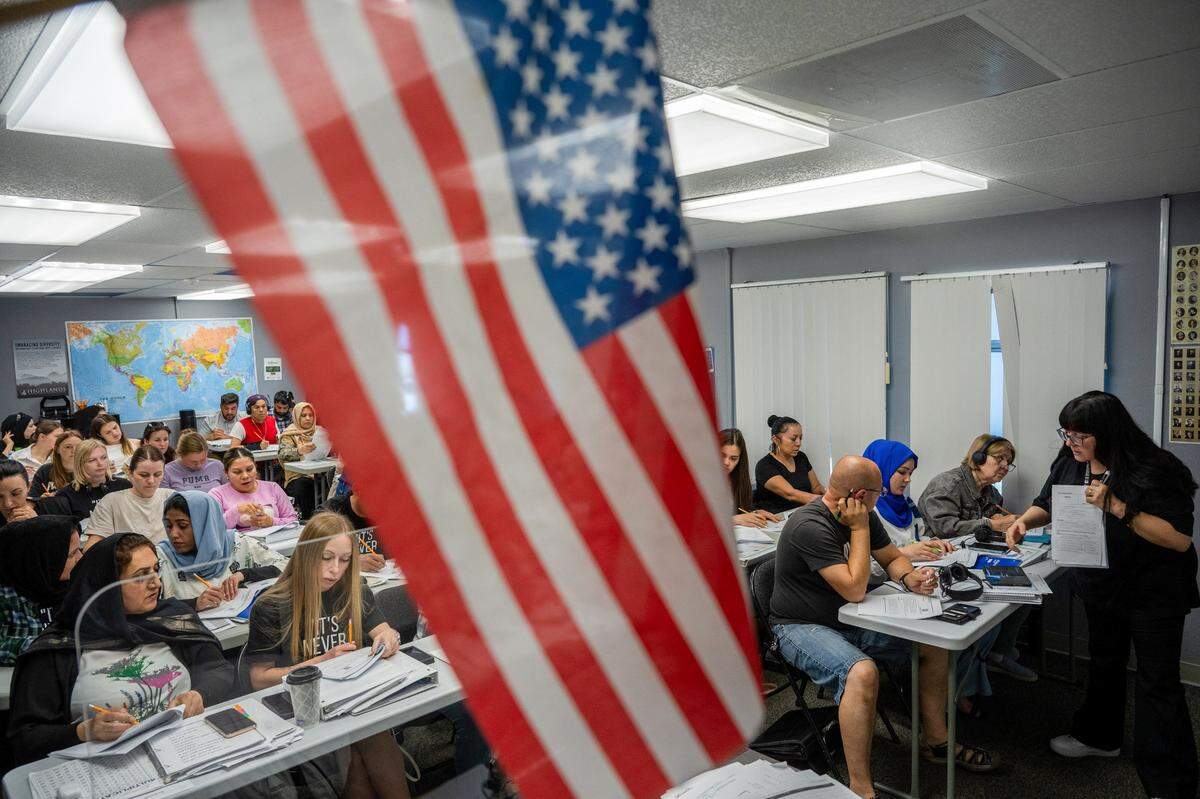
“That’s going to create turmoil across all of those communities, right along with the city of Sacramento and the region,” Highlands Community Charter School’s Executive Director Bill McGuire said in an interview last month. He denied any misappropriation of funds or fraud.
The Twin Rivers School District provided the charter school with a notice it is in “material violation of the conditions, standards and procedures set forth in its Charter, has failed to meet generally accepted accounting principles or engaged in fiscal mismanagement.” The notice of violation was included on Tuesday’s district board agenda.
The violation notice included findings such as bloated class sizes, lack of student attendance and “luxury office condominiums” in San Diego with no apparent educational purpose.
People from Afghanistan make up nearly a majority of Highlands Community Charter School’s approximate 12,000 students, according to school data. Sacramento County is home to the largest population of Afghan refugees in America, according to the 2021 resolution from the Sacramento County Board of Supervisors.
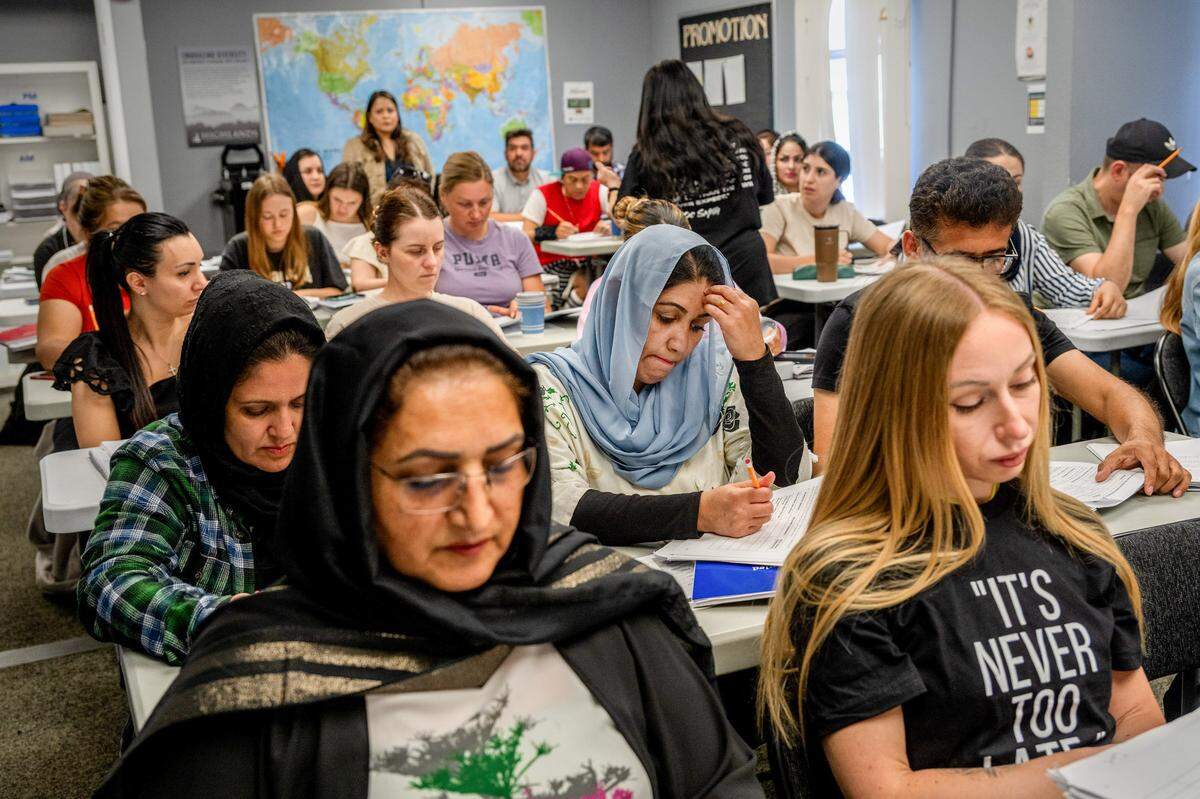
The nonprofit Highlands Community Charter and Technical Schools operates both the Highlands Community Charter School, a K-12 credentialed school, and the California Innovative Career Academy, which offers independent study. Under both schools, there are more than 50 campuses across the Sacramento area, the East Bay and Southern California. It is geared toward adults, 22 and older, who are seeking to get their high school diploma and find employment.
The charter school acknowledged in March its wrongdoing and offered to pay back $13 million in state funds attributed to misappropriating attendance in the 2021-22 school year, according to ABC10.
But McGuire, who said school officials will challenge state auditor’s findings, said the school site should not be completely shut down. His last day is June 30, which is the last day for laid off staff members, said deputy director Mayra Valdivia.
“We take full responsibility, for whatever reason, we screwed this up in the past,” McGuire said. He later added, “But to just turn it off is a travesty for students and employees.”
Erased from public life
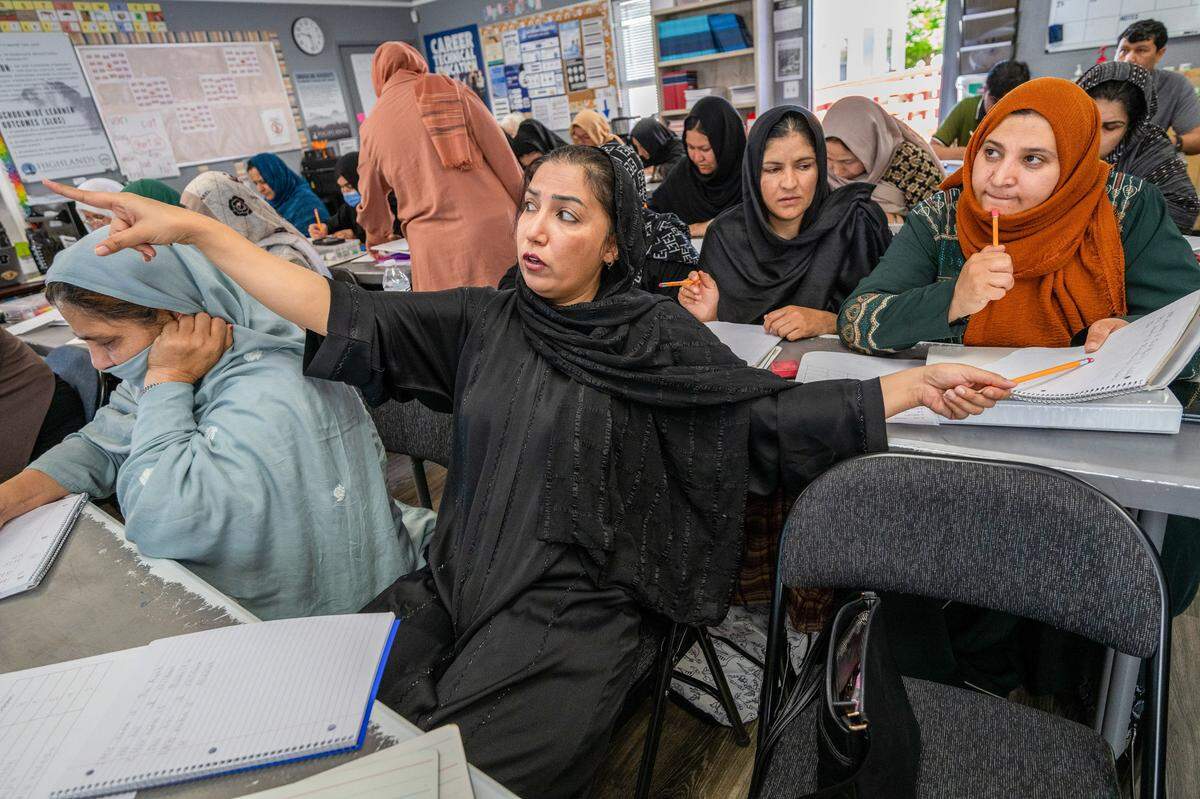
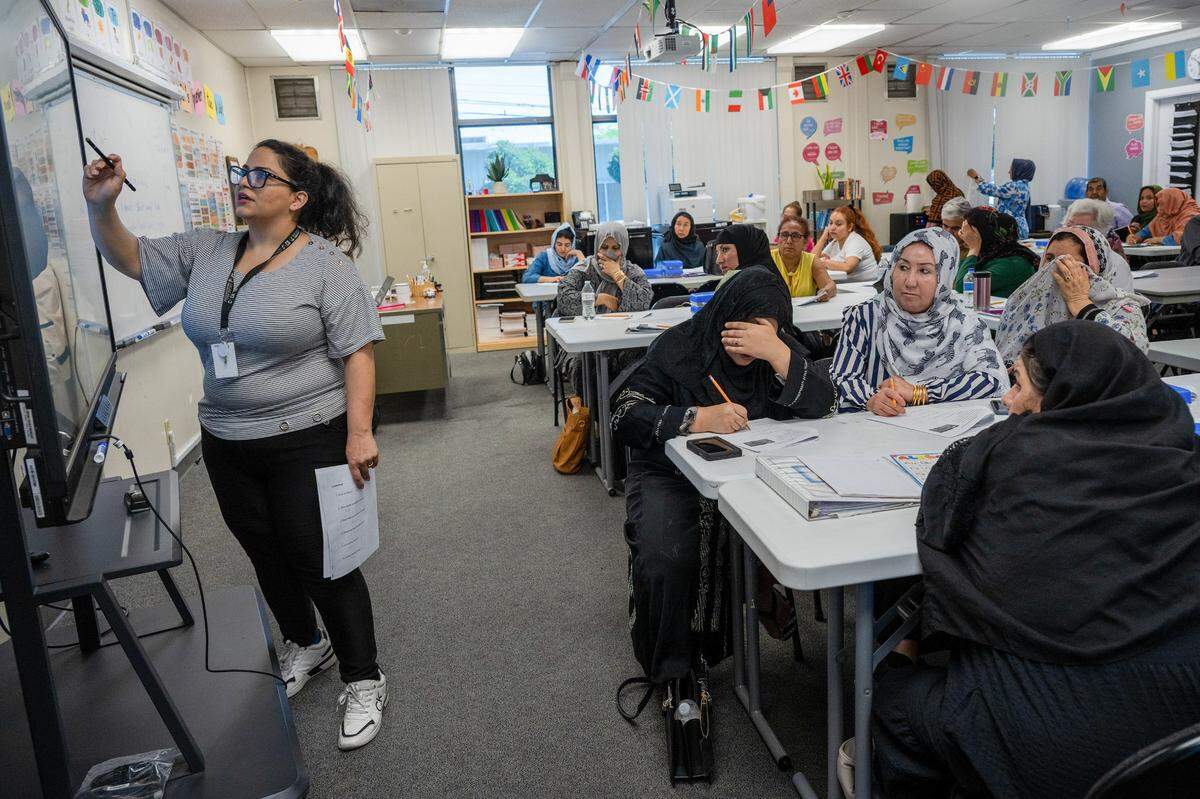
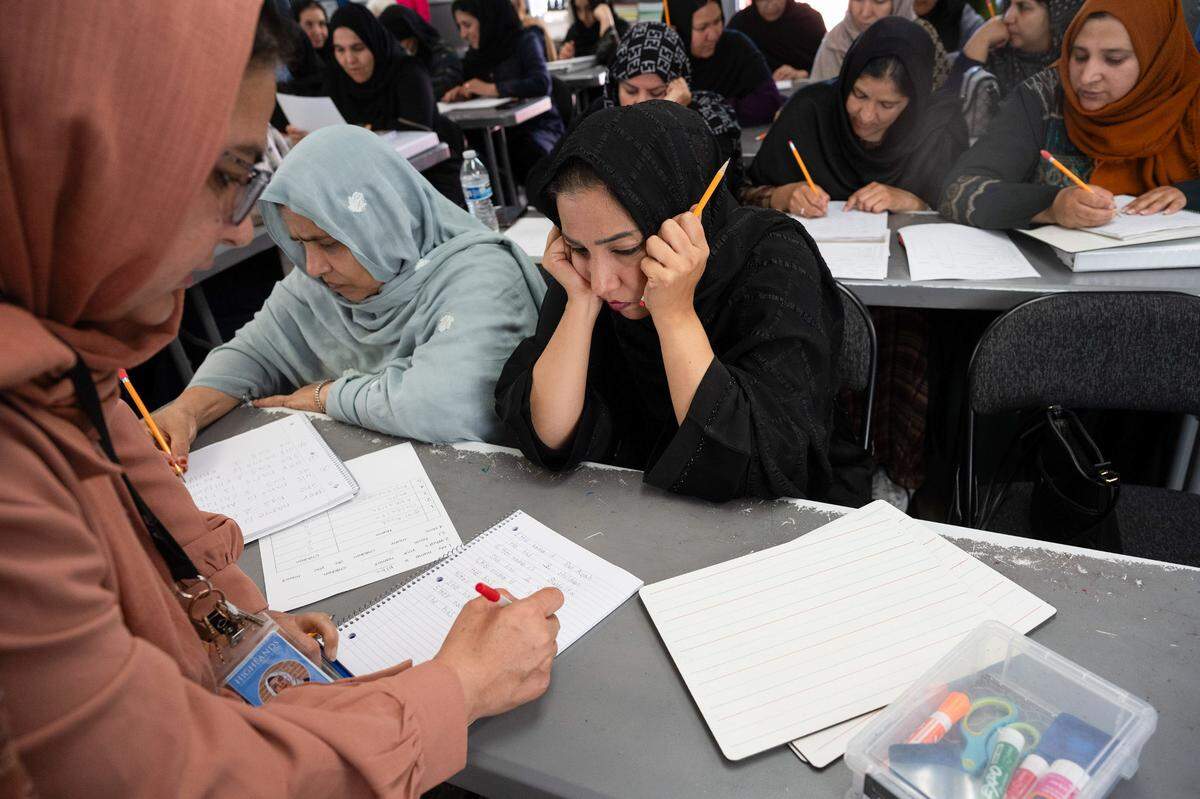
On a recent morning, Diba Bakhshi Kargar hunched over a desk and attempted to match pronouns with the right name on a worksheet at a school in Arden Arcade. Her traditional Afghan dress rustled as she turned in her desk to help other women with lessons, whispering and laughing as they worked.
“Did you finish your list?” their teacher, Mavzuna Rahimova, asked the class.
“Yes!” the class responded back, many snapping to attention after working individually.
For Bakhshi Kargar, stopping these classes is like living once again under Taliban rule in Afghanistan. She could never become an educator in her motherland despite attaining a college degree in teaching, she said.
The Taliban’s takeover in 2021 rolled back women’s rights and freedoms. They are prohibited from working, enrolling in classes, using specific public spaces and must cover their body from head to toe, according to a 2024 United Nations report. The restrictions hurt women’s mental health when they cannot seek physical exercise or must limit interactions with others, the report said.
The result, the report found, erased women from public life.
Back in 2021, Bakhski Kargar gripped her 40-day-old baby amid large crowds at an airport in Kabul hoping to leave Afghanistan in the aftermath of the Taliban takeover. Her husband, also with a Special Immigrant Visa, had to leave the country to avoid the Taliban’s retaliation, she said in Dari, and translated into English by a teacher’s assistant.
Without understanding English in the U.S., Bakshki Kargar couldn’t talk to her doctor, her children’s teacher or help them with their homework. She felt isolated as her husband worked long hours delivering food as a DoorDash driver leaving her alone without anyone to talk to or anywhere to go.
But through word of mouth, Bakshki Kargar heard of lessons offered by the Highlands Community Charter School.
The campus on Edison Avenue offered Bakshki Kargar a community of women to meet and converse. They could swap resources and grow together, she said. Teachers became her friends.
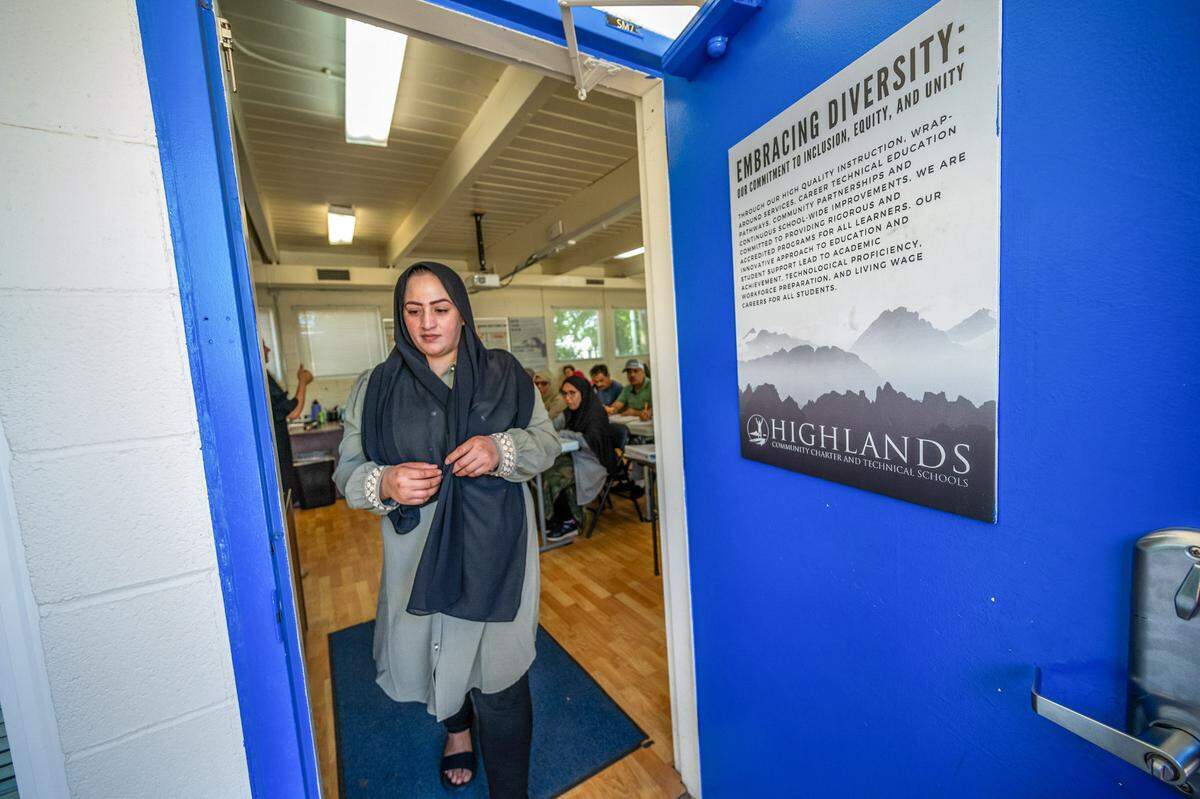
And the lessons, she said, gave her a fighting chance to stand on her own two feet.
So when Bakshki Kargar class heard of their school’s potential closure, everyone started crying, students and teachers said. Without the school, Bakshki Kargar said she will have no freedom and depression will rear its head again.
The school gave her a cellphone to use for educational purposes and serves as a bus pass she uses to come to class. That phone, she said, could be taken away.
‘They are my family’
The Highlands Community Charter School occupies a special designation as a “K-12 funded adult charter school” which McGuire called a “different kind of unicorn.”
“It’s very specialized,” he said.
The school operated under this special section in the law for about 10 years which allowed teachers to not hold a K-12 credential, he said. Only about 50 educators have the required credentials to work, he said.
McGuire said the school paid millions to ensure teachers have the correct authorizations, and for 10 years, this concern was not flagged by Twin Rivers District school officials.
The Twin Rivers School District oversees the charter school and ensures its compliance with laws. Zenobia Gerald, a district spokesperson, said in an emailed statement that the district has “consistently met this obligation for Highlands Community Charter and Technical Schools” since its founding in 2014.
Gerald said district officials received “new direction” about credentialing requirements in December 2024 from a state agency called the California Commission on Teacher Credentialing, which oversees teacher’s licenses and credentials.
“As a result, all educators at the charter must now hold appropriate K-12 credentials, even for programs previously identified as adult education,” the statement said.
But there have been no changes to recent law which affected teachers working at K-12 funded adult charter schools, said Jonathon Howard, a spokesperson with the California Commission on Teacher Credentialing.
The lack of appropriate authorizations for teachers was found by the commission this year, and its findings will be released this month.
“Adult Education credentials do not authorize teaching K-12 content in K-12 public schools settings, even if students are going back to earn their diplomas,” Howard said.
Highlands Community Charter School “failed to meet generally accepted accounting principles, and/or engaged in fiscal mismanagement,” according to a violation notice sent by the district in a letter dated June 12 and included in Tuesday’s board meeting agenda.
The school secured a site at “luxury office condominiums” in San Diego for “administrative purposes despite having no students in or near the area,” the violation notice said. The school’s space includes “a dedicated balcony with unparalleled view of Petco Park.”
The highest priced unit in the office costs $725,000, the violation notice said.
The audit will focus on attendance policies and procedures; verify enrollment data; check instructor credentials; ensure fair hiring practices safeguard against nepotism and conflict of interest; if the charter school’s “financial information” is appropriate and are best practices; and determine if Twin Rivers District has “responded appropriately” to alleged violations, according to the state auditor.
“The Commission recognizes the disruption to educators, families, and students and remains committed to helping affected educators understand their options,” Howard said.
For some teachers, the closure of school is more than just losing work.
Nelofar Nasir, a teacher’s assistant, waited recently outside a classroom on Edison Avenue when a student approached and hugged her.
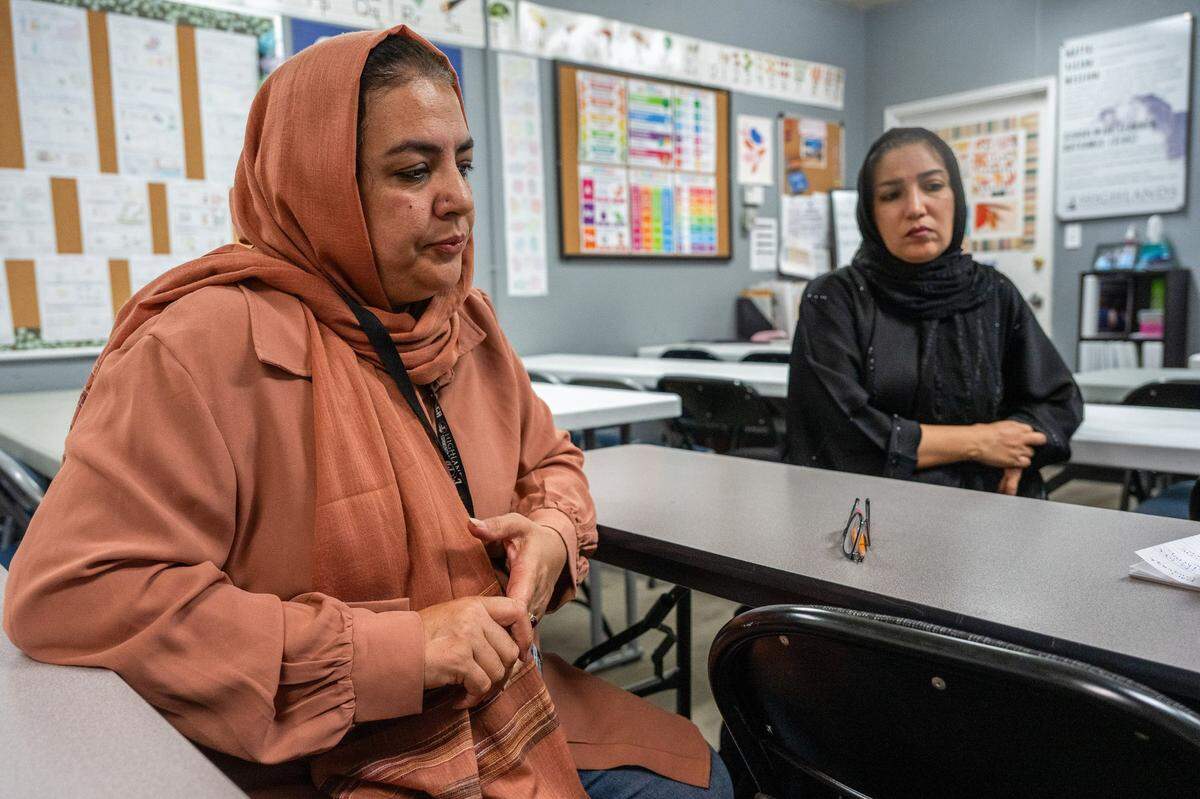
The student dreamed of Nasir and their teacher Mazuna the night before, rocked with uncertainty of the school closing. Everyday, students asked for updates on the potential closure of the campus on Edison Avenue, Nasir said.
“I feel like they are my family,” Nasir said.
Nasir feeds off her student’s energy in class, and loves watching them gain their footing in the U.S. She also served as a conduit in life-threatening incidents for her pupils.
Women and men come to her, seeking help to connect to domestic violence resources, after not knowing where to turn. They don’t know who can help. They don’t know which number to call. And when told to call police, they are scared about their lack of English to report incidents, Nasir said.
The wraparound services at Highlands Community Charter School also helps students take away all the other factors which could prevent them from attaining their education, McGuire, the executive director said. The campus on Edison Avenue is right next to a church in which students often lined up after class to access a food bank.
“This is a travesty for the students,” he said.
Uncertainty remains
Omar carries the burden of wanting to provide for her family back in her native Pakistan and ease the burden on her husband who works as an Uber driver.
The responsibility Omar feels to provide for her family grew after her brother and father died within the last seven months. The grief hurts, feels as sharp as it did when she first learned her father died after suffering heart problems.
Her father, a rickshaw driver, had encouraged her to study. He supported her in choosing a husband, and was upset that Omar’s brother blocked her from attending school.
The Highlands Community Charter School will close 26 campuses by July 1, though some may open by September after the district approves their plans, Valdivia said.
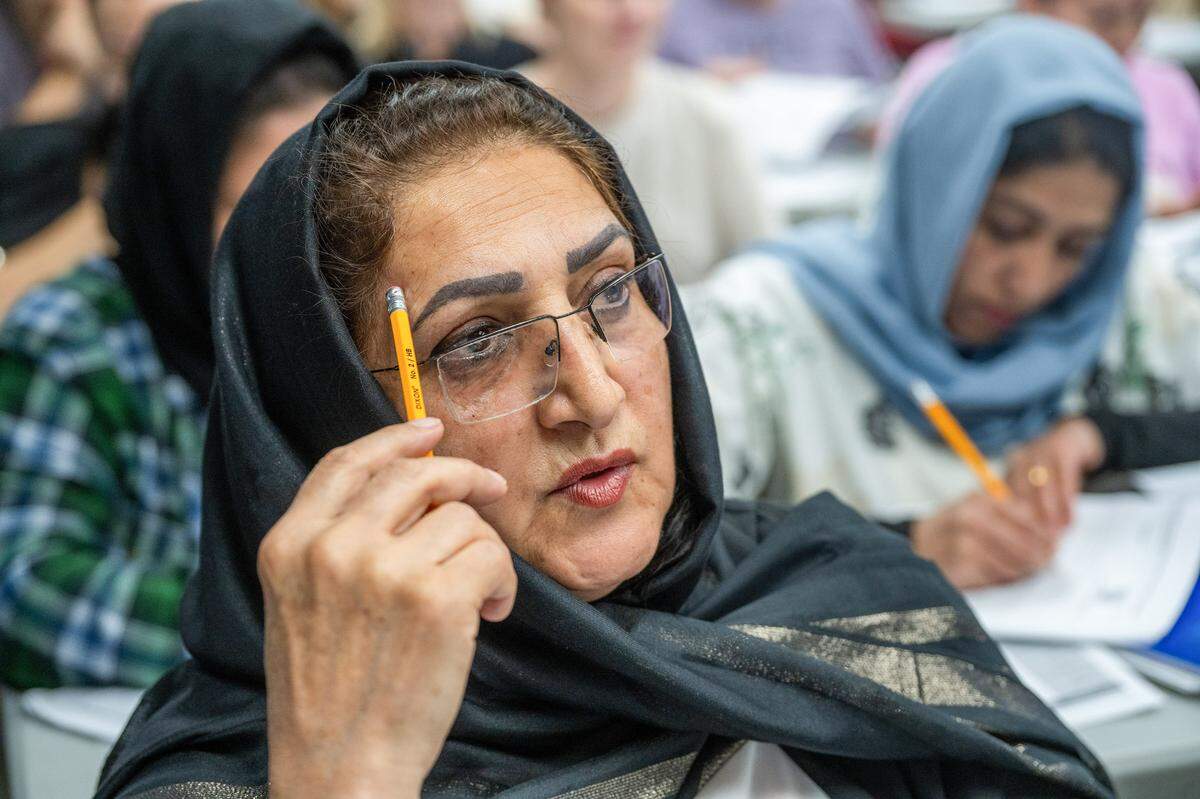
America afforded her the freedom to walk outside and go to stores when she wanted. In Afghanistan, Omar often stayed home, and in the midst of taking care of her family, she had no time to even wonder about trying to become a doctor.
English lessons at the charter school afforded her the opportunity to dream again. She hopes to talk to people without a translator, and has started to grasp the language, just a little, after four years in America.
Most of all, she said, she hopes learning English will allow her to speak with her two children as they grow up in this country.
This story was originally published June 20, 2025 at 5:00 AM.
CORRECTION: Due to incorrect information given to The Bee, an earlier version of this story misstated the source of findings about teacher credentialing at Highlands Community Charter School. The California Commission on Teacher Credentialing — not a state auditor — found a lack of appropriate authorizations for teachers.