One year after teen’s death, kids still risk lives on Sacramento-area overpass
AI-generated summary reviewed by our newsroom.
- Sacramento County has not acted to improve pedestrian safety after teen’s death.
- Officials cite low fatality count and limited budget as reasons for inaction.
- Pedestrians still walk unprotected on 50 mph overpass lacking sidewalks or barriers.
A year after an 18-year-old was killed while walking on the Walerga Road overpass, Sacramento County has taken no action to improve pedestrian safety on the bridge. An official said that one death, while tragic, was not enough to elevate the project.
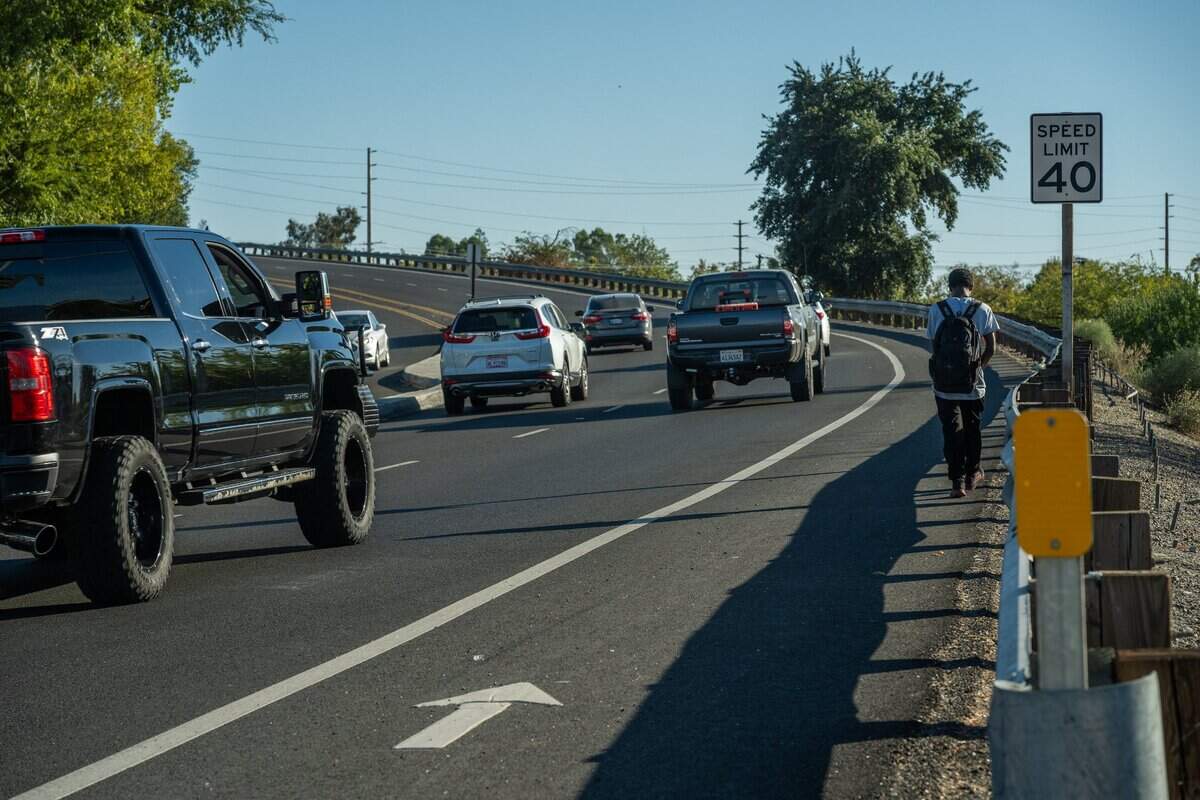
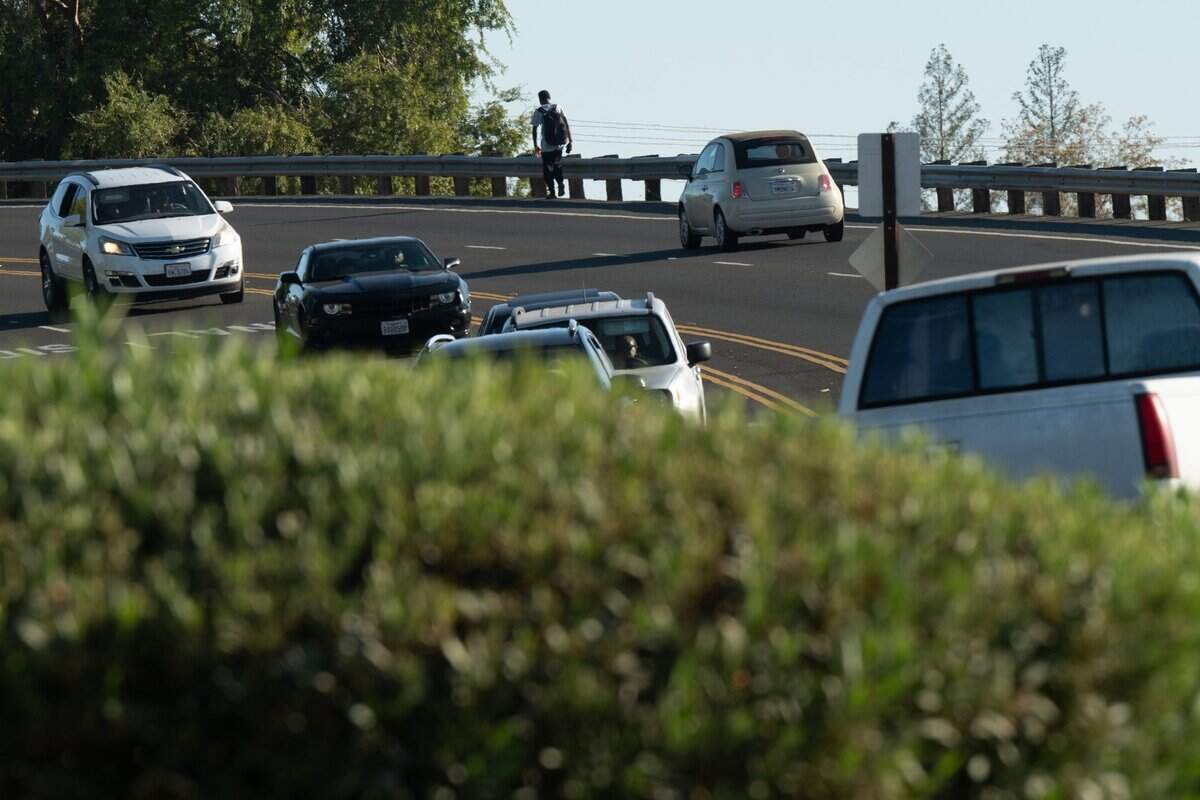
Since Shawn Jordan’s death, pedestrians — many of them students at nearby high schools — have continued to walk along the narrow shoulder of the viaduct, beside vehicles traveling at speeds that often exceed 50 mph. The structure was built in the 1960s and, except for a disconnected section in the middle of the southbound shoulder, it has no separated pedestrian walkway.
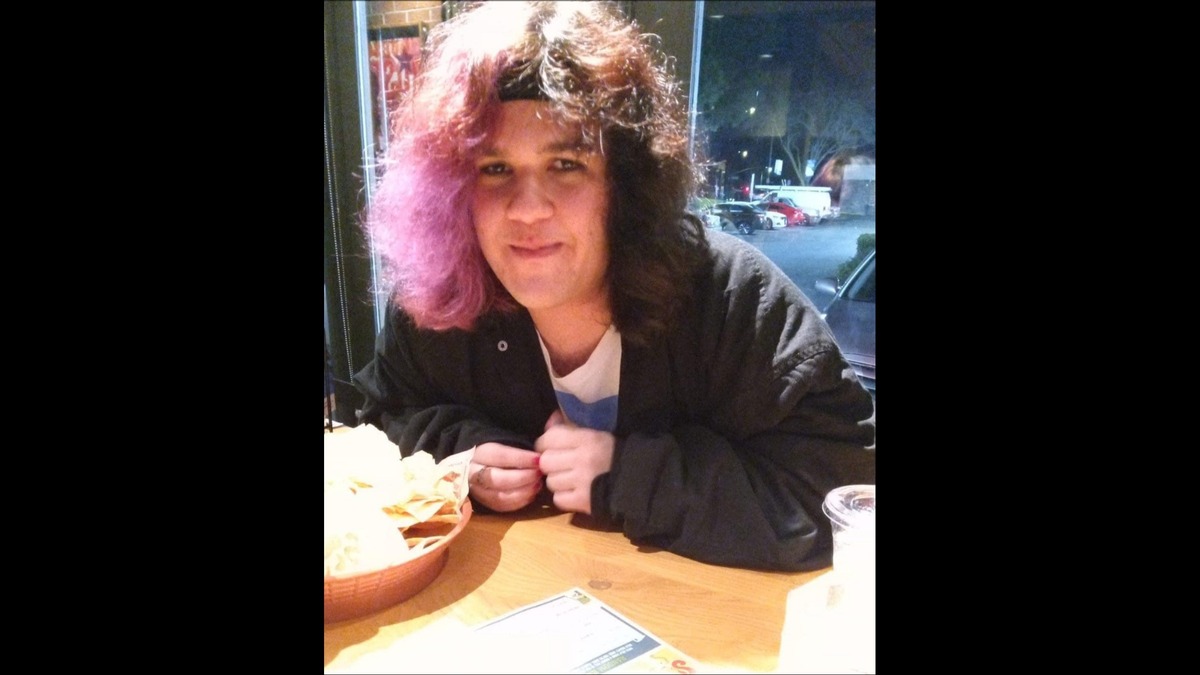
Jordan, 18, was struck by a hit-and-run driver June 15, 2024, while walking home from the bus stop the day before Father’s Day. On June 20, 2024, the young musician died of his injuries in the hospital. Sacramento Regional Transit does not have a bus that goes over that section of Walerga.
The overpass — which crosses over Roseville Road and fenced-off Union Pacific railroad tracks — is the only nearby route into the North Highlands neighborhood where Jordan lived with his dad, Seth.
The legal limit is 40 mph, but drivers routinely travel much faster. When vehicles move at just 42 mph, the National Highway Traffic Safety Administration says the risk that a pedestrian will die in a crash is 50%.
Last week, a spokesperson for the county’s Department of Transportation said there were “no viable options” to improve pedestrian safety on the Walerga Road overpass.
Jahison Tracy, a junior at Creative Connections Arts Academy, is one of the teenage pedestrians who regularly uses the overpass during the school year. On the bus, it took him between 90 minutes and two hours to get home; the walk is a 30-minute shortcut.
Still, he usually took the long bus ride just to avoid speeding vehicles on the overpass.
“I’m terrified,” Tracy said, standing at the base of the overpass as cars roared by. “I mean, what can I do? Sometimes I have to get home faster than I usually can on the bus. There’s no sidewalk. We’re practically walking on the street. From my knowledge, we’re walking on the bike lane. I don’t think that’s particularly safe for me, the walker. … Cars can easily hit you.”
He was disturbed to hear about the crash that killed Jordan.
But the student’s sense of urgency was not reflected at the county level. Matt Robinson, a spokesperson for the Department of Transportation, said that the overpass wasn’t a high priority because “we haven’t had a string of fatalities on that road; we’ve just had one. One is too many, but in the grand scheme of things, is it enough to bump it up?”
And although the department automatically investigates every deadly crash, officials cannot begin to investigate Jordan’s death until they receive a report from the California Highway Patrol saying exactly where the crash took place. As of June 11, that report had not yet been sent.
However, the preliminary report from the CHP contains latitude and longitude coordinates showing the crash occurred on the east side of the overpass, where there is no sidewalk. The document was provided to The Sacramento Bee by Jordan’s father. The young man’s grieving family, like the county, has yet to receive a full report from the CHP, which says the case is still open.
Pedestrian safety is only one factor Sacramento County considers
One local representative said he thought it shouldn’t take a year to look into the road safety concerns that contributed to a fatal crash.
Law enforcement is “apparently still doing some follow-up investigative work,” said Sacramento County Supervisor Rich Desmond, a California Highway Patrol veteran whose district includes about half of the overpass. “Even before they come out with the final results of their investigation — maybe they’re doing forensic work, or, I’m not entirely sure — there’s still a lot of information they could provide in terms of the exact location, and the dynamics of the vehicle, and where the pedestrians were in relation to the vehicle.”
Desmond said that the county could quickly consider restriping and adding signage to provide a small amount of protection for pedestrians. That kind of intervention would not require a budget allocation from the Board of Supervisors. Robinson said narrowing the lanes with paint was “not an option” because that would be “putting drivers in a bad situation because the lane’s narrow, then sometimes bigger vehicles might have problems and might venture over into the same lanes or opposing lanes.”
But both agreed that larger engineering projects would be more expensive and limited by the existing structure of the overpass: four vehicle lanes and a “multi-modal shoulder” on each side. “It depends on if there’s the money,” Robinson said. “That’s what it comes down to. … We don’t have the money for this, and we have other projects, so it comes to the balancing act.”
Sacramento County Supervisor Rosario Rodriguez, whose district includes the north side of the overpass, said, “Any time there is a death, it raises that concern of ... what happened? How did it happen?” She said that the county considers whether each crash was preventable.
Removing lanes on the viaduct would slow traffic down, making crashes less likely and less dangerous when they do occur. But Rodriguez and Desmond both said the overpass did not fit the criteria for a lane reduction because of the high volume of cars.
Traffic counts published in the county’s Open Data Portal show that about 19,000 vehicles traverse the overpass each day.
At those levels, the county will prioritize the current steady flow of vehicle traffic over changes that would protect pedestrian safety. Robinson said that removing a lane could cause congestion, which could in turn cause crashes.
“Having to bottleneck down to one lane each way — a highly traveled bridge, where you have a situation like that, we’re gonna have backups because people are trying to merge,” he said. “That increases the possibility of accidents. So we want to avoid adding to the problem.”
Isaac Gonzalez, a road safety advocate and the founder of Slow Down Sacramento, disputed the county’s thinking.
“This kind of logic is backwards,” he said. “The county’s argument that traffic volume precludes safety improvements completely ignores the fact that it’s because of this volume and the dangerously high speeds that this viaduct is unsafe. ... Prioritizing the smooth flow of cars over human lives is exactly why we are in a traffic violence crisis.”
Dangerous road is ‘right next to a high school’
Rodriguez said that even if the county did have the money on hand to put a sidewalk on its overpass, it would be difficult to choose where to focus resources.
“There are several bridges like this one,” she said. “Which one do you do first?”
Desmond said that the presence of children made the Walerga location more urgent. Tracy, the high school student, agreed.
“It’s very stupid to have this walk here, right next to a high school,” Tracy said. “A school where children are walking up and down here? I don’t know how that went through.”
The Department of Transportation has a holistic method of prioritizing projects, and it starts with a recent “collision history.” For Walerga Road, that history would include the hit-and-run that killed Jordan.
But Robinson said that the county would struggle to find money for the project when only one person had died in one crash.
The Bee had made multiple inquiries about pedestrian safety measures on the overpass since Jordan died last June, and each time, Robinson said that the department had not yet started looking into safety improvements because the CHP had not yet filed its report. On June 10 — almost a year after the crash — the department still had not received the report, but Robinson had changed his answer:
“There aren’t any viable options that don’t either cost too (much) or impede on the flow of traffic,” he said.
The federal Highway Bridge Program would be an obvious choice for funding, but the department wouldn’t apply, because, he said, “We don’t have the justification, due to the good shape the bridge is in and the low accident record over the last five years.”
How many people die on Sacramento County roads?
The Sacramento County Coroner’s Office has publicly logged more than 50 fatal car crashes on local roads throughout the county this year. The majority of the crashes took place outside Sacramento city limits.
“It’s always a matter of prioritizing them based on collisions, because we have so many — there’s so many roadways that have issues,” Desmond said. “It’s overwhelming.”
Unincorporated areas of the county have their own set of dangers: Roads were typically designed for car commuters with little consideration for people outside a car. Meanwhile, population growth in previously rural areas combined with a dearth of transit options has led to massive increases in car traffic, putting more pressure on a system that wasn’t designed to accommodate pedestrians in the first place. In turn, that’s put a strain on a Board of Supervisors, who, Rodriguez said, essentially have to triage safety goals.
The Department of Transportation has a backlog of planned projects.
“We’re trying to convert these roadways to uses that they were not designed for,” Desmond said. “It never was contemplated that there would be these high volumes of traffic and that there would be a desire to make safe spaces for bicyclists and pedestrians.”
Jordan contemplated it frequently. Like Tracy, the high school student, Jordan was afraid of the overpass. His stepmother, Aubrey Fong, said that the teenager had the same idea as Tracy: Both usually took a longer bus route to avoid the frightening overpass.
But, like Tracy, sometimes he took a calculated risk. The day of the crash, he decided to take the overpass. He was headed back earlier than usual, and the sun was still out.
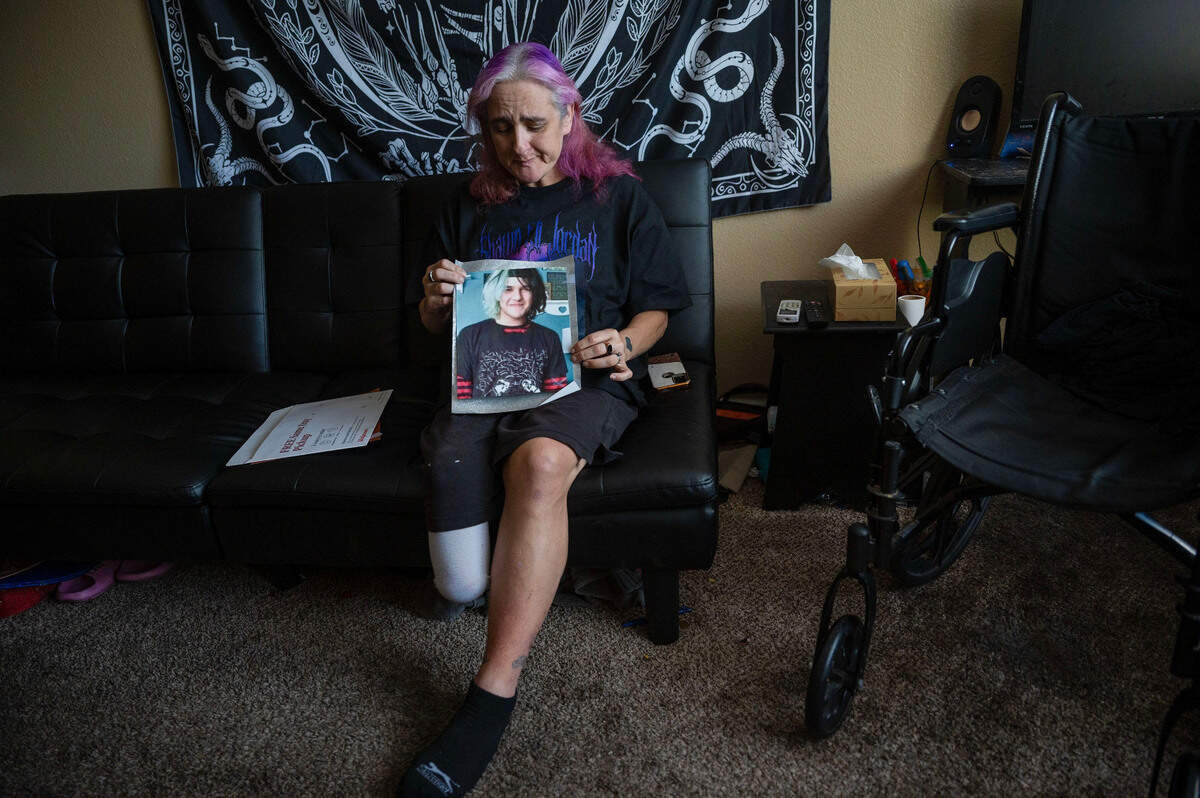
It could have been a mundane decision to walk home from a certain bus stop; instead, it was life-or-death. His mother, Marie Martinez, said the family will hold a vigil at the north end of the Walerga Road overpass on June 20, commemorating one year without their boy.
This story was originally published June 16, 2025 at 5:00 AM.