
Why do some Sacramento streets go from one-way to two-way? The change is by design
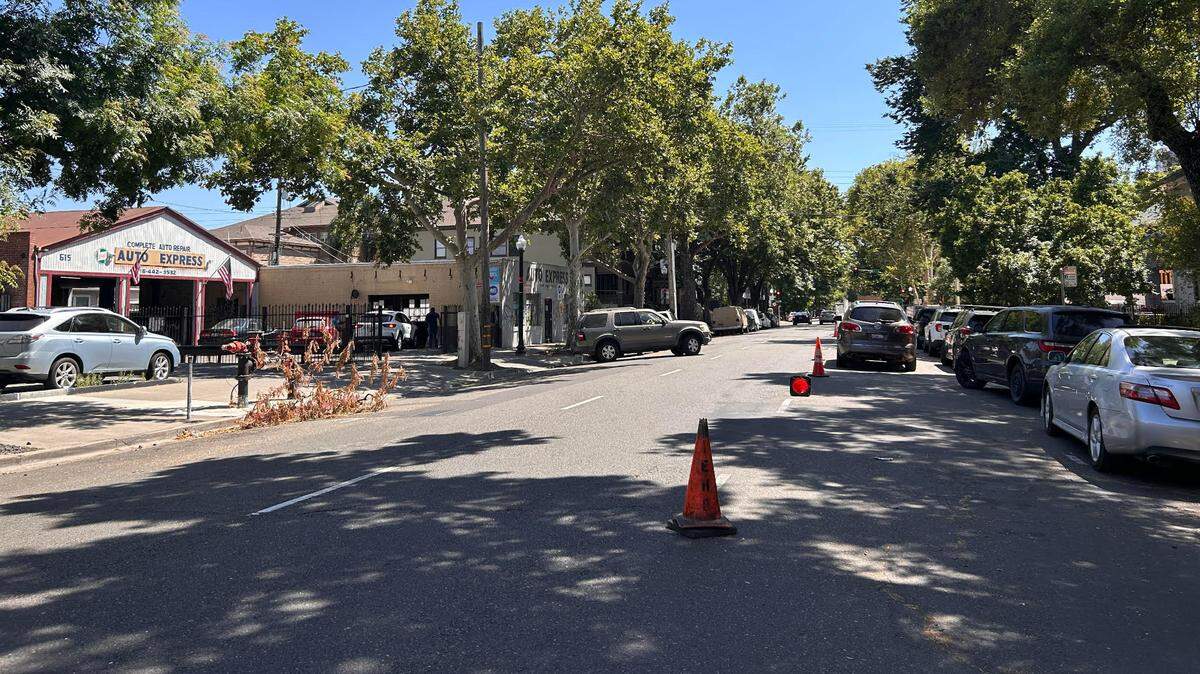
Sacramento’s central city grid is a patchwork of one-way and two-way streets, a legacy of mid-20th-century planning aimed at funneling car traffic into downtown. In recent decades, the city has been gradually reversing course, converting select one-way corridors back to two-way to enhance safety, accessibility, and neighborhood vitality.
Critical to this initiative is the Central City Mobility Project, which features, along with adding to a network of protected bike lanes, the conversion of 5th Street from Broadway to H Street into a two-way street — completed December 2024. In the city’s 2018 Central City vision plan, they identified sections of N, G and H streets as ones where they would like to see two-way conversions, though no plans have been released yet.
Urban planners and traffic engineers widely agree that two-way streets are safer for everyone on the road. They tend to calm traffic, reduce collision rates and improve visibility for both drivers and pedestrians.
Activists have long pointed out how the cited benefits of one-way streets — expedited traffic flow, allowing for left turns without waiting for oncoming traffic, as well as simpler and more plentiful parking — are not only just for drivers but are also debatable, especially as research suggests two-way streets may serve car trips at a higher rate even as they have lower vehicle-moving capacity than one-way streets.
Two-way conversions can also revitalize downtown areas. Unlike one-way streets, which are designed to move cars through quickly, two-way streets slow traffic and increase storefront visibility, as there is incoming traffic from both sides.
While pedestrians may find it convenient to only need to look one way when crossing a road, multiple lanes of traffic going in one direction can sometimes mean a driver in a lane farther from the pedestrian cannot see them.
In a 2023 analysis, local transportation advocate Troy Sankey examined crash data between 2012 and 2022 and found that every fatal crash involving a cyclist or pedestrian occurred on a one-way street.
Despite the benefits, two-way conversions are, like many transportation-related improvements, expensive.
“Upgrading just one intersection for two-way traffic — particularly traffic signals — can cost more than $1 million per intersection, as of 2024,” a spokeswoman for the transportation department wrote to The Bee.
Those costs don’t just reflect pavement markings, but also signal rewiring and upgrades, new signage and alterations to curbs or medians. With not enough funding to meet the need, the city’s transportation department conducts what a spokeswoman described as a “detailed and costly traffic analysis” before committing to a conversion.
In some cases, logistical or regulatory barriers halt a project before it gets off the ground.
Take I Street: the city initially explored converting it to two-way but ultimately shelved the idea after failing to secure approval from Union Pacific Railroad and the California Public Utilities Commission, which oversee safety at rail crossings. Instead, the city moved forward with a lane reduction and added a protected bike lane.
Given the high cost of two-way conversions, the city can turn to other measures to make one-way streets safer for pedestrians and cyclists: lane reductions, shortened crossing distances, protected bikeways and intersection daylighting—a practice that prohibits parking near intersections to improve visibility and reduce blind spots.
The Central City Mobility Project, which includes a mix of street conversions, bikeway upgrades and signal improvements, is backed by a patchwork of state and local funding sources. In total, the project’s cost was anticipated to be approximately $12.6 million; as of May 2024, the required funding escalated to roughly $19 million.