Sacramento councilmember’s last-minute push to expand youth funding failed. Here’s why
AI-generated summary reviewed by our newsroom.
- Sacramento Council rejected last-minute youth funding plan citing prior strategy.
- Selected scenario will fund 24 groups over 3.5 years from $17.9 million Measure L pot.
- Council selected an initial staff plan over late proposal.
A last-minute attempt to further divvy up new youth funding failed at Tuesday night’s Sacramento City Council meeting after concerns were raised that the proposal went against a previously approved plan.
The effort, spearheaded by Council members Karina Talamantes and Roger Dickinson, centered around the distribution of Measure L — a 2022 ballot initiative that allocates some revenue from cannabis operations taxes to youth services. For weeks, the council had considered two potential scenarios by city staff that allocates the roughly $17.9 million to certain organizations.
But on Tuesday, to the surprise of some residents and council members, Talamantes presented a third scenario that would have funded more nonprofits but with less money. The proposal did not garner enough support, with multiple council members saying it went against Measure L’s strategic funding plan.
The plan, approved by the council in September, was created with recommendations from a community-led commission.
“It’s important, when a new proposal is brought up that I have an opinion, but my commissioner, who spends all that time working with staff, has an opinion, because they dealt with this day in and day out,” said Councilmember Lisa Kaplan.
The elected body instead voted in favor of an option that provides the funding during the next three and a half years to 24 awardees — only a slice of the 121 organizations that applied for the money. The money will be distributed in June or July, said Rene Kausin, program manager for the Department of Youth, Parks and Community Enrichment.
“There is no perfect scenario, but I will say there is a better scenario,” said Councilmember Mai Vang.
Tuesday’s decision comes after the City Council delayed a decision on the funding scenario last month and culminates a yearslong push to steer millions of dollars to Sacramento youth. Similar youth measures had failed before voters overwhelmingly approved it three years ago.
“With this we’re, I think, doing the math, roughly doubling the services that we’re providing to programs for young people in the future,” said Mayor Kevin McCarty.
Talamantes’ proposed scenario would have included three more nonprofits in the funding, though each one would have received 20% less money than in the selected scenario. In her comments, she said her proposal allowed for three more organizations to “get a bite at the apple.”
“There’s no easy scenario that will make everyone here happy,” Talamantes said.
Some council members, including Eric Guerra, said they could not support the Talamantes’ scenario because it did not have any “emerging grassroots organizations.” Kaplan noted that, without the grassroots organizations, less total organizations would be funded under Talamantes’ proposal.
“The important thing is clarity and transparency,” said Guerra. “Under this scenario, frankly, my council district would actually gain like half a million dollars, but again, that wouldn’t be fair to the applicants and the work that the commission has done to put together a proposal here and what the staff has proposed.”
The Sacramento Children’s Fund Planning and Oversight Commission, which recommended much of the funding plan, did not receive information on scenario three until Tuesday night. Following the vote, Mónica Ruelas Mares, chair of the commission, said many of the commissioners met outside the council chambers to officially discuss the proposal for the first time.
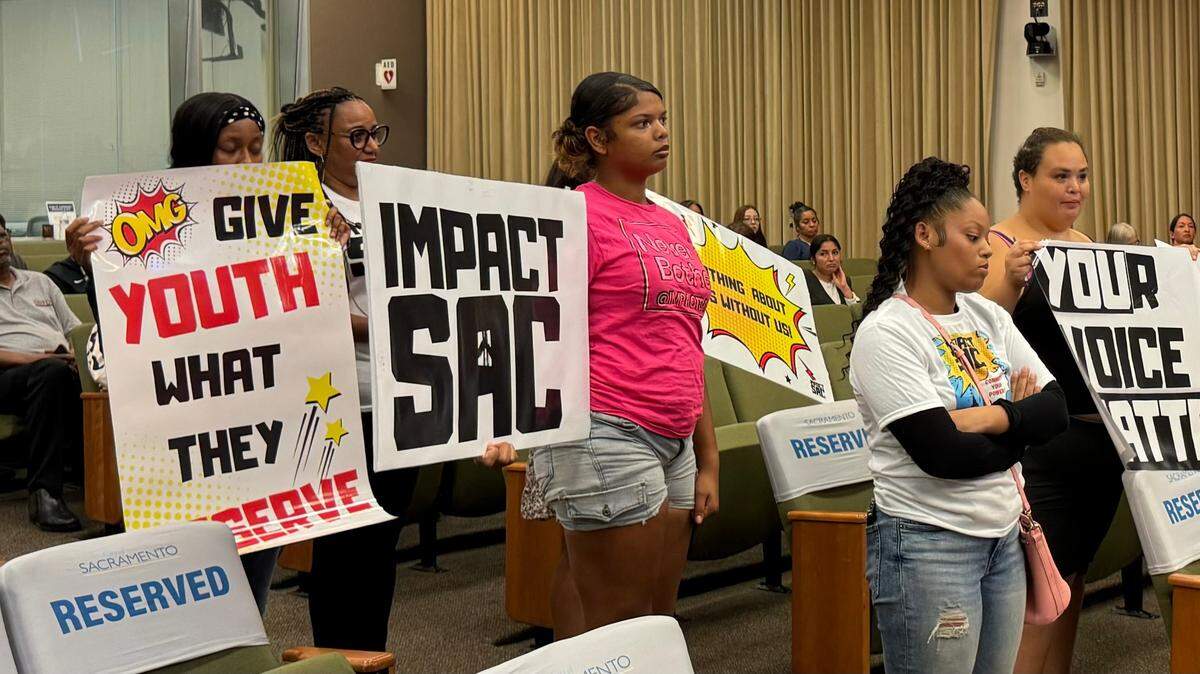
Tuesday night’s funding discussion featured 28 public speakers — a decrease from last month’s 45 speakers on the discussion. Their comments ranged from calling on the council to divert more to youth services to questioning why their organization was not chosen.
Advocates have raised concerns in recent weeks that the city’s lack of youth investments leads to groups battling for limited funding. They also argue that smaller organizations did not have the infrastructure or grant writers to compete with more resources and well-established non profits.
Funding applications for Measure L were scored by several factors such as budget, outcomes, impact, staffing qualifications and program design, according to a city staff report.
“We weren’t in the top 10 scores, but we’re doing the work in the community. ... So I stand before you asking for you all to support our organization and think about the babies my daughter’s age,” said Kenneth Duncan, founder of Ball Out Inc., a nonprofit that mentorship through athletic programs, who stood alongside his two young daughters.
This story was originally published June 11, 2025 at 2:27 PM.