
Why Lake Tahoe’s famous waters aren’t clearer — or cloudier — in latest report
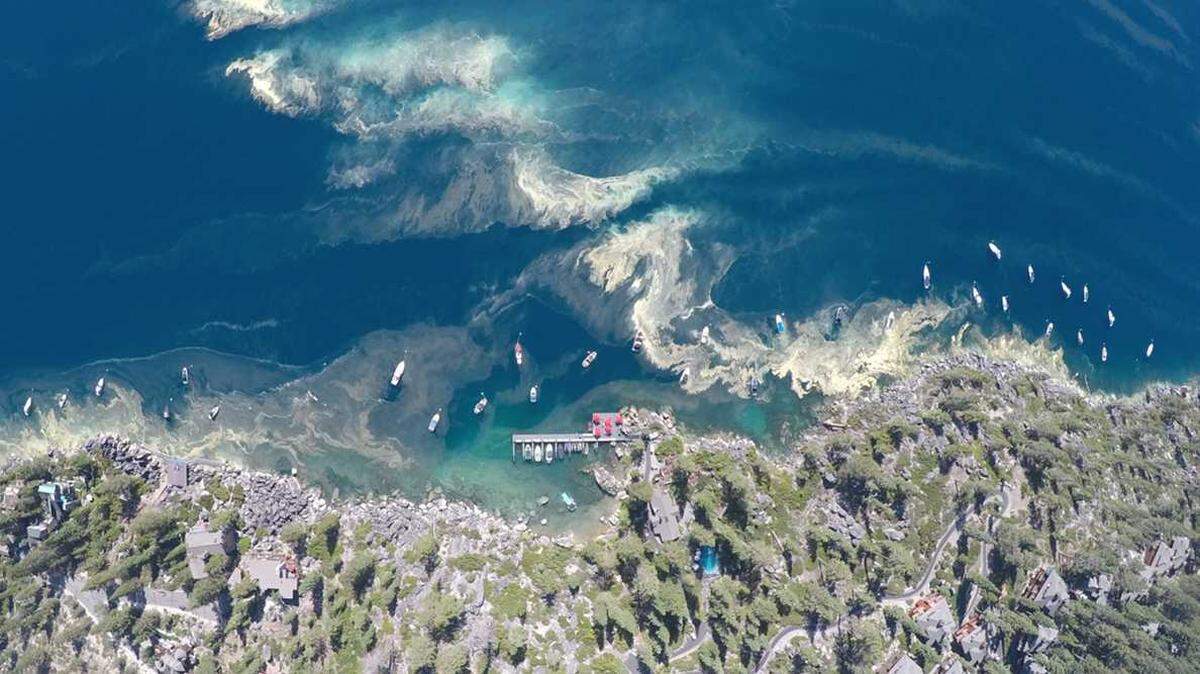
Lake Tahoe’s water clarity is neither improving nor worsening, according to the 2024 Lake Tahoe Clarity Report released by UC Davis’ Tahoe Environmental Research Center on Monday.
The 2024 annual average clarity for Lake Tahoe was 62.3 feet or 19.0 meters. This marks a decline from 68.2 feet in 2023, and is the third-worst recorded depth since clarity readings were first collected in 1968. However, the report notes that “it is not statistically worse” by comparison.
The lake’s clarity is measured by how deep below the water surface a 10-inch white disk, known as a Secchi disk, remains visible when lowered into the water. The smaller the value of the depth measurement, the less clear the lake’s water.
Factors affecting the infamous lake’s clear waters include fine sediment coming from roadways and erosion, as well as the presence of pollutants or any animals like phytoplankton and other native species, as well as invasive ones. External factors like climate change, wildfires and water runoff from weather events also have an impact.
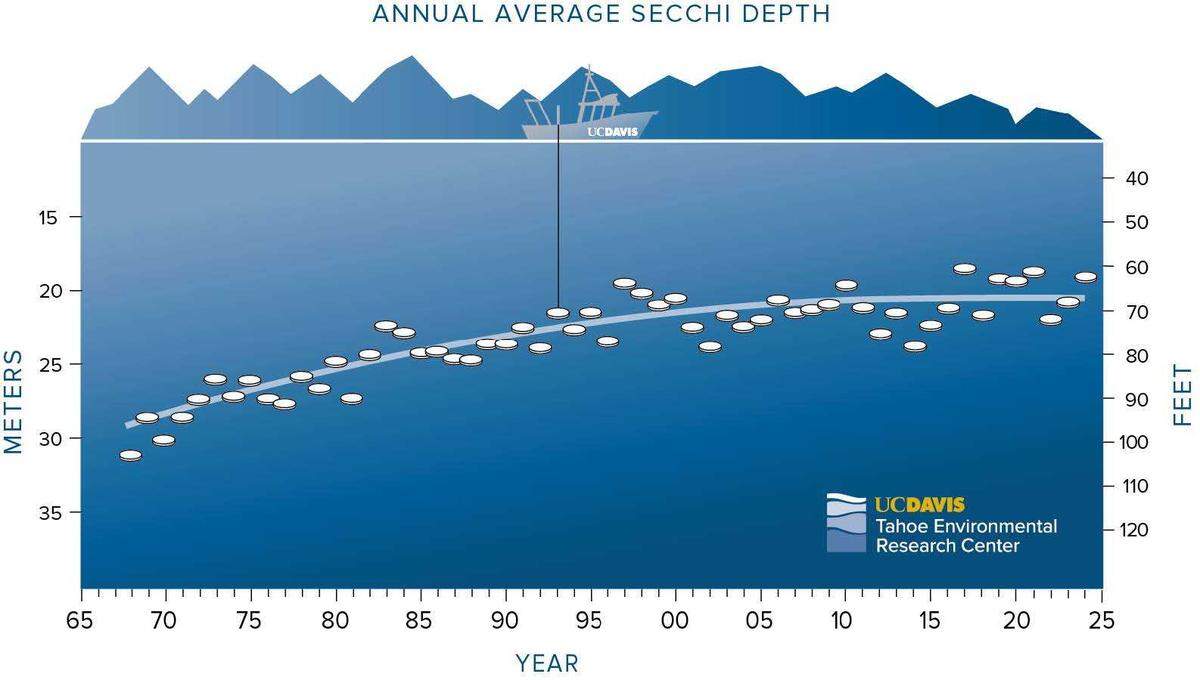
“We should embrace the improvements we have seen since the 1990s,” Stephanie Hampton, director of TERC and a UC Davis professor in the Department of Environmental Science and Policy, said. “It’s not, at this point, noticeably worse. But it’s not getting better, and we need to find out why.”
Jeff Cowen, a spokesperson for Tahoe Regional Planning Agency, said the efforts of the research center, the planning agency and other partner groups to protect and restore clarity have culminated in the Clarity Challenge. This challenge has been ongoing for about 15 years, with a goal to get Lake Tahoe back to its historic clarity of about 97.4 feet by 2076.
“Having the lake clarity stabilize and stop declining is a really big thing...We’re meeting the milestones of that science driven plan,” Cowen said. Fine sediment going into the lake was reduced by 15%.
The TERC report indicated that winter clarity is improving, a sign these efforts may be working, while summer clarity is worsening, a sign that it might not. He said the report is used to determine the approaches for the future of clarity restoration.
“Our takeaway is that what we’re doing is the right thing,” Cowen said.
Invasive species pose a threat
The threats to Tahoe’s crystal blue waters have only expanded in the last year.
Golden mussels were detected and removed from a lake-bound vessel at the Alpine Meadows inspection station on May 30. The invasive species poses a direct threat to the lake’s clarity by causing algal blooms in addition to damaged infrastructure, high maintenance and cleanup costs and disruptions to swimming, officials said.
They were first discovered in the Port of Stockton last October and have since proliferated across state waterways, sparking restrictions in Tahoe, Lake Folsom and other spots anxious to keep them out of the water.
“Once they’re here, it’s too late. Prevention is the only option,” the Keep Tahoe Blue - League to Save Lake Tahoe, an environmental advocacy group, said in a post. While there is an action plan in place if the golden mussels or other species enter the lake ecosystem, the organization is emphasizing prevention.
Authorities are also on the lookout for quagga mussels and zebra mussels, other longstanding invasive threats to the lake.
Lake Tahoe’s boating program added new fees for decontaminating vessels this spring when they fail to meet clean, drained, and dry standards. Boats with multiple problem areas face charges of $30 or more. Tahoe’s managers have underscored that prevention is the region’s best defense.
The league says vigilance is key, especially for non-motorized watercraft — powerboats, kayaks, paddleboards, e-foils, fishing gear, water shoes and even floaties — since mussels can survive without water for more than a week, reproduce rapidly and tolerate a wide range of habitat conditions.
“The long term trends are telling us that we need to better understand the ecology and the science of the lake so that we can identify the actions that we need to take to reduce fine sediment pollution, to reduce nutrients, stop the spread of aquatic invasive species to restore areas that could introduce additional fine sediment pollution to the lake, and preventing aquatic invasive species,” said Laura Patten, Keep Tahoe Blue’s Natural Resource Director.