
Catholic procession makes its way to Sacramento — by boat — for 25-year jubilee
AI-generated summary reviewed by our newsroom.
- The Diocese of Sacramento marked a 25-year jubilee with a 60-mile procession.
- The route included land and Sacramento River travel, using a yacht to reach nine parishes.
- Themes highlighted included issues like marriage, the environment and immigrant rights.
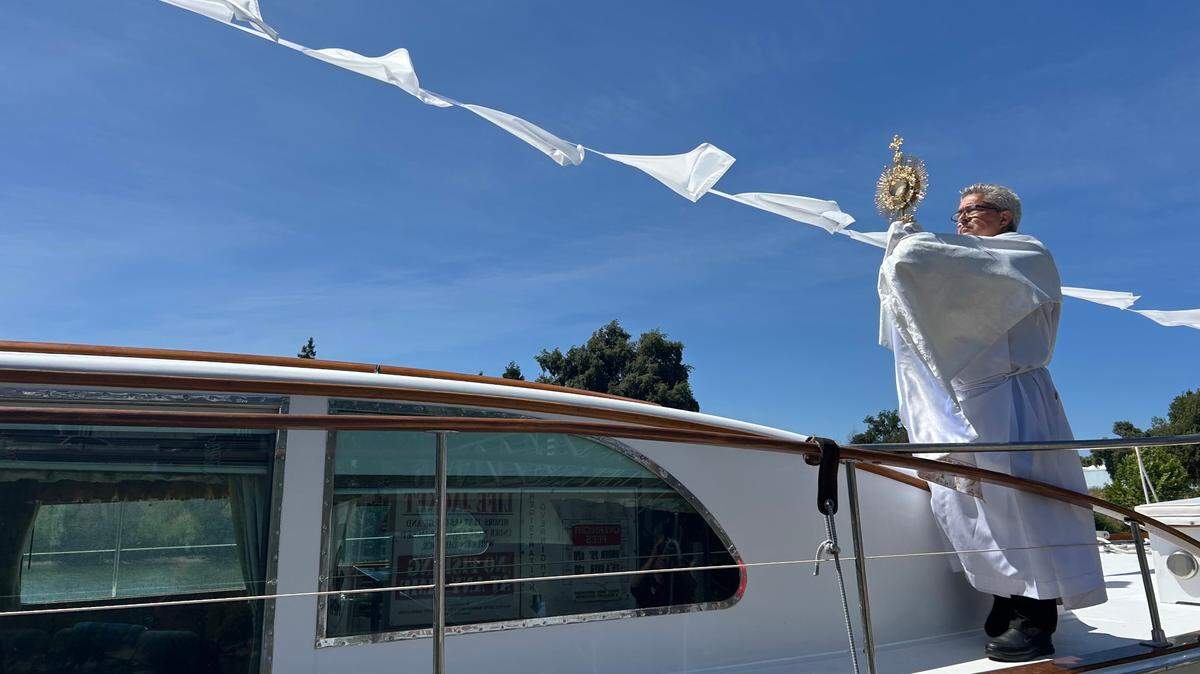
The Catholic Diocese of Sacramento will finish its three-day Eucharistic procession from Vallejo to Sacramento on Saturday afternoon, bridging spiritual belief with public life as it traverses land and water.
The procession is a part of the Catholic Church’s Jubilee Year which occurs every 25 years to celebrate forgiveness and often features a pilgrimage to a sacred site.
For the Diocese of Sacramento, this year’s final stop is downtown’s Cathedral of the Blessed Sacrament, though the procession visits nine parishes along the way.
But the 60 miles between Vallejo and Sacramento are too far to travel by foot in three days. The diocese opted for a modern approach to visit communities: a yacht.
On Friday, about 50 parishioners from St. Anthony’s Church in Walnut Grove marched behind Father Edgardo Garcia, chanting various prayers for the homeless, youth and immigrants.
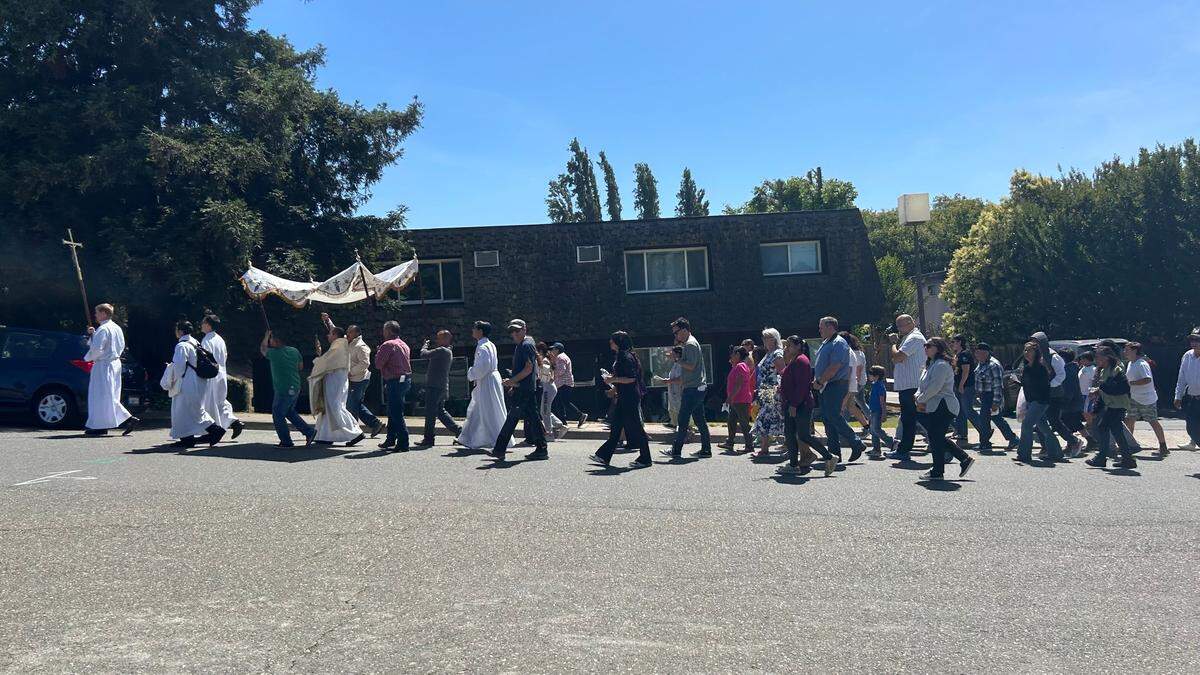
Each day of the procession highlights a different theme such as the environment or rights for farm workers. The last day spotlights marriage.
“Bishop Soto will bless newlyweds and engaged couples on the front steps of the Cathedral,” said a deacon from the diocese, Kevin Staszkow.
The diocese first used a boat for a national church campaign last year. It was such a hit that they decided to bring it back for this procession.
“The Bishop was inspired, I think, by the Philippines,” said Staszkow.
In the Philippines, Staszkow explained, fluvial processions are common. Sacramento’s Bishop Jaime Soto wanted to bring the practice to his diocese as a celebration of the Sacramento River and its connection to the Catholic Church.
The Sacramento River, according to Staszkow, derived its name from the Catholic sacraments — sacred rituals of the Church. The city, in turn, took its name from the river.
While the boat traveled down the Sacramento River, the deacon invited various groups on board. On Thursday, which was Juneteenth, members of the Church’s Black Catholic Ministry rode alongside Staszkow. On Friday, he brought along chaplains for first responders. For the final day of the procession, Soto will bless the boats, including the Aurora V, on which Staszkow traveled.
Slow and solemn on the water
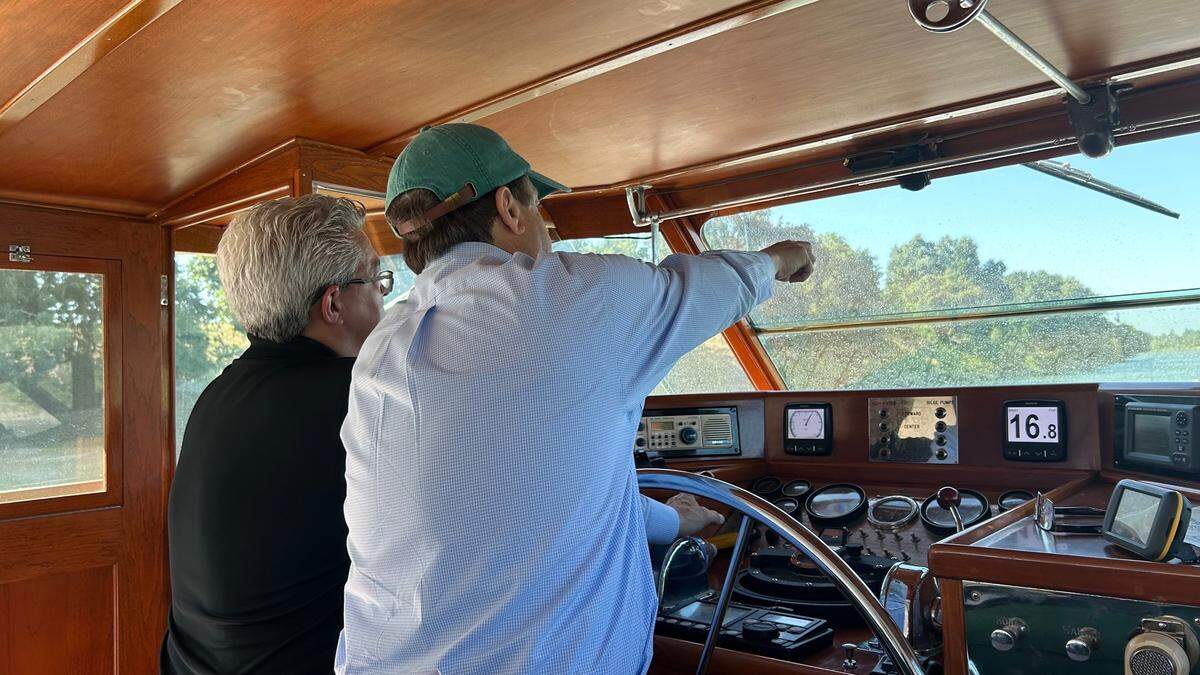
The Aurora V, which has three below-deck bedrooms, is owned by Gerry Kamilos. While Kamilos is not Catholic, he donated his boat to the cause to support a friend and often attends blessings of boats in San Francisco.
Kamilos organized with Caltrans in order to lift bridges so the boat could pass through. Staszkow said logistics measures like Kamilos’ were the hardest part of planning the procession. It took about four months to plan and required various permits from cities with participating parishes.
For the procession in Sacramento, the diocese hoped to shut down the streets around Tower Bridge. Unable to afford the necessary police escort, though, the diocese decided to proceed on the sidewalk.
The boat has also presented ecclesiastical issues. Deacon Staszkow said some other clergy members asked him, “How fast can we travel on the river and still be solemn?”
“The Bishop and I decided 10 miles per hour,” he joked.
Questions like these are Staszkow’s favorite part of putting on large events for the diocese. He hopes that the Church’s procession through Sacramento will encourage more engagement between the city’s secular and religious communities.
“Hopefully it gives us an opportunity to dialogue,” he said.