
A Sacramento organization is honoring a historic Black-owned jazz club in August
Nearly 80 years after the final note played inside Sacramento’s Zanzibar Cafe, a creative group is seeking to revive the legacy of the restaurant and jazz bar’s community space.
On Aug. 16, Sacramento-based event organizer Cherub is hosting a community concert event at the Rink Studios in Old North Sacramento, honoring the historic Black-owned cafe and music venue.
“The Zanzibar was this place that was a Black-owned space, but it wasn’t a space (just) for Black people — it’s for everybody,” said Tauz Hall, co-founder of Cherub. “What I’m trying to do with The Zanzibar is honor our history, but also make a space for everyone, not (making) it this thing of like, ‘No, this is a Black idea for Black people.”
The event will feature DJ sets by five artists, including Sacramento natives Soosh and Miss Organic, as well as a promotional beer in collaboration with Oak Park Brewing Co. that will have specialty labels displaying images of the DJs, Hall said.
According to Hall, all proceeds from beer sales will be returned to artists and participating businesses.
Hall said he was originally inspired to raise community awareness for the Zanzibar Cafe while working on a project for Visit Sacramento’s Black Sacramento section. His grandfather’s love for jazz music fueled his interest in the cafe, but he was most impassioned by The Zanzibar’s history and eventual closure by the state government.
“As a Black man living in Sacramento, I never really felt like this place was for Black people,” Hall said. “In the process of learning about The Zanzibar, I was like, ‘Oh, we actually do belong here,’ and it felt good, you know, to say I belong somewhere.”
The history of 528 Capitol Ave.
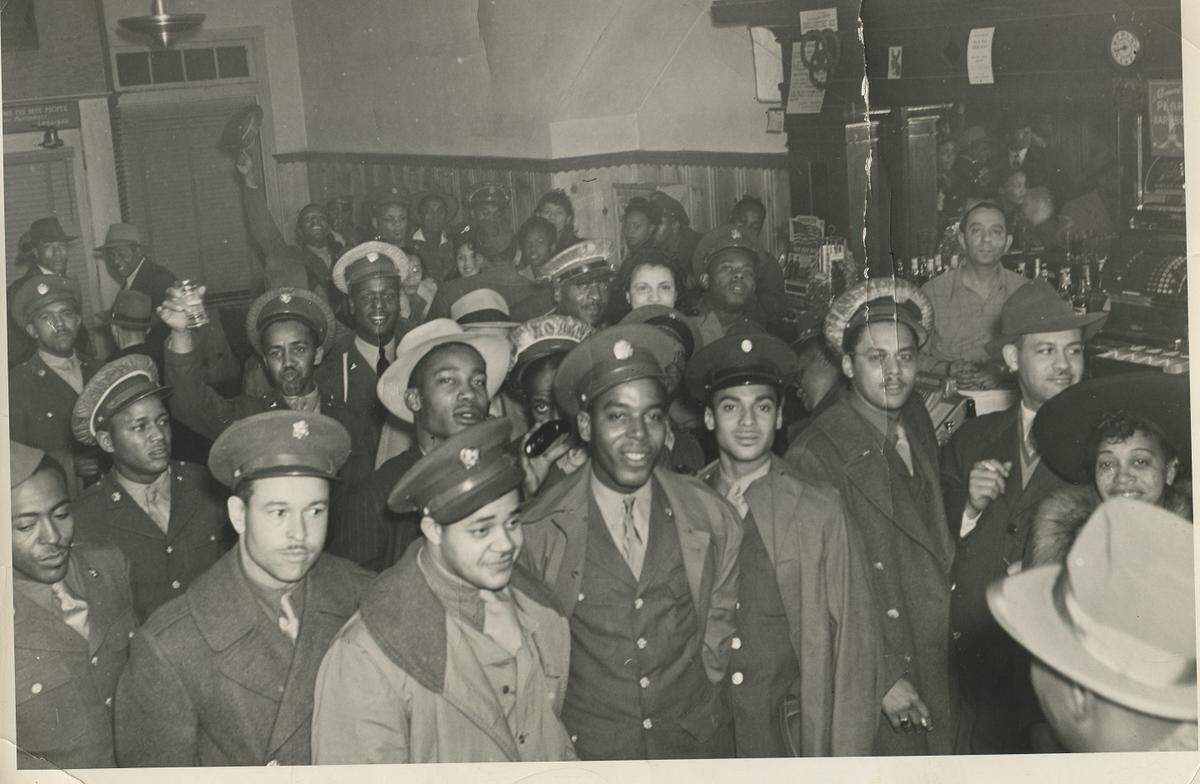
The Zanzibar Cafe opened on July 3, 1941, according to Sacramento Bee archives. The 528 Capitol Ave. venue was launched by Ike and Louise Anderson and Nitz Jackson, partners in a separate liquor store business, The Bee reported in a 2005 article.
The Zanzibar was located in the city’s West End neighborhood, an area between 10th Street and the Sacramento River in central Sacramento that housed a diverse population of Latino, Asian and Black residents, alongside the city’s nightlife.
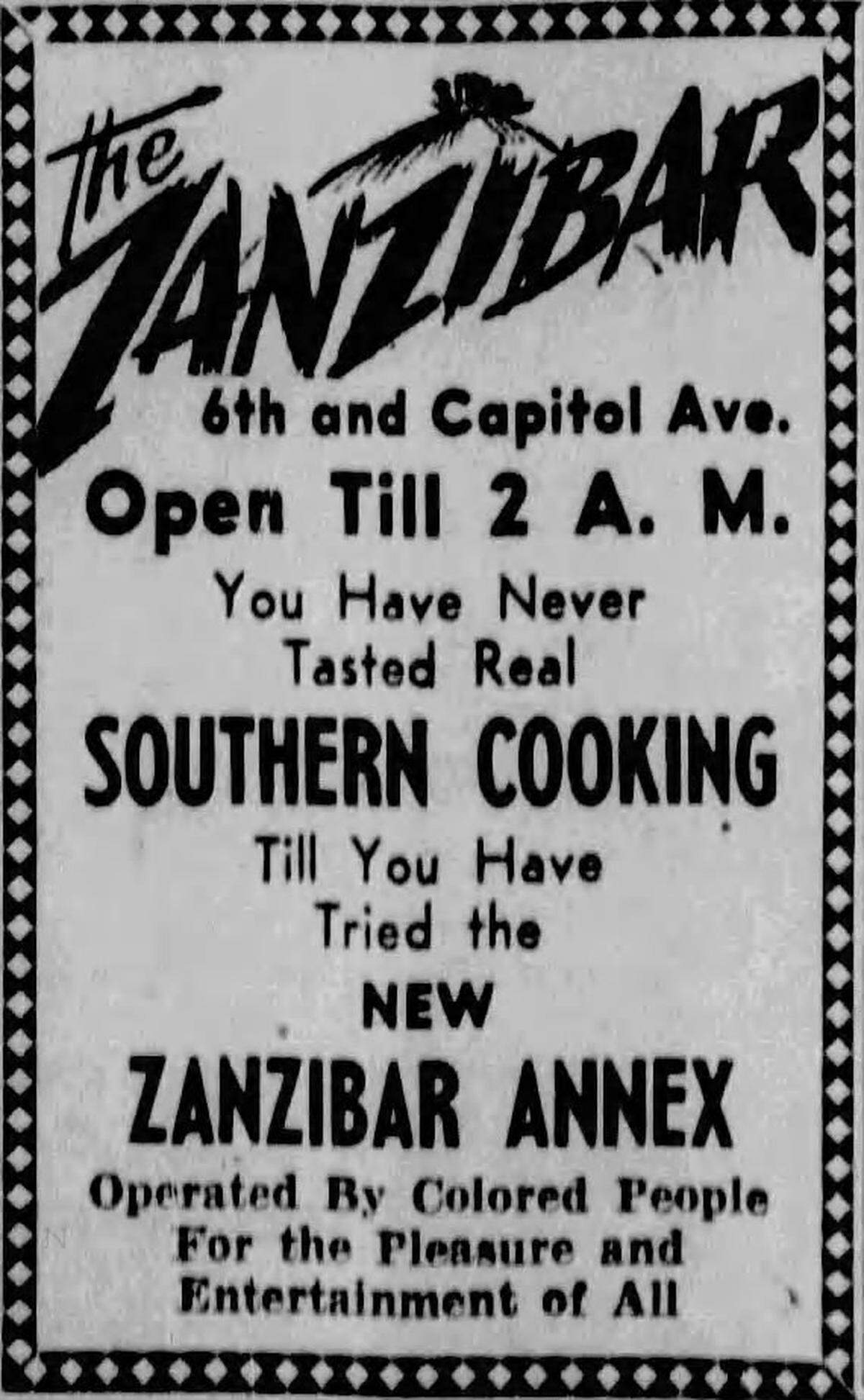
From Day 1, the Zanzibar frequently touted its prized “inimitable” Southern foods in The Bee’s classified ads. In 1944, the cafe’s six-course meals with Southern fried chicken or Southern baked ham went for $1.50, while a New York strip steak meal set diners back an eye-watering $2 — roughly $36 today, according to the Bureau of Labor Statistics.
The Zanzibar held a weekly “jam session” with area performers, as well as concerts with top jazz musicians across the country. Advertisements for legendary Black jazz artists like Billie Holiday and Count Basie performing at the cafe were tucked into small sections of The Bee’s classified ads. The Bee’s 2005 article on the club said it was often full, with bands performing until 2 a.m. regularly.
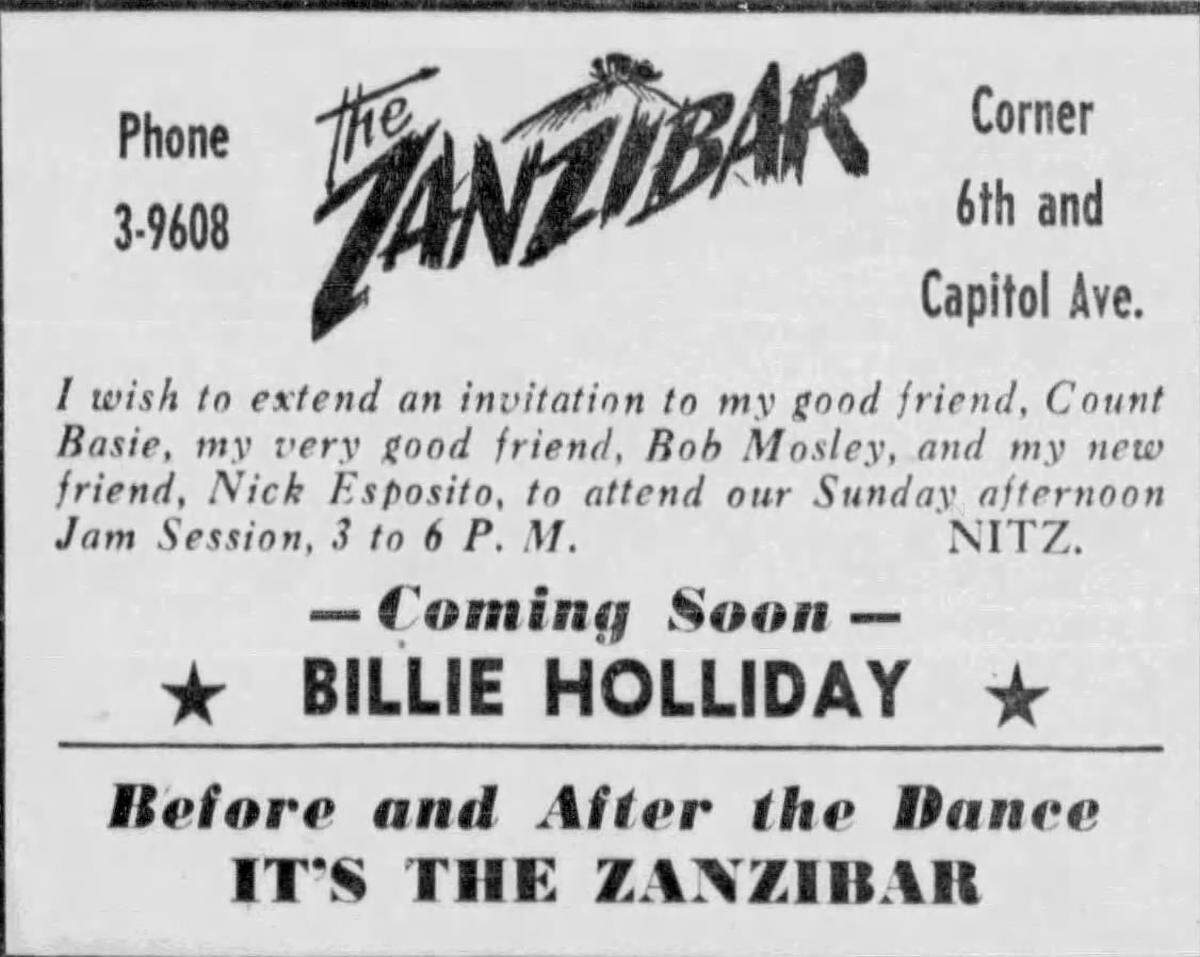
In the latter half of the decade, the cafe’s owners had multiple encounters with state agents alleging their business was being operated in an “improper manner,” according to Bee articles from the time.
The Bee wrote that Jackson was arrested in 1946 on a charge that claimed the Zanzibar had patrons drinking alcohol after legal hours. It was dismissed within a week after a judge ruled there was insufficient evidence to prove Jackson had any knowledge of the illegal drinking.
In May 1949, the bar faced more “disorderly place” allegations from the state government, this time being accused of “operating as a call house for prostitutes,” according to articles from the time. A six-month battle with the California Board of Equalization and the Sacramento Superior Court ensued, ending with the Zanzibar losing its liquor license. The Andersons permanently shut the cafe’s doors shortly after in November 1949.
Stories from The Bee covering the case at the time said the prosecutors’ evidence was comprised of testimony from Sacramento police officers and investigators for the state Board of Equalization.
In the 2005 Bee article, the owners’ son, Bill Anderson, maintained the prostitution claims were simply untrue, suggesting it was fabricated by a white business owner disgruntled with the Zanzibar’s success.
According to an article by the California State Library Foundation, in the 1950s, Sacramento city officials openly considered the West End area and neighboring Japantown “one of the worst slums in the country,” and pushed residents out of their homes and businesses throughout the decade. By the early 1960s, the entire area was demolished to make way for what is now Capitol Mall.
“So much of the Black experience is attached to trauma, right?” Hall said. “I’m just really, just trying to bring back the energy of this place that everybody was in, having a good time, and also honor that we’ve had great stuff here (in Sacramento).”
The new Zanzibar
To put on the event, Hall received financial backing from Embarc, a Northern California-based cannabis dispensary chain. According to the company’s website, it donates substantially to organizations in communities where it operates.
Hall said the Embarc team was instrumental in planning the event, saying they went along with every aspect of his vision for the event.
“It’s more than a concert; it’s a celebration of Black culture, creativity, and community legacy in Sacramento,” said Laura Braden, director of communications at Embarc. “We believe in showing up for spaces that uplift local voices and histories, and this one carries a lot of meaning. Embarc is honored to play a small part in backing something this powerful.”
Hall said he and the Cherub team strived to be highly intentional with the businesses and sponsoring partners they worked with on the Zanzibar event. The businesses Cherub is collaborating with on the event — namely the Rink Studios and Oak Park Brewing Co. — are Black-owned companies, but Hall said he does not want that to deter non-Black community members from attending the concert.
“As a community, we could do more to support our people here,” Hall said. “As people from Sacramento, we’re always so caught up in what’s going on everywhere else ... but we don’t support our own (people) until they leave and they’re supported by others.”
Tickets for Zanzibar were on sale for $19.37 on the event’s webpage as of Wednesday. The show starts at 8 p.m. on Saturday, Aug. 16 at the Rink Studios, 1031 Del Paso Blvd.
.jpg)