
Survivors of deadly Lake Tahoe capsizing disaster wore life jackets, authorities said
The two survivors of the Lake Tahoe capsize disaster that left eight people dead last weekend in one of the deadliest tragedies in the lake’s history, were wearing life jackets, authorities said.
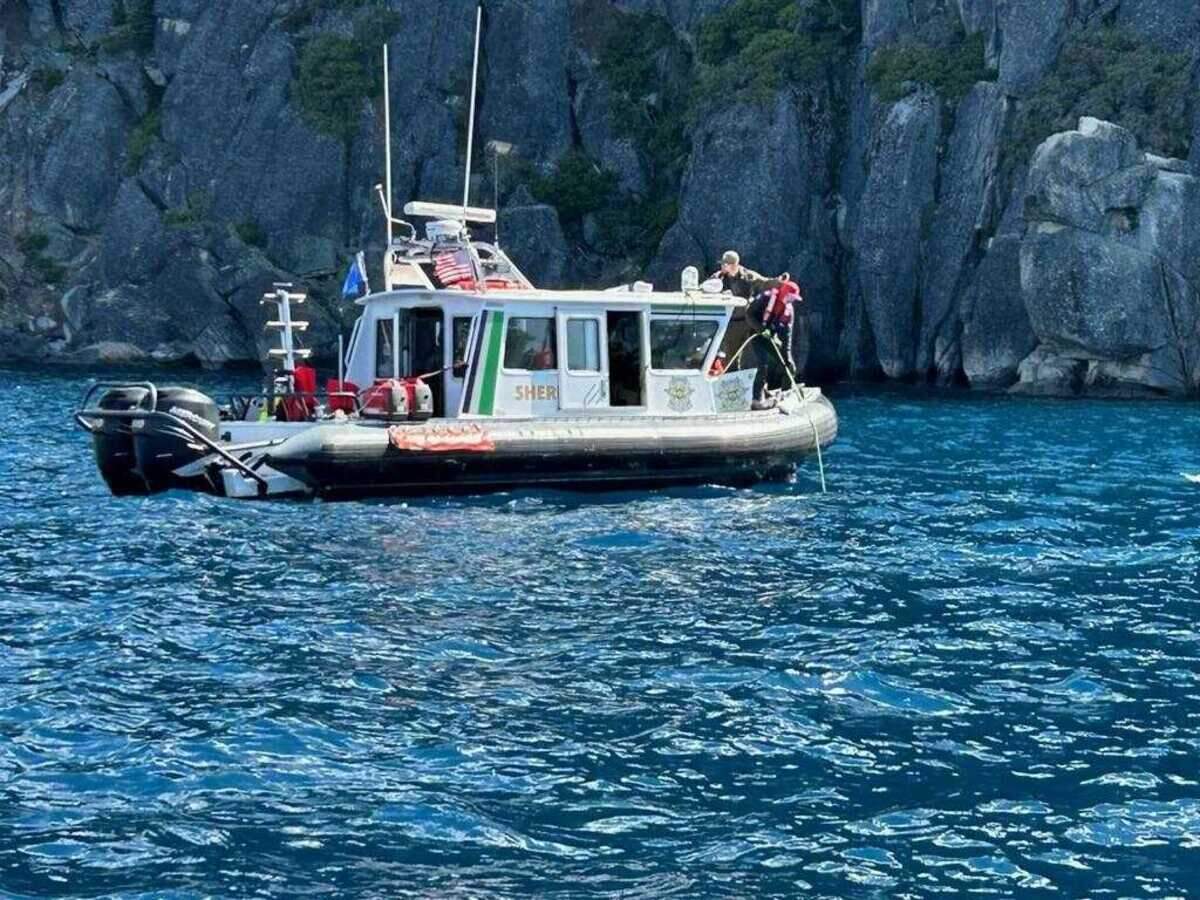
One woman was able to swim to shore. The other survivor was pulled to safety by a California State Parks lifeguard, authorities said. Six victims were pronounced dead by emergency responders in the capsizing’s immediate aftermath. El Dorado County Sheriff’s search and rescue members recovered the bodies of the last two victims Sunday, officials said.
Officials with the Washoe County Sheriff’s Office in Nevada in a Facebook post confirmed that the two survivors were wearing personal floating devices when they went into the water. Both were hospitalized for treatment. Their conditions Thursday were not known.
DoorDash executive Joshua Pickles, parents Paula Bozinovich, 71, and Terry Pickles, of Redwood City, died along with others who were celebrating Bozinovich’s birthday. The sudden, violent storm last Saturday that overturned the 27-foot craft on the waters of Lake Tahoe near D.L. Bliss State Park.
The five other people who died were Joshua Pickles’ uncle, Peter Bayes, 72, of Lincoln; Timothy O’Leary, 66, of Auburn; Stephen Lindsay, 63, of Springwater, New York; and Theresa Giullari, 66, and James Guck, 69, of Honeoye, New York.
In comments in Washington, D.C., on Thursday, Rep. Kevin Kiley, R-Roseville, called the incident an “unimaginable tragedy.” Two of the victims — Bayes and O’Leary — were his constituents, he said from Capitol Hill.
Kiley said the National Transportation Safety Board investigation is in the “on-scene fact-gathering phase,” with a preliminary report expected “in a matter of weeks, maybe in the next couple weeks.”
He said the full investigation, which could take 12 to 24 months, will examine “all aspects of the accident, that includes weather, the condition of the vessel, maintenance of the vessel, how many people can be on board the vessel, personal flotation devices, experience of the operator, history of the operators as well as many other conditions that are standard that deal with any tragedy like this.”
That NTSB report could take up to two years to complete, he said, but would be made public.
This story was originally published June 26, 2025 at 9:30 AM.
.JPG)