This Sacramento baby is a US citizen. His family lives in fear of deportation
AI-generated summary reviewed by our newsroom.
- A Sacramento family navigates daily fear as only the newborn holds U.S. status.
- Trump's order to end birthright citizenship faces legal hurdles in U.S. courts.
- Policy shifts and enforcement intensify instability among mixed-status households.
At just a month old and less than 10 pounds, he already holds something no one else in his family has ever had: a Social Security number.
The boy, whose head is full of shaggy black hair, is the youngest in his household of six. His parents and older sisters — ages 4, 13 and 14 — immigrated to Sacramento from Michoacán, Mexico a few years ago, hoping to escape violence and secure a chance at the American dream.
Now, like thousands of families across the country, this family is split by one of the oldest tenets in U.S. history, which guarantees citizenship to anyone born in the country. Nearly 250,000 babies are born annually to undocumented immigrant parents, according to Syracuse University.
Unlike the newborn, his Sacramento father, mother and three siblings have no legal residency. They face constant uncertainty and anxiety amid increasing arrests, deportations and federal policies against undocumented immigrants.
Among the proposed policies is one to end birthright citizenship, signed by President Donald Trump on the first day of his second term.
Since then, three lower courts have blocked the order from taking effect nationwide. In response, the Trump administration filed an emergency appeal and asked the U.S. Supreme Court to limit those rulings so the policy could move forward in some states.
On Friday, the U.S. Supreme Court, in a 6-3 decision, ruled that lower courts could not impose nationwide blocks against Trump’s bid to restrict birthright citizenship. The decision means Trump’s effort to eliminate the constitutional provision remains unclear, with future legal battles expected to determine the outcome.
Still, immigrant families, like the one in Sacramento, are living under a federal administration that seems intent on creating fear, said Arturo Vargas Bustamante, a health policy and management professor at UCLA.
Bustamante, who recently authored a report on a potential birthright citizenship ban, said such a policy would have lasting effects throughout the nation. These would include reduced health care utilization, worsened birth outcomes, lower public safety net programs and economic instability.
“Ultimately, the cost will be paid, not only by these families or by these individuals, but society in general,” Bustamante said.
For the Sacramento family, fear has become a part of daily life.
The father looks twice at suspicious cars with tinted windows during his early morning drives to work. The mother attended her prenatal appointments filled with worries. Among the parent’s biggest fears is being taken while their daughters are at school, leaving the children to return to an empty home.
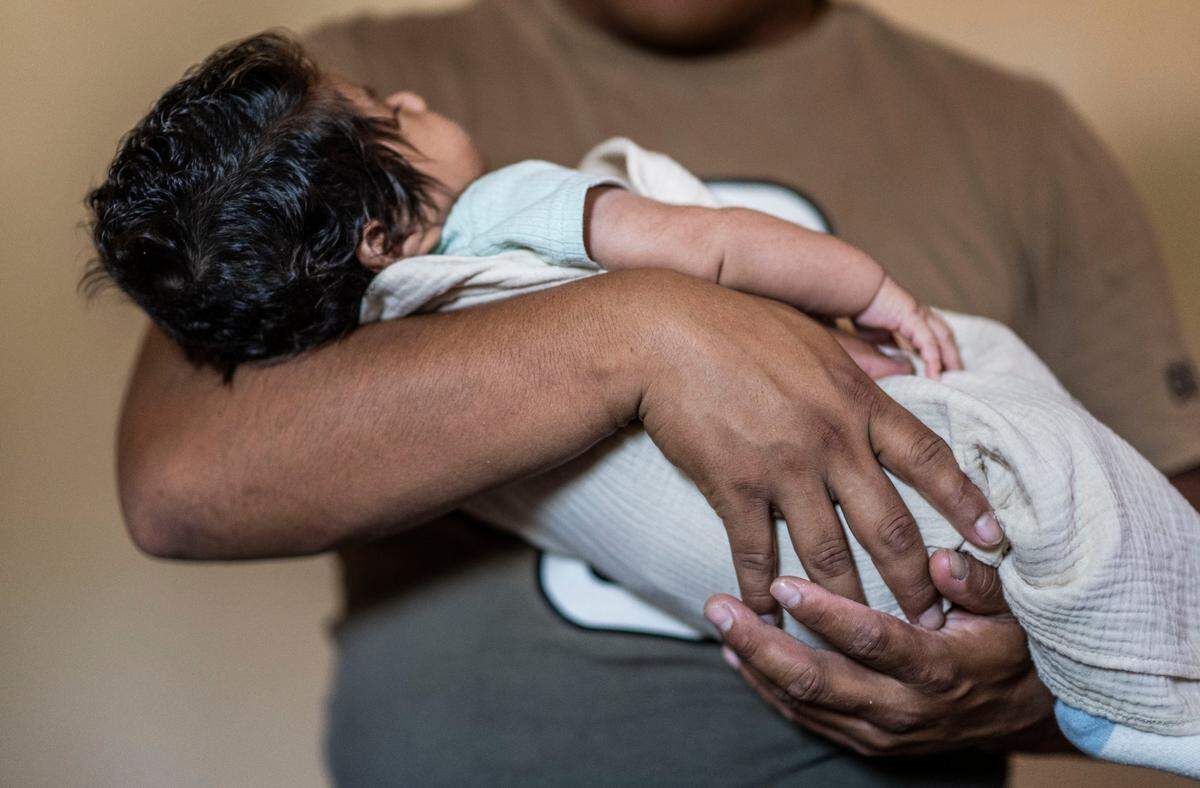
Even their newly born American son might not be safe, said the mother who is in her mid-30s. Recent media reports have noted detainment and arrests of U.S. citizens by federal immigration agents. Last month, NBC News reported that a newborn U.S. citizen and their Guatemalan mother were detained and face pending deportation.
“My son was born here, but he will be like us: an immigrant,” said the mother in Spanish.
The family requested anonymity in the story, citing fear of deportation and retaliation.
Journey to Sacramento
Earlier this year, the family gathered in the living room of their one-bedroom North Sacramento apartment. The space was modest with the three daughters sharing the bedroom and their parents sleeping in the living room.
The white walls were mostly empty, except for the occasional drawing, school award or photo from their home back in Mexico.
Their life in Michoacán was simple, said the mother who was six months pregnant at the time. The family spent most of their time in a small ranch town of just about 13,000 people in the southern part of the state. They would have preferred to stay, but life became dangerous.
The Mexican state is an area fraught with ongoing violent attacks and organized crime activity.
“We came to escape,” said the father, who is in his early 30s.
He was the first of the family to arrive in mid-2021, spending time in the Central Valley picking almonds. He later made his way to Sacramento with a goal to secure more stable work.
In 2023, his wife and the three young girls made the dayslong journey to the border. To enter the U.S., they used the CBP One application and were granted temporary asylum, according to documents shared by the family.
The application allowed migrants to schedule an appointment with Customs and Border Protection before coming into the country under former President Joe Biden’s administration. Trump has since signed executive orders ending the application and several protections previously given to migrants.
Once reunited in Sacramento, the family began their new lives. The mother secured work at a laundromat. Her husband later joined as well as starting a side business selling fruits and cheese.
The girls were enrolled at local schools to ensure they continued their education and to learn English. The oldest daughter desires a career as a surgeon. The middle child wants to become a kindergarten teacher. Their youngest sister remains undecided on her future job, wavering almost daily between a police officer and a doctor.
“Mom, why is my brother not born yet?” the talkative 4-year-old asked at one point. “I want to see him already.”
Faith in God
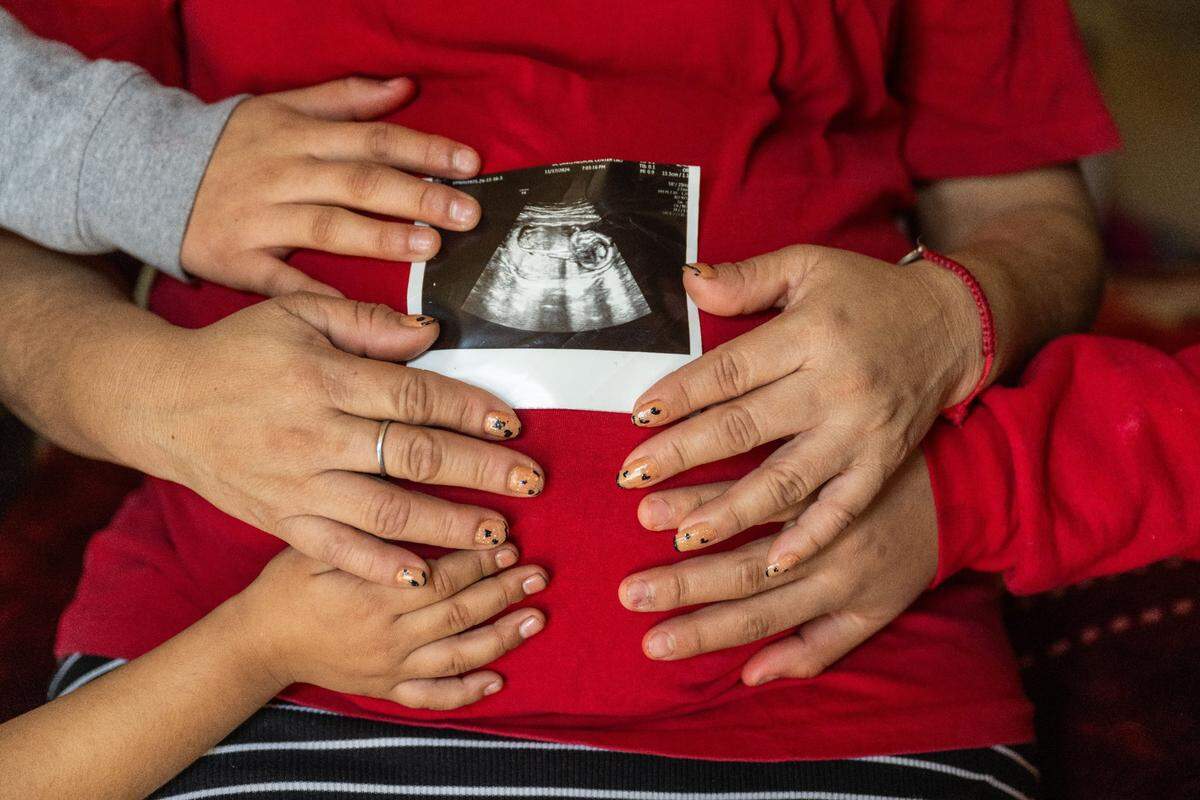
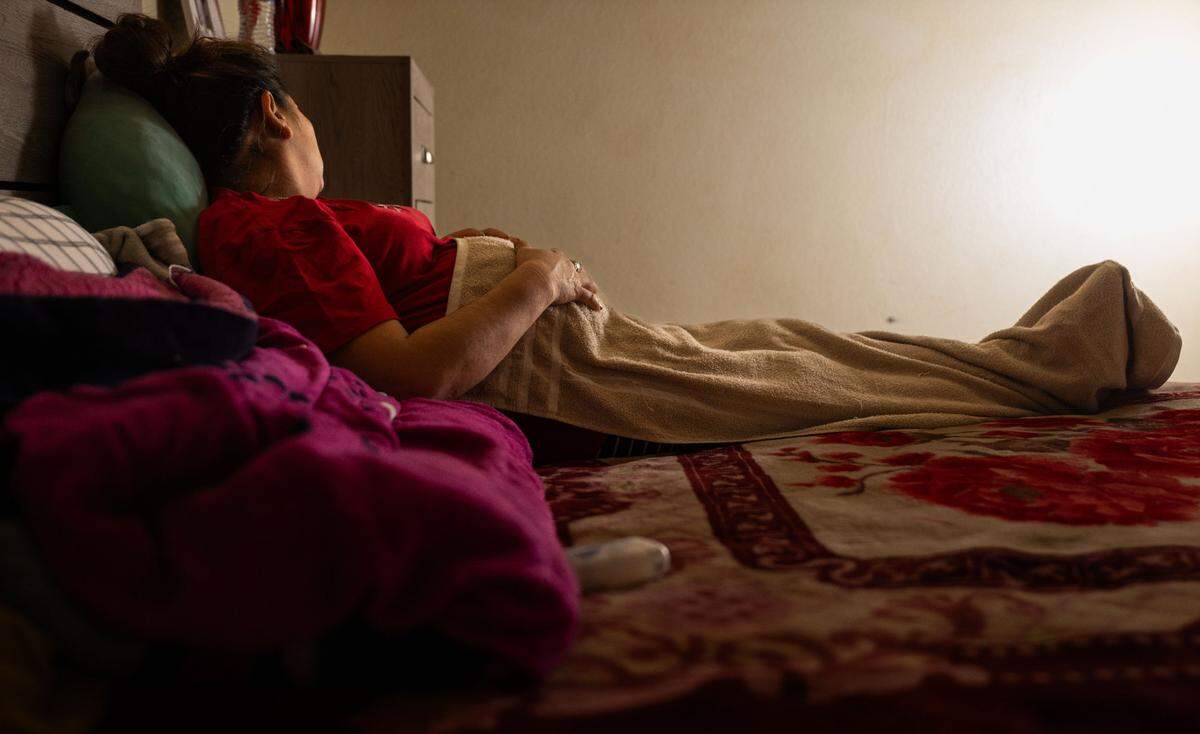
In January, about halfway through her pregnancy, the Trump administration rescinded a previous policy that protected hospitals from immigration enforcement. The decision, which the mother heard about on the news, heightened her worries. Medical appointments, like drives to work and school, soon became yet another risk.
“Where am I going to have my son?” she asked that month.
On the first day of his second term, Trump signed an executive order to end automatic birthright citizenship — a long-held interpretation of the 14th Amendment. The order stated that children born to undocumented immigrants would no longer receive citizenship.
While the proposed change faced several legal challenges immediately, it gave little comfort to the family, who felt like the entire federal government was against them.
“How does that make sense?” asked the father. “Our child is not going to be from here or there (Mexico).”
Bustamante said these feelings are not unique to the Sacramento family. His recent report highlights that Trump’s immigration policies, including the birthright citizenship ban, have a chilling effect that ripples across immigrant communities — both those who are mixed-status and solely undocumented.
He added that families may question whether to attend medical appointments for their infants, enroll in public programs and, ultimately, heighten social and legal instability.
“The consequence is that they cause fear,” Bustamante said. “They change decision-making.”
Amid the federal changes, the Sacramento family even began questioning their move away from Mexico. The mother said she often wondered if the family should return back to their homeland, reminiscing about her small-town life. At least then, there wasn’t a possibility that she could be deported without her children.
“The biggest fear I have is that they throw us out and then what happens to our children,” she said.
While Friday’s decision by the Supreme Court made no ruling on the constitutionality of Trump’s attempt to end birthright citizenship, it stopped the order from taking effect for 30 days — a temporary reprieve for families like hers.
Last month, by what she called the “grace of God,” she gave birth. Her son is, today and until the day he dies, an American citizen. She prays that will mean more than just paperwork.
“I have faith in God that he will change things for our family,” his mother said.
This story was originally published June 27, 2025 at 8:57 AM.