
These insects are endangering Sacramento’s beloved oaks. Here’s what you can do
Invasive beetles might be boring through the valley oaks in your neighborhood.
Mediterranean oak borers were first identified in the city of Sacramento last July. They target oaks native to Sacramento, those trees with arching canopies that line the American and Sacramento rivers, and can kill an 80-foot giant in five years.
The beetles have spread too far across the Sacramento region to be quarantined: they have reached Citrus Heights, Curtis Park and, most recently in April, Beals Point at Folsom Lake. They leave arborists, entomologists and city workers no choice but to prioritize removing infested trees — which can cost at least $4,000 — and raising awareness.
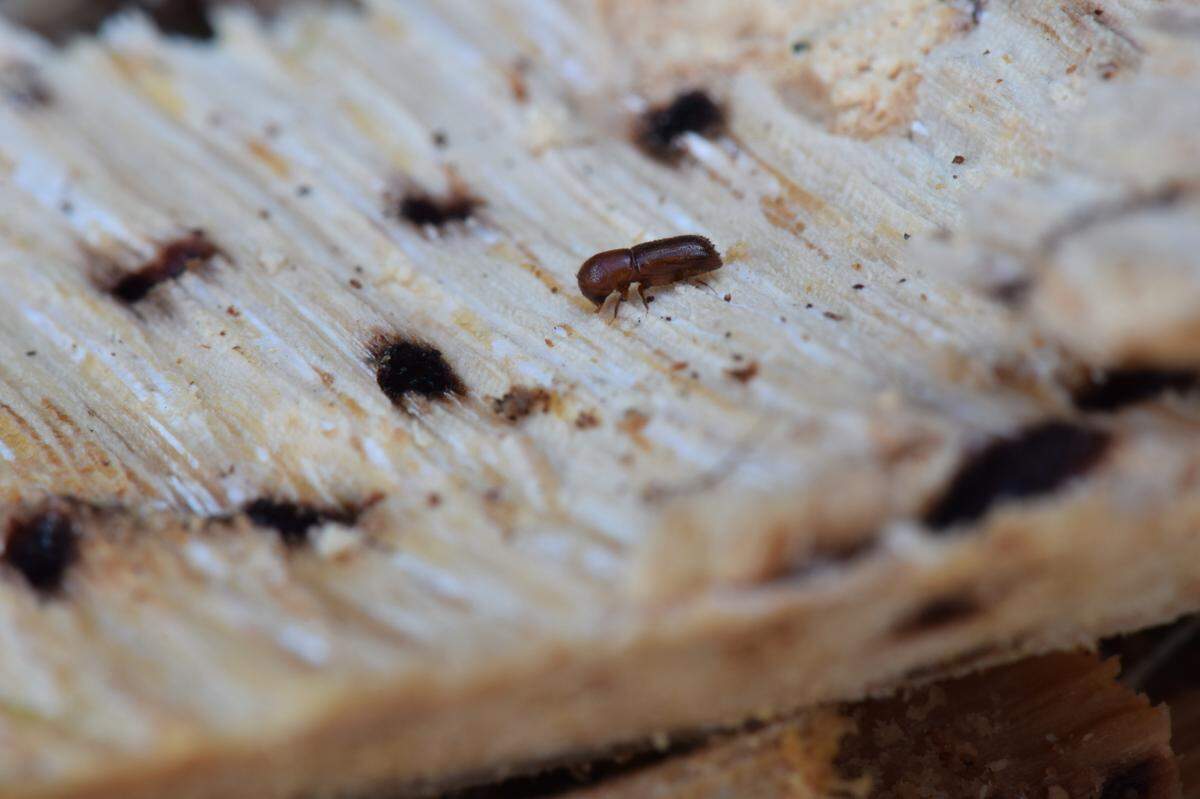
Dan Pskowski, a former city arborist who discovered the infested tree in Curtis Park, noted that a female beetle is the size of a pen nib. “This little tiny beetle is going to take out a huge oak tree, a 300-year-old oak tree.”
A threat to stressed oaks
The insects arrived in California at least eight years ago in Napa County. According to Cal Fire entomologist Curtis Ewing, they likely stowed away from France to California in oak barrels containing wine.
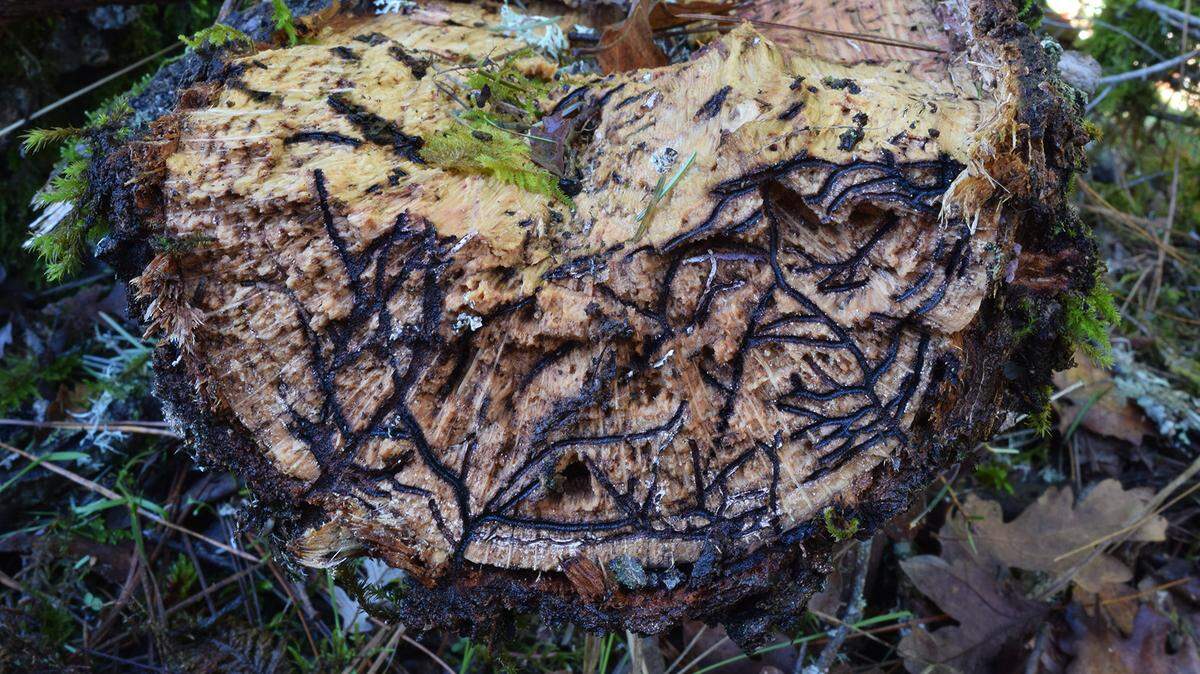
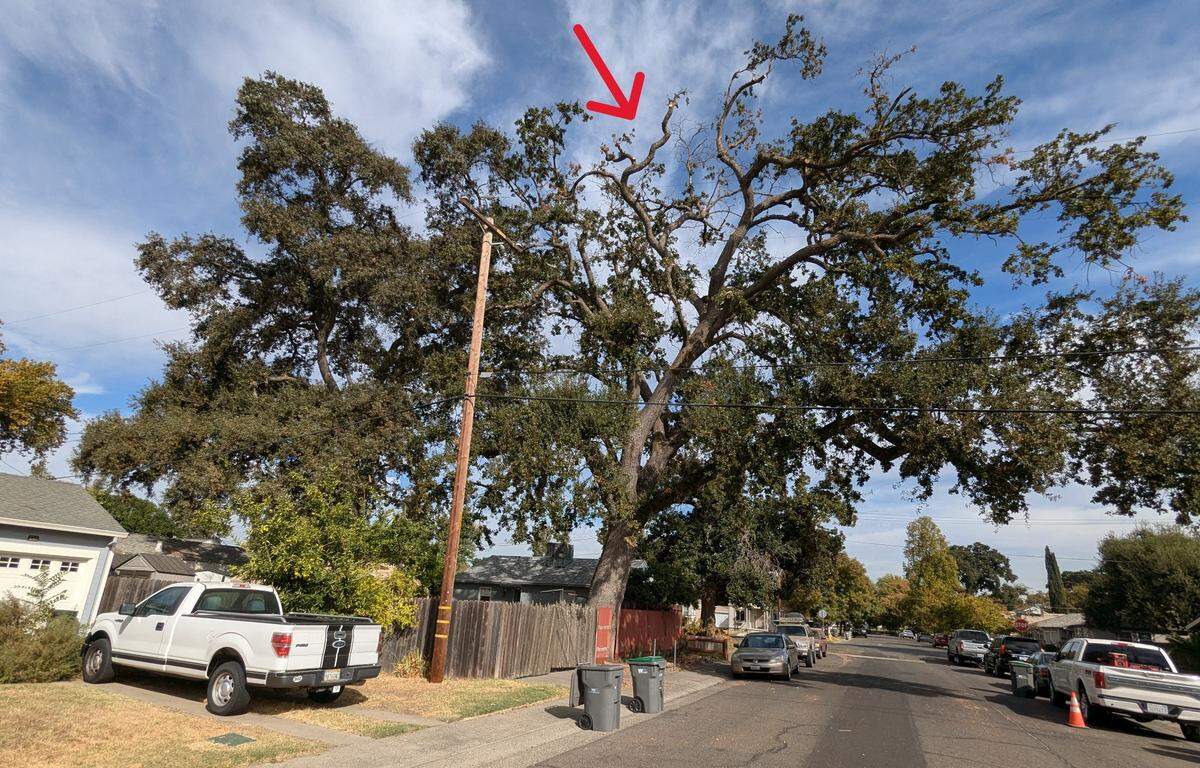
Infested oak trees bear telltale signs. Keep an eye out for dead branches, particularly at the top of the tree — beetles start high and work their way down to the trunk. The beetles bore holes into the tree and leave dust behind. And inside, fork-like tunnels fan across the wood.
The beetles themselves aren’t the killers: it’s the fungus they introduce that harms the trees. As the beetles chew tunnels through a tree, they release a fungus stored in a pouch above their mouths. The fungus destabilizes the tree and doubles as a food source for the beetles and their growing larvae.
The beetles don’t fly far. But Ewing notes their life cycle and human behavior are conducive to accidental spreading. The beetles infest a tree by the end of summer and wait patiently in the wood. Soon after, the tree dies. It is felled and cut into firewood — and demand for these logs is high in the fall.
“You’ve got a whole tree that’s full of tens — if not hundreds — of thousands of these beetles,” Ewing said. “They’re mated. They’re all ready to attack the next tree.”
The beetles hitch a ride across the state and lie low in the winter. When temperatures warm above 80 degrees Fahrenheit, typically in the spring, they finally emerge from the wood in search of new oaks.
Kevin Hocker, Sacramento’s Urban Forester, likens the beetles to respiratory diseases such as a cold or COVID-19. If you’re healthy, you’re not likely to die. But immunocompromised individuals, or trees already facing stressors such as drought or storm damage, are vulnerable to invaders.
“Trees have natural mechanisms to defend themselves, a natural defense system that functions very much like our immune system,” Hocker said. “Most of the trees are not going to die when a single beetle attacks them, or even when 100 beetles attack them. But some will.”
‘Take care of the wood’
Managing Mediterranean oak borers is an expensive task. Pskowski estimates that it costs at least $350 to inspect a tree for the beetles, since reaching the top branches requires special equipment. And Ewing has seen tree removal costs fall between $4,000 and $10,000.
It’s not the first time the city has dealt with insectile threats to its trees. Bark beetles brought Dutch elm disease to Sacramento in the 1990s. Though impossible to eradicate, quarantining infested trees and investing in antifungal injections allowed the city to prevent the disease from spreading uncontrollably.
A Sacramento Bee reporter, writing in May 1996, noted that the city paid to remove about 1,000 trees a year following the disease’s entry into Sacramento.
A lack of funding and a need for further research into the beetles make such efforts difficult to replicate, Ewing said. Cal Fire and the city have set up several pheromone traps at trees known to be infested, hoping to coax the beetles out. They’re working with arborists, UC Davis’ Agriculture and Natural Resources division and tree-loving volunteers to monitor oaks across the city and raise public awareness.
“Funding is always hard to come by, and part of the thing that drives funding is awareness,” Hocker said. “As people become more aware of it and more concerned about it, they will start investing in ways to manage it.”
In the meantime, Hocker notes that Sacramento residents can take action by getting involved with local tree advocacy groups and arborists. If a tree is found to be infested, Ewing recommends felling it and disposing of the wood by cutting it into chips and composting it.
The bottom line? Avoid moving firewood around to prevent the beetles from reaching new oaks.
“That is the key,” Pskowski said. “Take care of the wood because that’s what’s harboring the pest.”
Additionally, early prevention can save the city’s oak trees — and thousands of dollars.
“The best ways to prevent the symptoms of a (beetle) infestation are to keep the tree as healthy as possible,” Hocker said. “Make sure it has enough water, make sure it’s fertilized.”
If you think a tree may be infested with Mediterranean oak borers, you can call the California Department of Food and Agriculture’s pest hotline at 800-491-1899 or Sacramento’s general service hotline at 311.
You can also submit photographs of potentially infested trees via UC Davis’ Mediterranean oak borer reporting tool (bit.ly/44XnYSV).
This story was originally published July 22, 2025 at 5:00 AM.