Thrift stores are becoming more popular. Here’s what Sacramento has to offer
AI-generated summary reviewed by our newsroom.
- Thrift stores in Sacramento attract diverse shoppers seeking affordability and variety.
- Younger consumers drive growth as thrifting offsets inflation and clothing costs.
- Thrift shop donations support local charities, reduce waste and cut emissions.
Inside Upscale Thrift store, ovate racks perch hangers with gently used designer finds, Van Heusen button downs for $7, blue Feraggamo heels for $20, beige Nordstrom slacks for $19, all attached to dangling yellow and orange discount sticker tags.
Upscale is just down the street from patron Alexis Roberts’ dentist, making it a quick spot on Wednesday to stop and pick up new garments.
The majority of Roberts’ wardrobe consists of secondhand finds from the store, she said, because Sacramento thrifts tend to have more costly, diverse plus-sized selections. Perusing Wednesday with three potential dresses for purchase in her arms, Roberts wore both a thrifted multicolored tank top and pair of knee-length bermuda shorts.
Shopping at a retail store can be frustrating because the styles are scattered and it’s often hard to find the right size, Roberts said. In contrast, thrift stores make it easier for her since all the clothes in her size are in one place, allowing her to quickly browse and see what stands out.
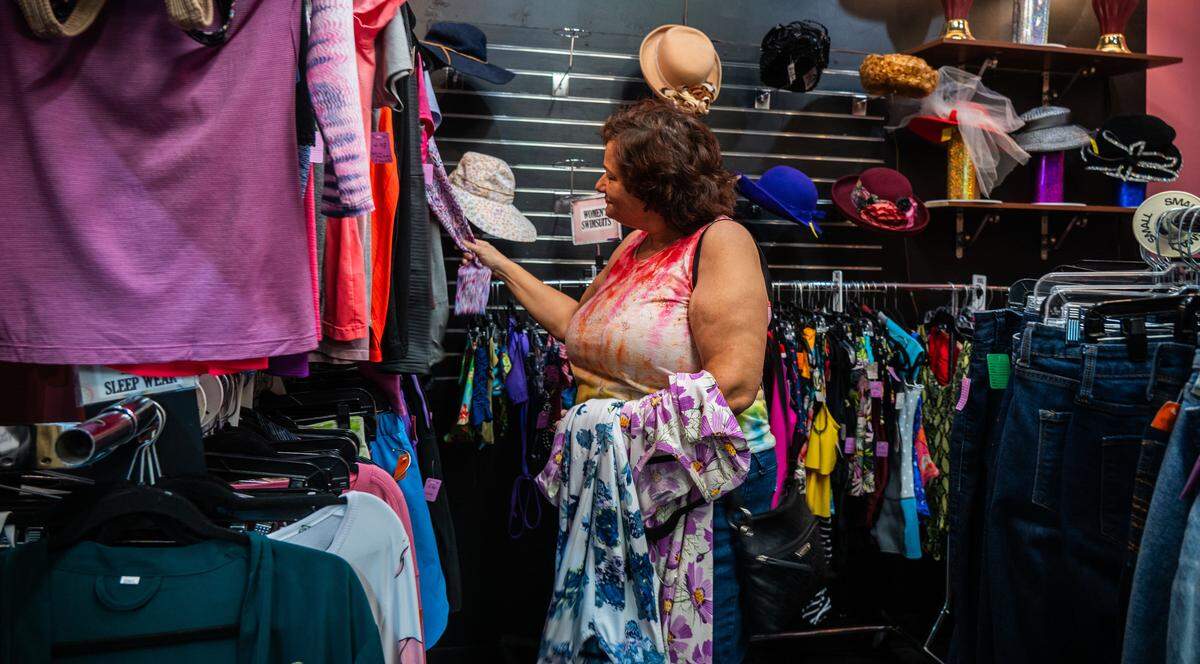
“They have styles for some of us who are older and wiser,” Roberts, 61, said. “We’re trying to find something that fits our body, not something that’s the trend. Styles come and go, but your body changes shape over time and if it doesn’t fit, donate to the thrift. If it does, wear it.”
When thrifting, she often finds brand new items, designer and generic, still in the box or tagged at affordable prices. With that in mind, she tends not to have a budget when shopping and maneuvers through the store with leisure.
“And I just think that shopping at the thrift shop makes more sense,” Roberts said. “We’re trying to be more cognizant of where we’re spending our money, and you can go to Amazon and buy whatever you want, but that doesn’t necessarily support our local economy.”
Every year, 16 to 18% of consumers in the U.S. shop at thrift stores, with California having the largest number of secondhand merchandise stores in the country, according to Capital One Shopping Research. The popularity of secondhand shopping continues to increase by 11% annually, saving about 8 pounds of carbon emissions per item.
The downtown Sacramento shop has two other locations, one in Carmichael and the other in Folsom, according to Jacqueline Gorré, operations and visual merchandising manager. A former stylist and image consultant, she claims that Upscale thrift has the lowest prices in the city, bringing in a consistent consumer population broken down into categories: people on a budget, resellers, and collectors.
Upscale often collaborates with community organizations, such as Powerhouse Ministries, to donate clothing to homeless shelters in the area and proceeds to the Sacramento SPCA, turning thrifting into an emotional experience for all involved.
“People feel good inside to be donating, saving the planet, giving to others in need, et cetera, but also it feels good when you’re making these purchases instead of buying new and overproduced merchandise.”
A generational tribute and youth-led trend
Passion Bailey, owner of Hidden Gems thrift, used to hate thrifting so much so that while her mother and grandmother circumvented quality tops and bottoms to pore over secondhand furniture and art, Bailey would hide in the book section to get away from them.
In her method of evasion, Bailey soon began to develop an ardor for book collecting. Initially, she planned to build a bookstore, but opted to create Hidden Gems Thrift in 2019 to honor the women that raised her.
“I wanted to do something to acknowledge my mom and grandmother through thrifting and getting me to start loving books,” Bailey said. “I had no idea how to run a thrift store, but from there, I met all these different people and it just changed my life.”
Hidden Gems Thrift is a boutique off Florin Road that accepts donations throughout the week. Bailey sifts through bags and boxes of handed over clothing to determine what pieces customers would be interested in purchasing. The shop sells men’s, women’s and children’s clothing as well as shoes and accessories.
She said the culture of thrifting in Sacramento has changed drastically since when she was a child. Back then, it was a way for people to afford clothing and my mother and grandmother weren’t into it how people are now, Bailey explained.
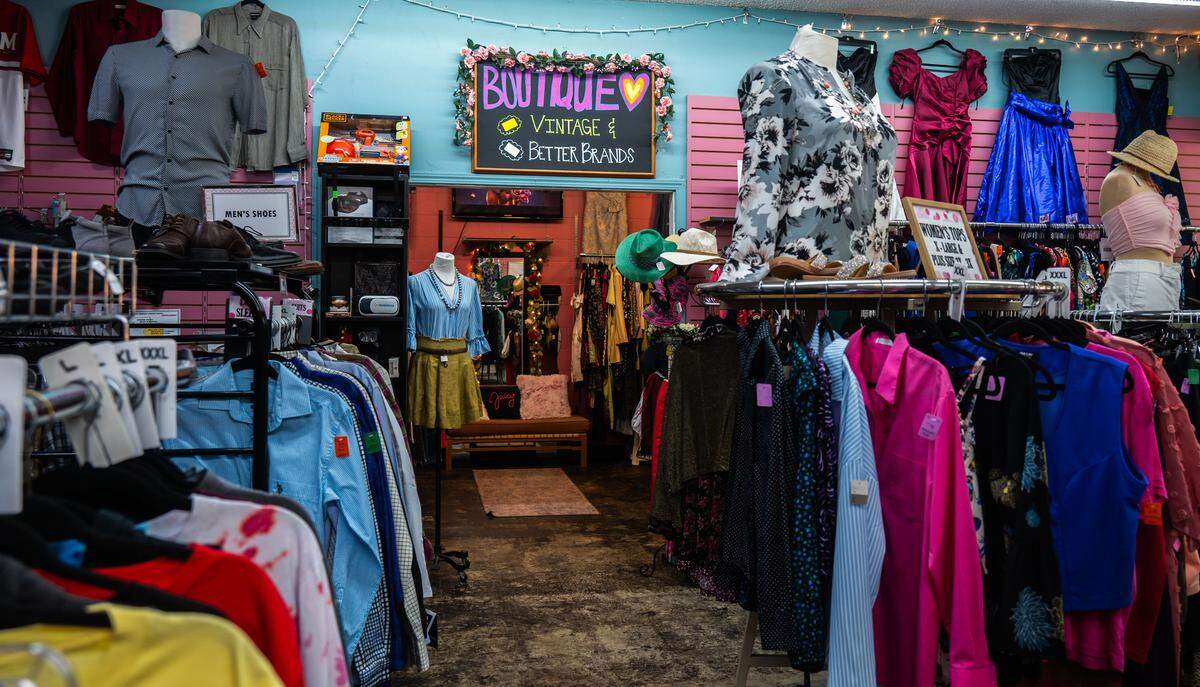
Despite her products advertised to a range of ages, what comprises the majority of her core consumer base are teenagers and young adults.
“It’s the young folks, like 16-25,” Bailey said. “It’s funny how (the culture) has changed. I still get more mature women and men coming in who’ll bring their kids, but you could tell that the kids are more into it. It’s exciting because thrifting is important in so many aspects of life.”
Bailey dubbed the trend a youth reclamation of power from inflation and rising national costs. Last month, the country’s consumer price index, a measure of goods and service costs, increased by 0.3% compared to the previous month, and prices on goods have increased by 2.7% since last July, according to the Bureau of Labor Statistics.
She iterated, though, that the financial situations of her customers are much more varied. In order to appeal to varying financial needs, Bailey prices based on the quality of the item, has a “dollar bin” and is open to customer negotiations.
If there’s something someone likes and they ask to take a couple dollars off, I’ll do it, she admitted.
She also tries to not excessively mark-up quality fabrics like 100% cotton and sell a surplus of synthetic clothing.
“I had a young lady come in with her daughter for back to school shopping and they were talking about the price of everything going up,” Bailey said. “I understand and I’ve always prided myself on pricing my things low. But you kind of have to go with the times, because everything’s going up for me as well.”
Mission-driven thrifting with community impact
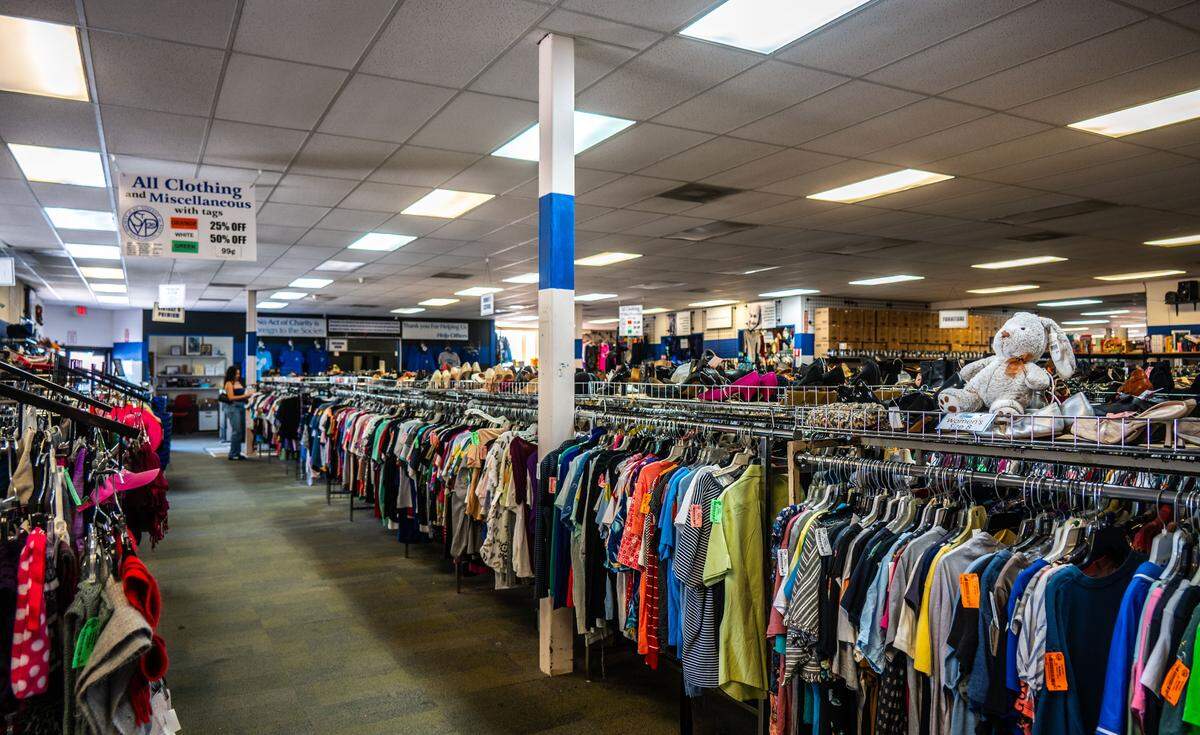
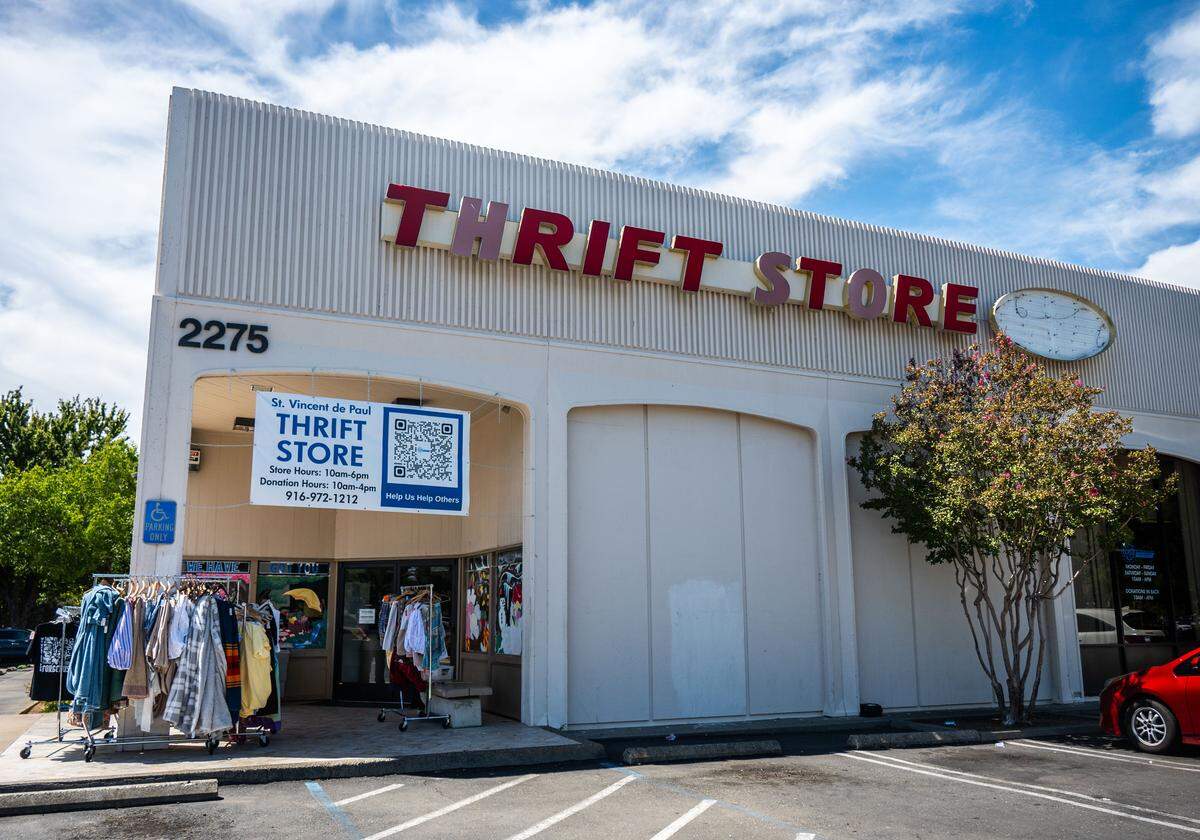
Society of St. Vincent de Paul Thrift Store has been serving the Sacramento area for more than 70 years, moving its location from Citrus Heights to Fulton to its current storefront in Arden-Arcade.
Viktoriya Kotyash, manager of the store, believes the mission of the store has remained the same: to serve the community by offering affordable, essential items and create a place for people to find support, dignity and value.
Kotyash said that what separates the mission-based store from peers like Hidden Gems or chains like Goodwill and FreeStyle are it’s home visit program where they are made aware of a need for clothing via helpline and provide individuals with the items they require to live comfortably.
“When we visit, some might say they need clothing, but then we’ll notice they don’t really have any furniture or might be sleeping on the floor, so we’ll issue vouchers to use at our store to provide them the items they might need,” Kotyash said.
The store’s inventory consists of everything from clothing to furniture to electronics to knick-knacks, most of which is under $20-25 dollars. In a given day, an average of 162 customers come into the store, according to Kotyash. On weekends, it may see upwards of 200 people.
In terms of customer demographics, Kotyash mirrored Bailey’s idea that resellers, Gen Z’ers and small business owners are moving away from fast fashion and pivoting to thrifting.
However, most notable to Kotyash, has been a sharp uptick in immigrants on fixed or limited incomes thrifting from the store.
Ana Alas visits the store almost every week, drawn in by the affordable prices.
“I’m looking for clothes for my husband, my daughter, and myself,” she said in Spanish, often spending between $20 and $25 per visit — though her haul on Wednesday ran closer to $30 or $40.
In her cart: two shirts for her husband, shoes for her granddaughter, a wallet and flip-flops for herself. For Ana, sustainability matters.
“If someone brings an item to donate and someone else buys it, it helps the environment because it won’t be thrown away,” she explained.
That sense of purpose, combined with savings, keeps her coming back every week.