
Driving the Yolo Causeway as sun sets? You might catch a glimpse of 250,000 bats
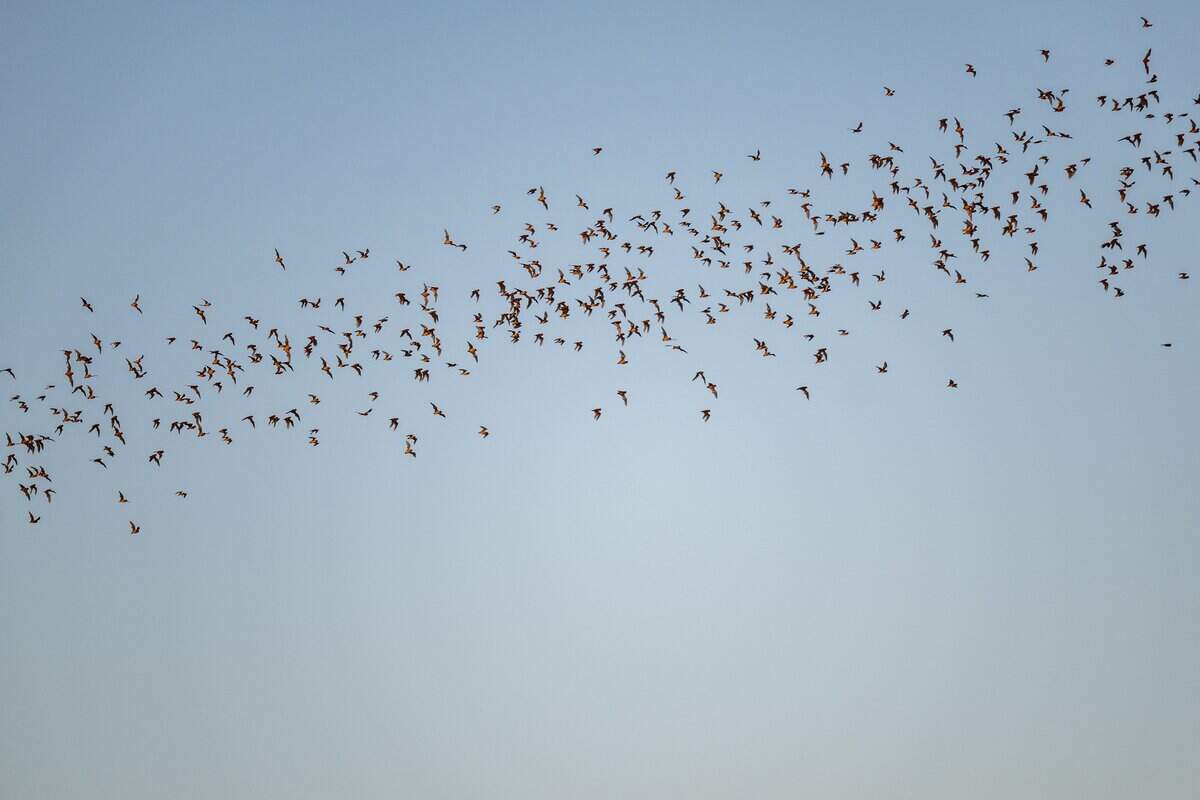
If you drive across the Yolo Causeway as the sun sets, you may see ribbon-like streams of bats surge from underneath the bridge and into the open air.
The causeway supports tens of thousands of commuters a day. It is also home to at least 250,000 Mexican free-tailed bats — the largest urban colony of their kind in California.
Bats don’t just sneak under the cloak of night, evading the human eye. In the summer, they fly every sunset in search of food, traveling as far as 50 miles from the causeway.
Curious visitors can see the flyouts up close through the Yolo Basin Foundation’s Bat Talk and Tour series. Tours run almost every evening from June through September near the Yolo Bypass Wildlife Area. Over 5,000 people attend the tours each year.
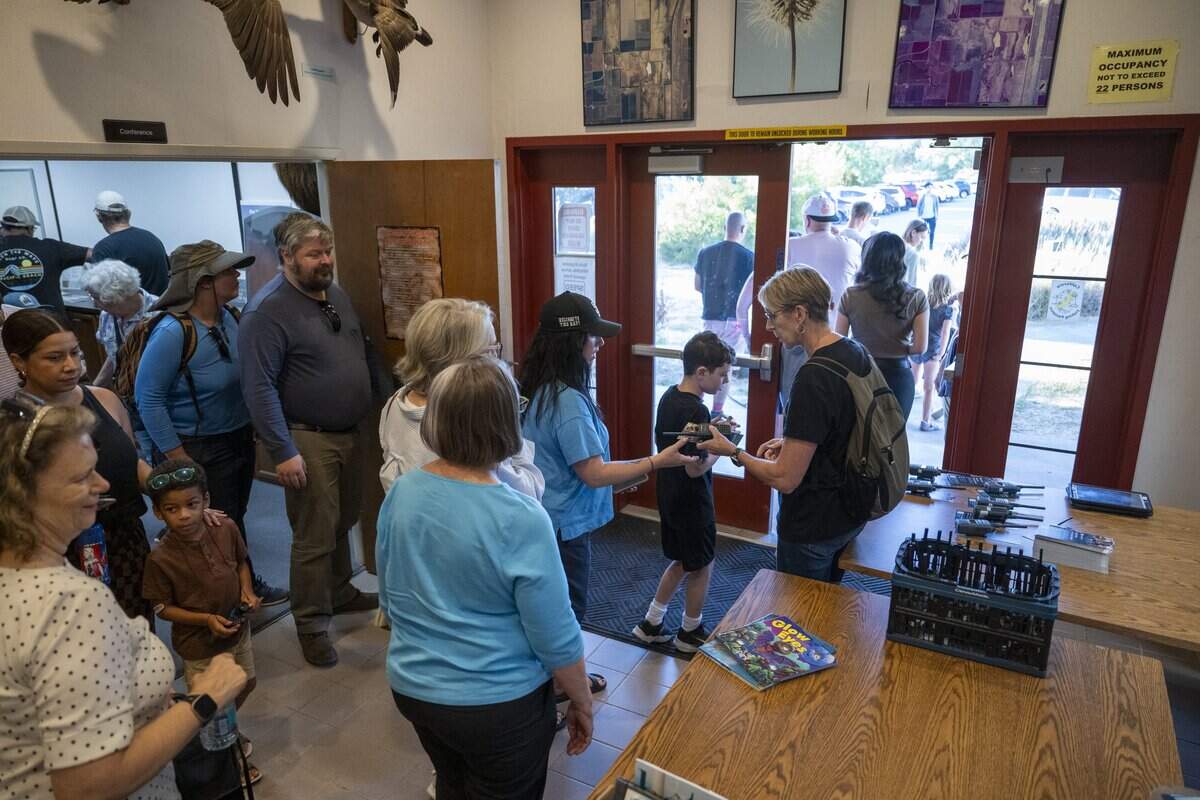
Corky Quirk, program coordinator at the Yolo Basin Foundation, stood at the entrance of the Yolo Bypass Wildlife Headquarters in early August, ushering 60 attendees into the building for the first part of the tour. Bat earrings dangled from her ears.
“Thousands of people drive across that bridge every single day,” she said, “and many have no idea what’s just right outside their car door.”
Bats up close
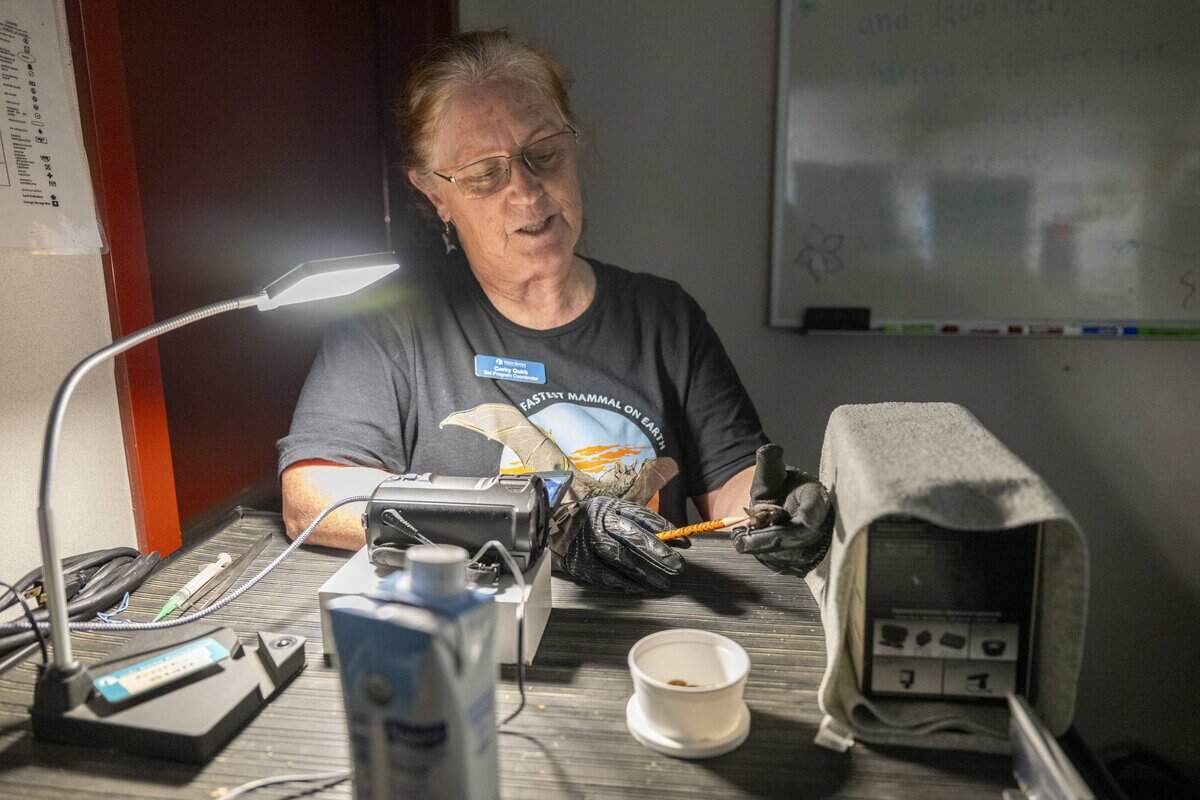
A sleepy bat poked its head from between Quirk’s fingers and blinked at a camera. Attendees watching the feed from the big screen cooed. The consensus: the bats’ forward-pointing ears and snub nose made them cuter than expected.
“You don’t see them up close ever,” said Omar Khayam, a biologist and science communicator at the Yolo Basin Foundation. “They’re not like birds that make themselves very visible — they’re kind of mysterious.”
Mexican free-tailed bats tuck themselves in the expansion joints holding the Yolo Causeway together. The joints almost replicate the conditions of caves, their preferred habitat — dark, warm, angled away from gusts of cold wind.
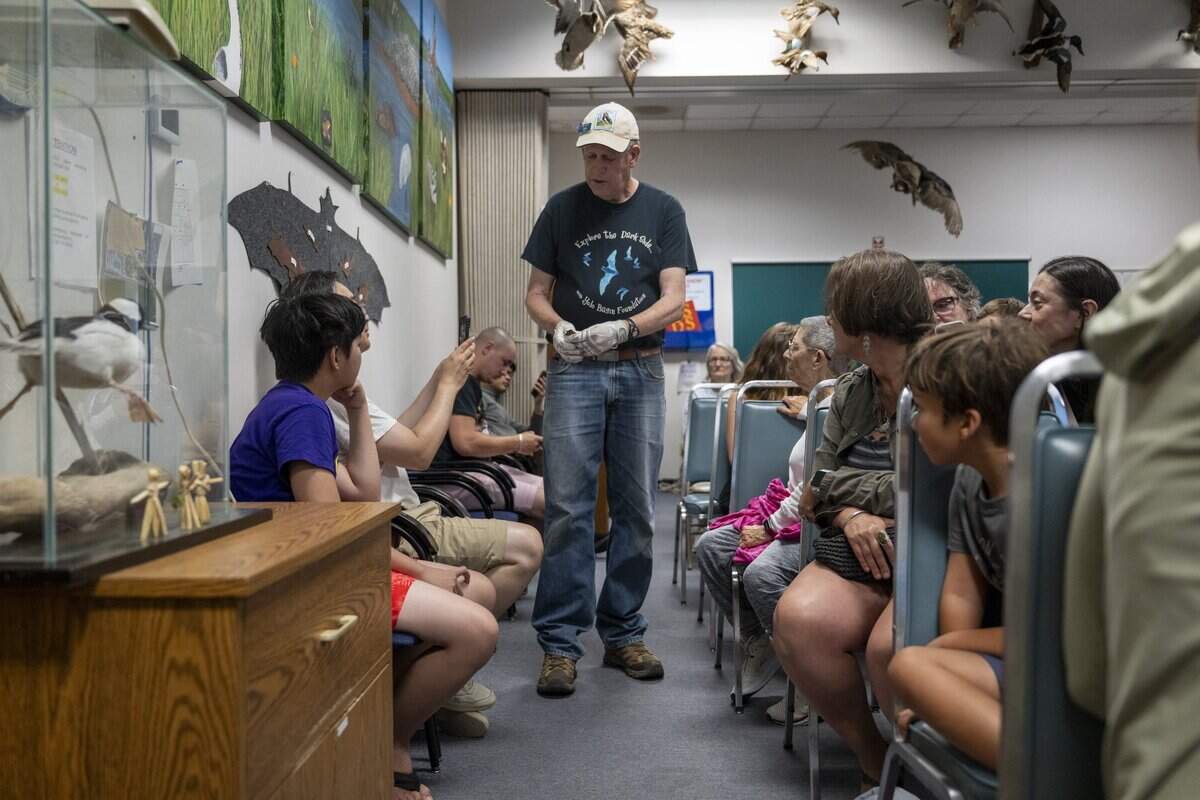
In the early 2000s, growing curiosity about the flyouts prompted the Yolo Basin Foundation to start the Bat Talk and Tour program. Each session begins with a presentation about bats, their role in local ecosystems and how to interact with them safely.
Though some may consider them pests, Mexican free-tailed bats offer free pest control for farmers. They feed on insects that eat away at crops, such as the rice-gnawing armyworm moth and the cucumber beetles that infest cucumbers and melons. A 2011 study in Science Magazine estimated that bats save crops worth at least $3.7 billion each year.
“People that don’t understand enough about bats tend to be afraid of them,” Quirk said. “It’s all about education.”
‘Nature right next to us’
After the talk, the attendees hopped into their cars and followed Khayam through a tour of the Yolo Bypass Wildlife Area. Each party carried a walkie-talkie. As they drove through rice fields and floodplains, Khayam pointed out the sunflowers lining the levees and the S-shaped necks of great egrets grazing by the water.
Managed by the California Department of Fish and Wildlife, the Yolo Bypass Wildlife Area spans 25 square miles and emphasizes restoration ecology. Fish, birds and insects thrive in the floodplains, with the latter serving as food for their hungry bat neighbors.
“All of this mosaic of habitats contributes towards a more complex ecosystem,” Khayam said, “which is able to support different kinds of animals who have different preferences for their daily life.
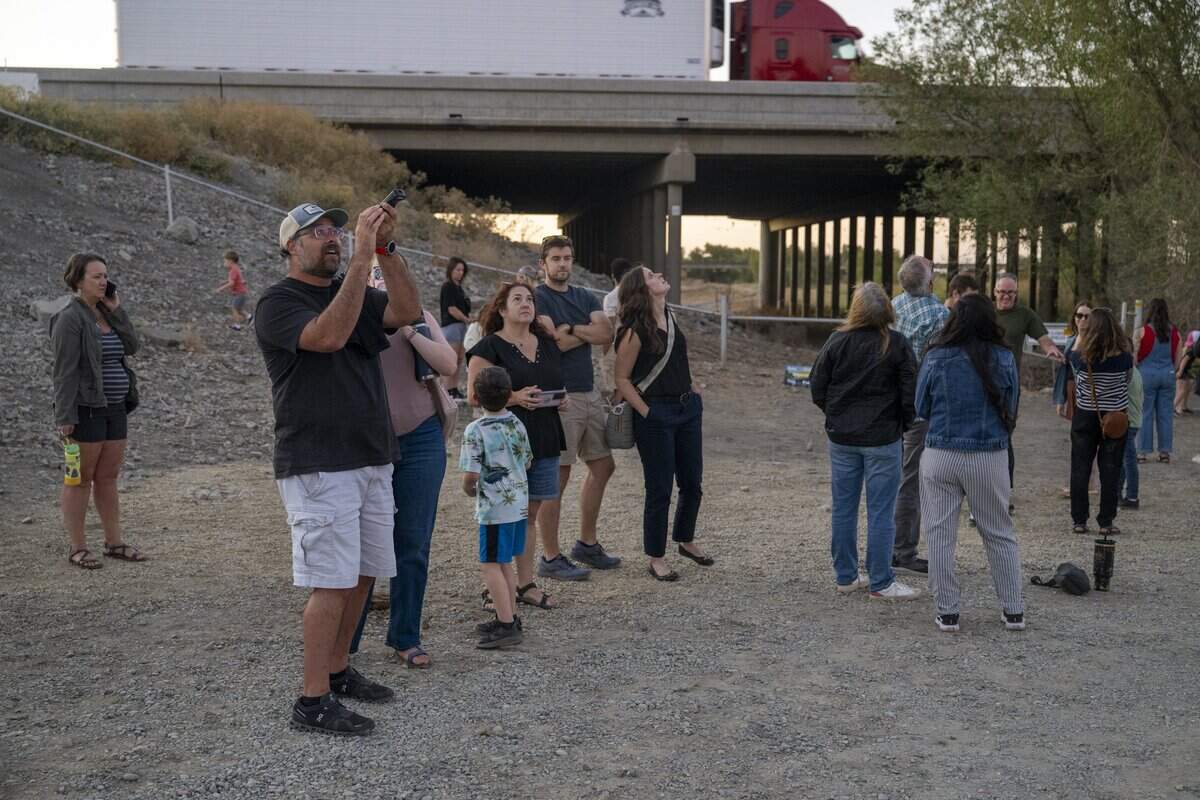
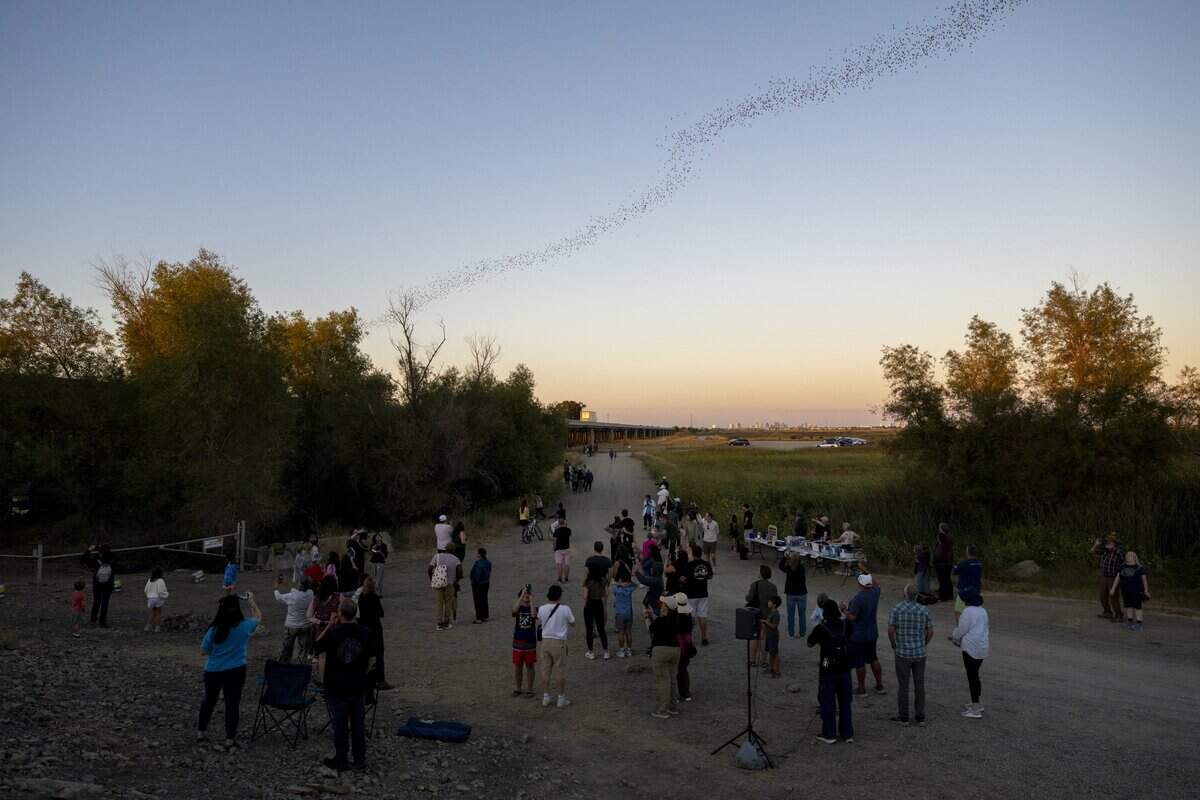
Human curiosity was one of those. As the tour ended on a strip of land near the causeway, attendees stepped out of their cars and waited for the bats.
Susan Wood, 72, regularly drives across the causeway from her hometown of Suisun to watch River Cats games. She had witnessed the bat flyouts several times but had always thought the creatures were birds.
“It just fascinates me that we have nature right next to us but we forget about it,” she said.
Just before 8 p.m., the first cloud of bats tore from under the freeway. As the world’s fastest mammal, they can travel up to 100 miles per hour. They flew together before dispersing, wisps of black against the pink sky.
Wood noticed children jumping up and down nearby, pointing at the bats. She plans to ask a neighboring couple if she can bring their 8-year-old child to another tour.
“For the kids,” she said, “this little touch of nature early can make a difference in their lives.”
Bat Talks and Tours take place almost every evening through Sep. 26, 2025. Tickets are $17 for adults, $5 for youth over 6 and free for children aged 0 to 5. You can register for a tour through the Yolo Basin Foundation’s portal (https://yolobasin.org/battalkandtour/).
And if you see a bat on the ground, it is sick and can pass diseases through its saliva. Call NorCal Bats at 530-902-1918 and do not touch it.
This story was originally published August 8, 2025 at 5:00 AM.