‘Beloved’ meteor shower, planet parade to shine in California sky. When to watch
AI-generated summary reviewed by our newsroom.
- California skies feature a six-planet parade on early morning of Aug. 10.
- Perseid meteor shower peaks Aug. 12–13, but bright moon hampers visibility.
- New moon on Aug. 22 offers ideal conditions for viewing Andromeda galaxy.
California stargazers can catch a vibrant full moon and an unusual six-planet parade in the night sky in August.
They’ll also witness a dazzling annual meteor shower zip overhead, with prime stargazing conditions in the weeks ahead.
Here’s how to view the upcoming celestial events:
When to watch August full moon in California
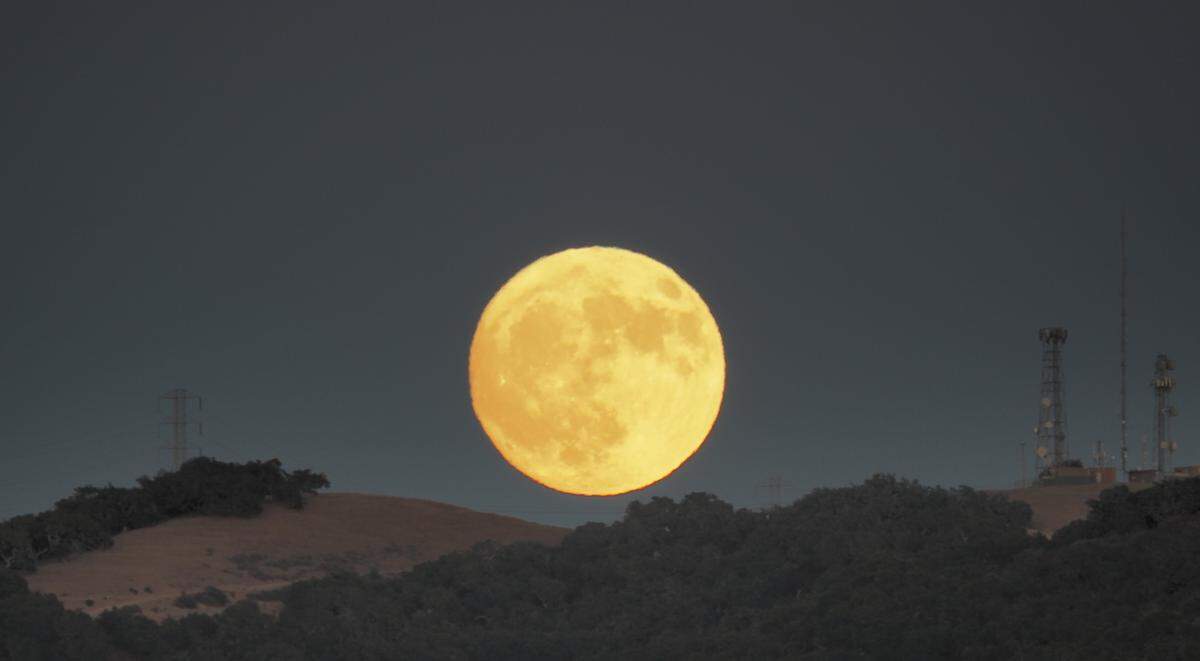
The eighth full moon of 2025 will reach peak illumination at 12:54 a.m. on Saturday, Aug. 9, according to online calendar Time and Date.
How did sturgeon moon get its name?
The August full moon is called the sturgeon moon, according to the Old Farmer’s Almanac.
The name refers to the giant lake sturgeon found in the Great Lakes and Lake Champlain.
Native Americans who lived in the region caught the freshwater fish during late summer months, the almanac said.
What’s the best way to watch planet parade?
Amateur astronomers can glimpse a six-planet pile-up in the early morning hours of Sunday, Aug. 10.
The planetary parade will include Mercury, Venus, Jupiter, Saturn, Uranus, and Neptune, according to National Geographic.
Only Mars will be left out of the party, since it’s only visible in the early evening.
Most of those planets can be spotted with the naked eye, the magazine said, but Californians will need a telescope to see Neptune and Uranus.
Mercury will also be more challenging to view due to its proximity to the sun, according to National Geographic.
“Such ‘planetary parades’ are not very rare,” National Geographic said. “But they’re commonly limited to four or five planets, making this six-planet show one to catch.”
When does Perseid meteor shower peak in 2025?
One of the most celebrated meteor showers of the year returns in August.
The Perseid meteor shower is set to peak overnight in California from Tuesday, Aug. 12, into the morning of Wednesday, Aug. 13.
The stunning shower produces up to 100 meteors per hour under pristine dark-sky conditions, National Geographic said, calling it “one of the most reliable and beloved annual displays of shooting stars.”
However, the usually dazzling show will be dimmed by a very bright moon in 2025.
On the night of the peak, the moon will be 84% illuminated, washing out most of the shooting stars, according to NASA.
“A few bright meteors may still be seen in the pre-dawn hours, but viewing conditions are not ideal this year,” NASA said.
When will stargazing be best in August?
California residents can expect ideal conditions for stargazing on the night of Friday, Aug. 22, and into the following morning, thanks to the new moon.
You’ll be able to spot stars and other celestial sights without any light pollution from the moon, National Geographic said.
The end of August is also the beginning of peak viewing season for the Andromeda galaxy in the Northern Hemisphere.
Our galaxy’s closest neighbor should be visible without a telescope on the darkest days in August, according to National Geographic.
“The absence of moonlight allows for optimal viewing of distant galaxies, wispy nebulae and even the last meteors from the Perseids,” National Geographic said.