
CA legislators grill Cal-OSHA chief over recent audit findings

Legislators grilled officials with the Division of Occupational Safety and Health, or Cal-OSHA, this week about a recent scathing audit released in July, which found that severe staffing shortages have meant that the majority of the agency’s workplace investigations are conducted by letter rather than in person -- an approach that relies on employers largely policing themselves.
The audit was requested in 2024 by Assemblymember Liz Ortega, D-San Leandro, chair of the Assembly Labor and Employment Committee, in response to numerous complaints from farmworker advocates and others about workplace violations going unchecked by the agency.
During the opening moments of a hearing by the Joint Legislative Audit Committee Wednesday, Ortega said the audit confirmed her worst fears.
“I have to say that this audit has made it very clear what I have known for some time, and that is that Cal OSHA is not working,” she said.
California State Auditor Grant Parks provided troubling details from the audit, which also found that fines against companies are often arbitrarily reduced and criminal prosecutions for cases involving serious injury or death are virtually non-existent.
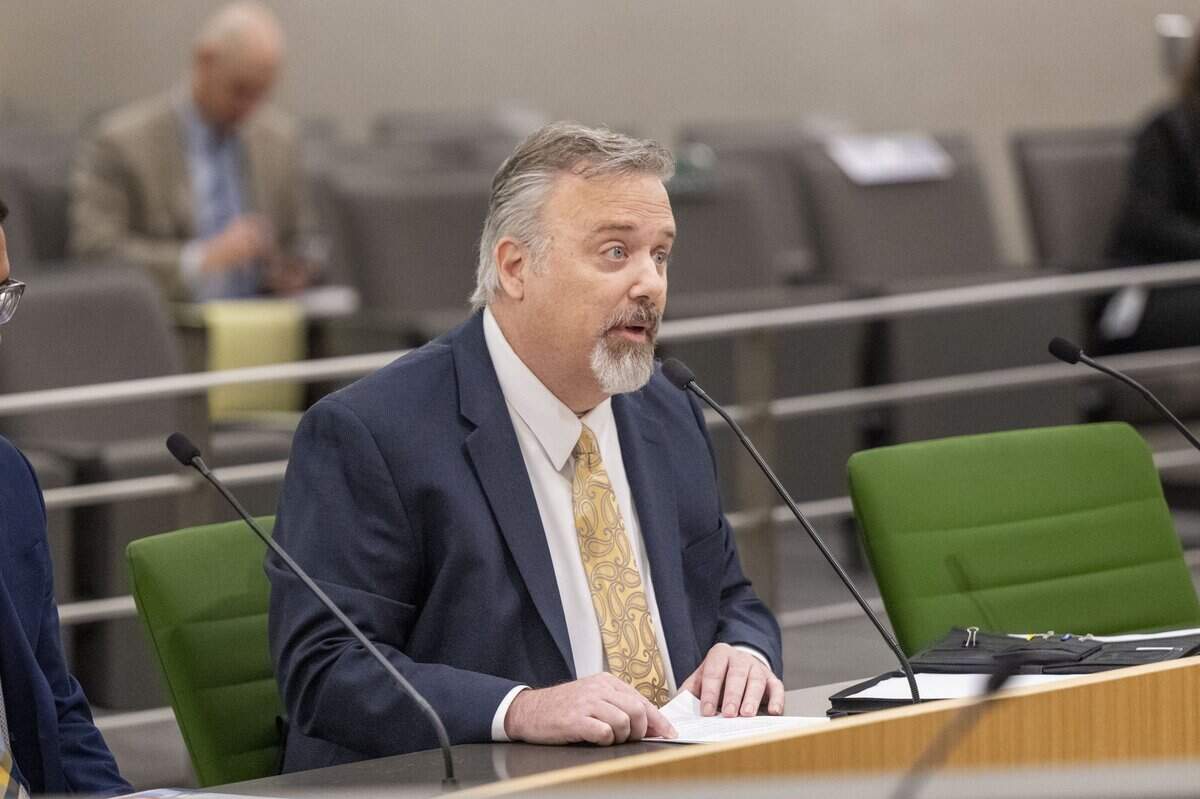
In precise and unwithering testimony, Parks described the agency charged with protecting 20 million California workers as plagued by staffing shortages and poor management practices.
Among the audits findings: Cal-OSHA performs more than 80% of its inspections by letter rather than in person; 32% of positions are unfilled despite adequate budget; and the agency keeps records in antiquated paper files filled with sometimes indecipherable handwritten inspection notes. Sometimes those inspection files are lost.
“There is no electronic case management system to help it manage its workload,” Parks said. ”One accident that we selected for review was ultimately unavailable because Cal-OSHA accidentally destroyed it.” “Illegible case notes created ambiguity for why certain cases were not inspected, or why initial fine amounts calculated by Cal-OSHA were lower than expected,” he added.
The report found that out of roughly 10,632 valid complaints the agency received in 2023-24, just 17% resulted in in-person inspections by the agency inspected. When it came to workplace accidents, the agency performed in-person inspections on just 42% of those mishaps. Critics of Cal-OSHA have called workplace investigations performed by letter toothless, because only in-person inspections can result in fines. During the hearing, Ortega called for the entire practice of letter inspections to stop. “Fake letters, that’s what I’m going to call them, because they’re not doing anything,” she said.
In testimony at the hearing, Cal-OSHA’s top official, Chief Debra Lee, who was appointed by Governor Gavin Newsom last year, defended the overall practice of inspection by correspondence, though she said she agreed with the audit findings that “that having clear instructions to staff is important to ensure the letters are only used for non-serious hazards.”
Lee said that “the letter inspection is reserved for non-serious hazards, or what we refer to as non-formal complaints under the labor code. These are hazards that are not likely to cause a serious injury or fatality.”
Ortega responded: “You’re using them 80% of the time. You’re asking employers to, you know, report on themselves, to self-police themselves.”

During his testimony, Parks cited several examples of inspections, including one where a worker was injured by a chainsaw, that were handled by letters but should have been handled in person. In another case Parks said, a worker complained that their employer had failed to fix an air conditioning unit in a kitchen where the temperature often exceeded 90 degrees; the worker was taken by an ambulance to the ER for help for heat illness.
Parks said in that case, Cal-OSHA’s policies should have required an on-site inspection, but one was not performed, although the agency had received a similar complaint about the same workplace months earlier.
Cal-OSHA closed the second case, Parks said, despite the fact that “the employer did not provide evidence to show that the air conditioner was actually fixed, such as with repair invoices or photographic evidence or other indications of corrective action.”
In an emailed statement, Daniel Lopez, a spokesperson for California’s Department of Industrial Relations, which oversees Cal-OSHA, said that the agency acknowledged the state auditor’s findings and recommendations.
“Prior to this report, Cal/OSHA had already begun the important work of modernizing and improving our operations,” the statement said. “This includes replacing outdated manual systems with new technology, initiating revisions to existing policies, and establishing new ones to support both intermediate and long-term improvements in enforcement.” In her testimony Lee said that through an “aggressive hiring and recruitment strategy,” Cal-OSHA has been able to reduce its vacancy rate to 12%, with 126 hires made during the first half of 2025.
But Lee also acknowledged the reduction in the vacancy percentage was in part due to the elimination of 66 positions as a result of Newsom’s directive to eliminate vacant roles in state government.
Garrett Brown, a former safety and health officer at Cal-OSHA who served as special assistant to Cal-OSHA Chief Ellen Widess between 2011-2014, was one of several advocates who came to the hearing to observe.
Brown, now a watchdog of the agency who has been tracking Cal-OSHA hiring data and publishing a newsletter on the issue for more than 25 years, took issue with Lee’s claims. “On May 1, there were 110 vacancies among field inspectors which amounted to an overall 39% vacancy rate. Twelve district offices had vacancies higher than 40%. Nine offices had higher than 50%. Now they’ve taken down the rate to 12%,” Brown said “Well, that’s either cooking the books, or it’s totally misleading.”
One issue in the audit that particularly upset Ortega was the dearth of criminal referrals and substantial fines in accidents involving worker deaths. There are on average around 400 workplace fatalities annually in California.
A Sacramento Bee investigation last year found that the Bureau of Investigation, a division of Cal-OSHA tasked with making criminal referrals to district attorneys, had only one investigator for the entire state. Cal-OSHA has since significantly increased staffing at the BOI, hiring six more investigators and two supervisors. But criminal referals remain low, according to the audit.
Ortega said that she is particularly committed to making sure that families who have lost loved ones obtain a degree of justice, noting that one workplace in her district, San Leandro-based Alco Metals, has had three workplace fatalities in eight years, including one in 2025. There have been no criminal referrals as a result of any of the deaths and a total of just $18,000 in fines paid.
In a dramatic moment during the hearing, Ortega recalled meeting the wife and eight-year-old daughter of the most recent victim, Luis Fernando Guerrero, and being shown footage of Guerrero being crushed by heavy machinery.
“In each case, Cal-OSHA was called to investigate,” Ortega said during the hearing, “but to this day, [Alco Metals] have paid a grand total of $18,000 in fines for the lives of these three men…That’s $6,000 for each employee killed. Is that what a life is worth in California?”
Reached by phone, Julio Alfaro, a former criminal investigator for the BOI who left the agency in 2024 said he recalled two of the Alco cases, including a 2022 case involving the death of Ray Alfaro ( no relation), who was killed in Alco’s yard in Stockton when 4,000 pounds of bundled wire fell on top of him. Alfaro said he had to drop the case because of staffing shortages, even though he thought there was a case to be made.
“That’s the position that OSHA left me as the only investigator in Northern California,” Alfaro said.
Teresa Wassman, the former supervisor of the BOI who left her position earlier this year, said, “that is just how it was, we were constantly having to perform triage, when these families deserve better.”
In an interview following the hearing, Ortega said that she believed that legislative fixes are necessary.
“One of my main priorities, whether I get it done next year, or however long it takes, is fixing this broken system when it comes to criminal referrals to prosecutors,” she said. “I have another 10 years here, and I’m not gonna be satisfied until some real structural change happens that provides justice for workers hurt, or, who have been killed on the job.”
This story was originally published August 29, 2025 at 11:50 AM.