Sac State, Cal Expo clear way for a football stadium deal. Could it open in 2026?
Sacramento State is hoping to play its football games in a new stadium at Cal Expo as soon as 2026.
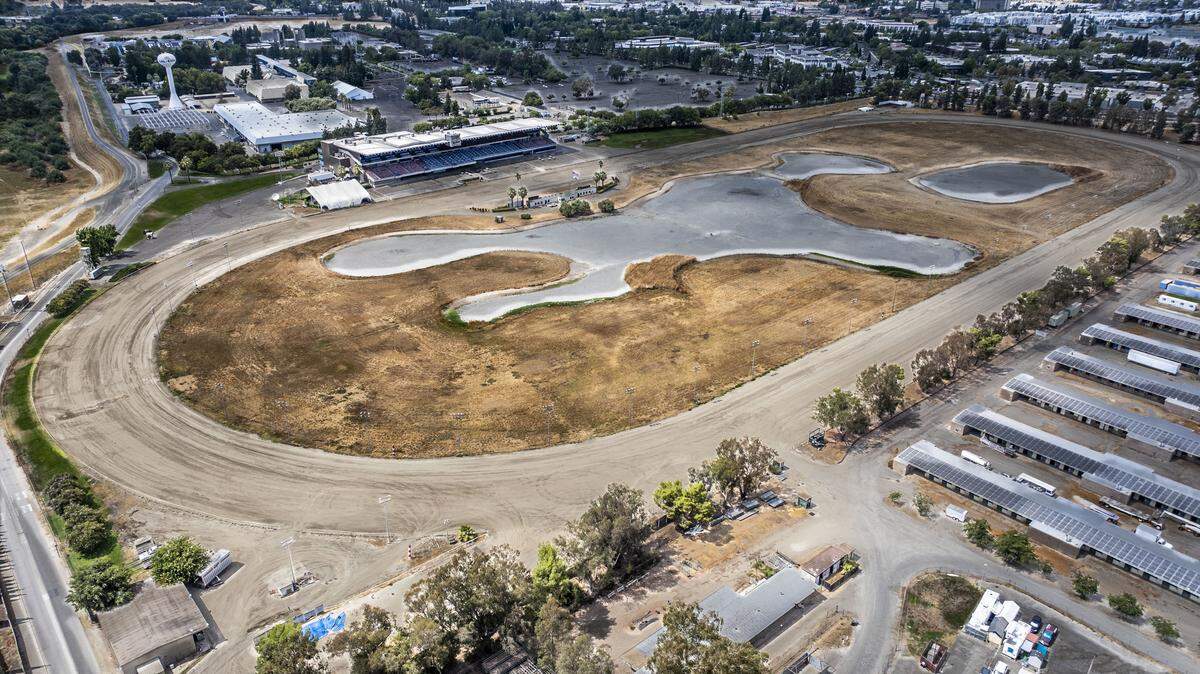
The two sides on Thursday memorialized an agreement to open exclusive negotiations that officials hope will lead to turning Cal Expo’s defunct horse racing track and grand stand into a new football facility roughly three miles north of Sacramento State’s campus.
“There’s no reason that we can’t have big-time college football here in Sacramento,” university Athletic Director Mark Orr said at Cal Expo’s board meeting inside the grand stand. “This region, this community, would support that.”
After Orr and Sac State President Luke Wood spoke, Cal Expo’s board of directors voted unanimously, 6-0, to enter into exclusive negotiations with the university. Finalizing a stadium plan would have to happen quickly as they hope to have the facility finished in time for the 2026 season — roughly 12 months from Thursday’s meeting. The Hornets start the 2025 season this Saturday, on the road.
Why did Sacramento State pivot from on-campus stadium?
Wood and other school officials less than a year ago announced plans to build a new, state-of-the-art stadium on campus to update Hornet Stadium, which opened in 1969 and has been given modest upgrades since. The focus on upgrading its home venue comes as the school pushes to elevate its football program from the second-tier FCS to the FBS, and potentially join a top-tier conference such as the Pac-12.
The university pivoted its stadium plans over the winter after being approach by Cal Expo, which has been rethinking its business model amid the decision to no longer have horse racing at California’s annual State Fair. The site is also set to lose the Sacramento Republic FC soccer team to its new stadium in the downtown Railyards. Cal Expo plans to use the potential facility for concerts and other events, in addition to hosting Sac State football games.
“It was never that it wasn’t going to work on campus,” Wood said. “It was more so that Cal Expo provides an opportunity to go bigger. It’s a much larger vision for what we want to do with athletics.”
Along with a larger footprint for a football stadium, Wood cited transportation and parking as key reasons to build at Cal Expo, which has 15,000 parking spaces within walking distance to the race track.
“When we look at the infrastructure that exists here for events, pregame activities, tailgating, parking and more, there are a lot of benefits being at Expo with infrastructure that is already in place to have an elite game day experience,” Wood said.
“It creates an opportunity for expanded football training facilities for our football team. The other things that come to mind, and this will be very important to those who are at Sacramento State, this would help to alleviate the gameday traffic with only two entrances and exits to our entire campus, which has become a common moniker of those who are concerned about our original plan to expand Hornet Stadium.”
The grand stand already in place would be the centerpiece of the new venue. It’s roughly 420 feet wide, officials said, with 5,000 fixed seats with many under an overhang.
The area is already permitted to have over 20,000 patrons for events like horse racing and concerts, which officials believe will expedite the approval process.
Both sides have already began the required feasibility studies and are optimistic about getting the approvals needed to begin renovating the grand stand, building out the football field and new seating areas to allow the stadium to hold 25,000 fans by 2026.

Wood said the initial plan includes modular facilities, such as locker rooms, food stands and bathrooms, and hopes to build out more permanent structures over time and grow the stadium to a capacity of 40,000, presumably when the football program jumps to FBS.
“Our goal is to be here for the next 50 years,” Wood said.
How will the stadium be paid for?
Wood declined to say how much the new stadium would cost, but said it will be funded from a revenue bond through the California State University system. He indicated the plan will be presented to the system’s board of trustees within the next two months. It’s expected the bond would be repaid through revenue created by the stadium over the next 30 years.
“We’re not in a position right now to release costs, except to say that it’s significantly less expensive (to build at Cal Expo) because this is an existing sporting facility that’s already in use, that already has the main (grand stand) already built,” Wood said.
Orr cited the recent development of Snapdragon Stadium, the multi-purpose stadium built for San Diego State football just off campus in Mission Valley, which cost $310 million and opened in 2022. It was funded partially by revenue bonds and private donations.
Sacramento State had planned to increase its student fee from $181 to $256 per student by the 2027-28 school year and use the money to update the school’s athletic facilities, including for a new football stadium. That plan has not changed while the school has shifted its stadium plans to Cal Expo, off campus.
“Those resources are specifically assigned for athletic facilities,” Wood said. “So they’ll be used for this project, but also for the renovation of Hornet Stadium, for changes that we’re doing to baseball and softball and everything. So every sport is going to end up benefiting from that.”
The renovation of Hornet Stadium will continue after it was announced the school would invest $5 million into its current home football venue. If the Cal Expo plan gets approved, Hornet Stadium will continue to house track and field along with other sports.
What’s next for the stadium plan?
Thursday’s board meeting did not finalize the stadium — it formalized an exclusive negotiating window.
“We’ve memorialized our commitment to one another,” said Cal Expo CEO Tom Martinez. “And through this exclusive dating process, we look forward to seeing what we can do and hopefully bring Hornet football here to Cal Expo.”

Officials said an architect has not yet been contracted for the project, though renderings and design work should be released in the “near future,” Martinez said.
“Currently we’re in the beginning part of this relationship, which is basically to see those studies through to see if this is even feasible to do,” he continued.
Martinez called the 2026 goal “aggressive” but feasible.
“We’re going to make every effort to do that.”
This story was originally published August 28, 2025 at 5:49 PM.